Stainless Steel Mesh for Industrial Oven Conveyor Belts
An industrial oven conveyor belt carries work through heating, drying, curing or cooking while remaining under tension for long production runs. Stainless steel mesh for industrial oven conveyor belts must therefore balance heat resistance, corrosion resistance, product support and cleanability. A decorative screen or generic welded panel may look suitable, yet its wire profile, edge construction or alloy can sag, oxidise or contaminate the product inside a hot process.
Reliable specification starts with the oven rather than the mesh catalogue. Engineers need the temperature profile, belt speed, product load, atmosphere, cleaning regime and roller arrangement. They also need a clear definition of service life, inspection criteria and replacement tolerances. Those inputs let a mesh manufacturer select an alloy, weave and edge system that can be fabricated for an Australian production line rather than adapted from an unrelated mesh product.
Match the alloy to the oven environment
Grade selection begins with actual exposure, not a maximum-temperature label. Grade 304 stainless steel suits many clean, oxidising oven environments, while 316 and 316L provide better resistance to chloride-bearing washdown chemicals and atmospheric contaminants. 316L is often useful for welded custom edges because its lower carbon content supports ductile fabrication. Neither grade is a universal answer: sustained operation near the upper end of a furnace schedule can require a heat-resistant grade such as 310S, selected against the supplier’s test data.
The oven atmosphere changes the decision just as much as temperature. Sulfur-bearing gases, reducing conditions, condensation and recycled humidity can accelerate oxidation or attack the wire. Food, oil and polymer residues create another risk because a hot belt can bake deposits into the mesh. Coastal sites, refrigerated warehouses and washdown zones also expose components to salt and cleaning chemicals. Specify the actual atmosphere and contamination sources so the alloy and surface finish can be matched to them.
Mechanical performance must be checked separately from corrosion performance. Fine wire is often supplied in annealed condition for weaving, while cold-worked wire offers higher tensile strength with less ductility. The required balance depends on weave tension, bend radius, roller spacing and shock loading. At elevated temperature, creep and relaxation can reduce a joint’s load capacity even if room-temperature tensile values look adequate. Grade certification and finished-part testing should cover the actual fabrication route.
Engineer the mesh and belt geometry
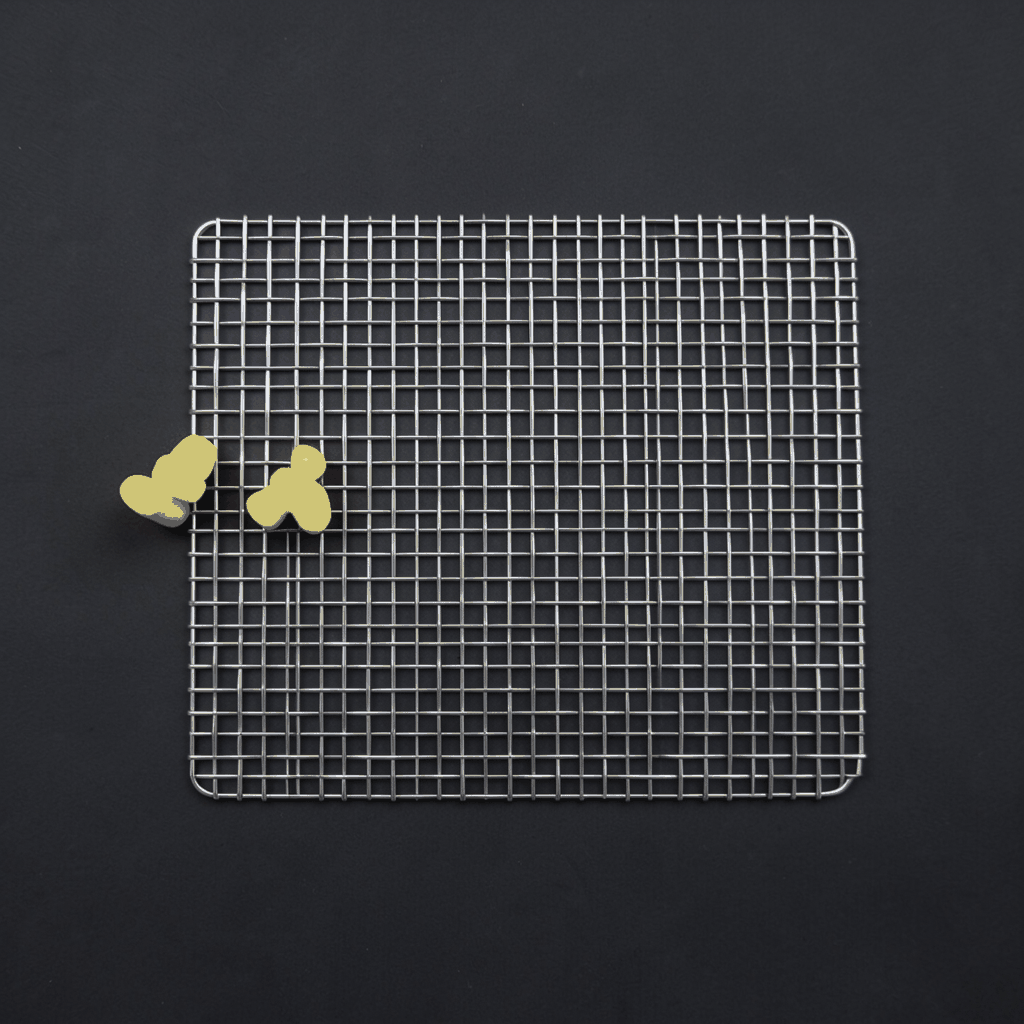
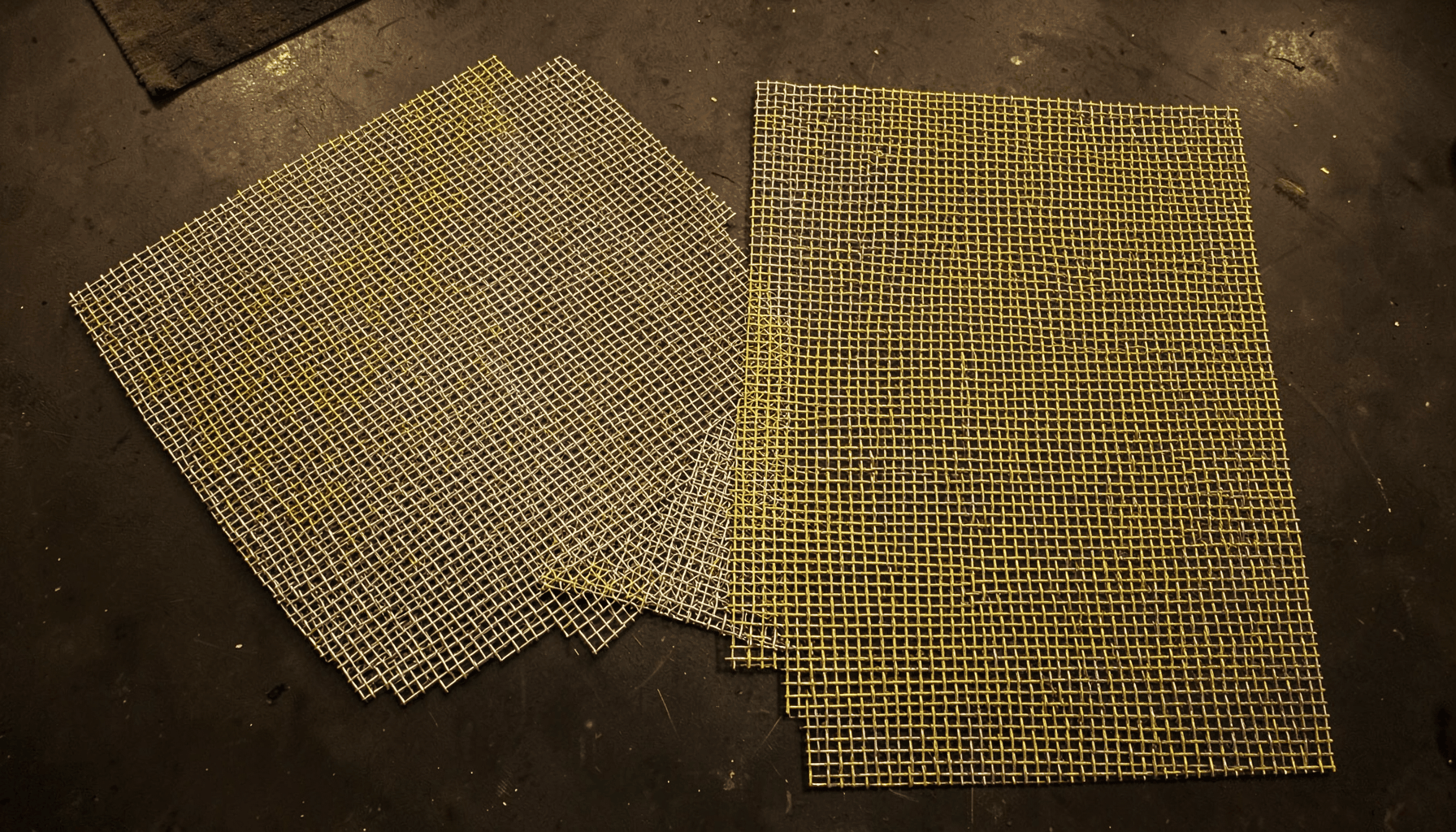
A conveyor belt needs a different construction from a stationary filter or decorative screen. Plain and twill woven wire mesh provides flexible movement with good product support; welded panels provide greater rigidity but add intersections that must be cleaned and inspected. In both directions, clear aperture, wire diameter, pitch and open area should be stated separately. A finer count can improve airflow and small-item retention, yet it can also sag between rollers and trap crumbs. A more open weave may clean faster but needs a larger safety factor against product loss and wire pull-out.
The same discipline shown in this woven mesh specification for architectural balustrades transfers usefully to oven belts: define wire diameter, clear aperture, mesh count, open area and edge treatment before fabrication. Those choices determine airflow, load distribution, weld access and cleanability in an oven. A belt must also remain flat, track predictably and tolerate repeated flexing as it passes around end rollers.
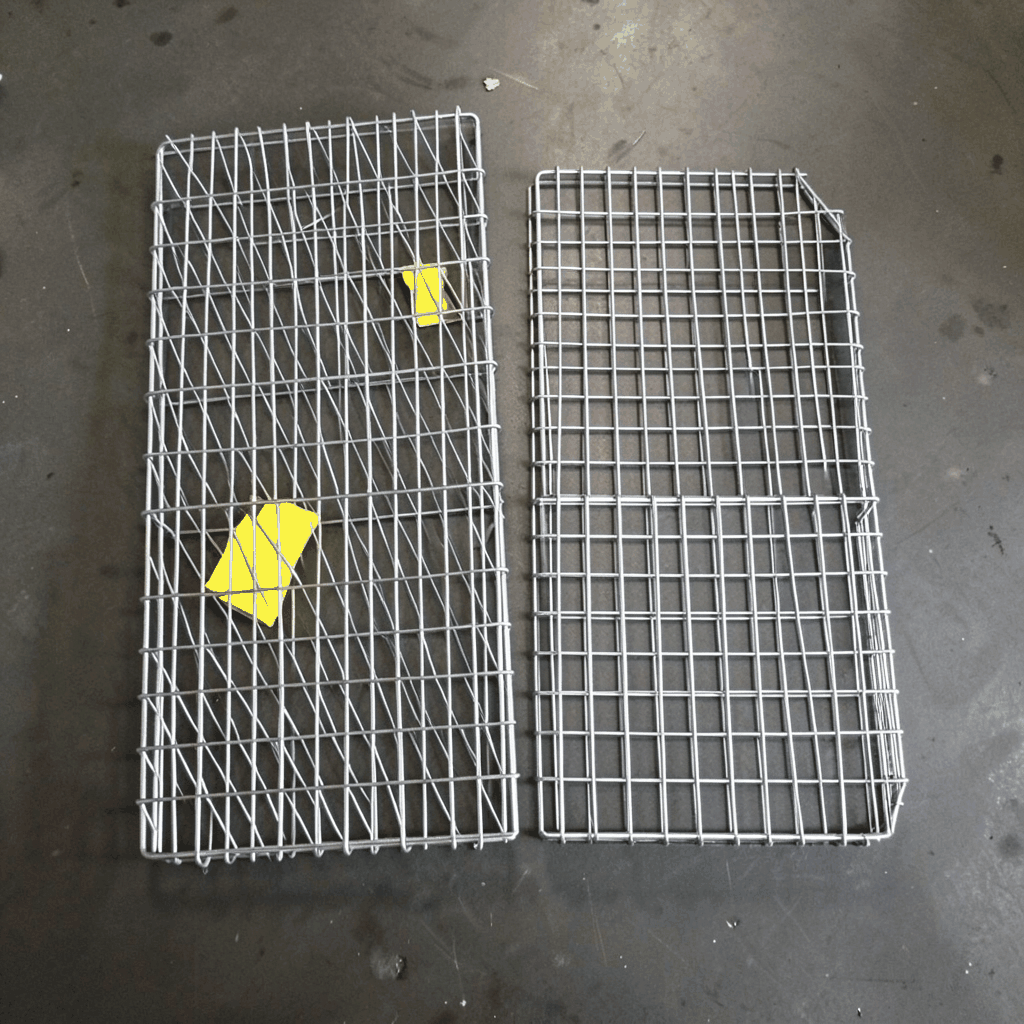
Edge design is where many otherwise suitable belts become unreliable. The selvage should distribute tension without fraying, while the attachment method must withstand heat, vibration and repeated cleaning cycles. Weld size, edge distance and surface finish need review for corrosion and food-contact applications. Roller alignment, tensioning clearance and thermal expansion also affect tracking. For long installations, specify whether the belt runs continuously, uses a transfer splice or is built as several replaceable sections with staggered joints.
Design for Australian industrial conditions
Food processing plants in Melbourne, Sydney and Brisbane are a major Australian market for continuous ovens used in baking, roasting, dehydration and ready-meal production. Conveyor mesh in these applications must release crumbs and withstand hot fat, steam and alkaline or acidic washdown. HACCP-based food safety programmes and operator duties under the Australia New Zealand Food Standards Code make inspection access, drainability and documented stainless-steel grades important procurement points.
Component curing and powder-coating lines around Adelaide, Melbourne and Brisbane create a different duty cycle. Their conveyors often handle formed parts, coatings and fixtures rather than food, with moderate temperatures but substantial abrasion. Mining equipment manufacturers and service operations around Perth and Kalgoorlie may add dusty, washdown environments. In all cases, the belt should be specified for the product, cycle time and housekeeping routine rather than for the oven builder’s general description.
Australian ambient conditions deserve attention before the oven is even switched on. High summer temperatures around northern and western sites affect incoming belt tension, while humid coastal plants in Sydney, Brisbane, Melbourne and Fremantle can carry salt into the process area. A 316 or 316L selection may be prudent for those exposures, but stainless steel still needs protection from embedded iron particles and carbon-steel grinding dust. Access guards, emergency stops and nip-point protection should also align with Safe Work Australia and state work health and safety requirements.
Local procurement adds commercial detail. Australian importers need Australian Border Force clearance, accurate country-of-origin information and GST records. A customs broker should determine whether the conveyor belt or mesh is classified as wire cloth, machinery or a part, since the tariff treatment can differ. For Chinese-origin goods, the broker can also assess whether the China-Australia Free Trade Agreement origin criteria apply. A purchase specification should request mill certificates, welded-joint procedures, dimensional reports, spare-parts availability and an agreed delivery program in AUD.
Selection and inspection checklist
A short commissioning pack prevents assumptions from moving into fabrication. Give the supplier one consolidated table covering the duty cycle, geometry and cleaning requirements:
Core process and geometry
- Continuous and peak belt temperatures, ramp rate, dwell time and atmosphere
- Belt width, length, speed, product load and roller centres
- Alloy and temper, finish, wire diameter, pitch, clear aperture and open area
- Cleaning chemicals, concentration, temperature, frequency and hygiene regime
Commercial and acceptance details should be settled at the same time. Useful contractual checks include:
Manufacturing and delivery checks
- Edge profile, attachment method and roller interface drawings
- Material and tensile records, dimensional reports, weld quality and passivation records
- Pilot-run criteria for tracking, sag, heat uniformity and cleanability
- Marking, packaging, spare-parts plan and agreed delivery program
Build a supplier-ready specification
The final purchase specification should convert the operating data into measurable manufacturing requirements. Include the belt’s cross-section, roller arrangement, loading diagram, expected thermal cycling, joining method and dimensional tolerances. State whether the woven wire should be supported by welded edge rods, attached to reinforcing links or formed into a continuous selvage. Documentation should identify the alloy standard, wire condition, surface treatment and any areas designated for product contact.
A sample or pilot installation provides stronger evidence than a visual comparison alone. Check the mesh after a thermal cycle for distortion, permanent stretch, weld discolouration and edge movement. Observe tracking at operating speed, airflow through the product bed and resistance during cleaning. Record any changes in wire tension or belt dimensions, then compare them with agreed acceptance limits. This is particularly valuable when replacing an imported belt whose construction differs from the original equipment drawing.
Contact Shuo Ke Wire Mesh Product Technology Co., Ltd. with the thermal profile, conveyor dimensions, product load and cleaning chemistry, and request a drawing review, alloy comparison and sample plan tailored to the Australian installation. Its custom metal mesh capability across stainless steel, aluminium, copper, iron and other alloys supports that engineering review while keeping the final selection focused on the conveyor’s actual duty.