Stainless Steel Mesh for Sterilization Pouch Workflows
In Australian hospitals, same-day surgery centres, dental practices and large GP clinics, reusable instruments are cleaned, inspected, packed and sterilised through controlled reprocessing workflows. Stainless steel mesh can support that work as a tray liner, instrument separator, basket or pouch support. It cannot replace the sterile barrier supplied by a medical-grade sterilization pouch: open mesh apertures are much larger than the microscopic pores required to exclude microorganisms. The two components have different jobs, with mesh organising and protecting items while the validated pouch maintains sterility.
Stainless steel is attractive because it combines strength, corrosion resistance and cleanability with a non-absorbent, open structure. A mesh carrier can hold small components without concealing them from inspection, allow water to drain and withstand repeated thermal cycles. Grades such as 304 and 316L offer different balances of strength, weldability and resistance to chloride-based cleaning chemistry. Material choice is only the start; aperture, surface finish, joint quality and geometry determine whether a component works in a real sterile-processing load.
Facilities in Sydney, Melbourne, Brisbane and regional centres face a mix of high-volume hospital reprocessing departments, smaller clinic systems and outsourced services. They also work within a local market shaped by TGA oversight, state and Commonwealth procurement, imported equipment and the need to reduce downtime. The role of stainless steel mesh for sterilization pouches in the medical industry is consequently practical rather than cosmetic: it must fit existing trays, carts and cleaning routines, withstand local conditions and remain traceable within quality systems.
Material choice for clean, repeatable processing
Grade selection should begin with the complete exposure profile, not a preference for the highest alloy number. Type 304 stainless steel is widely used for clean indoor components and offers good formability and corrosion performance under many neutral cleaning conditions. Type 316 or 316L adds molybdenum, improving resistance to chloride contamination and aggressive rinse aids; its low-carbon content can support cleaner welding. These distinctions matter in coastal facilities, humid transport areas and sites using chlorine-based products, although indoor reprocessing conditions remain the dominant factor.
Surface condition affects how easily soil, blood protein and cleaning residue are removed. A smooth, well-finished surface with rounded wire intersections supports drainage and visual inspection. Electropolishing or a suitably passivated finish may be appropriate where repeated wet cleaning is expected. Coatings, colour coding or decorative treatments need scrutiny because damaged coatings can flake near instruments and complicate validation. Stainless steel resists rust, but it can still show staining or contamination if the cleaning process is inadequate.
Each mesh component should have documented cleaning instructions that match the facility’s validated process. Compatibility with enzymatic detergents, neutral cleaners, alcohol, quaternary ammonium products and relevant disinfection agents should be confirmed. Stainless steel does not create sterility, and a clean-looking basket is not proof that bioburden has been removed. The component must also avoid trapping moisture in deep seams, blind welds or tightly folded edges.
Mesh geometry and pouch integration
Aperture size is the central design variable. The opening must retain the smallest item in the set while allowing steam, sterilant and condensate to move through the load. A mesh that is too fine can slow drainage and encourage wet spots; one that is too coarse can let delicate tips or small components escape. Wire diameter and mesh count should therefore be selected together, using the actual instrument dimensions rather than a generic catalogue size.
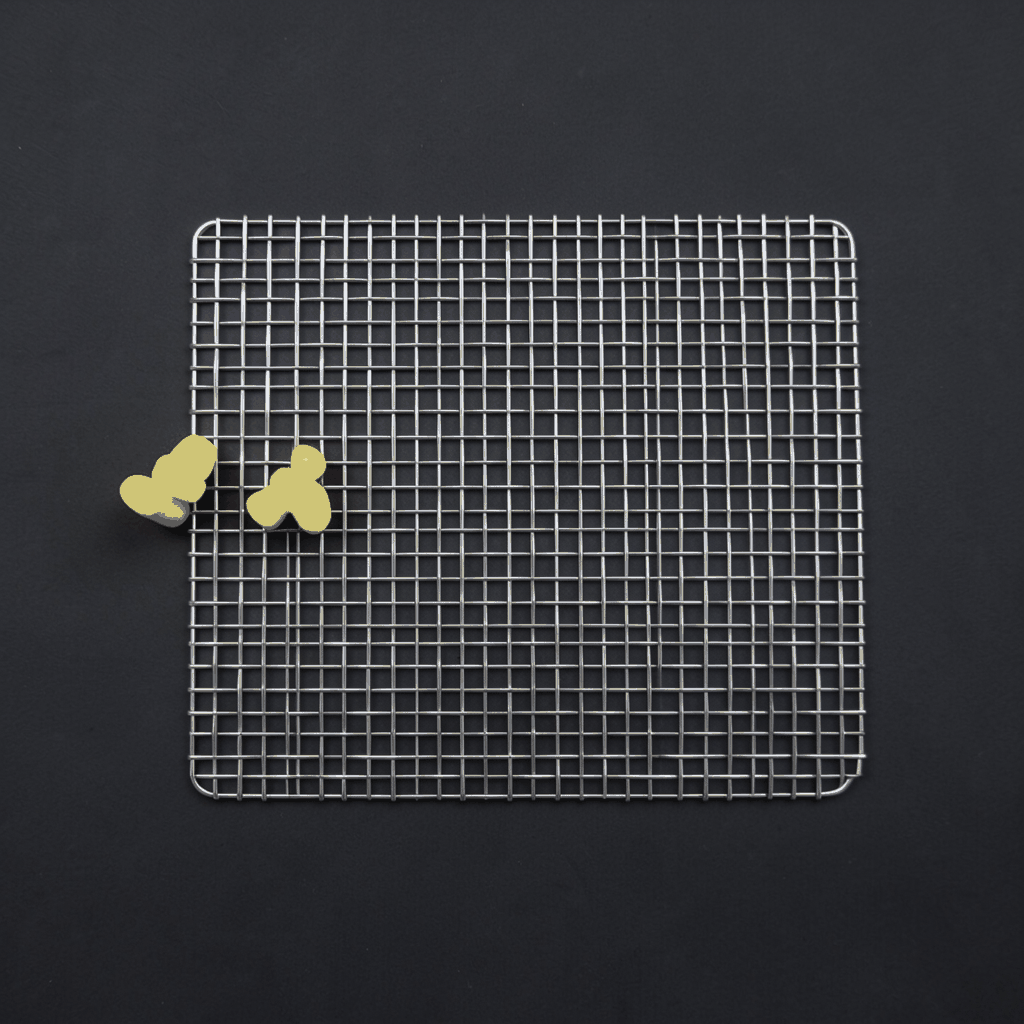
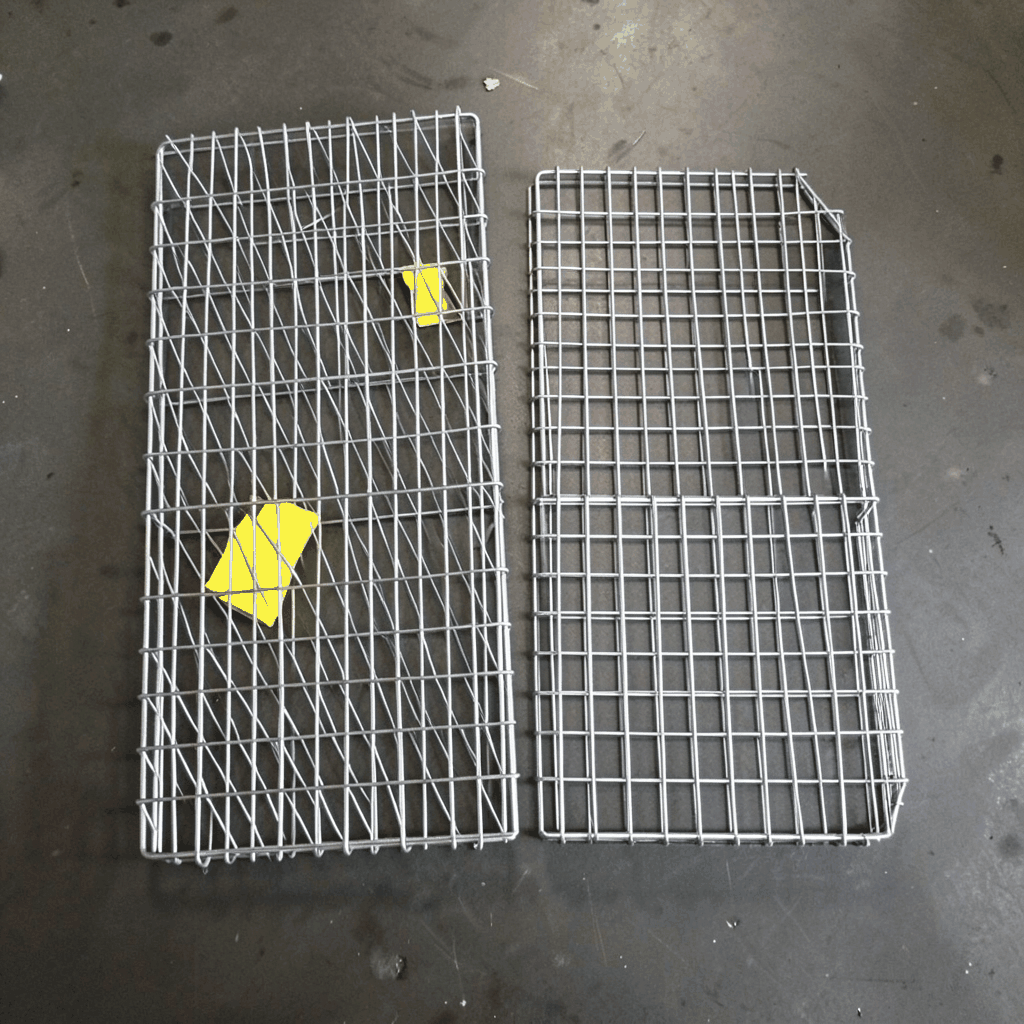
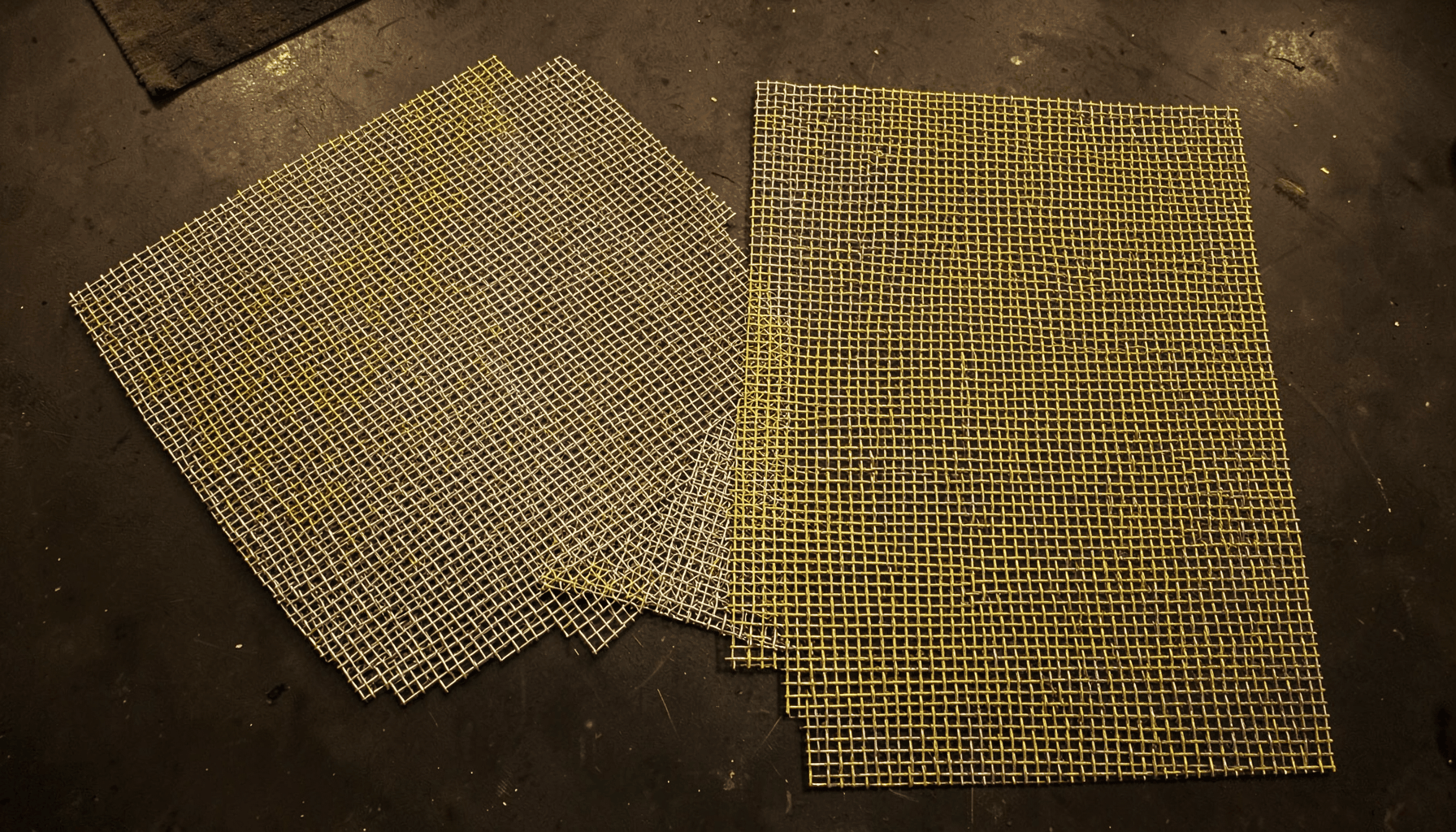
Construction changes handling as well as filtration. Woven stainless steel mesh is flexible, packs efficiently and conforms to rounded trays. Welded mesh provides predictable apertures and greater rigidity, making it useful for repeatable dividers and institutional racks. Weld intersections should be smooth, evenly finished and free of trapped residue. Cut ends need deburring, and any formed flange should remove sharp edges that could abrade a pouch film or mark an instrument.
Mesh placement needs careful thought when it is enclosed within a pouch. It must not interfere with seals, chemical indicators or sterile barriers, and it should not add unnecessary mass that makes drying harder. External supports should protect the pouch without blocking vents or creating condensation pockets. If stainless steel mesh becomes part of the sterile containment system, the complete assembly must be assessed under the intended packaging standard rather than treating the mesh as an independent sterilisation claim.
Matching mesh to common sterilization methods
Moist-heat sterilisation in an autoclave is the most common route for many reusable stainless instruments, but the cycle is validated for the load, not for a particular material name. Mesh remains dimensionally stable under typical 121°C and 134°C processes when correctly designed. Its open geometry supports circulation and drainage, yet dense baskets can still create restricted areas. Sterilisation parameters, load density, drying time and the instrument manufacturer’s instructions must remain the controlling requirements.
Ethylene oxide and other low-temperature methods introduce different constraints. Stainless steel is generally compatible with industrial sterilisation chemistry, but the pouch film, adhesive, indicators and any polymer components still govern permeability, aeration and residue limits. Gamma or other ionising radiation also presents little concern for the metal itself, although radiation can affect some pouch polymers and indicators. The relevant method must be named in the component specification so that all three elements—mesh, pouch and load—are tested together.
Validation should include worst-case cleaning, packing and sterilisation cycles, followed by package integrity and sterile barrier checks. Reusable mesh must also withstand repeated cycles without deformation, weld fracture, surface pitting or residue transfer. ISO 14937 provides a framework for validating a routinely sterilised medical device, while the applicable sterilisation standard addresses the process itself. A supplier’s material certificate supports consistency, but it cannot replace end-user qualification of the finished system.
Practical criteria for Australian sterile-processing teams
Selection works best when sterile-processing, infection prevention, engineering and procurement teams review the same requirements. In Australian healthcare, value is judged as much by lifecycle reliability, cleaning time and serviceability as by the purchase price. The following checks help convert a general mesh description into a component that can be introduced into a controlled workflow.
Facility and process checks
- Match alloy and finish to the documented cleaning chemistry, storage environment and expected service life.
- Base aperture and wire diameter on the smallest retained item, load density and validated drying conditions.
- Test the mesh, pouch, indicator, tray and full load together rather than validating each item in isolation.
- Define inspection limits for damaged wires, rough welds, deformation, staining and trapped debris.
Procurement documentation should also make inspection and replacement straightforward, particularly where imported equipment has long lead times or limited local spare-part support.
Design and supply checks
- Review dimensioned drawings, tolerances, edge treatment, weld quality and load-bearing expectations before tooling.
- Request material identification and batch traceability suitable for the facility’s quality records.
- Check packed size, weight, stacking, cart access and compatibility with existing trays before approval.
- Compare total costs, including inspection, cleaning, replacement and downtime, rather than unit price alone.
Public hospitals may procure through state frameworks or AusTender, while private hospital groups and day-surgery operators often balance local support against global supply options. A documented sample approval and a clear technical data sheet can reduce uncertainty across either route.
Regulation, local conditions and custom production
Australian projects must align the sterile packaging system with AS/NZS ISO 11607-1 and AS/NZS ISO 11607-2. These standards cover packaging for terminally sterilised medical devices and the validation of forming, sealing and assembly processes. For a medical device supplied in Australia, its sponsor must satisfy the Therapeutic Goods (Medical Devices) Regulations, relevant TGA Essential Principles and, where applicable, Australian Register of Therapeutic Devices requirements. If the mesh is only an external processing accessory, it may sit outside the sterile barrier, but the pouch manufacturer or device sponsor still owns the evidence for the final sterile packaging. A mesh component that contacts a patient or directly supports a sterile device can change the assessment and should be reviewed early.
Local realities shape practical specifications. Australian summers increase the storage and transport burden on metal components, while coastal salt exposure can matter during maintenance or shipping. More importantly, many public and private facilities operate around the clock or on mixed clinical schedules, so a mesh that reduces sorting time or prevents instrument damage can outperform a cheaper option that is awkward to clean. Imported parts can also create long replacement delays, giving locally available samples, drawings and clear fabrication tolerances commercial value.
Shuo Ke Wire Mesh Product Technology Co., Ltd. develops architectural and industrial mesh in stainless steel, aluminium, copper, iron and other alloys, with an emphasis on custom dimensions and practical engineering. Its wider experience with controlled apertures and edge quality is illustrated by its laser-cut security screens, where clean geometry and stable panels affect daily use. For medical projects, the same disciplined approach can be applied to sampling, but the mesh should remain a specified component within the customer’s validated pouch and reprocessing system rather than be marketed as independently sterile.
Specify the intended placement first: inside or outside the sterile barrier, supported or loose, and which cleaning and sterilisation methods will be used. Provide the alloy preference, aperture, wire diameter, overall dimensions, edge detail, acceptable finish and required test documentation. These inputs allow samples to be assessed for drainage, instrument protection, pouch compatibility and repeated-cycle durability before production.
Shuo Ke Wire Mesh Product Technology Co., Ltd. can review drawings and manufacturing requirements for custom stainless steel mesh used in pouch supports, instrument organisation systems and related medical-industry components. Contact the company with your technical specification to discuss material selection, sampling and a production plan tailored to Australian sterile-processing environments.