Stainless Steel Mesh Gaskets for Reliable Flange Sealing
Counting on a gasket to hold back process pressure is a quiet kind of trust. The joint sits between two flange faces, often invisible once the bolts are tensioned, and it has to perform for years without attention. Stainless steel mesh gaskets, when they are engineered and fabricated correctly, offer the kind of mechanical resilience and thermal endurance that bolted connections in refineries, processing plants, and water infrastructure genuinely need. They are not the right answer for every service, but where they fit, they tend to deliver steady performance over long service intervals.
Shuo Ke Wire Mesh Product Technology Co., Ltd. produces a wide catalogue of woven and welded mesh components, from decorative partitions to filter baskets, and the same metallurgical discipline that supports architectural mesh is applied to industrial sealing components. The company weaves, cuts, and forms stainless steel mesh into gaskets engineered for raised-face, flat-face, and tongue-and-groove flange configurations. Production is tailored rather than catalogued, which lets engineering teams specify density, alloy, and geometry against a particular pressure class or media profile.
Across Australian process plants, the conversation about flange sealing has shifted noticeably in the last decade. Maintenance planners run longer turnarounds, shutdown windows are tighter, and the cost of an unplanned gasket failure in a remote site like the Pilbara or Gladstone is measured in millions of dollars per day. That environment rewards components that are dimensionally accurate, traceable to a known standard, and built from materials with documented mechanical properties. Stainless steel mesh gaskets, properly specified, tick those boxes more consistently than many alternative sealing products.
Material Selection and Mesh Architecture
The starting point for a robust mesh gasket is the grade of stainless steel. For most process services, 304 and 316L are the workhorses, with 316L preferred wherever chloride exposure is a concern. In desalination plants along the Western Australian coast, where feedwater carries elevated bromide and chloride, fabricators frequently opt for 904L or super-austenitic alternatives, although the cost jump is rarely justified for general water and air service. Carbon steel inserts are sometimes bonded between mesh layers to provide additional stiffness, particularly for high-pressure ring-type-joint arrangements where a ductile metal core helps the gasket recover bolt load after thermal cycling.
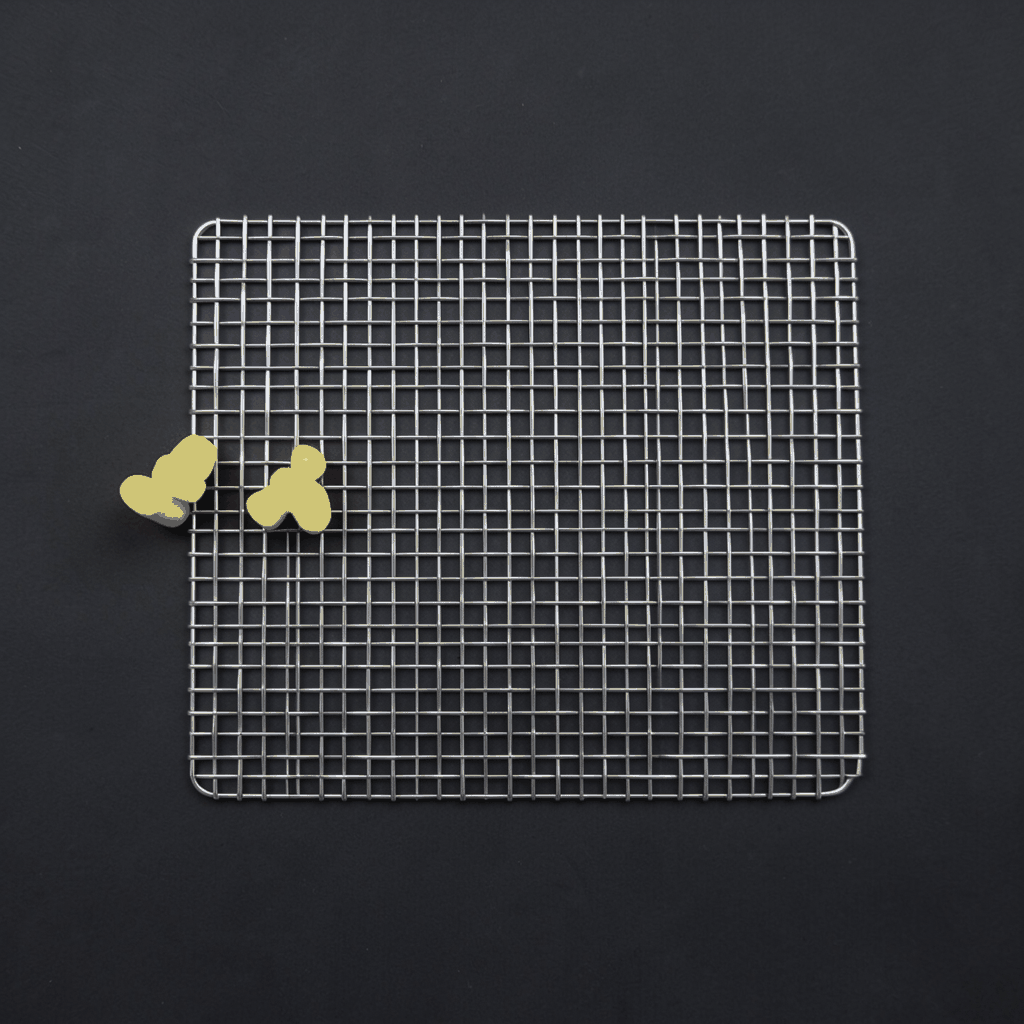
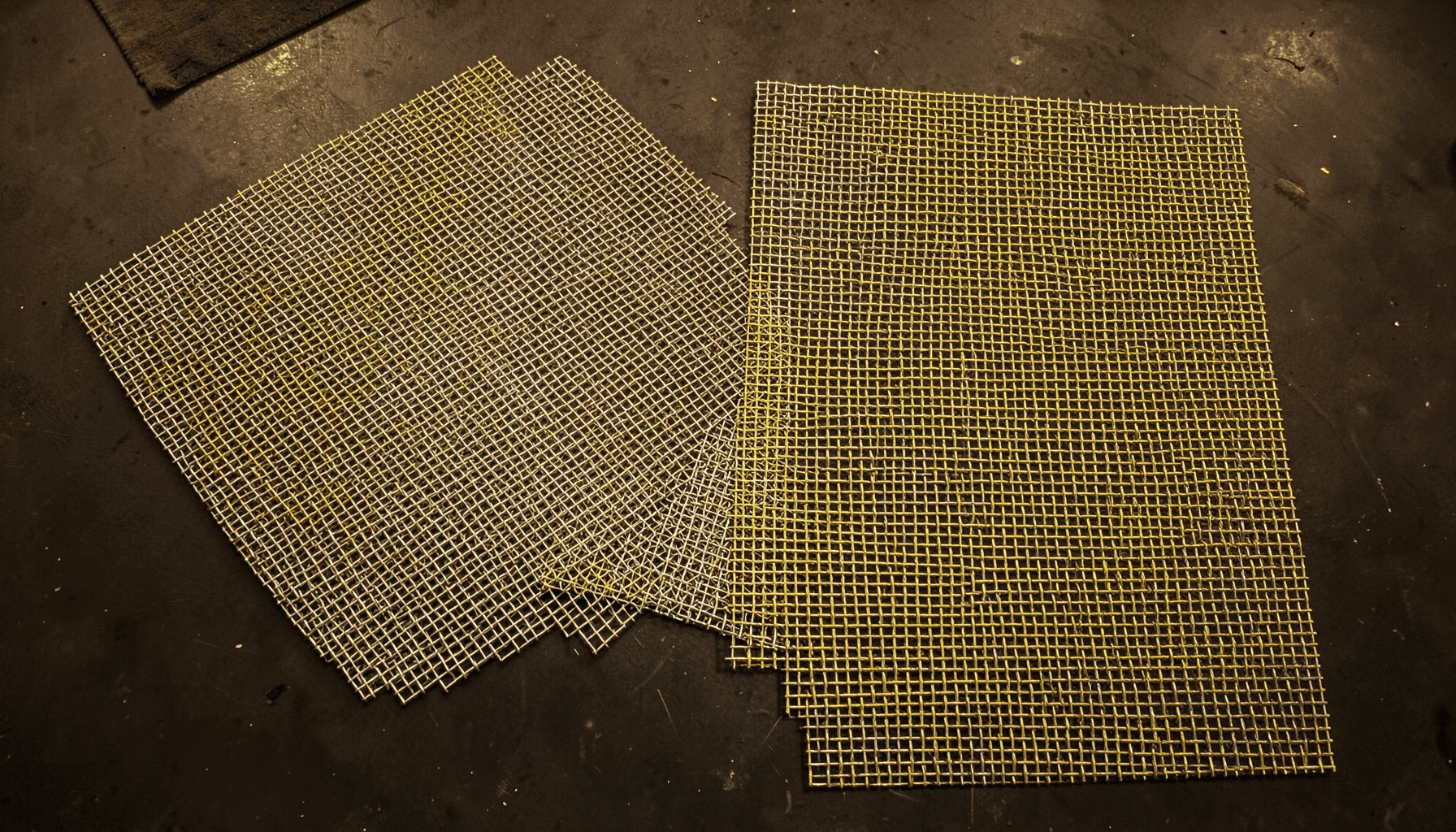
Mesh architecture matters as much as the parent alloy. Plain square weaves offer a balanced compressibility profile and suit softer, lower-pressure sealing duties. Dutch weaves, where warp and shute wires differ in diameter and count, deliver finer filtration of leakage paths and tighter sealing at low seating stresses. Wire diameter, aperture size, and the number of layers are all variables Shuo Ke can adjust when a drawing calls for a non-standard geometry. Density is expressed in wires per inch in both directions, and a tight 200×200 plain weave behaves very differently from a coarse 20×20 weave wrapped into the same gasket profile.
For elevated temperatures and aggressive chemicals, mesh gaskets can be combined with graphite, mica, or PTFE facing layers. The metallic skeleton provides dimensional stability while the facing material fills micro-imperfections on the flange face. In cryogenic service on LNG transfer systems around Karratha, the mesh component helps prevent over-compression of softer fillers that would otherwise extrude at low temperatures. Engineers who specify layered gaskets usually test them under representative load curves rather than trusting catalogue compression values, which is sensible practice for any critical joint.
Standards, Pressure Classes, and Flange Geometry
Flange sealing in Australia is governed by a layered set of standards. ASME B16.5 is widely referenced in oil and gas processing because many sites were originally engineered against American class ratings. Local infrastructure, however, is typically built to AS 2129 or the newer AS 4087 for water and general-purpose piping, while AS/NZS 4331 covers the metric PN series used in European-sourced equipment. Mesh gaskets destined for these systems must be dimensioned against the appropriate flange standard, including inner diameter, outer diameter, and bolt circle, otherwise seating load will not distribute correctly.
Gasket stress is the bolt load divided by contact area, and the available load is set by the bolt grade and the tightening sequence rather than by the gasket itself. Stainless steel mesh absorbs and redistributes clamping force across surface irregularities far better than compressed fibre, which is one reason it is often chosen for heat exchangers and pressure vessels built to AS 1210. For hydrocarbon service in processing hubs such as Newcastle and Geelong, gaskets are routinely marked with the ASME class they suit and the manufacturer's batch code, so traceability can be confirmed during shutdown audits.
Non-metallic gaskets have limited use in Class 600 and above because their creep relaxation increases sharply with temperature. Mesh-based gaskets are rated well above that threshold, particularly when paired with a graphite or mica facing, and they remain serviceable across the temperature range common to feedwater heaters and process reboilers. Where the operating pressure exceeds PN 100 or Class 600, integrally formed metal gaskets with a mesh structure are sometimes preferred over solid ring joints because the mesh compresses more predictably against a slightly pitted flange face that has been in service for decades.
Design Variants Suited to Particular Services
Mesh gaskets are a family of products rather than a single item. The most recognisable configuration is the spiral wound, where a metal mesh strip is wound in a V-shape around a winding mandrel, sometimes with alternating layers of graphite filler. Shuo Ke produces winding-grade mesh in coils of defined width and pitch, allowing gasket manufacturers to source a consistent raw material for their spiral wound product lines. The metallurgical consistency of those mesh strips influences how evenly the gasket seats, particularly on flanges that have seen multiple re-tightening cycles out in the field.
Kammprofile gaskets are another relevant variant, featuring a solid metal core with concentric sealing ridges often produced from mesh-bound layers or wire-formed serrations. They combine low seating stress with high blow-out resistance, which makes them a popular choice for heat exchanger channels and manway covers. Their performance depends on the precision of the serrated profile, and the wire-forming step is one place where a producer with the tooling of an architectural mesh specialist can add real value. For older AS 2129 Table D and E flanges that have seen surface wear, Kammprofile often seals more readily than flat graphite sheet stock.
There are also jacketed mesh gaskets, where a fine stainless mesh forms the body and the sealing face is plated or filled with a softer material such as PTFE. These are widely used in chemical dosing skids and pharmaceutical water loops because the polymer facing prevents metal-to-metal contact on less critical joints. For abrasive media in slurry lines, a denser mesh construction extends service life, with the matrix acting as a wear surface that resists erosion far longer than an equivalent rubber or fibre joint.
Installation Practice and Long-Term Performance
Even a well-engineered mesh gasket will fail if it is installed poorly. Bolt-up procedure is the single biggest variable under the installer's control, and a calibrated approach is non-negotiable in any Class 300 or higher joint. Sequential tightening in a star pattern, repeated in three or four passes to roughly a quarter, half, three-quarter, and full torque, lets the gasket settle gradually and reduces the chance of uneven seating. Maintenance crews using cordless impact tools often overestimate the torque that has actually been applied, which can over-compress a softer layered gasket and strip the mesh's recovery properties.
Re-torqueing after the first hot cycle of a piping system is a habit that separates reliable plants from chronic leakers. The mesh structure relaxes slightly when temperature rises, and a follow-up pass to the original target torque recovers load that has bled out. Technicians based in regional depots, from Welshpool to Mount Isa, often carry digital torque wrenches calibrated against local standards to make sure this re-torque is uniform across every bolt on the joint. The cost of doing it properly is trivial compared with the cost of a hot repair in a hazardous area, and procurement teams have learnt the hard way that cheaper consumables seldom stay cheap once a shutdown drags on.
Inspection between shutdowns is straightforward when gaskets are traceable. Each unit can be marked with a batch code at the time of slitting, and operators can log which lot went into a particular vessel or heat exchanger. When joints are opened during the next turnaround, the condition of the mesh tells a useful story: visible flattening suggests over-compression, while fracture of the facing layer points to thermal cycling damage. A consistent reading across many gaskets from the same plant validates the specification, which is the kind of evidence maintenance engineers can put on the table when justifying a switch to a higher-grade mesh product.
Where Mesh Gaskets Earn Their Place in Australia
The Pilbara iron ore operations around Port Hedland and Newman run continuous slurry and tailing pipelines at pressures that punish ordinary sealing products. Mesh gaskets with graphite facings are commonly specified for the pump and valve flanges in those circuits because they tolerate the abrasive media and the temperature swings better than rubber-bound alternatives. Similar thinking applies in alumina processing at Gladstone, where caustic liquor lines and digesters present a steady demand for robust sealing solutions.
Desalination plants from Sydney's Kurnell facility to Victorian installations at Wonthaggi and ongoing Western Australian projects push feedwater through reverse osmosis trains with pressurised pumping and energy-recovery equipment that operates around Class 150 to 300. The flange faces in these systems see continuous moisture and elevated chloride, which is precisely the operating window where a 316L mesh gasket performs cleanly. Local water authorities running AS 4087 ductile iron flanges can source mesh gaskets cut to those exact dimensions, eliminating the fit-up problems that arise when generic Class 150 gaskets are forced into metric joints.
The oil and gas sector continues to define a large slice of demand. Upstream gathering networks on the North West Shelf and downstream processing at Geelong, Bulwer Island, and Altona are built against ASME standards and accept mesh gaskets of the correct class without question. Refinery turnarounds traditionally include a re-gasket campaign where hundreds of joints are opened, inspected, and resealed, and mesh gaskets are routinely specified for the hot service equipment in those plants. Their ability to be re-used after inspection, where conditions allow, also reduces consumable spend during major outages, which is a quietly important consideration for any plant accountant.
Get a Tailored Quote for Your Next Flange Project
Specifying the right stainless steel mesh gasket becomes simpler when the supplier can hold a drawing, propose a material grade, and ship cut components to the dimensional standard required. Shuo Ke Wire Mesh Product Technology Co., Ltd. works with engineering teams on bespoke gasket geometry, alloy selection, and facing combinations for both ASME and AS/NZS flange systems. Send your flange datasheet or a sample gasket to the team through the contact page, and a tailored quote with material certification will be returned promptly. Reliable flange sealing is built long before the bolts are tightened, and the right conversation about your service conditions is the place to start.