
Stainless Steel Mesh Baskets for Cleaner, Safer Food Processing
Food processing baskets must withstand repeated handling, washing, heating, cooling, and contact with ingredients without becoming a source of contamination or product damage. Stainless steel wire mesh is widely selected for these demanding conditions because it combines mechanical strength, corrosion resistance, cleanability, and dimensional stability in one practical material.
From blanching and frying to rinsing, drying, sterilizing, and storage, a well-designed mesh basket supports efficient product movement through a processing line. The open structure allows water, steam, oil, and air to circulate while helping operators drain, inspect, and separate food products with less manual handling.
For manufacturers, the basket itself is only part of the solution. Wire diameter, opening size, weave pattern, frame construction, edge treatment, handle design, and surface finish all influence hygiene and performance. A specialist metal mesh supplier can adapt these details to match the food, equipment, and operating environment.
Hygienic Surfaces For Food Contact
Stainless steel offers a smooth, non-porous surface that is easier to wash and sanitize than many rough or absorbent materials. When the mesh is correctly formed and finished, food particles have fewer places to lodge, helping reduce residue between production cycles. This is especially important when baskets are used for meat, seafood, vegetables, baked goods, or prepared foods.
The open area of woven or welded wire mesh also supports thorough rinsing. Cleaning fluids can reach multiple sides of the basket, while drainage is faster than with a solid container. A basket that dries quickly is less likely to retain moisture, which helps control microbial growth during storage and changeovers.
Sanitary design extends beyond the mesh itself. Welded joints should be even and secure, corners should avoid unnecessary crevices, and cut edges should be smooth. Reinforced rims can add strength without creating difficult-to-clean structures. For facilities with automated wash systems, these details can simplify inspection and reduce cleaning time.
Corrosion Resistance In Wet And Chemical Environments
Food production frequently exposes equipment to water, steam, salt, acids, alkaline detergents, and sanitizing chemicals. Ordinary carbon steel can rust quickly in these conditions, leading to staining, weakened wires, and possible contamination. Stainless steel forms a protective chromium-rich oxide layer that helps resist corrosion in many processing environments.
The selected grade should reflect the actual conditions. Stainless steel 304 is commonly used for general food handling, washing, cooking, and packaging applications. Stainless steel 316 provides stronger resistance where chlorides, saltwater, acidic ingredients, or aggressive cleaning agents are present. The correct choice depends on temperature, chemical concentration, exposure time, and required service life.
Corrosion resistance lowers the risk of flaking oxide or rust particles entering food. It also helps preserve the basket’s fit inside conveyors, tanks, fryers, and sterilization equipment. With suitable maintenance and chemical control, stainless steel containers can remain serviceable through many production cycles.
Strength For Repeated Industrial Handling
Processing baskets are lifted, stacked, loaded, emptied, and transferred many times each day. A fragile container can deform under product weight or lose its shape when exposed to impact. Stainless steel wire provides a strong framework for baskets that need to retain their dimensions during frequent use.
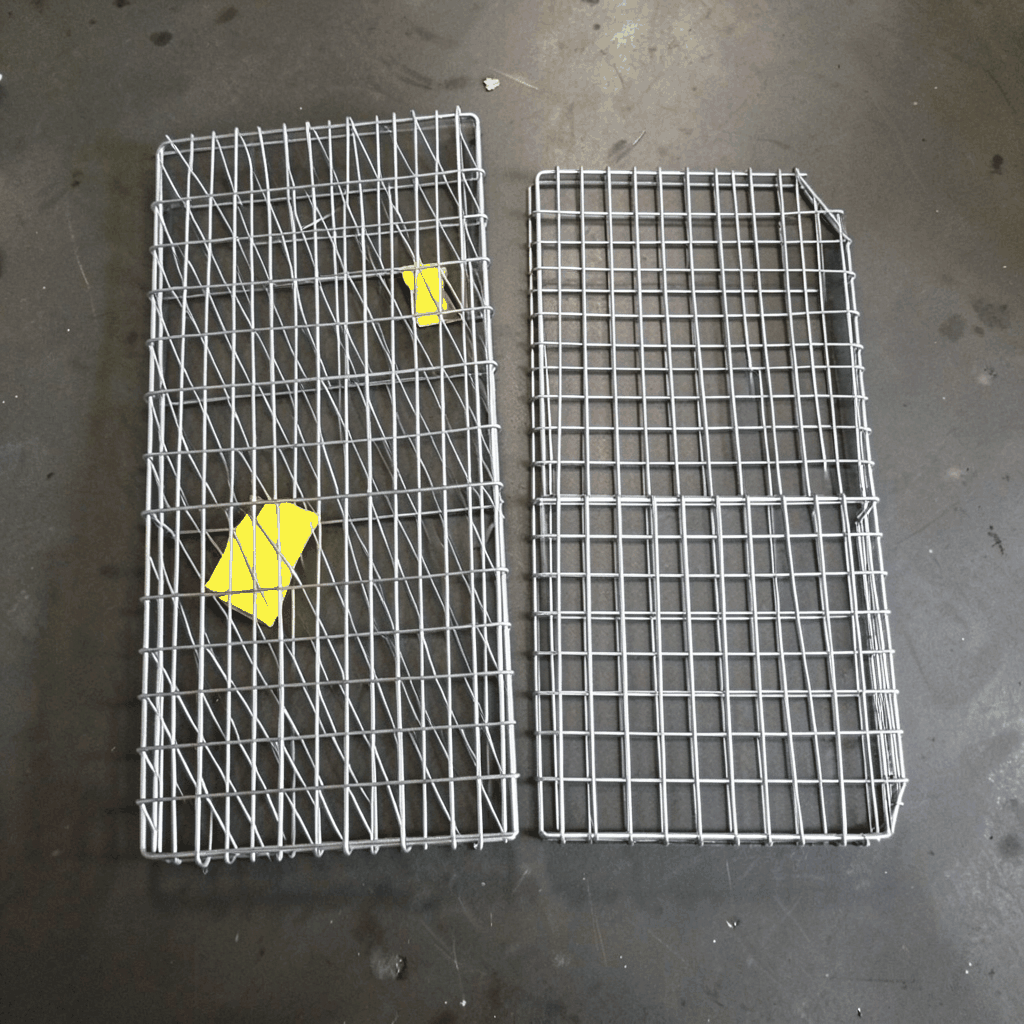
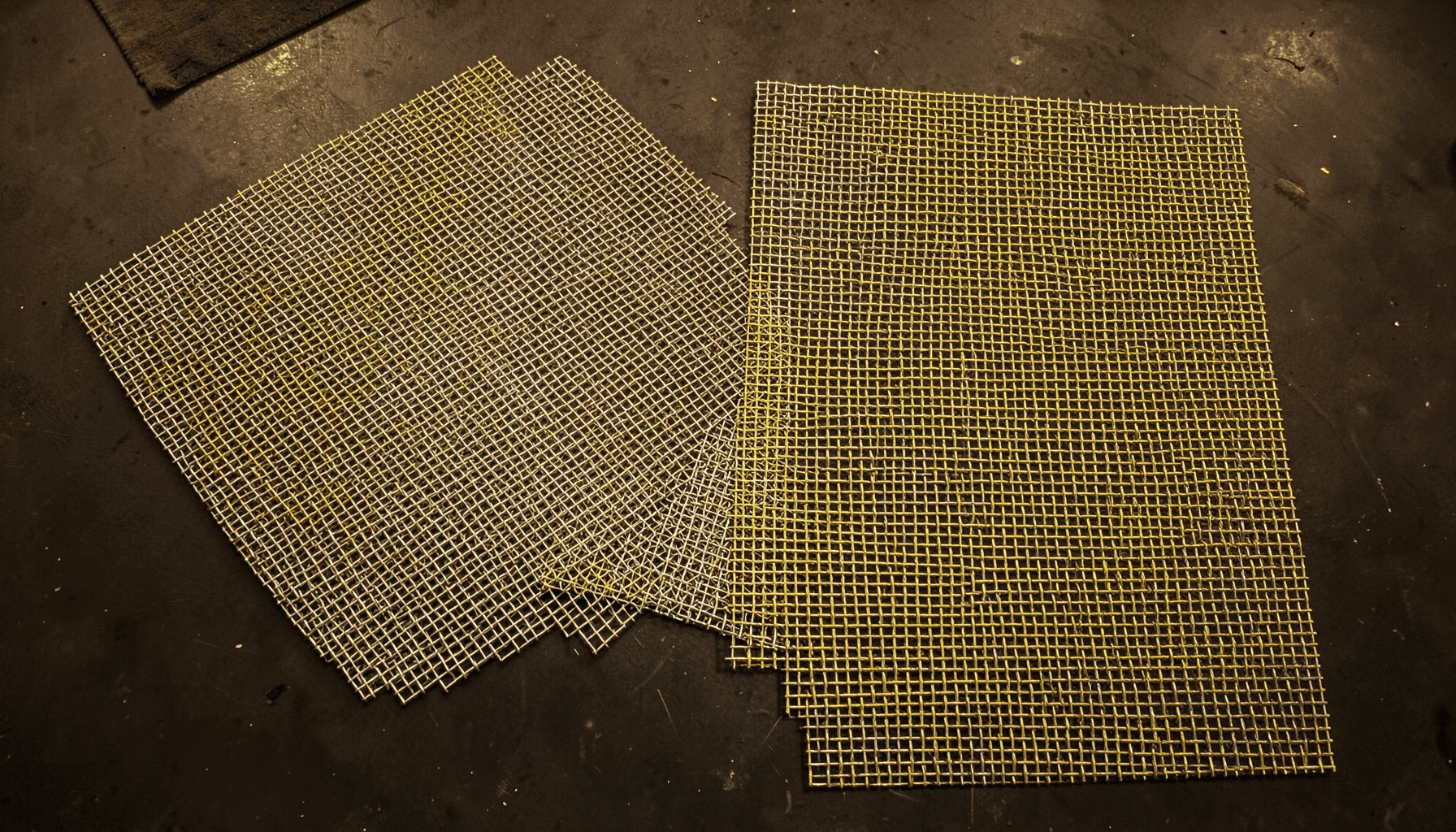
Welded mesh is useful when rigidity and fixed openings are priorities. Each intersection is joined to create a stable panel that resists shifting and supports consistent product spacing. Woven mesh can provide flexibility and a broad range of opening sizes, making it suitable for filtration, washing, draining, and applications where gentle contact is important.
Strength depends on more than material grade. Larger wire diameters, closer openings, reinforced borders, support bars, and formed frames can increase load capacity. A custom basket may use heavier mesh at the base and lighter mesh on the sides to balance durability, weight, drainage, and cost.
Thermal stability is another advantage. Stainless steel maintains useful mechanical performance across the temperature changes found in blanching, cooking, freezing, and sterilization. It does not absorb water, swell, or become soft when exposed to heat in the way some non-metallic materials may.
Efficient Drainage, Heating, And Product Separation
The open pattern of stainless steel basket mesh is central to efficient processing. Water can pass through during washing, oil can drain after frying, and hot air or steam can circulate around individual products. Better circulation helps create more even treatment and can reduce the time required for certain operations.
Mesh openings should be selected according to the product size and process objective. A fine wire mesh can retain small particles, seeds, granules, and cut pieces. A larger opening can improve flow around bulky vegetables, seafood, meat portions, or packaged components. The correct aperture helps prevent product loss while maintaining adequate drainage and ventilation.
Basket geometry also affects production results. Perforated or expanded designs may suit some applications, but woven or welded wire mesh offers distinct advantages where open-area percentage and visual inspection matter. Operators can see whether a basket is fully loaded, whether residue remains, and whether products have been evenly distributed.
For automated lines, consistent basket dimensions are essential. Uniform mesh panels and accurately formed frames help baskets move smoothly through guides, hoists, racks, and washing stations. Custom fabrication can account for conveyor width, tank depth, stacking height, and lifting equipment.
Material And Design Choices At A Glance
The best basket specification depends on the food, temperature, cleaning program, load, and handling method. The following comparison provides a practical starting point for evaluating common stainless steel mesh configurations.
| Design consideration | Common option | Primary benefit | Suitable applications |
|---|---|---|---|
| Stainless steel grade | 304 stainless steel | Reliable corrosion resistance and economical service | General washing, blanching, drying, storage, and food handling |
| Stainless steel grade | 316 stainless steel | Improved resistance to chlorides and aggressive chemicals | Seafood, salted products, acidic processing, and demanding washdown areas |
| Mesh construction | Welded wire mesh | High rigidity, stable openings, and strong support | Heavy-duty baskets, racks, cooking containers, and automated handling |
| Mesh construction | Woven wire mesh | Flexible opening patterns and broad filtration choices | Rinsing, draining, screening, and delicate product handling |
| Opening size | Fine aperture | Retains small pieces and improves separation | Granules, seeds, sliced foods, and fine filtration |
| Opening size | Large aperture | Maximizes airflow, drainage, and visibility | Bulky products, washing, cooling, and drying |
| Surface finish | Smooth polished or passivated finish | Easier cleaning and improved resistance to surface contamination | Sanitary food contact and frequent washdown |
| Structural details | Reinforced frame and handles | Better lifting strength and shape retention | Loaded baskets, stacking systems, and industrial transfer |
These options can be combined. For example, a seafood processor may require 316 stainless steel, welded mesh, reinforced lifting points, and a relatively open pattern for rapid drainage. A bakery or dry-food operation may prioritize a fine aperture, lightweight frame, and smooth finish for easy release and cleaning.
Lower Maintenance And Longer Service Life
A durable food processing basket can reduce replacement frequency and help stabilize operating costs. Stainless steel resists many forms of wear associated with washing, temperature cycling, and repeated contact with processing equipment. Its long working life makes it suitable for reusable baskets that circulate continuously within a plant.
Routine maintenance remains important. Operators should remove food residue promptly, inspect welds and handles, and avoid cleaners that are incompatible with the selected grade. Contact with ordinary steel tools or storage racks can introduce particles that cause surface discoloration, even when the stainless steel itself has good corrosion resistance.
Passivation, electropolishing, or other appropriate finishing processes can improve surface condition after fabrication. These treatments may remove free iron and support a cleaner, more uniform surface. The required finish should be discussed in relation to food contact, cleaning chemicals, appearance, and budget.
Replacing a damaged basket is not the only cost to consider. Bent containers can interrupt conveyor movement, spill products, damage machinery, or create extra sorting work. A properly reinforced stainless steel design helps preserve dependable operation and supports a safer workplace.
Custom Fabrication For Processing Lines
Standard baskets may work for simple washing or storage, but custom stainless steel mesh baskets are often more effective when space and process requirements are specific. A manufacturer can adjust length, width, depth, mesh opening, wire diameter, rim profile, feet, partitions, and lifting points to suit the equipment already in use.
Custom fabrication is valuable for products with unusual dimensions or delicate surfaces. Internal dividers can separate different items or control product depth. Rounded corners can support easier discharge and cleaning. Hinged lids, removable trays, stacking feet, and reinforced bases can be added where the production method requires them.
A reliable specification should include the food type, maximum load, operating temperature, cleaning chemicals, contact time, conveyor or rack dimensions, and expected handling frequency. Drawings, samples, or photographs of existing equipment can help clarify the design. These details allow the basket to be engineered for actual working conditions rather than estimated use.
Shuo Ke Wire Mesh Product Technology Co., Ltd. produces and processes stainless steel mesh products for industrial and architectural applications. Its manufacturing capability supports tailored wire mesh solutions using different materials, mesh forms, finishes, and structural configurations. For food processing baskets, the focus can remain on hygienic construction, dependable strength, drainage performance, and compatibility with the customer’s workflow.
Practical Selection Priorities
When evaluating stainless steel baskets for a processing facility, procurement and engineering teams should review the full operating cycle rather than choosing by appearance alone.
- Select 304 or 316 stainless steel according to salt, acidity, cleaning chemicals, and moisture exposure.
- Match mesh opening size and wire diameter to the smallest product, target drainage rate, and maximum load.
- Specify smooth welds, rounded edges, and an accessible surface finish for efficient sanitation.
- Add reinforced rims, support bars, handles, or stacking features where repeated industrial handling is expected.
- Confirm basket dimensions and lifting points against conveyors, tanks, racks, washers, and storage areas.
These priorities help connect material selection with measurable production needs. They also make it easier to compare quotations from different suppliers, since the requested performance characteristics are clearly defined.
A quality basket should support the whole process: loading, treatment, drainage, transfer, cleaning, inspection, and storage. Considering every stage can prevent costly redesigns and ensure that the mesh container performs well after installation.
Stainless steel mesh gives food processors a durable and adaptable foundation for reusable baskets. Its hygienic surface, resistance to corrosion, mechanical strength, open-area performance, and customization potential make it suitable for demanding production environments. With the right grade, mesh pattern, structure, and finish, a basket can improve handling efficiency while supporting consistent sanitation practices.
Contact Shuo Ke Wire Mesh Product Technology Co., Ltd. to develop stainless steel food processing baskets matched to your product, equipment, cleaning method, and production demands. Share your dimensions and operating conditions for a purpose-built mesh solution designed for reliable service.