The Aesthetic Appeal of Weathered Steel in Outdoor Mesh Partitions
Weathered steel brings a distinctive combination of texture, warmth, and structural character to outdoor design. Its rust-toned surface changes gradually with exposure, creating a living finish that can make a metal partition feel more connected to soil, stone, timber, and planting. When shaped into perforated panels, woven mesh, or laser-cut screens, this material offers privacy and spatial definition without creating a visually heavy barrier.
The appeal goes beyond color. A weathering steel screen can act as an architectural backdrop, wind filter, boundary marker, or decorative focal point. Its naturally developed patina gives each installation a slightly different appearance, while the open structure of mesh preserves daylight and allows air to move through the space.
For landscape designers, architects, contractors, and property owners, the main challenge is turning that visual appeal into a reliable outdoor product. Material selection, panel geometry, drainage, installation details, and the surrounding environment all affect the final result. A carefully engineered custom mesh partition can deliver the desired aged-metal appearance while remaining practical for long-term use.
Why weathered steel works so well outdoors
Weathering steel is valued for its controlled oxidation process. Under suitable conditions, the surface develops a dense protective patina that slows further corrosion. The resulting finish ranges from orange and copper tones to deep russet and brown, depending on the climate, exposure, age, and surface preparation.
This earthy palette fits naturally into gardens, courtyards, public plazas, hospitality venues, and residential landscapes. Unlike bright stainless steel or painted aluminum, weathered steel does not compete strongly with greenery or natural materials. It can frame a view, separate functions, or guide movement while maintaining a grounded, understated presence.
The visual effect becomes especially interesting when the material is used as architectural mesh. Openings break up the solid rust-colored surface and create changing patterns of light and shadow. From a distance, a perforated screen may appear monolithic; at close range, the cutouts reveal depth, transparency, and craftsmanship.
Design possibilities for mesh partitions
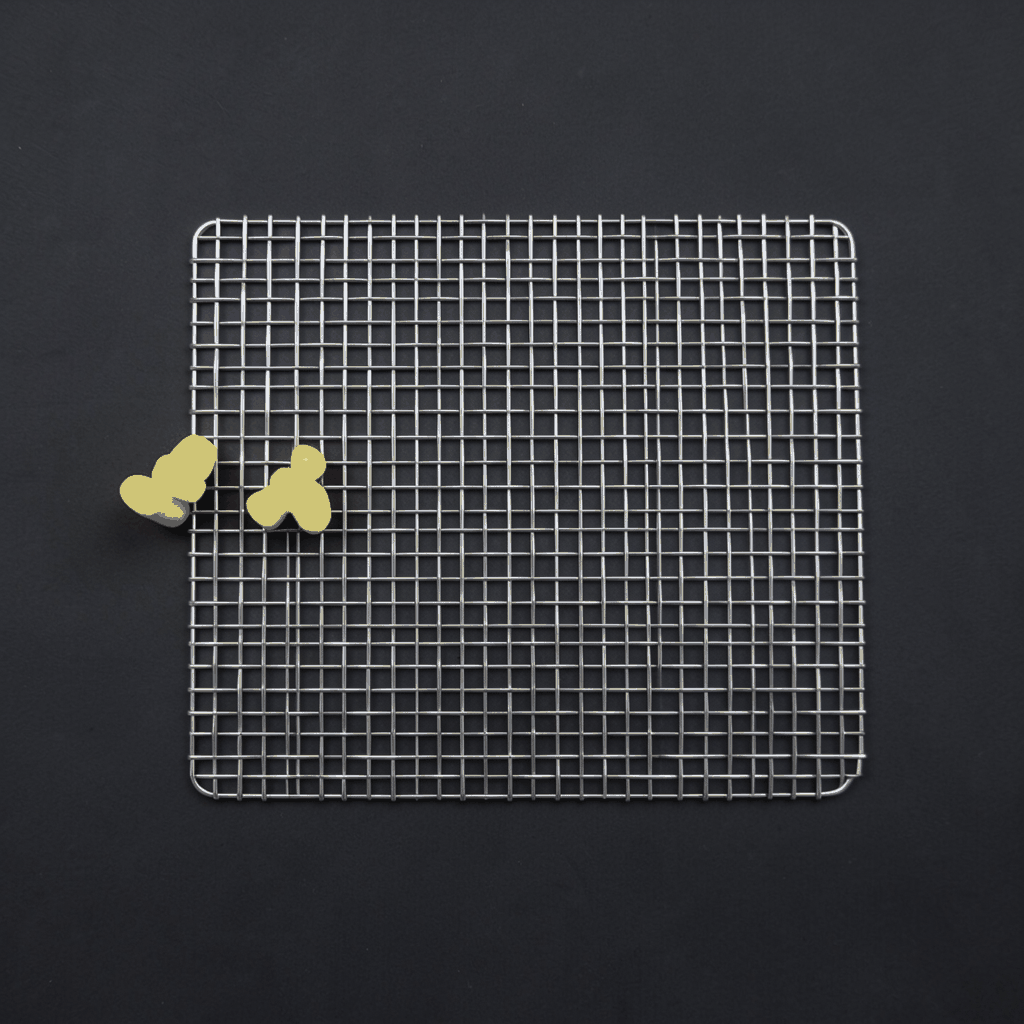
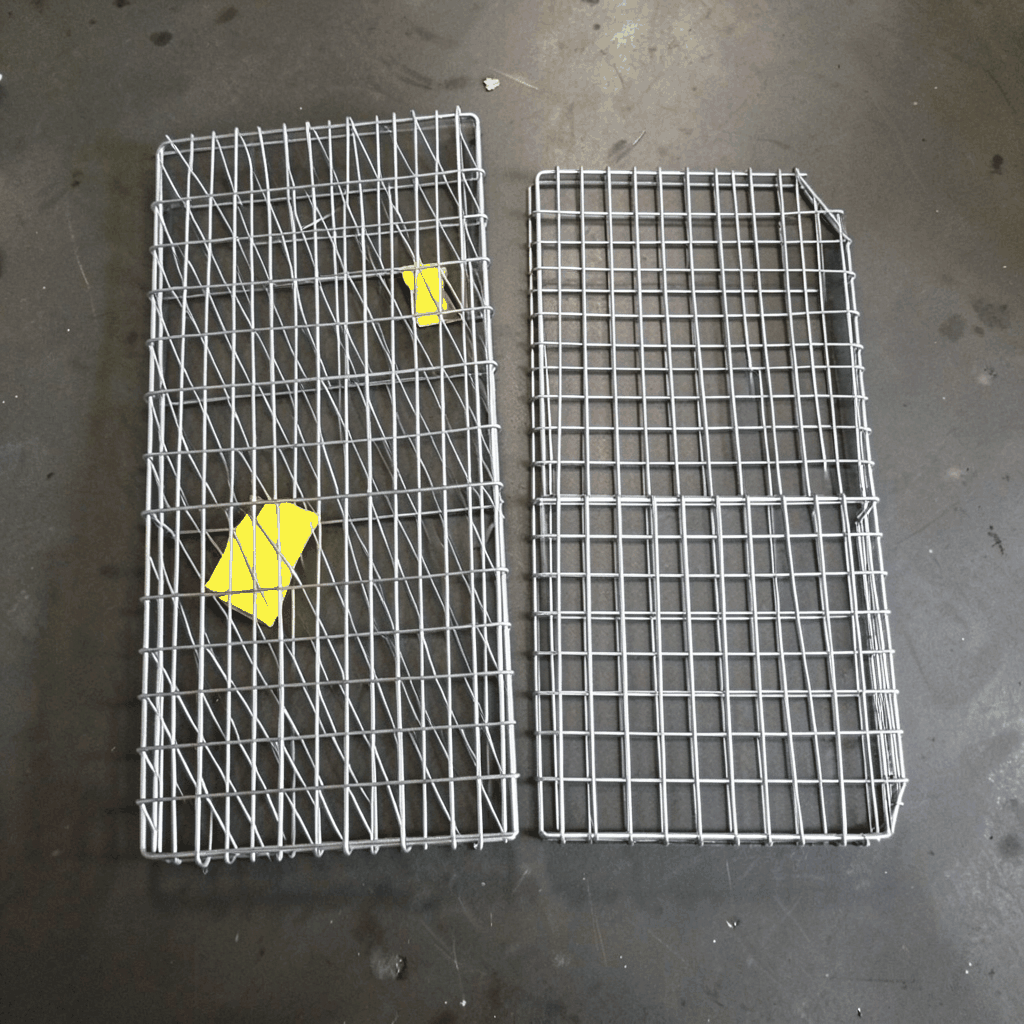
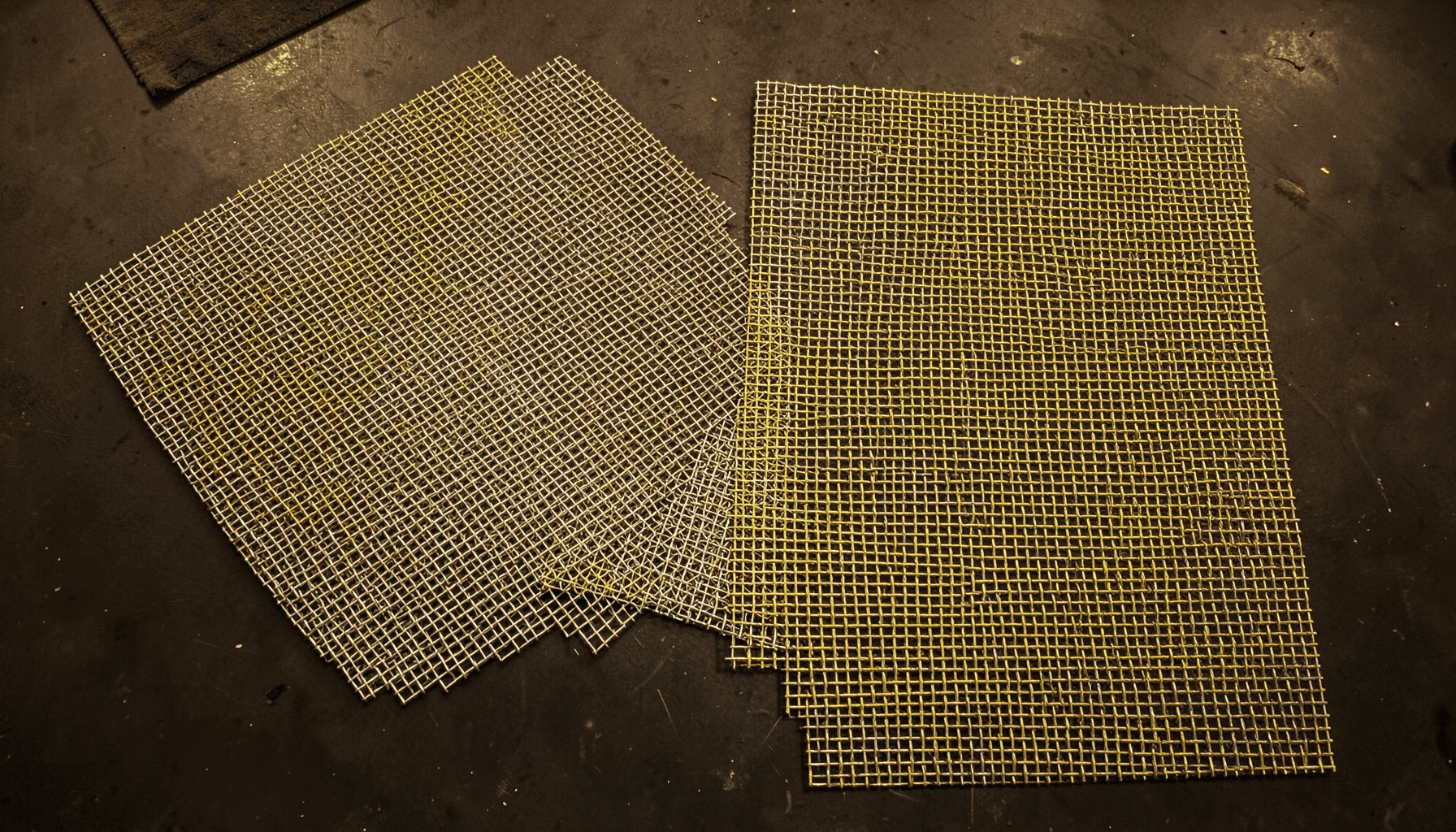
Outdoor metal partitions can be produced in many forms, including expanded metal, woven wire mesh, perforated sheet, decorative chain mesh, and laser-cut panels. Weathered steel is particularly effective when the design balances solid and open areas. A dense pattern can provide stronger screening, while a more open pattern can preserve views and improve ventilation.
Laser-cut screens allow designers to introduce botanical motifs, geometric compositions, branding elements, or abstract patterns. The patina softens the precision of the cut lines and gives the finished panel an artisanal quality. Perforated panels can be specified with round, square, slotted, or custom openings, allowing the degree of privacy and daylight to be controlled.
Mesh partitions also work well in combination with other materials. A weathered steel infill may be installed within a black powder-coated frame, a masonry wall, a timber structure, or a stainless steel support system. These combinations create contrast and help the screen relate to existing architecture. In a garden, for example, a rust-colored panel can echo timber decking and clay paving while standing apart from them through its metallic texture.
Balancing appearance, privacy, and airflow
A successful outdoor screen must perform as well as it looks. The opening ratio, wire diameter, panel thickness, and pattern direction all influence how a partition handles sunlight, wind, visibility, and security. A screen designed for visual separation may require a different configuration from one intended to protect a walkway or define a poolside boundary.
The following comparison illustrates how common configurations can support different design objectives. Exact performance depends on dimensions, mounting conditions, material grade, and fabrication details.
| Mesh or screen configuration | Visual effect | Typical privacy level | Suitable outdoor uses | Key design consideration |
|---|---|---|---|---|
| Open woven wire mesh | Lightweight, transparent, textured | Low to medium | Garden dividers, balconies, walkways | Select aperture and wire size for the required view control |
| Perforated weathering steel panel | Strong graphic surface with controlled openings | Medium to high | Courtyards, entrances, restaurants, plazas | Check pattern density, edge strength, and drainage |
| Laser-cut decorative screen | Custom artwork or geometric shadow pattern | Medium to high | Feature walls, landscape partitions, branded spaces | Maintain enough solid material around cuts for rigidity |
| Expanded metal mesh | Directional texture with strong airflow | Medium | Fences, service zones, rooftop screens | Orientation affects transparency and perceived privacy |
| Dense metal curtain or chain mesh | Flexible, layered appearance | Medium | Covered terraces, interiors opening outdoors, event spaces | Provide secure top and bottom fixing to control movement |
Wind loading deserves particular attention. A fully solid panel can create significant pressure, while an open mesh reduces wind resistance. In exposed locations, the support frame, posts, anchors, and foundations should be designed as a complete system rather than treating the mesh as an isolated decorative element.
The color and density of the screen also change with viewing distance. Dark openings may make a panel appear more private from far away, while direct sunlight can increase transparency. Sample panels are useful for assessing the real relationship between patina, aperture, lighting, and background planting before production begins.
Managing patina, runoff, and site conditions
The weathered appearance develops through cycles of moisture and drying. In a suitable environment, the surface gradually becomes more uniform and stable. During the early stages, however, runoff may carry iron-colored residue onto paving, concrete, stone, or adjacent walls. This is a design and installation issue that should be considered before the screen is positioned.
Drainage details can reduce staining. Raised supports, drip edges, gravel strips, concealed channels, and deliberate separation from light-colored paving help direct water away from sensitive surfaces. The lower edge of a partition should not sit in standing water or continuously damp soil. Good airflow around the panel supports a more consistent patina and reduces localized moisture retention.
Weathering steel is not ideal for every climate. Constantly wet conditions, marine atmospheres, salt spray, and areas exposed to de-icing chemicals can interfere with the development of a stable protective layer. In these settings, stainless steel, aluminum, galvanized steel, painted iron, or a specialized weathered-effect finish may provide a more predictable result.
The chosen substrate and finish should match the environment as well as the visual brief. A manufacturer experienced in architectural and industrial mesh can help assess whether the intended metal, thickness, aperture, and surface treatment are appropriate for the installation. Compatibility between the mesh, frame, fasteners, and support posts is equally important, especially where dissimilar metals could create galvanic corrosion.
Engineering details that protect the visual concept
A refined appearance depends on more than the face of the panel. Cut edges, folded returns, welded joints, fixing points, and frame proportions all remain visible in an outdoor partition. A custom fabrication process can coordinate these elements so that the structure looks intentional from every angle.
Panel dimensions should account for transportation, thermal movement, access, and replacement. Large sheets may need stiffening ribs or intermediate supports to prevent vibration and deflection. Narrower modules can simplify installation and make it easier to follow a curved wall, stepped landscape, or irregular property boundary.
Fasteners should be selected for corrosion resistance and visual compatibility. Concealed fixings can produce a cleaner architectural finish, while exposed bolts may suit an industrial design language. Where the partition meets a floor or wall, a small expansion gap can help prevent trapped moisture and accommodate movement.
Decorative mesh must also be safe for its setting. Edges should be finished to reduce sharp projections, openings should be reviewed where children may be present, and the screen should be secured against accidental impact. For fences, gates, guardrails, and municipal installations, local load, safety, and accessibility requirements should guide the final specification.
Choosing a surface treatment and material strategy
Natural patina is only one route to the weathered steel look. Some projects require a consistent color from the first day, while others benefit from gradual change. A pre-weathered surface, chemical treatment, paint system, or textured powder coating can offer greater control over appearance and reduce early runoff concerns.
The decision should be based on the project’s maintenance expectations and surroundings. A naturally oxidized panel may be ideal for a rural garden or landscape feature where variation is welcome. A hospitality entrance with pale stone paving may call for a stabilized or factory-treated surface. In a coastal project, a corrosion-resistant base metal with a weathered-color finish may be a more dependable solution.
Shuo Ke Wire Mesh Product Technology Co., Ltd. provides customized architectural and industrial metal mesh solutions for decorative and practical applications. Its manufacturing range includes stainless steel, aluminum, copper, iron, and other alloys, along with products such as laser-cut screens, partitions, fences, gates, guardrails, and cladding. For a weathered-metal concept, the specification can be developed around the required appearance, openness, strength, and environmental exposure.
Early communication is valuable. Drawings, photographs of the site, preferred pattern references, target dimensions, and installation conditions help the fabricator assess the best construction method. A physical sample or finish panel can then confirm the patina tone, transparency, edge treatment, and relationship with nearby materials.
Practical choices for a lasting installation
- Define the primary function first: privacy, wind filtering, boundary control, decoration, security, or a combination of these.
- Review the opening ratio and pattern at both close and long viewing distances before approving production drawings.
- Plan drainage and runoff control so early oxidation does not stain paving, walls, or other finished surfaces.
- Match the metal, frame, fasteners, and finish to the site climate, especially in coastal or persistently damp locations.
- Request samples and detailed fabrication drawings to verify color, thickness, edge safety, support spacing, and fixing positions.
Bring the design into production
Weathered steel can give an outdoor mesh partition a strong sense of place while preserving the practical advantages of a ventilated, adaptable screen. Its changing patina, natural color range, and compatibility with laser-cut and perforated designs make it suitable for gardens, commercial landscapes, public projects, entrances, terraces, and architectural feature walls.
The best result comes from treating the partition as a complete engineered product rather than a decorative sheet. Material behavior, pattern density, frame construction, drainage, fasteners, and site conditions should be resolved together. Share your drawings, dimensions, preferred mesh style, and environmental requirements with Shuo Ke Wire Mesh Product Technology Co., Ltd. to develop a customized metal mesh solution that brings the weathered-metal concept into a durable finished installation.