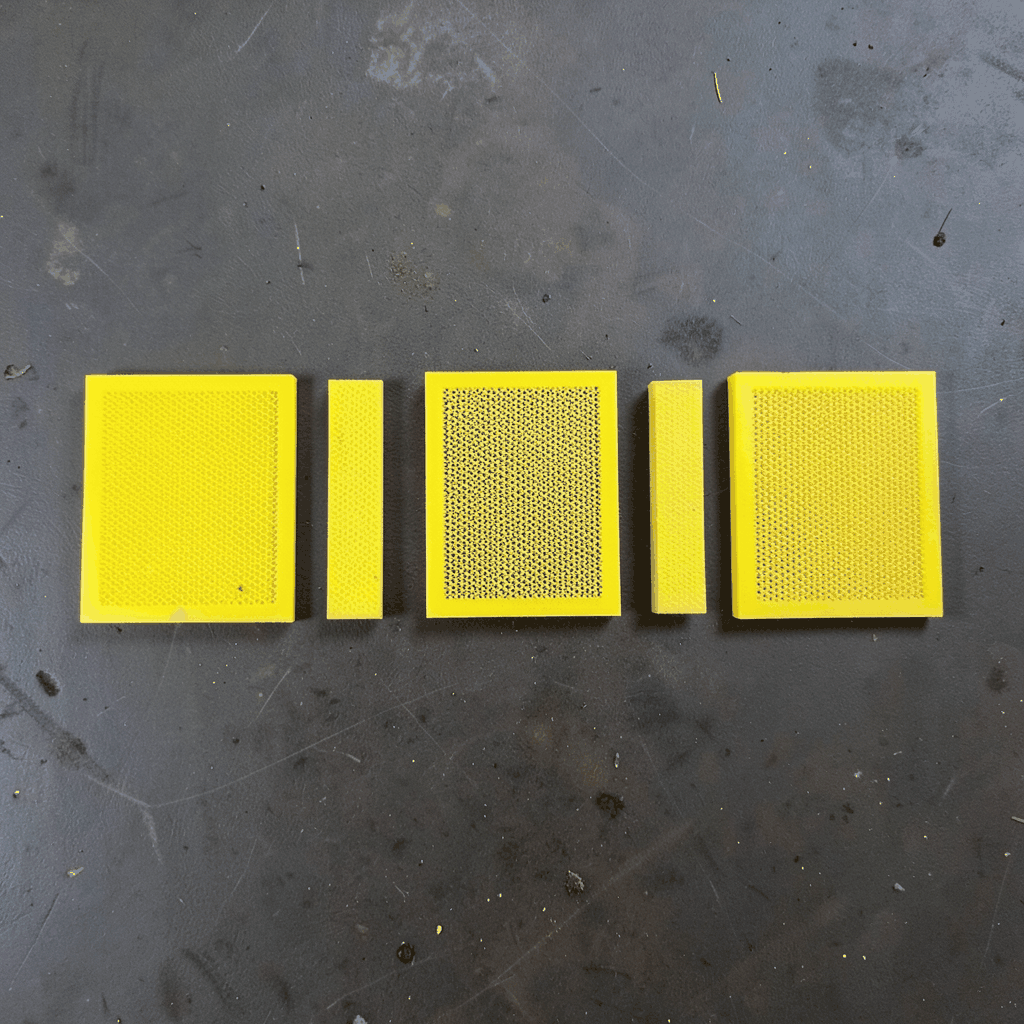
The Benefits of Perforated Metal Mesh in HVAC Diffusers
Heating, ventilation, and air-conditioning systems depend on controlled air distribution. Diffusers must release conditioned air evenly, limit uncomfortable drafts, and support a clean architectural appearance. Perforated metal mesh provides a practical surface for this task because its openings can be engineered for airflow while the panel remains strong, stable, and visually refined.
Unlike many lightweight diffuser materials, metal can withstand repeated cleaning, temperature changes, impact, and long-term exposure to indoor humidity. The perforation pattern also offers design flexibility, allowing HVAC grilles and ceiling panels to coordinate with walls, elevator interiors, partitions, lighting, and other architectural features.
For commercial buildings, healthcare facilities, factories, transportation areas, and residences, the best diffuser material must balance air performance with appearance and service life. Stainless steel, aluminum, copper, and coated iron each offer different advantages, while custom hole size, open area, panel thickness, and finish allow the assembly to match the demands of its installation.
Why perforated panels suit air distribution
A perforated metal diffuser uses a regular arrangement of holes to pass supply air from a plenum or duct into the occupied space. The openings can be round, square, slotted, or formed in a custom pattern. By adjusting the hole diameter and spacing, engineers can influence the percentage of open area and the resistance encountered as air passes through the face.
This controlled resistance helps distribute air across the visible surface instead of allowing it to rush through a few large openings. A well-designed perforated face can promote a more uniform air stream, reducing hot and cold spots near the diffuser. It can also help direct air along a ceiling or wall, depending on the geometry of the assembly and the position of the openings.
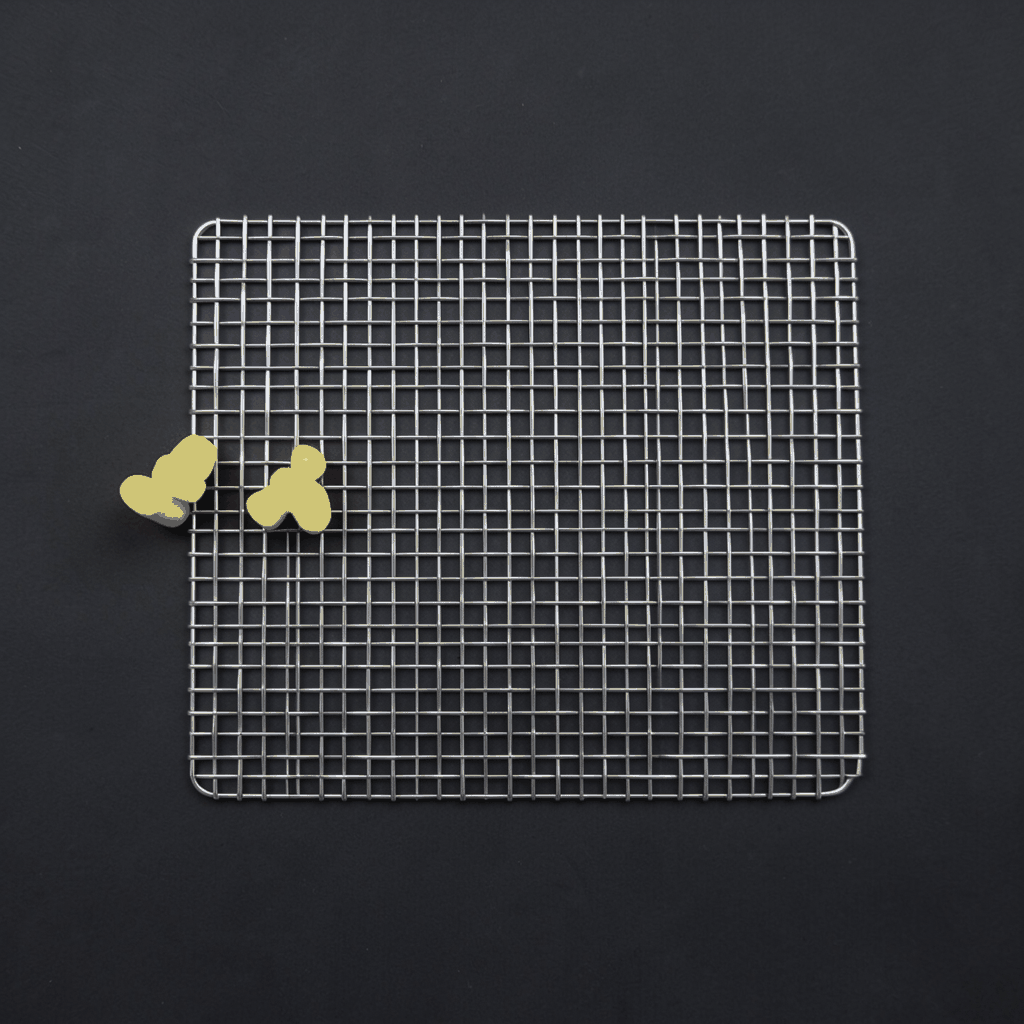
Metal mesh panels are particularly useful when the diffuser needs to be integrated into a larger architectural system. They can be fabricated as removable ceiling panels, linear air grilles, wall-mounted vents, or custom screens around mechanical equipment. The same material language may then continue across adjacent cladding or decorative elements.
Airflow, acoustics, and comfort
The percentage of open area is one of the most important factors in diffuser performance. A low open area can increase pressure loss and fan energy demand, while an excessively open pattern may provide insufficient control over air velocity. The correct balance depends on the airflow rate, duct pressure, diffuser dimensions, room height, and desired throw pattern.
Perforated sheets and decorative mesh should therefore be specified as engineered HVAC components rather than selected solely for appearance. Hole diameter, pitch, panel depth, backing components, and internal baffles can all affect the final result. Coordination between the mesh manufacturer, HVAC engineer, and installer helps ensure that the attractive face does not restrict the system beyond its design parameters.
Acoustic behavior is another consideration. A metal diffuser can contribute to noise control when paired with a plenum, acoustic backing, or sound-absorbing material. The perforated surface allows sound energy to interact with the absorption layer behind it, while the rigid face protects that layer and presents a neat finish. This approach is useful in offices, classrooms, hotels, hospitals, and public interiors where mechanical noise must remain unobtrusive.
| Consideration | Perforated metal diffuser | Solid metal grille | Plastic diffuser |
|---|---|---|---|
| Airflow control | Flexible through hole size and open area | Depends heavily on louvers or slots | Generally flexible, depending on molded design |
| Mechanical strength | High, especially in stainless steel or thicker aluminum | High | Moderate; may deform under impact or heat |
| Cleaning resistance | Excellent with a suitable finish | Excellent | Varies with material and chemical exposure |
| Appearance | Customizable patterns and finishes | Functional, often more conventional | Smooth and uniform |
| Temperature stability | Very good | Very good | Material-dependent |
| Acoustic integration | Can support acoustic backing | Possible, though design-dependent | Common in specialized systems |
| Service life | Long with correct material selection | Long | Can shorten with ultraviolet exposure, heat, or impact |
Hygiene and maintenance advantages
In ventilation applications, surfaces collect dust, fibers, grease, and airborne contaminants. A diffuser that is difficult to clean can gradually lose its appearance and may contribute to poor indoor air quality. Perforated metal provides a durable, washable face that can be wiped, vacuumed, or removed for deeper cleaning.
Stainless steel is especially suitable for food processing areas, medical environments, commercial kitchens, laboratories, and high-traffic public spaces. Its corrosion resistance supports frequent sanitation routines, while a smooth brushed or polished finish can reduce the visual impact of fingerprints and minor marks. Aluminum is also easy to maintain and offers a lighter option for suspended ceiling systems.
The pattern must be selected with cleaning in mind. Very small openings may trap dust if the panel lacks suitable access or a removable design. A diffuser assembly should include practical service access so filters, dampers, plenums, and internal insulation can be inspected without damaging the face panel. Rounded perforations and clean edges are often preferable where frequent handling is expected.
Durability matters in areas where maintenance teams move ladders, carts, and equipment near ceiling or wall diffusers. Properly specified stainless steel can remain reliable under repeated contact and cleaning, much as it does in demanding elevator interiors; this discussion of stainless steel durability illustrates why material choice is important in heavily used spaces.
Material and finish selection
Stainless steel is a strong choice when corrosion resistance, hygiene, and long-term appearance are priorities. Grades such as 304 and 316 are commonly considered for architectural and industrial environments, with the appropriate grade depending on humidity, chemicals, salt exposure, and cleaning agents. Brushed, satin, mirror, and bead-blasted finishes can support different design objectives.
Aluminum offers a lower-weight alternative for large diffuser faces, suspended panels, and installations where handling simplicity matters. It can be anodized or powder coated in a broad range of colors. Anodizing preserves a metallic appearance and offers surface protection, while powder coating is useful when the diffuser must match a branded interior scheme or a specific ceiling color.
Copper creates a distinctive warm appearance and may be chosen for hospitality, retail, cultural, and residential projects. Its surface can change over time, so the design team should decide whether natural patination is desirable or whether a protective coating is required. Iron and mild steel can provide economical strength, but they generally need paint, powder coating, galvanizing, or another protective treatment to resist corrosion.
The finish should be compatible with the cleaning method, indoor humidity, and adjacent materials. It is also important to review edge treatment, weld quality, mounting holes, and dimensional tolerances. A visually attractive perforated sheet will perform poorly if it vibrates, rattles, exposes sharp edges, or fails to sit flush with the surrounding ceiling or wall.
Design integration across interiors
HVAC diffusers often occupy prominent positions in ceilings and walls, so they should be treated as part of the interior design rather than hidden afterthoughts. Perforated metal can create a discreet, continuous surface that blends with a ceiling grid, or it can become a deliberate decorative feature. Custom patterns may echo a corporate logo, geometric motif, façade language, or nearby partition design.
The panel format can also be adapted to different architectural conditions. Large removable panels simplify maintenance in open ceilings, while narrow linear sections suit corridors and perimeter zones. Wall-mounted diffusers may be coordinated with metal cladding, acoustic screens, or ventilation grilles. In retail and hospitality projects, colored or metallic finishes can support a particular atmosphere without compromising the practical role of the air outlet.
Visual consistency is easier when the same manufacturer supplies related metal components. A specialist processor can coordinate perforation, cutting, bending, welding, framing, and surface treatment across multiple products. This helps maintain consistent color, hole geometry, and edge detailing between HVAC diffusers and other custom metalwork.
The design should still preserve access to dampers, filters, sensors, and duct connections. A concealed fixing system can provide a clean appearance, but it must allow maintenance personnel to remove the face safely. Hinged, clipped, magnetic, or screw-fixed solutions may be selected according to panel weight, security requirements, and service frequency.
Specification details that support performance
A successful diffuser specification begins with the air-side requirements. Designers should identify the required airflow volume, face velocity, pressure drop, noise limit, throw distance, and room comfort targets. These figures guide the open area and panel dimensions more reliably than visual preference alone.
The metal face should be supported by a rigid frame when the panel is large or exposed to vibration. Reinforced edges, folded returns, and concealed stiffeners can prevent oil-canning and maintain a flat appearance. Where the diffuser is installed in a suspended ceiling, the frame should be coordinated with the grid module and neighboring ceiling materials.
Fire performance and indoor environmental requirements may also influence the assembly. Metal is non-combustible in its basic form, but coatings, sealants, insulation, and backing materials must be assessed as part of the complete system. In healthcare and food-related applications, the specification should address cleanability, resistance to disinfectants, and the avoidance of dirt-collecting recesses.
Samples and mock-ups are valuable before production. A small sample can reveal how the perforation looks under actual lighting, whether the finish matches adjacent surfaces, and whether the proposed hole size provides the desired visual density. It can also help verify panel rigidity, access details, and the relationship between the metal face and the internal diffuser components.
Practical recommendations for project teams
- Select the perforation pattern according to airflow, pressure, noise, and cleaning requirements rather than appearance alone.
- Match stainless steel, aluminum, copper, or coated steel to the project’s humidity, chemical exposure, impact risk, and maintenance routine.
- Coordinate diffuser dimensions and access panels with ductwork, ceiling grids, lighting, sprinklers, sensors, and fire protection systems.
- Request finish samples and a physical mock-up when color, reflectivity, perforation density, or custom geometry is important.
- Confirm edge safety, frame strength, fixing method, and removal procedure before approving the final fabrication drawings.
Perforated metal mesh gives HVAC diffusers a valuable combination of controlled ventilation, structural reliability, cleanability, and architectural flexibility. Its performance depends on careful engineering, but its visual adaptability makes it suitable for both discreet mechanical integration and expressive interior design.
Shuo Ke Wire Mesh Product Technology Co., Ltd. can support projects requiring custom metal mesh processing for architectural and industrial applications. By coordinating material selection, perforation, fabrication, finishing, and dimensions, project teams can develop diffuser faces that serve the air-conditioning system while reinforcing the character of the space. Engage the manufacturer early in the design process to turn the required airflow and appearance into a durable, production-ready solution.