How Wire Diameter Shapes Decorative Curtain Strength
Decorative metal curtains bring movement, texture, and controlled separation to interiors and façades. They can define zones in hotels, restaurants, retail spaces, offices, public buildings, and private residences while preserving light and visual connection. Their appearance may seem lightweight, but each curtain is an engineered assembly in which wire diameter has a direct effect on stability, service life, and handling.
The diameter of the wire influences far more than the visual scale of a mesh. It affects the tensile capacity of individual links, the weight carried by the track, resistance to bending, dimensional stability, and the curtain’s response to wind, impact, cleaning, and repeated movement. Selecting a suitable specification therefore requires a balance between decorative character and practical performance.
The impact of wire diameter on the strength of decorative curtains becomes clearer when it is considered together with metal type, weave or link construction, opening size, panel dimensions, and installation method. A well-matched system can maintain its appearance for years, while an under-specified system may stretch, deform, or place excessive stress on its supporting hardware.
Why wire diameter matters
A larger wire diameter creates a greater cross-sectional area. This gives each wire or spiral link more resistance to tensile forces, local bending, and deformation. In a chainmail-style metal curtain, thicker links are generally better suited to heavy panels, frequent operation, and locations where the mesh may be touched or exposed to accidental impact.
Thicker wire also increases bending stiffness. A fine wire curtain can flex easily and produce a soft, flowing appearance, which is useful for decorative room dividers and feature backdrops. A heavier wire produces a more structured drape and is less likely to curl, kink, or lose its intended geometry when the panel is moved along a track.
The increase in diameter also adds mass. This can improve hanging stability, especially where air movement is present, but it raises the load carried by the header, rollers, hooks, and fixing points. A strong curtain material cannot compensate for an undersized support system. The complete assembly must be evaluated as one load-bearing unit.
How strength is transferred through a curtain
Decorative curtains rarely fail because of a single wire breaking in isolation. Problems often begin at connections, bends, welded joints, hooks, track carriers, or edge terminations. A curtain panel transfers its weight through many individual links, but the upper rows and attachment points carry a larger share of the load than the lower portion.
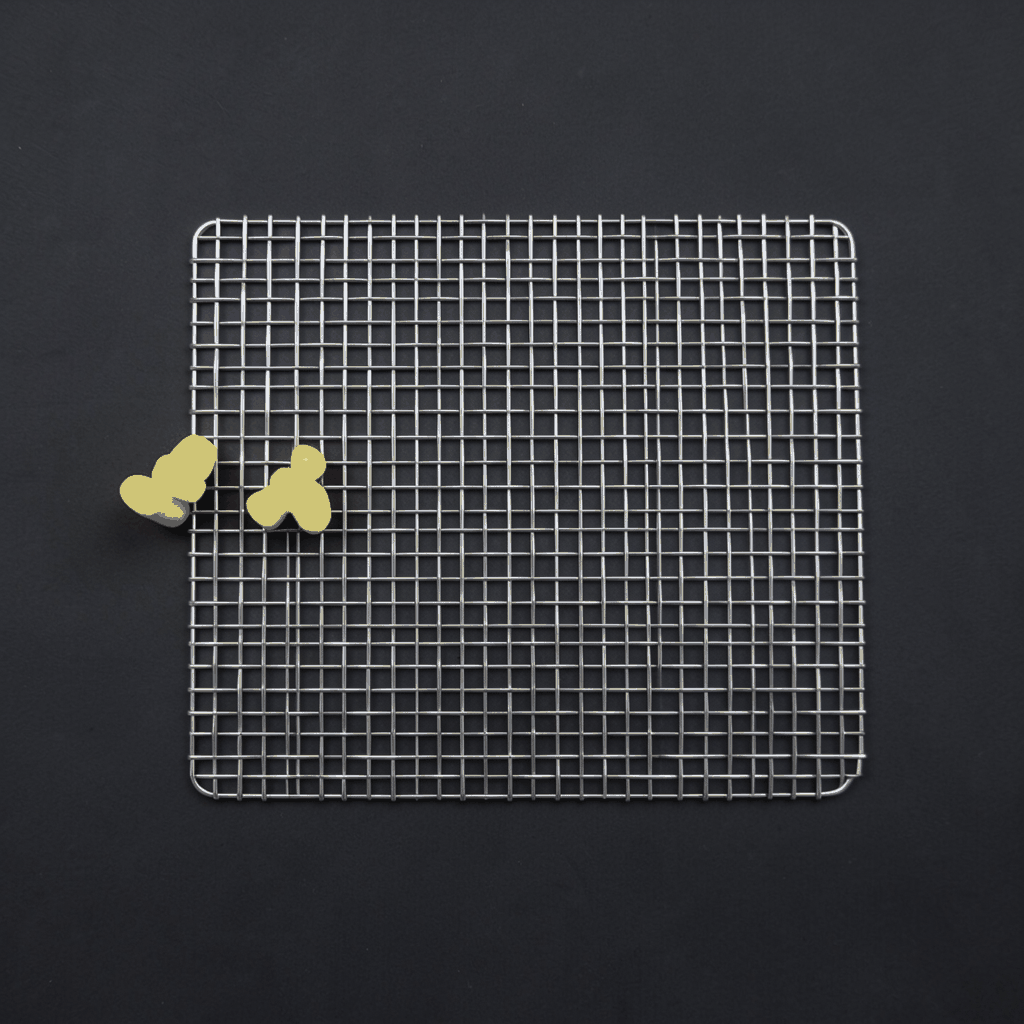
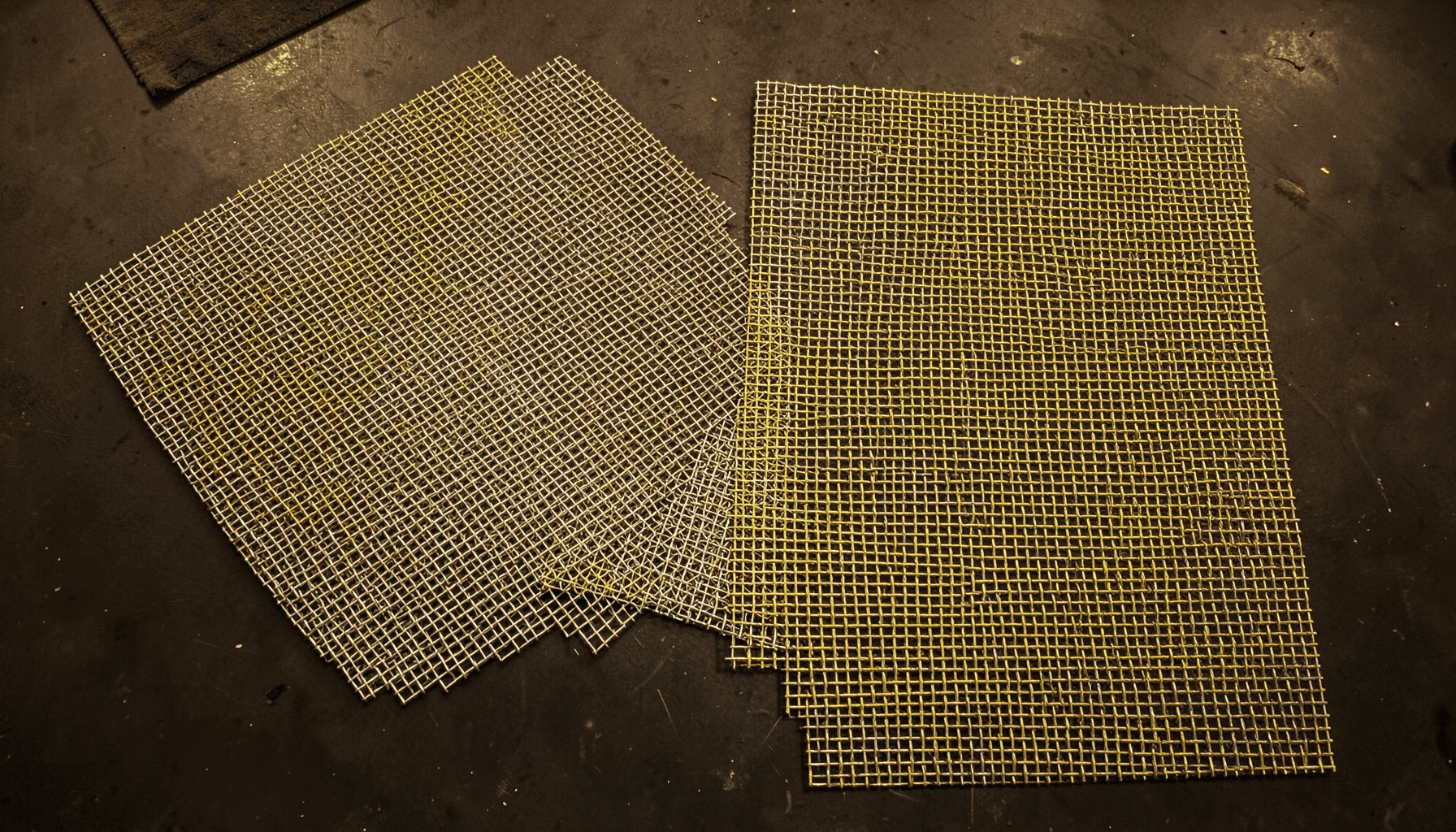
The wire diameter affects the capacity of these connections. In a woven wire mesh curtain, thicker wires can improve resistance to pulled or distorted intersections. In a ring mesh curtain, the diameter contributes to the ring’s resistance to opening. If the curtain is frequently drawn, pushed aside, or exposed to impact, the ability of each connection to retain its shape becomes especially important.
Panel width and height also influence load distribution. A tall, wide panel places more demand on the track and may experience greater sway. Increasing wire diameter may improve panel stability, but it can also produce a heavier assembly that requires more carriers and stronger anchoring. For large architectural installations, the specification should include panel segmentation, carrier spacing, header design, and edge reinforcement.
Diameter, material, and opening size
Wire diameter should not be selected independently from the material. Stainless steel, aluminum, copper, and iron-based alloys have different densities, tensile properties, corrosion resistance, and surface characteristics. Stainless steel is often selected for demanding interior or exterior applications because it combines strength with good resistance to moisture and oxidation. Aluminum can reduce dead load, although a larger diameter may be needed to achieve comparable stiffness in some designs.
The mesh opening changes the visual and mechanical behavior of a curtain. Small openings create a denser surface and may distribute contact forces across more material. Large openings reduce the amount of metal per square meter and can produce a lighter visual effect, but the individual links or wires may need greater diameter to retain shape and resist distortion.
Surface finish also matters. Polished, brushed, colored, plated, or coated finishes can affect appearance and maintenance requirements, but the underlying metal and wire size remain the primary structural factors. For outdoor or humid environments, the correct alloy and finish should be chosen alongside diameter so that corrosion does not gradually reduce the effective strength of the wire.
Comparing common wire diameters
The following values provide a general design comparison for decorative metal curtains. Actual performance depends on alloy, mesh pattern, link geometry, opening size, panel dimensions, edge treatment, and support hardware. Relative descriptions are more useful during early design than treating diameter as a standalone load rating.
| Approximate wire diameter | Visual character | Relative flexibility | Typical strength behavior | Suitable applications |
|---|---|---|---|---|
| 0.8–1.0 mm | Fine, delicate, highly open | Very high | Best for light-duty decorative use; more sensitive to kinking and local deformation | Room dividers, display features, small panels |
| 1.2–1.5 mm | Balanced and refined | High | Provides improved shape retention and moderate handling resistance | Hospitality interiors, retail spaces, office partitions |
| 1.6–2.0 mm | Noticeably substantial | Medium | Better resistance to impact, repeated movement, and panel distortion | Large partitions, elevator accents, feature walls |
| 2.5–3.0 mm | Bold and architectural | Lower | High stiffness and stronger link retention; increased support load | Heavy curtains, public areas, selected exterior installations |
A fine wire is often appropriate when the main objective is a light visual screen with limited physical contact. A medium diameter is a practical choice for many commercial interiors because it balances decorative movement, durability, and manageable weight. Heavy wire is more suitable when the curtain must retain a firm profile or tolerate regular handling.
These ranges are not universal product grades. A 1.5 mm stainless steel mesh and a 1.5 mm aluminum mesh will not behave identically, and a tightly connected ring curtain will respond differently from a loose woven mesh. Manufacturers should confirm weight per square meter, allowable panel size, recommended carrier spacing, and fixing details for the selected construction.
Matching diameter to installation conditions
The installation environment determines how much mechanical demand a decorative curtain will experience. A stationary panel behind a reception desk may require only moderate resistance to handling. A movable partition in a restaurant or conference center may be opened and closed several times each day. A curtain near an entrance can encounter contact from bags, carts, clothing, or passing equipment.
Air movement is another consideration. Interior air-conditioning systems can cause light panels to sway, while exterior installations may face wind pressure and suction. In these situations, wire diameter, panel weight, mesh porosity, and fixing strength must be reviewed together. A denser or heavier curtain may move less dramatically, but it can receive greater wind force and place higher loads on the header.
Support hardware should be sized for the completed panel rather than for the mesh material alone. Track carriers need enough capacity to roll smoothly without binding. Hooks and eyelets should resist wear at the attachment points. End stops, brackets, and anchors must be compatible with the substrate. Where a curtain is installed above people, secure retention and secondary safety measures deserve particular attention.
Preserving appearance through service life
Strength is closely connected to appearance. A curtain that develops stretched links, uneven sagging, bent edges, or permanent waves may remain technically attached but no longer achieve the intended architectural effect. Choosing a suitable wire diameter helps the mesh retain its original geometry under normal use.
The finish and cleaning method should be considered during specification. Abrasive cleaning can mark polished surfaces, while unsuitable chemicals may damage coatings or accelerate corrosion. Regular inspection should focus on the top attachment row, moving carriers, welded or crimped connections, and areas that receive repeated contact.
For long panels, an appropriate wire diameter can reduce visible changes between the center and edges. However, diameter alone cannot prevent sagging if the span is excessive or the header is poorly supported. Dividing a large elevation into manageable panels, adding properly designed edge members, or using intermediate supports may produce a better result than simply selecting a much heavier mesh.
A practical specification checklist
A reliable selection process begins with the required visual effect and then tests that choice against real operating conditions. The manufacturer should receive accurate information about panel dimensions, whether the curtain is fixed or movable, expected contact, indoor or outdoor exposure, and the preferred metal finish.
Early coordination prevents the common mistake of choosing a mesh by sample appearance and reviewing strength only after the track or frame has been designed. The mesh, header, carriers, anchors, and surrounding structure should be developed as a coordinated architectural metalwork package.
- Define the panel height, width, operating direction, and expected movement frequency.
- Select the alloy according to corrosion exposure, weight limits, finish, and required durability.
- Compare wire diameter with opening size, link geometry, and the desired level of drape.
- Calculate the completed curtain weight and confirm track, carrier, hook, and anchor capacity.
- Review edges, corners, access points, and areas likely to receive accidental impact.
- Request production samples or technical data for weight, finish, tolerances, and recommended installation details.
Custom engineering for decorative metal mesh
Standard mesh sizes can serve many interior applications, but custom processing is valuable when a project has unusual dimensions, high traffic, specific color requirements, or demanding environmental conditions. A manufacturer experienced in stainless steel, aluminum, copper, iron, and alloy mesh can adjust the wire diameter, opening pattern, panel size, edge treatment, and hanging components as a coordinated solution.
Customization may also involve combining a decorative curtain with wall cladding, elevator finishes, laser-cut screens, guardrails, or other architectural metalwork. Consistent finishes and carefully matched proportions can help different elements read as part of one design language. For municipal, commercial, and residential projects, the technical requirements may vary considerably even when the visual concept is similar.
Shuo Ke Wire Mesh Product Technology Co., Ltd. provides decorative and industrial mesh processing for applications that require both visual refinement and practical engineering. Its production approach can support project-specific choices involving material, diameter, finish, panel construction, and installation format. Detailed drawings, samples, and load-related information should be reviewed before production begins, especially for large or movable curtains.
Specify the curtain as a complete system rather than selecting wire diameter in isolation. Share the design intent, dimensions, operating conditions, finish requirements, and support details with Shuo Ke’s technical team to develop a durable decorative mesh solution suited to the project.