Mechanical Strength of Wire Weaves in Industrial Filters
Industrial filters rely on woven wire mesh to retain particles while allowing air, liquids, gases, or process materials to pass through. The weave determines how wires support one another, how much open area remains available, and how well the filter withstands pressure, vibration, cleaning, and repeated loading. Selecting mesh by aperture size alone can therefore lead to premature deformation or failure.
Plain weave, twill weave, Dutch weave, and specialty patterns each provide a different balance of tensile strength, rigidity, permeability, and resistance to wear. Wire diameter, alloy, mesh count, layer arrangement, and edge construction also influence the finished filter’s performance. A suitable specification must match the mesh to the actual operating environment rather than treating all woven wire products as interchangeable.
For process equipment, hydraulic systems, air filtration units, chemical plants, food machinery, and municipal installations, mechanical reliability is closely connected to filtration accuracy. A well-designed wire mesh filter keeps its opening geometry under load and remains serviceable during cleaning and maintenance. Shuo Ke Wire Mesh Product Technology Co., Ltd. manufactures and processes customized metal mesh products in stainless steel, aluminum, copper, iron, and other alloys for demanding industrial and architectural applications.
How The Weave Controls Load Distribution
In woven wire mesh, warp wires run lengthwise while weft wires cross them. Their interlacing pattern determines how forces travel through the screen. A simple weave with frequent crossings can hold wires securely in position, while a more open or layered construction may improve flow capacity but require greater control of wire tension and support.
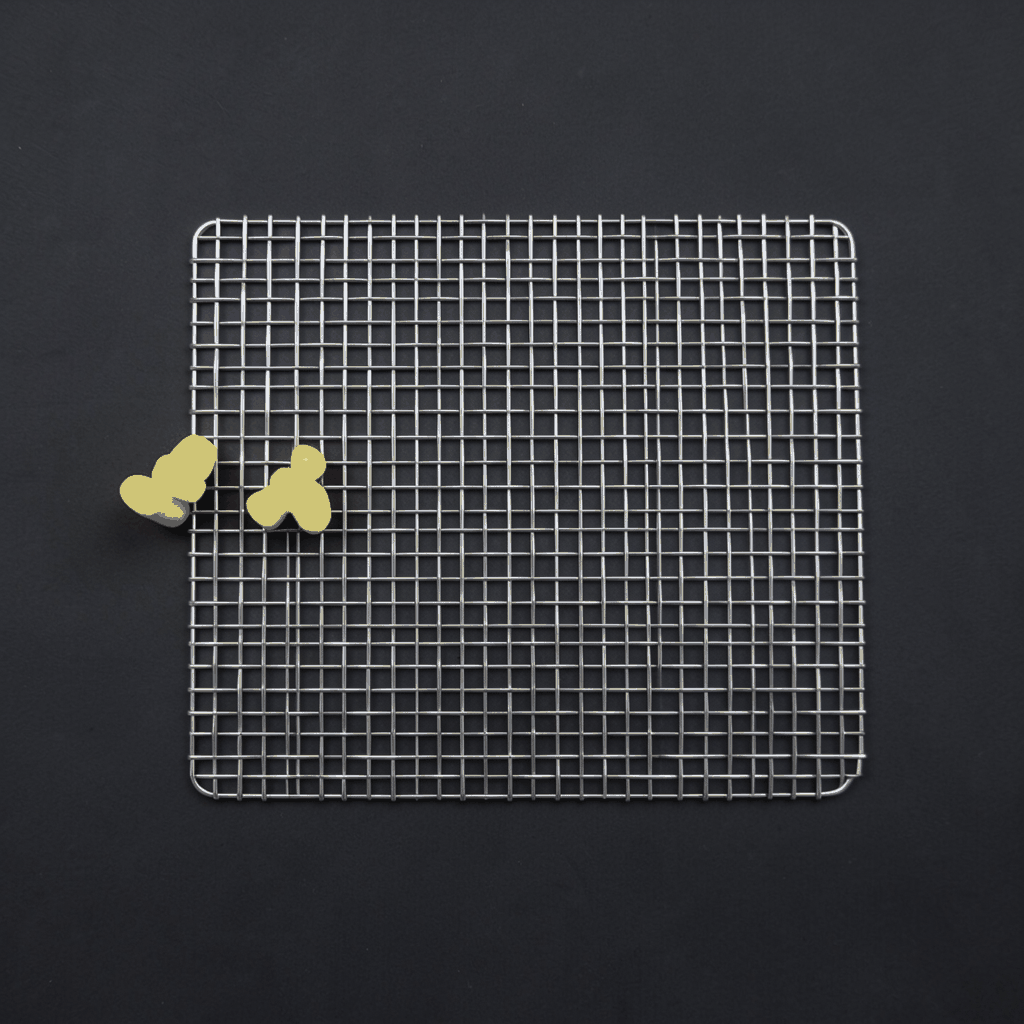
Plain weave places each weft wire alternately over and under successive warp wires. This produces a stable, uniform structure with good dimensional accuracy. Because the wires are tightly locked at every crossing, plain weave is widely used for general-purpose filtration, screening, guards, and support layers. Its limitation is that fine mesh can become relatively rigid and may have lower resistance to severe abrasion than a heavier twill or Dutch construction.
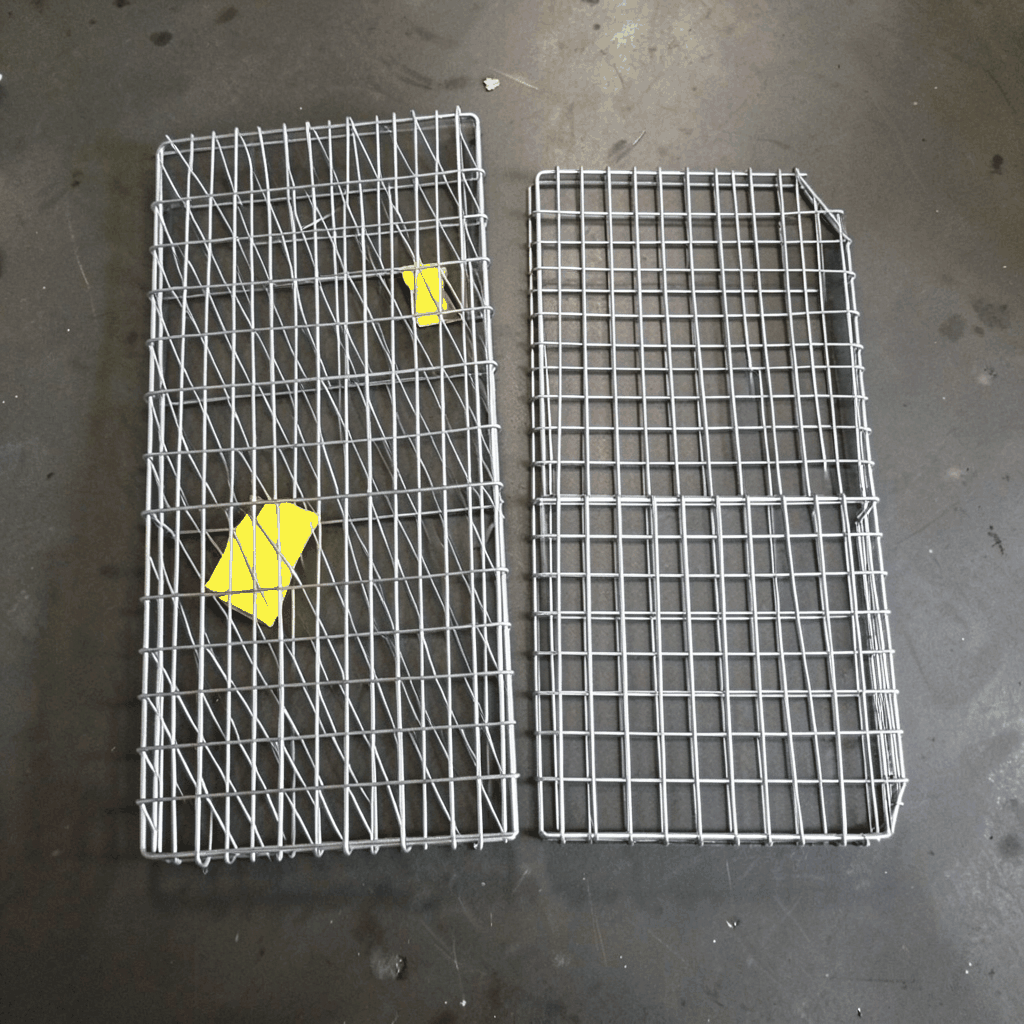
Twill weave passes a wire over and under two or more opposing wires in a repeated diagonal pattern. The diagonal arrangement allows thicker wires to be used with a fine opening, increasing tensile capacity and improving resistance to bending. Twill mesh can also be woven more densely than plain mesh, making it suitable where a small aperture and higher mechanical load must be combined.
Dutch weaves use different wire diameters or mesh arrangements in the warp and weft directions. The filtering wires can be fine, while the supporting wires provide longitudinal strength. This creates a strong filter medium with controlled openings and a high ability to retain fine particles. The reduced open area can increase pressure drop, so the filtration rate and pump or fan capacity must be checked during design.
Strength Characteristics Of Common Weaves
Mechanical strength has several dimensions. Tensile strength describes the force required to pull the mesh apart, while burst strength concerns resistance to pressure applied across the filter surface. Rigidity affects how much the panel deflects between supports, and fatigue resistance determines how well it survives cyclic pressure, vibration, and repeated cleaning.
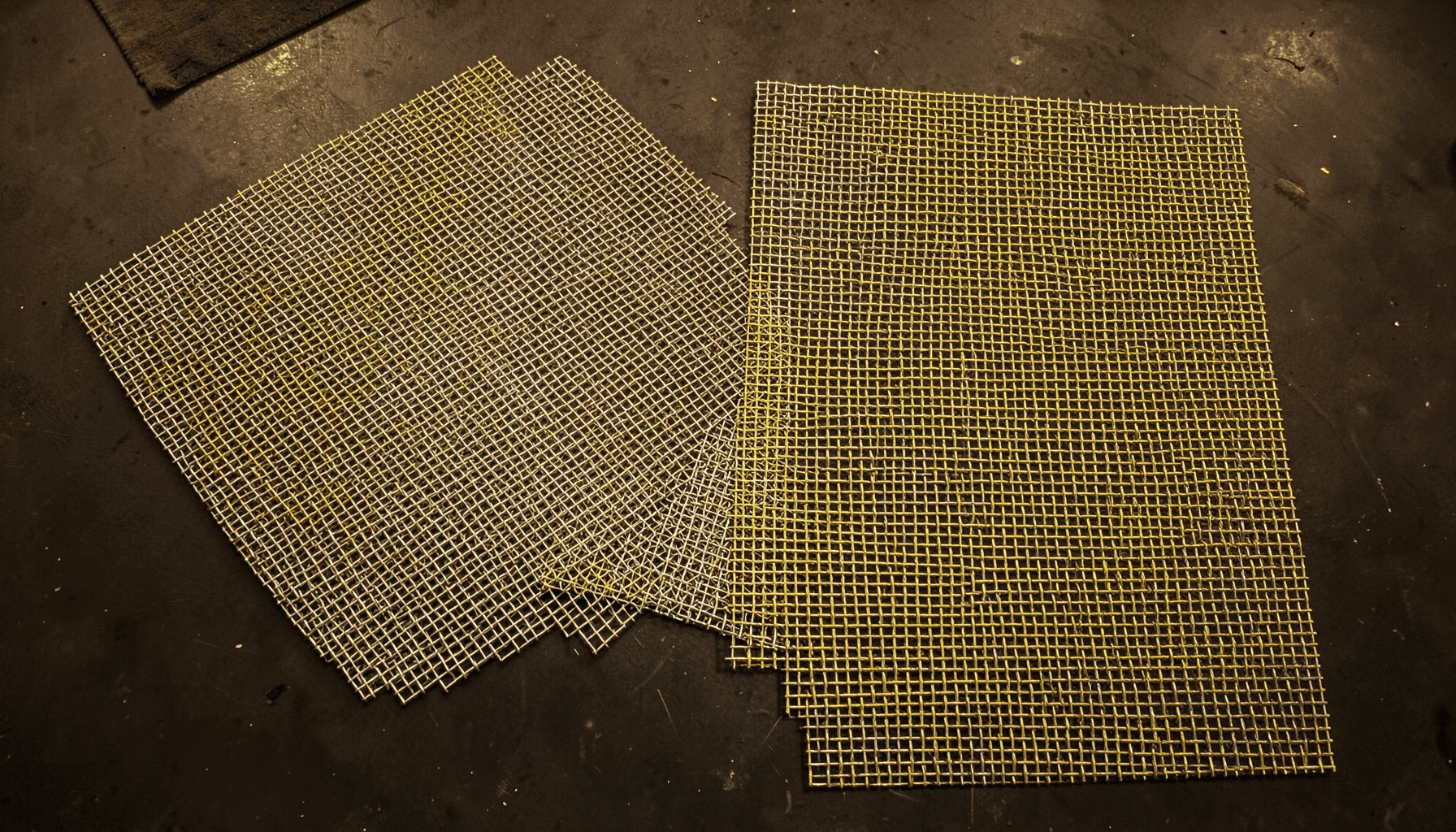
Plain weave usually offers predictable strength in both directions. It is easy to cut, form, weld, and support, which makes it practical for filter baskets, screens, and cartridges. Heavy-gauge plain mesh can provide substantial stiffness, although increasing wire diameter reduces the available filtration area and may make the material more difficult to shape.
Twill weave generally performs well when fine filtration must withstand mechanical handling or pressure. Its offset crossings distribute stress along a diagonal path and can reduce the tendency of fine wires to break at a single straight line. The weave may be more flexible than an equivalent plain mesh, so it should be supported correctly when exposed to high differential pressure.
Dutch weave is often selected for high-pressure filtration and particle retention. Its dense surface resists wire displacement and can tolerate demanding flow conditions when properly supported. Reverse Dutch weave places the heavier wires in a different orientation from conventional Dutch weave, providing a useful combination of fine filtration and improved longitudinal strength. The correct arrangement depends on flow direction, cleaning method, and how the filter is mounted.
Comparing Wire Weave Performance
The following comparison describes typical tendencies rather than absolute ratings. Actual performance depends on alloy grade, wire diameter, mesh count, width, edge treatment, support spacing, temperature, and pressure conditions.
| Weave Type | Mechanical Strength | Filtration Behavior | Typical Advantages | Main Design Consideration |
|---|---|---|---|---|
| Plain weave | Balanced strength and dimensional stability | Consistent openings and moderate flow | Economical, versatile, easy to fabricate | Fine versions may be vulnerable to abrasion or distortion |
| Twill weave | High strength for fine openings; good resistance to deformation | Finer filtration with relatively strong wire support | Suitable for pressure, wear, and close particle retention | Can have lower open area and higher pressure drop |
| Dutch weave | Very high retention and strong filter surface | Fine filtration with dense wire arrangement | Effective for high-pressure and precision filtration | Requires careful flow and cleaning analysis |
| Reverse Dutch weave | Strong longitudinal support with fine filtering wires | Good fine-particle retention and structural stability | Useful for pressure-loaded filter elements | Orientation must match the load and mounting design |
| Five-heddle weave | High strength and smooth surface | High permeability with controlled openings | Good for hydraulic, polymer, and process filtration | More specialized and typically higher in cost |
Five-heddle weave is another option for applications that need high strength and relatively smooth wire surfaces. The pattern creates a strong support structure and can provide good flow characteristics. It is frequently considered for hydraulic filters, polymer melt filtration, and process screens where the filter must resist pressure while maintaining a controlled passage size.
Material And Wire Diameter Effects
The weave cannot be evaluated separately from the metal. Stainless steel grades such as 304 and 316 offer corrosion resistance and stable mechanical properties across many industrial environments. Grade 316 is often preferred where chlorides, saltwater, or aggressive process fluids are present. Carbon steel and iron mesh can provide useful strength at a lower initial cost, but protective coatings or controlled operating conditions may be needed to limit corrosion.
Aluminum has a low density and good corrosion resistance in suitable environments, making it useful where weight reduction matters. Its lower hardness and strength compared with many stainless steels can limit its use in abrasive or high-pressure filtration. Copper and copper alloys offer conductivity and particular corrosion characteristics, while specialized alloys may be selected for elevated temperature, chemical exposure, or unusual wear requirements.
A larger wire diameter generally increases tensile strength, stiffness, and resistance to abrasion. It also reduces open area and can increase pressure loss. Fine wire increases available filtration area for a given mesh count, but it is more sensitive to handling damage, fatigue, and erosion. The best specification balances wire diameter against aperture, flow rate, contaminant type, and expected service life.
Heat treatment, cold working, and the manufacturing process can alter hardness and ductility. A strong but excessively brittle wire may crack during forming or cleaning. For this reason, filter manufacturers should consider both ultimate strength and practical formability when producing cylinders, baskets, discs, panels, and pleated elements.
Pressure, Abrasion, And Fatigue In Service
Differential pressure is one of the most important loads on an industrial filter. As contaminants accumulate, resistance to flow rises and the pressure force across the mesh becomes greater. An unsupported panel may bow, stretch, or collapse even when the wire itself has a high tensile rating. Support grids, perforated plates, internal cores, and closer mounting intervals can significantly improve filter stability.
Abrasion occurs when particles slide across the wire surface or strike it at high velocity. Sand, mineral powders, metal fragments, and glass particles can gradually reduce wire diameter. A heavy twill or Dutch weave may last longer than a fine plain weave in such conditions, especially when made from a wear-resistant alloy. Flow turbulence should also be controlled because localized eddies can erode particular sections of the filter.
Fatigue develops when pressure, vibration, or mechanical movement is repeated over a long period. Wires may loosen at crossing points or fracture near welded seams, bends, and clamp areas. Rounded forming tools, uniform tension, correctly designed supports, and high-quality edge finishing help reduce concentrated stress. Filters used in pumps, compressors, engines, and vibrating screens should be assessed for cyclic loading rather than static pressure alone.
Backwashing and chemical cleaning add further stresses. Reverse flow can temporarily load the mesh in the opposite direction, while brushes or high-pressure jets can damage fine wires. A weave that performs well in forward filtration may require reinforcement if frequent backwash cycles are part of the process. Cleaning frequency, pressure, temperature, and fluid chemistry should be included in the selection process.
Designing The Filter For Reliable Strength
A mechanically strong wire weave still needs a suitable filter structure. Cylindrical elements benefit from internal support tubes or cages, while flat panels may need perimeter frames and intermediate ribs. The support should prevent excessive deflection without blocking too much active filtration area. Welded, clipped, folded, or reinforced edges must be designed so that load is transferred smoothly into the frame.
The direction of the weave matters when warp and weft wires have different diameters or functions. In Dutch and reverse Dutch constructions, the stronger direction should be aligned with the principal load where practical. Flow direction, filter orientation, lifting forces, and cleaning movement may all affect this decision. A custom drawing should identify mesh direction, seam location, support spacing, and allowable deflection.
Filtration accuracy also depends on opening shape and stability. If wires move under pressure, particles larger than the intended aperture may pass through, while a distorted surface can accelerate clogging. Precision weaving, controlled wire tension, and inspection of mesh count and opening size help maintain consistent performance. For critical applications, manufacturers may provide tensile data, material certificates, dimensional checks, and pressure test results.
- Specify the required particle retention size together with flow rate and allowable pressure drop.
- Identify the primary loads, including differential pressure, vibration, backwashing, abrasion, and handling.
- Select the alloy according to corrosion, temperature, hardness, and cleaning chemistry.
- Add support structures when the filter span, pressure, or contamination load could cause deflection.
- Confirm mesh direction, edge construction, and inspection requirements before production.
Choosing A Weave For The Application
Plain weave is a sensible choice for general screening, pre-filtration, air intake protection, and moderate-duty liquid filtration. It offers broad availability, straightforward fabrication, and stable openings. When the filter is exposed to heavy particles, repeated handling, or elevated pressure, a heavier wire or a more supportive weave may provide a longer operating life.
Twill and five-heddle weaves are useful when a fine aperture must coexist with mechanical strength. They are appropriate for hydraulic oil, polymer processing, fuel systems, and industrial fluids where pressure and cleanliness requirements are significant. Their permeability must be checked carefully because a fine, dense mesh can require a larger filter area to maintain the target flow rate.
Dutch and reverse Dutch weaves are strong candidates for precision filtration, high-pressure systems, and applications that require reliable fine-particle retention. They can be produced as discs, cylinders, cones, filter packs, and multilayer assemblies. A protective support layer may be added where the filtering surface is too fine to carry the full operating load by itself.
For architectural or municipal equipment, the appearance and fabrication method may matter alongside strength. Stainless steel mesh can combine corrosion resistance with a clean finish for visible screens, guards, and ventilation panels. Shuo Ke Wire Mesh Product Technology Co., Ltd. can process different metals and weave types into customized filter components and related metal mesh products, helping align filtration, structural, and design requirements.
A sound specification begins with the operating data: fluid or gas, temperature, pressure differential, contamination profile, cleaning process, service life, and available installation space. Engineers can then compare weave patterns, wire materials, support systems, and fabrication details based on measurable performance rather than mesh count alone.
Contact Shuo Ke Wire Mesh Product Technology Co., Ltd. with the required aperture, material, dimensions, flow conditions, and mechanical loads to develop a customized industrial filter mesh solution built for dependable service.