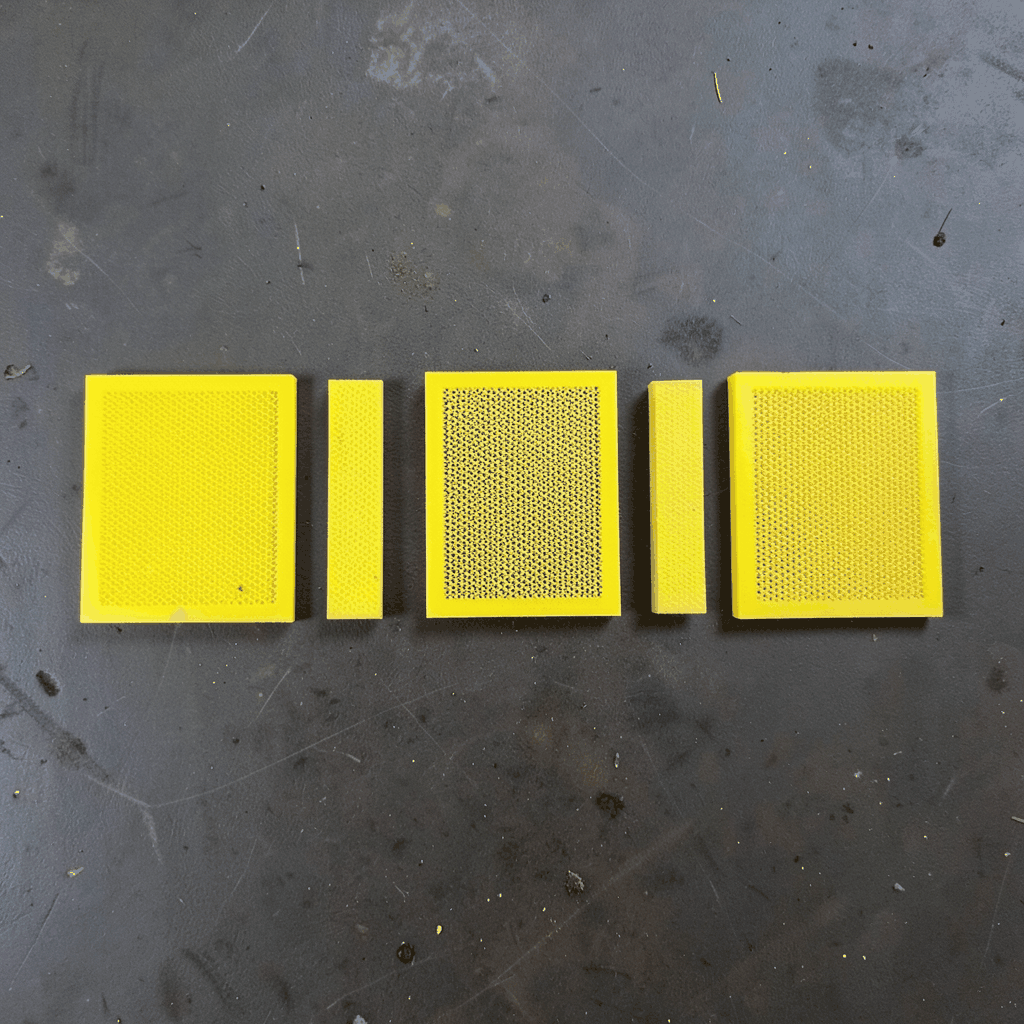
The Process of Annealing and Tensioning Architectural Wire Mesh Panels
Architectural wire mesh panels combine structural utility with a highly visible decorative role. They may serve as elevator cladding, ceiling features, space dividers, façade screens, balustrade infill, or protective barriers. In each application, the panel must retain a consistent pattern, stable dimensions, and a clean surface after fabrication and installation.
Two manufacturing operations have a major influence on that performance: annealing and tensioning. Annealing manages internal stress in the metal, while tensioning establishes the flatness and working geometry required for installation. When these stages are properly coordinated, mesh panels are easier to handle, less likely to buckle, and more capable of maintaining their intended appearance.
The correct process depends on the alloy, wire diameter, mesh construction, panel size, edge treatment, finish, and service environment. A qualified metal mesh manufacturer evaluates these factors together rather than treating heat treatment and tensioning as isolated production steps.
Why annealing matters in architectural mesh
Wire drawing, weaving, cutting, welding, rolling, and forming can all create residual stress in metal. These stresses may remain invisible when a panel leaves the loom, yet become apparent when the mesh is cut to size or fixed inside a frame. Typical symptoms include curling edges, uneven openings, local bowing, and dimensional movement during installation.
Annealing is a controlled heating and cooling process used to reduce internal stress and modify the material’s mechanical condition. Depending on the alloy and production objective, it can improve ductility, reduce brittleness, stabilize dimensions, and make the mesh more suitable for later forming or shaping. The process must be carefully controlled because excessive heat can soften the wire, alter the surface, or affect the regularity of the woven pattern.
Architectural mesh often requires a balance between flexibility and stability. A decorative partition may benefit from a more workable mesh that can be shaped around a frame, while a façade or guardrail panel may require stronger resistance to movement. Annealing parameters should therefore be selected according to the final use rather than applied as a universal recipe.
Preparing the mesh before heat treatment
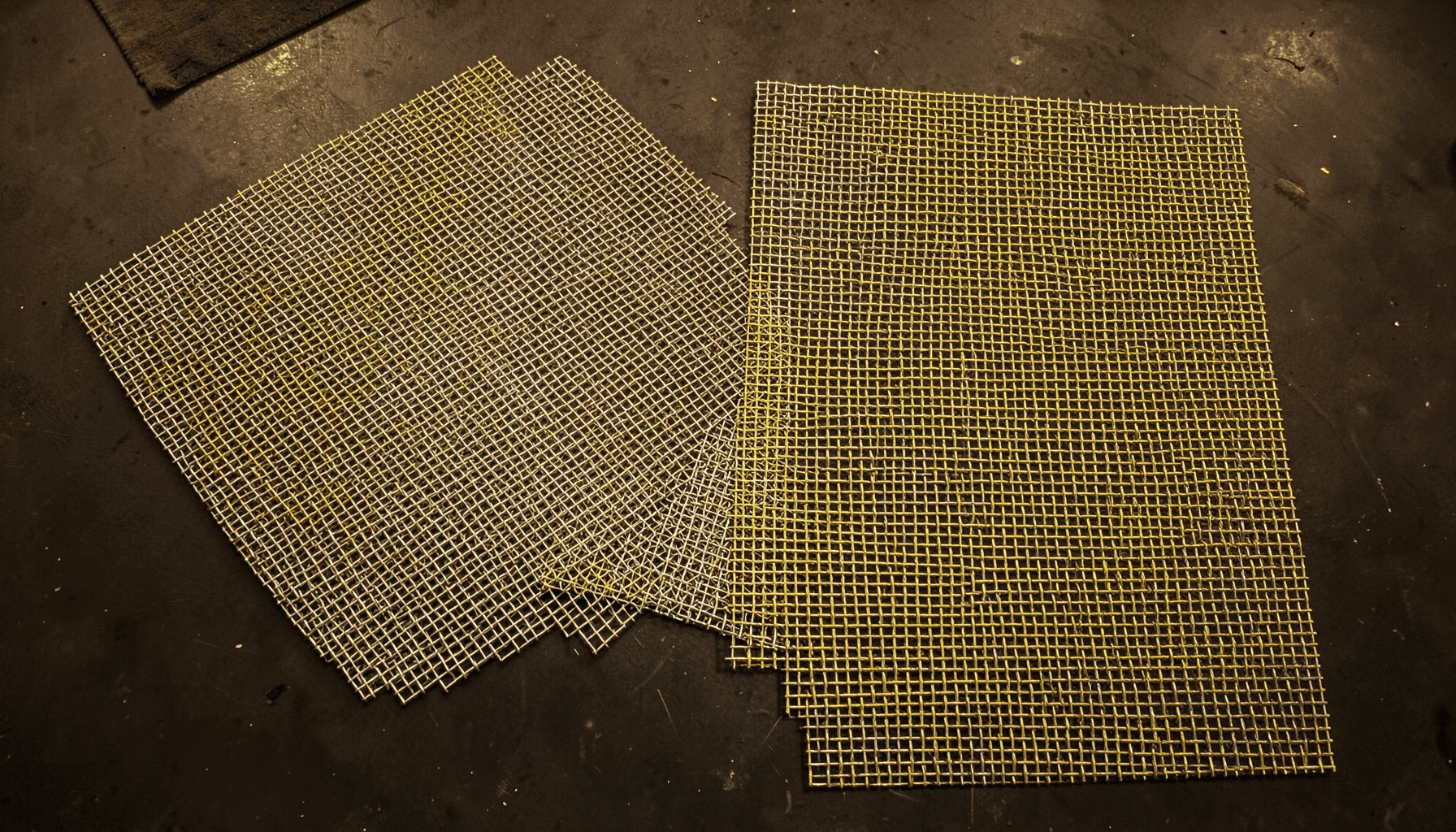
Before annealing, production personnel inspect the mesh construction, wire gauge, selvage, and panel dimensions. Woven mesh may contain plain weave, twill weave, Dutch weave, or heavier architectural patterns, and each construction responds differently to heat. Panels with large open areas can move more readily than dense mesh, while fine wire can be more sensitive to thermal distortion.
The surface must be clean before entering the furnace. Oil, drawing compounds, dust, and other residues can discolor the metal or interfere with a controlled atmosphere. Stainless steel may require special protection against oxidation and heat tint, particularly when the finished panel will remain exposed as a visible design element. Aluminum, copper, and iron-based materials each require their own heating and cooling controls.
Panels are generally supported in a way that limits sagging and contact marks. Fixtures should allow uniform heat circulation without locking the mesh so tightly that it cannot release stress. For large or delicate panels, the orientation, support spacing, furnace loading pattern, and cooling method can be as important as the nominal heating cycle.
Material-specific annealing considerations
Stainless steel is widely used for architectural curtains, elevator cladding, façade screens, and interior partitions because of its corrosion resistance and clean appearance. Heat treatment must protect the surface from oxidation and avoid unnecessary discoloration. After annealing, cleaning or passivation may be required, depending on the grade, finish, and exposure conditions.
Aluminum mesh is lightweight and easy to form, but it has a lower processing temperature range than many steel alloys. Excessive heat can reduce strength, distort the panel, or damage a surface treatment. When aluminum wire mesh is anodized or powder coated, annealing and finishing schedules must be coordinated so that the final color and adhesion remain consistent.
Copper and brass offer warm colors and distinctive reflective qualities. Their surfaces can change during heating, so atmosphere control and post-treatment cleaning are especially important for decorative installations. Iron and carbon steel mesh may require protection against scale and corrosion, followed by a suitable coating, plating, or other finish.
The following factors are normally reviewed before selecting a heat-treatment route:
| Factor | Effect on the process | Typical production focus |
|---|---|---|
| Alloy and temper | Determines heat response, strength, and ductility | Select a material-specific cycle |
| Wire diameter | Controls heating speed and flexibility | Avoid overheating fine wire |
| Mesh opening and weave | Influences distortion and pattern stability | Support the panel evenly |
| Panel dimensions | Affects sagging and thermal uniformity | Use suitable fixtures and furnace loading |
| Surface finish | Determines appearance after heating | Control atmosphere and cleaning |
| Final application | Sets the required balance of flexibility and stiffness | Match annealing to installation needs |
Controlling temperature, atmosphere, and cooling
A reliable annealing cycle includes controlled heating, a holding period, and a planned cooling stage. The target temperature and holding time depend on the alloy, wire size, prior processing, and desired mechanical properties. Production records should identify the material grade, batch, furnace settings, loading arrangement, and cooling conditions.
Temperature uniformity is essential. If one area of a panel heats faster than another, different parts of the mesh may relax or soften at different rates. This can create uneven openings or a panel that appears flat when hot but develops a wave after cooling. Calibrated sensors and routine furnace verification help reduce this risk.
Atmosphere control protects the surface and limits oxidation. Inert or otherwise controlled conditions may be used when the appearance of the metal is critical. Cooling should also be controlled rather than improvised. Rapid cooling, air cooling, or furnace cooling may be appropriate for different materials and specifications, but the chosen method should be validated against dimensional and mechanical requirements.
After annealing, the mesh is allowed to stabilize before final cutting or tensioning whenever practical. This waiting period gives the material time to reach a consistent temperature and stress condition. For high-visibility projects, a sample panel or trial section can confirm the effect on color, flatness, weave geometry, and finishing requirements before full production begins.
Tensioning architectural mesh panels
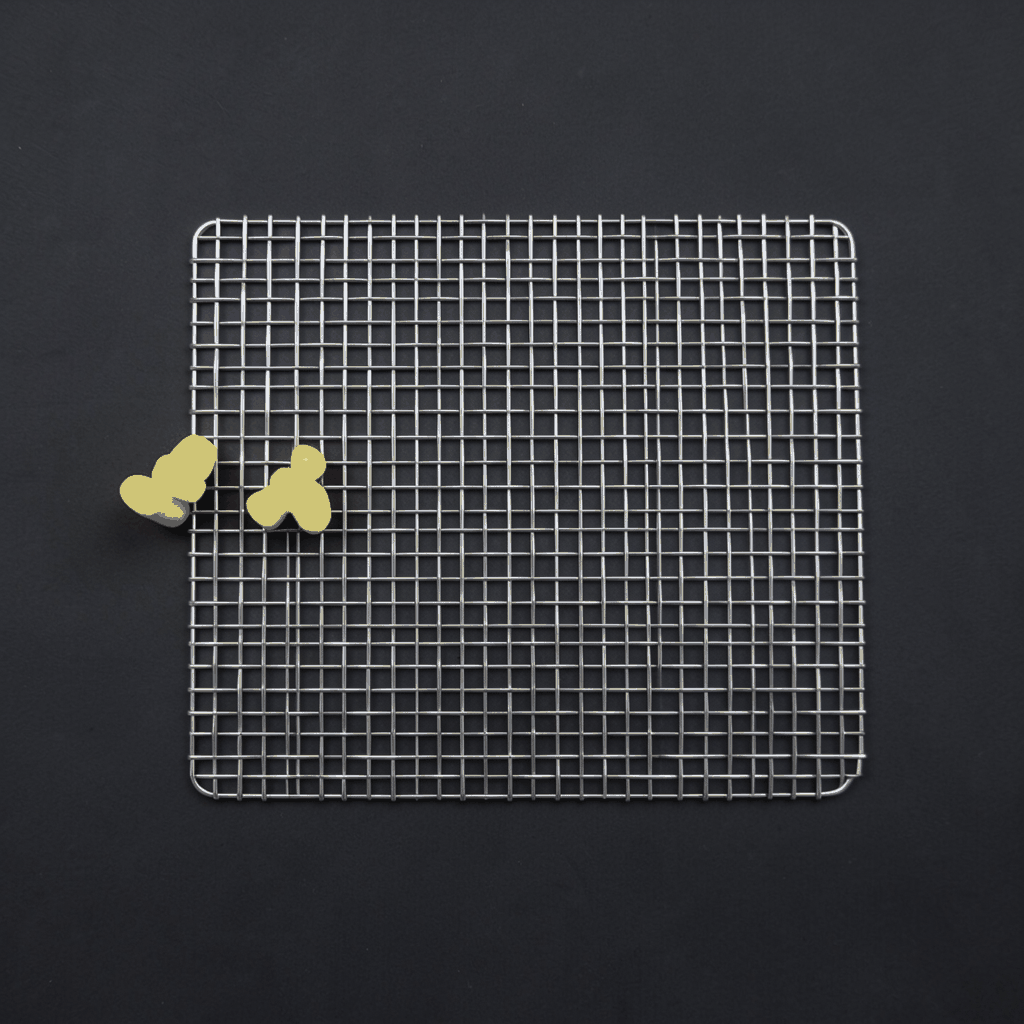
Tensioning establishes a controlled, even force across the panel so that the mesh remains flat and visually consistent. It is commonly performed when woven wire mesh is installed in a rigid perimeter frame, a cable-supported system, a curtain track, or a custom architectural assembly. The purpose is not to stretch the metal permanently beyond its working range. Instead, the panel is aligned and loaded sufficiently to remove slack, waves, and local irregularities.
The process begins with accurate measurement of the finished opening and the frame. The mesh is cut with allowance for edge attachment, then temporarily secured while the operator checks the weave direction, pattern alignment, and corner position. Tension is applied progressively, often from opposite sides or in a balanced sequence, so that the panel does not shift toward one edge.
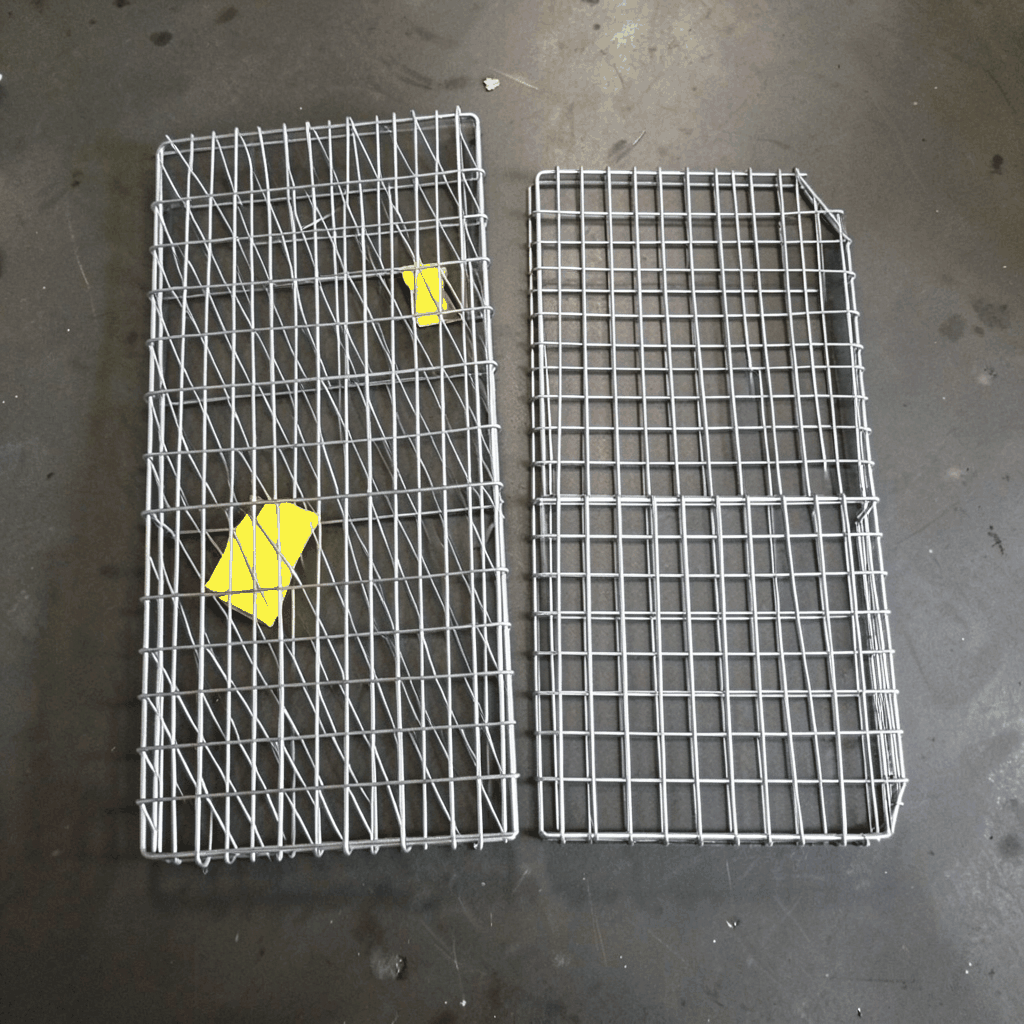
Edge treatment strongly influences the result. Wrapped edges, welded rods, flat bars, punched holes, clamps, and bolted profiles each distribute force differently. A reinforced edge can make installation easier and reduce local deformation, while a poorly matched fixing system may pull individual wires out of alignment. The attachment method should be selected together with the mesh type and expected load.
Tension should be sufficient for the application but not excessive. Over-tensioning can narrow openings, distort the weave, deform the frame, or increase stress at fixing points. Panels exposed to wind, vibration, thermal movement, or repeated handling may require a defined engineering allowance rather than a visual judgment alone.
Inspection and quality control
Quality control begins with incoming material verification. Wire diameter, alloy grade, surface condition, weave pattern, and opening size should be compared with the project specification. These checks provide a baseline before annealing and help identify whether later variation comes from the material, heat treatment, or assembly process.
After annealing, inspectors review flatness, pattern regularity, surface color, oxidation, and dimensional stability. Depending on the project, measurements may include diagonal dimensions, edge straightness, panel thickness, opening size, and hardness or tensile properties. A visual inspection under consistent lighting is valuable for decorative products because minor heat marks can become prominent after installation.
Tensioned panels should be checked while supported in the same way they will be used on site. Inspectors look for ripples, loose areas, frame deflection, uneven edge loading, and misalignment between adjoining panels. Where multiple panels form a continuous wall or façade, the relationship between panel patterns is as important as the condition of each individual panel.
Documentation helps maintain consistency across large orders. Records can include annealing batch information, fixture details, tensioning sequence, fastener type, inspection results, and approved samples. This is particularly useful for projects using stainless steel decorative mesh, metal curtain partitions, laser-cut screens combined with wire mesh, or custom cladding systems supplied in several production batches.
Coordinating design, fabrication, and installation
The best results are achieved when the mesh manufacturer receives complete information before production starts. Drawings should show clear opening dimensions, panel orientation, support conditions, fixing locations, visible edges, joint details, and any requirements for movement or access. Material grade, finish, weave type, and acceptable tolerances should also be stated.
Architectural wire mesh can be supplied as flexible curtains, framed panels, rigid screens, or formed components. These formats do not share the same tensioning requirements. A suspended metal curtain may need controlled weight distribution and track alignment, while a rigid façade panel may need perimeter reinforcement and allowance for thermal expansion. Treating both systems identically can lead to installation problems.
The finish must be considered alongside the thermal and mechanical process. Mill finish, brushed stainless steel, polished metal, anodized aluminum, powder coating, plating, and decorative coloration each have different preparation needs. If the mesh will be combined with glass, stone, timber, lighting, or elevator panels, the visible surface should be protected throughout handling and installation.
For demanding projects, a pre-production sample can confirm the selected alloy, weave, edge construction, annealing approach, tension level, and finish. An approved sample gives the design team, contractor, and manufacturer a shared reference for acceptable flatness, color, opening consistency, and visual character.
Practical recommendations for reliable panels
- Specify the alloy, wire diameter, weave, finish, panel dimensions, and intended application before production.
- Use a controlled annealing cycle suited to the material instead of relying on a general heating procedure.
- Allow the mesh to stabilize after heat treatment before final sizing or frame tensioning.
- Apply balanced tension through an edge system designed for the panel’s load and geometry.
- Inspect both individual panels and installed assemblies for flatness, alignment, surface condition, and dimensional consistency.
Shuo Ke Wire Mesh Product Technology Co., Ltd. can support projects requiring decorative and industrial metal mesh in stainless steel, aluminum, copper, iron, and other alloys. With suitable production planning, annealing control, edge preparation, and tensioning methods, architectural wire mesh panels can deliver a dependable combination of durability, clean geometry, and distinctive design. Contact the manufacturer with project drawings and performance requirements to develop a mesh solution matched to the installation environment.