Rolling and shaping mesh into cylindrical filter elements
Cylindrical filter elements are widely used in fluid handling, ventilation, process equipment, fuel systems, food production, and industrial separation. Their familiar round form provides a large filtration area within a compact housing, while the metal mesh offers strength, cleanability, and controlled flow resistance. Producing a reliable element requires much more than bending a sheet into a tube. Mesh opening, wire diameter, seam design, roundness, and end treatment must work together.
The manufacturing route normally begins with a suitable woven or expanded metal mesh. The material is then cut, prepared, rolled around a forming tool, joined along its longitudinal seam, and calibrated to the specified diameter. Additional support layers, frames, collars, or end caps may be added when the filter must withstand pressure, vibration, repeated cleaning, or high operating temperatures.
For a manufacturer and processor such as Shuo Ke Wire Mesh Product Technology Co., Ltd., customization is central to this process. Stainless steel, aluminum, copper, iron, and other alloys can be selected according to the filtration medium, operating environment, corrosion exposure, and required mechanical performance. Careful fabrication turns standard mesh into a filter component made for a particular assembly.
Selecting materials and filter geometry
The first decision is the relationship between filtration accuracy and mechanical strength. Fine stainless steel woven mesh can capture small particles, while a coarser mesh provides higher flow capacity and is easier to clean. In demanding applications, a multi-layer construction may combine a fine filtering layer with one or more coarse support layers. The outer support prevents deformation when pressure acts across the filter surface.
Stainless steel is commonly selected for water treatment, chemical processing, food equipment, and applications involving heat or moisture. Aluminum offers low weight and useful corrosion resistance in less aggressive conditions. Copper and copper alloys may be chosen for conductivity or specialized chemical compatibility, while iron-based materials can serve cost-sensitive structural or industrial purposes when the environment permits.
The cylindrical dimensions must also be defined at this stage. Important parameters include outside diameter, inside diameter, overall length, wall construction, mesh grade, open area, and end connection. A longer element can provide increased filtration surface, but it may require internal supports to prevent buckling. The housing and sealing method determine whether the mesh cylinder needs a plain edge, reinforced rim, threaded fitting, flange, or welded end cap.
Preparing mesh before forming
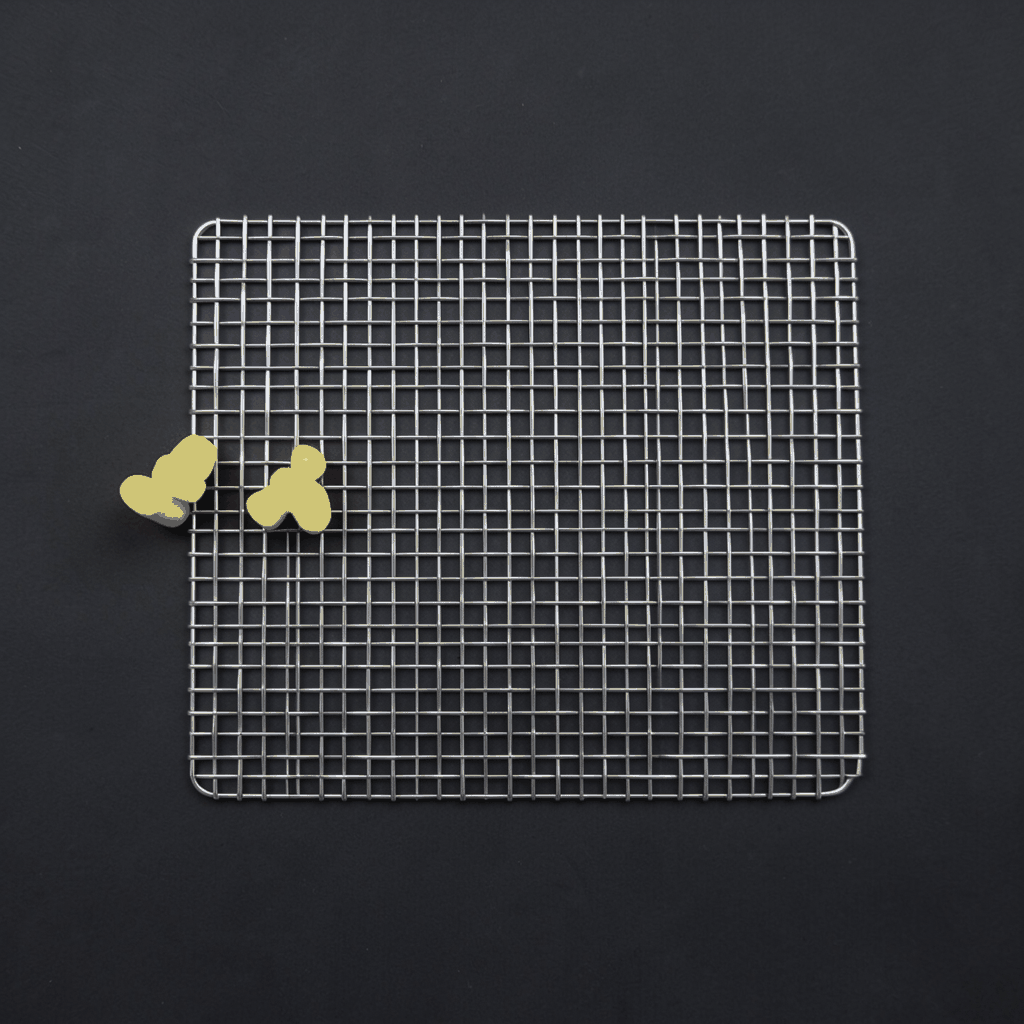
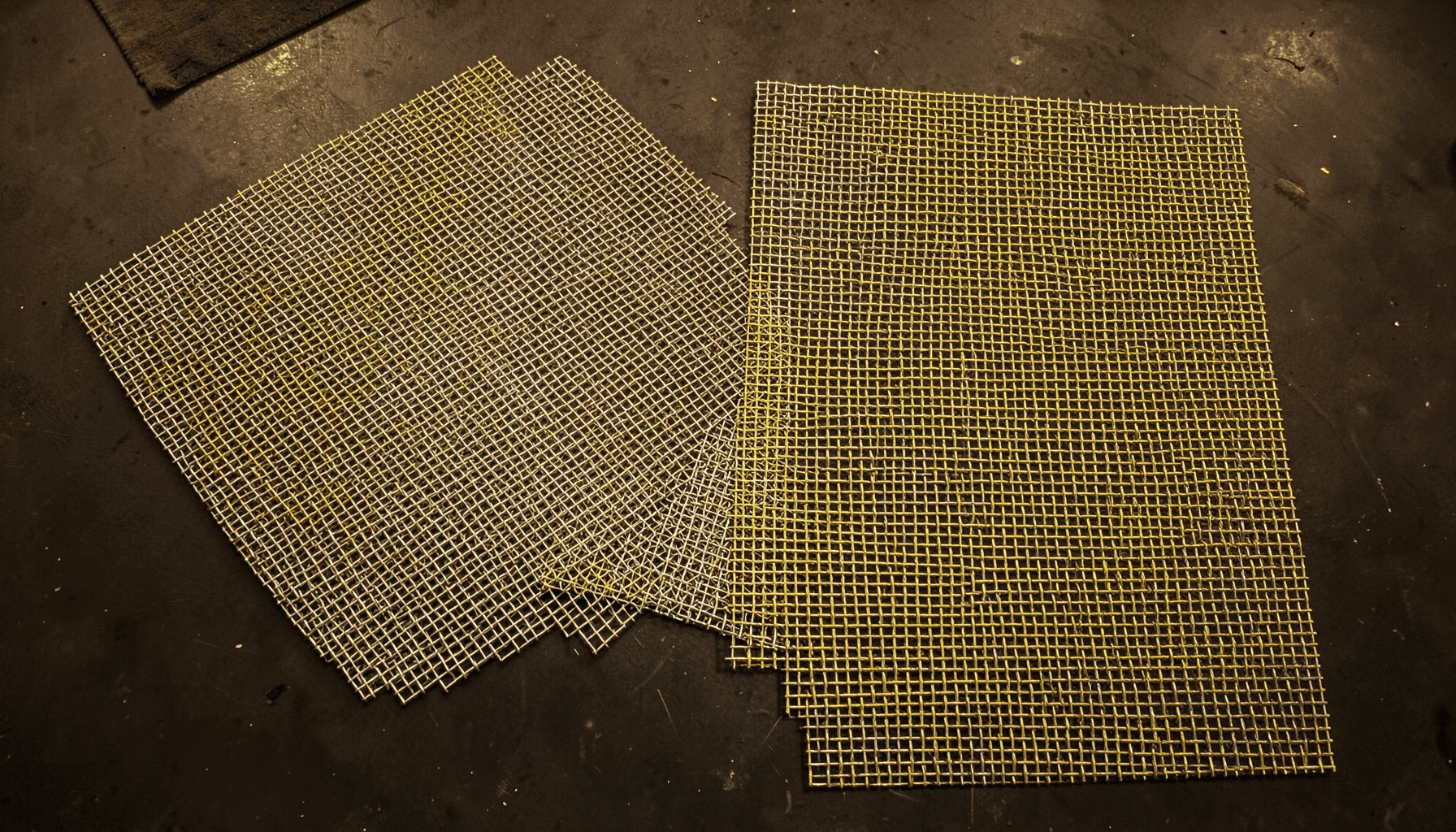
Mesh preparation affects every later operation. The material must be inspected for consistent aperture size, stable wire intersections, surface damage, and correct roll direction. Woven mesh is especially sensitive to distortion because excessive handling can shift the warp and weft wires. A mesh sheet that appears acceptable before forming may produce an uneven filter opening after it is cut or rolled.
Cutting is carried out according to the developed circumference and required length. The seam allowance must be included in the blank dimensions, particularly when the edges will overlap or be joined with a welded strip. Clean, square edges help the cylinder close evenly and reduce the risk of a spiral seam. For fine mesh, controlled cutting methods are preferred because rough edges can catch particles, interfere with sealing, or create handling hazards.
Before rolling, the mesh may be flattened, tensioned, or laminated with a backing layer. Any support screen should be aligned with the filtering layer so that the two materials move together during forming. Surface contaminants such as oil, scale, or loose metal fragments should be removed before welding or brazing. Clean preparation improves joint consistency and helps prevent inclusions in the finished filter.
Rolling flat mesh into a cylinder
The central forming operation uses a roller, mandrel, or cylindrical fixture matched to the target diameter. The prepared mesh blank is introduced gradually so that bending occurs across the sheet without creating sharp creases. Controlled pressure is important: too little force leaves a faceted shape, while too much force can stretch the wires, close the apertures, or damage delicate woven intersections.
For thin or fine filtration mesh, several light passes are generally safer than one aggressive forming pass. The operator checks the developing curvature as the sheet wraps around the mandrel. This approach helps maintain a uniform radius along the full length and reduces springback after the material leaves the forming equipment. The correct forming method depends on alloy, thickness, mesh construction, cylinder diameter, and whether the filter includes reinforcement.
The two longitudinal edges are brought together after the main rolling step. They may meet edge-to-edge, overlap, or fit against a separate backing strip. The selected arrangement influences filtration continuity and pressure resistance. An overlap can make sealing easier, but it may create a thicker area that must fit inside the housing. An edge-to-edge joint preserves a more consistent wall thickness but requires accurate alignment and controlled joining.
| Forming approach | Typical use | Main benefit | Important control point |
|---|---|---|---|
| Mandrel rolling | Fine woven mesh and supported cylinders | Accurate roundness and repeatable diameter | Match mandrel size to material springback |
| Multi-pass roller forming | Medium and large cylindrical elements | Gradual bending with lower mesh distortion | Keep pressure consistent along the sheet |
| Overlap seam forming | Filters needing a robust sealed joint | Simple edge alignment and increased joint area | Prevent excess thickness at the overlap |
| Edge-to-edge joining | Uniform-wall filter cartridges | Smooth profile and consistent internal clearance | Maintain precise edge positioning |
| Mesh with support core | High-flow or pressure-loaded filters | Better resistance to collapse | Align layers before and during rolling |
Joining and shaping the seam
The seam is a structural part of the filter, not merely a finishing detail. Welding is often used with stainless steel and other conductive metals because it can create a compact, durable joint. Resistance welding, laser welding, and carefully controlled TIG processes may be suitable depending on mesh fineness, wire diameter, alloy, and production volume. Excessive heat can enlarge openings, burn fine wires, or distort the cylinder.
A backing strip can distribute load along the seam and make it easier to achieve a stable connection. In multi-layer filter elements, the joint must secure all layers without blocking an excessive portion of the active filtration area. The seam should remain straight and should not produce sharp projections that could damage seals or complicate insertion into the filter housing.
After joining, the cylindrical element may be placed over a sizing mandrel or passed through a calibration fixture. This corrects local high spots and brings the diameter within tolerance. Circularity is especially important when the element slides into a close-fitting shell. Even a small out-of-round condition can cause uneven sealing, installation difficulty, or concentrated stress during operation.
Sizing, finishing, and inspection
End treatment depends on how the filter will be installed. Some elements remain open at both ends and are secured by separate housing components. Others receive welded rings, collars, caps, flanges, threaded fittings, or gasket seats. End components must be concentric with the mesh body so that the finished filter does not sit at an angle in the assembly.
Deburring and edge finishing remove sharp wire ends and weld projections. Passivation may be applied to suitable stainless steel products to improve surface cleanliness and restore corrosion resistance after fabrication. Other metals may require brushing, polishing, coating, or protective treatment based on the service environment. Finishing should preserve the filter openings rather than filling or closing them.
Inspection commonly covers mesh specification, overall dimensions, seam integrity, end alignment, circularity, surface condition, and cleanliness. Visual checks can identify broken wires, blocked apertures, incomplete welds, and excessive deformation. Dimensional gauges verify diameter and length, while application-specific testing may include pressure resistance, flow testing, bubble-point testing, or leakage inspection.
Traceability is also valuable for customized industrial filter elements. Recording the alloy, mesh grade, batch, forming method, joining process, and inspection results helps maintain consistency across repeat orders. It allows engineers to identify the source of variation and match replacement elements to existing equipment.
Design choices for application performance
The ideal filter cylinder balances particle retention, flow rate, pressure drop, service life, and maintenance requirements. A very fine mesh may deliver precise filtration but can clog more quickly. A larger opening can improve throughput, yet it may permit unwanted particles to pass or require a downstream filter. The best design is therefore based on the complete operating condition rather than aperture size alone.
Flow direction affects the choice of support structure. When pressure acts from the outside toward the center, the mesh may need an internal support core to resist collapse. Reverse flow can place stress on the outer surface and may require an external protective layer. Pulsed flow, backwashing, vibration, and thermal cycling also influence the required seam strength and end construction.
Surface area can be increased through pleating, layered construction, or a longer cylindrical body, provided the element remains compatible with the housing. In some systems, a coarse pre-filter protects a fine inner cylinder from rapid blockage. In others, the cylindrical mesh functions as a strainer that removes larger debris while allowing simple cleaning and reuse.
Shuo Ke can adapt the mesh material, aperture, cylinder size, seam arrangement, support structure, and finishing method to the intended application. This makes the same basic rolling process suitable for compact equipment, large industrial filtration units, architectural service systems, and custom engineering assemblies.
Practical recommendations for a reliable filter element
A well-planned specification reduces rework and helps the finished cylinder perform consistently. Before production begins, the following points should be established:
- Define the target particle size, flow rate, pressure range, temperature, and cleaning method.
- Select the alloy and mesh construction according to corrosion exposure and mechanical loading.
- Provide the housing dimensions, sealing method, end connections, and allowable installation clearance.
- Specify whether the seam must be welded, overlapped, reinforced, or left open for a separate frame.
- Confirm dimensional tolerances, surface finish, inspection requirements, and packaging conditions.
The mesh should be designed as part of the complete filter assembly. A precise cylinder cannot compensate for an undersized housing, an unsuitable gasket, or insufficient support under pressure. Sharing drawings, samples, or application data with the manufacturer enables the forming and finishing process to be matched to the actual operating conditions.
From mesh sheet to engineered component
Rolling and shaping mesh into cylindrical filter elements combines material selection, controlled forming, accurate joining, and detailed inspection. Each stage affects the next: an incorrect blank size causes seam problems, uneven rolling affects end alignment, and excessive joining heat can reduce filtration performance. Consistent production depends on treating the filter as a complete engineered component rather than a simple rolled piece of metal.
Shuo Ke Wire Mesh Product Technology Co., Ltd. provides customized metal mesh processing for industrial and architectural requirements, including formed filter components made from stainless steel, aluminum, copper, iron, and other alloys. Contact the company with your required dimensions, mesh specification, operating conditions, and connection details to develop a cylindrical filter element suited to your equipment.