How mesh size shapes fence visibility and security
Fence mesh size is a primary design factor in the relationship between visibility, privacy, airflow, and physical protection. The distance between wires or the size of each opening determines how clearly people can see through a fence, how easily objects can pass through it, and how difficult it may be to climb, cut, or breach.
A fence with large apertures can make a site feel open and improve observation from both sides. A fine mesh can restrict access and reduce the passage of tools or debris, yet it may also create a more enclosed appearance. The correct choice depends on the site’s purpose, the required security level, the surrounding environment, and the appearance expected by the property owner or project designer.
Shuo Ke Wire Mesh Product Technology Co., Ltd. manufactures and processes metal mesh products for architectural, commercial, industrial, and municipal applications. Stainless steel, aluminum, iron, copper, and other alloys can be formed into customized fence panels, gates, guardrails, screens, and related components. A practical specification considers mesh opening together with material, wire diameter, frame design, and installation conditions.
Mesh size and the way a fence is seen
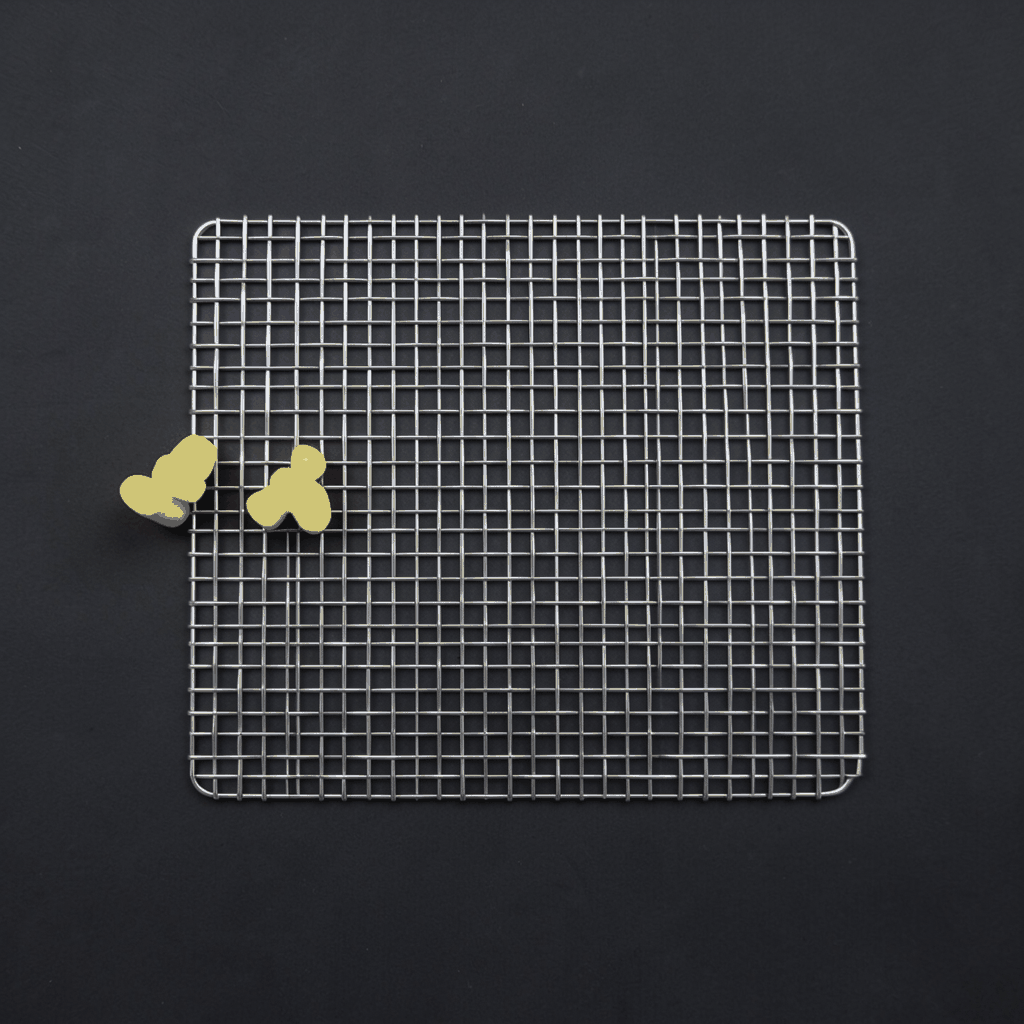
Mesh size usually describes the opening between adjacent wires or the aperture formed by an expanded, woven, welded, or perforated pattern. Larger openings allow more light and create a clearer view through the fence. Smaller openings interrupt the sightline more frequently, making objects behind the fence less distinct and reducing the sense of openness.
Visibility is affected by viewing distance and lighting as well as aperture dimensions. A large-opening fence may provide strong transparency during the day, while glare, shadows, or backlighting can make it harder to see through at night. Fine woven wire mesh may appear almost transparent from a distance but provide partial visual screening when viewed closely. Color and surface finish also influence contrast: dark coatings often reduce reflections, while bright stainless steel can catch sunlight and draw attention to the fence line.
Architects and facility managers should define whether they need full visibility, controlled visibility, or privacy. A sports court, school boundary, or security checkpoint may benefit from an open view. A residential garden, service yard, or equipment compound may require a less exposed appearance. Mesh selection should support the intended visual relationship between the property and its surroundings rather than treating visibility as an incidental result.
How openings affect physical security
A smaller opening can restrict hand and foot placement, making a fence more difficult to climb. It can also prevent fingers, simple hand tools, and small objects from passing through the panel. This is particularly useful around utility equipment, transport facilities, warehouses, and areas where unauthorized contact with machinery must be reduced.
The opening alone does not determine the full security performance of a fence. Wire thickness, weld quality, panel stiffness, post spacing, fasteners, hinges, and gate construction are equally important. A fine mesh made from light-gauge wire may resist small-object access but still be vulnerable to cutting or deformation. A heavier welded panel with a moderate aperture may provide better impact resistance and remain easier to inspect and maintain.
Security design also depends on the potential threat. If the main concern is accidental entry, a standard welded wire fence may be appropriate. If the site faces deliberate intrusion, the specification may require anti-climb geometry, reinforced posts, tamper-resistant fixings, a protected gate, and a foundation that prevents lifting or digging beneath the panel. Mesh size should therefore be selected as part of a complete perimeter system.
Matching aperture dimensions to the site
Different locations require different balances between transparency and restriction. A public-facing property may need a fence that preserves a welcoming appearance, while an industrial site may prioritize containment and resistance to unauthorized access. A custom metal mesh manufacturer can adjust panel dimensions, wire form, finish, and supporting frames to suit these conditions.
Common applications include:
- Residential boundaries, where moderate openings preserve views while defining the property line
- Schools and playgrounds, where visibility supports supervision and smaller apertures help limit climbing or object passage
- Industrial compounds, where rigid welded mesh can combine airflow, inspection access, and perimeter control
- Municipal facilities, where durable finishes and consistent appearance are important across long fence runs
- Equipment enclosures, where fine mesh can keep hands, animals, leaves, and debris away from sensitive components
The surrounding environment should also guide the aperture choice. Coastal sites may need corrosion-resistant stainless steel or a suitable protective coating. Locations exposed to dust, snow, or windblown debris may benefit from a mesh pattern that limits accumulation without blocking necessary airflow. In high-traffic areas, the fence should maintain visibility for drivers, pedestrians, and security staff while avoiding openings that create avoidable hazards.
| Mesh opening or pattern | Typical visibility | Security contribution | Common applications |
|---|---|---|---|
| Large aperture | Clear, open sightlines | Defines boundaries and delays casual entry | Sports areas, gardens, light-duty boundaries |
| Medium aperture | Controlled transparency | Limits some object passage and improves climbing resistance | Schools, commercial properties, general industrial fencing |
| Small welded opening | Restricted detail and stronger visual screening | Reduces hand access and limits tool or debris passage | Equipment compounds, service yards, utility enclosures |
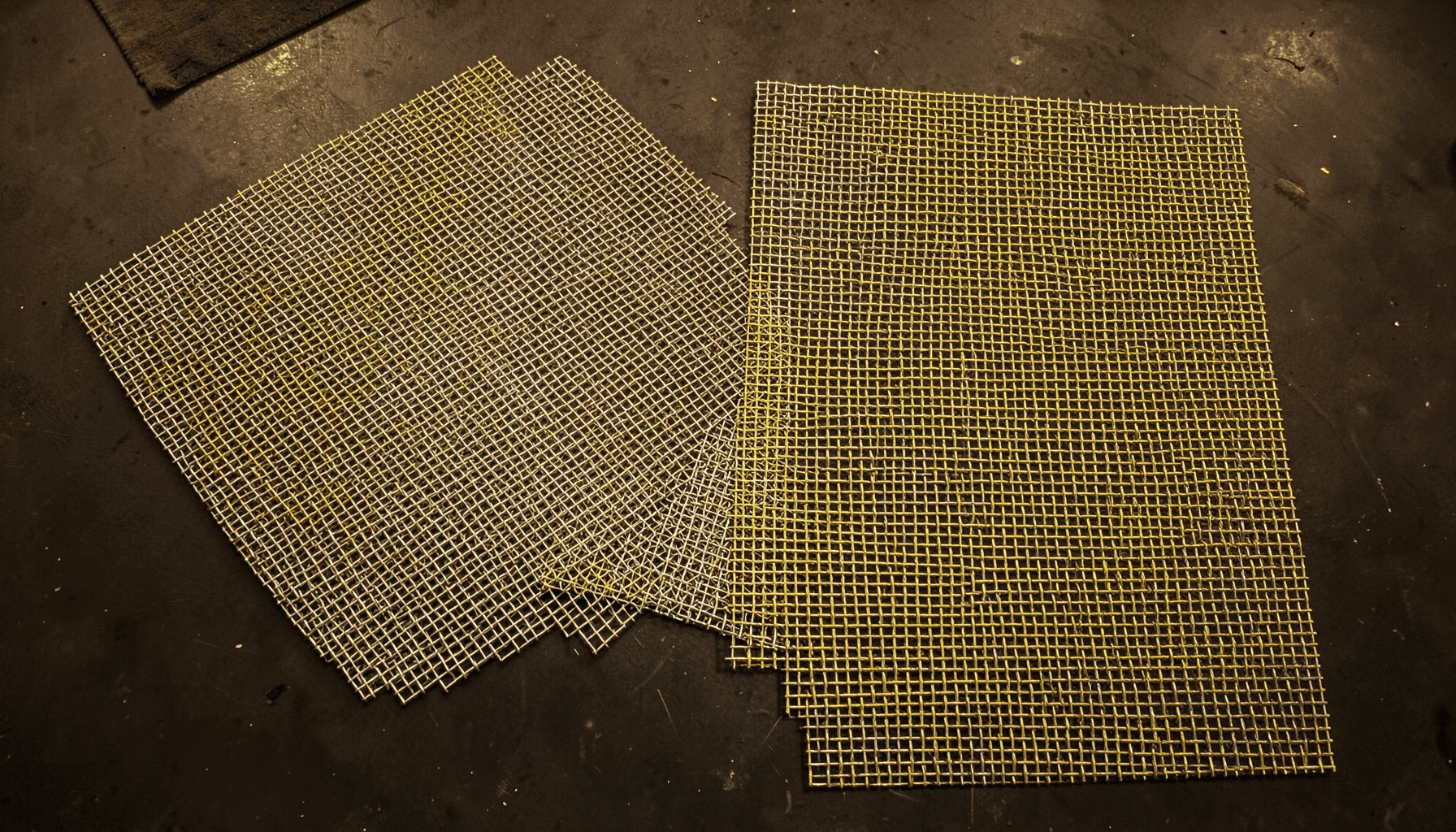
| Fine woven mesh | Diffused view with strong small-object control | Helps contain particles, animals, and minor debris | Ventilation areas, machinery guards, specialized enclosures |
| Decorative or laser-cut pattern | Depends on cutout percentage and panel design | Can combine deterrence with architectural identity | Entrances, commercial buildings, civic projects |
These descriptions are general rather than fixed performance ratings. Actual results depend on wire diameter, alloy, panel thickness, support structure, installation quality, and the conditions specified for the project. A supplier should review drawings and operating requirements before confirming a final mesh configuration.
Material, wire diameter, and panel construction
The same opening size can perform very differently when produced from different materials and wire gauges. Stainless steel offers corrosion resistance, strength, and a clean architectural appearance. Aluminum provides low weight and good corrosion resistance, which can simplify handling and reduce structural load. Iron and carbon steel may provide economical strength when protected with galvanizing, powder coating, paint, or another suitable finish.
Wire diameter changes both the visual weight and physical resistance of the fence. Thicker wires create a stronger barrier and can make a given aperture appear more substantial. They also increase material use and may reduce transparency. Fine wire gives a lighter appearance and can be suitable for decorative or screening purposes, but it needs appropriate support to prevent deflection and damage.
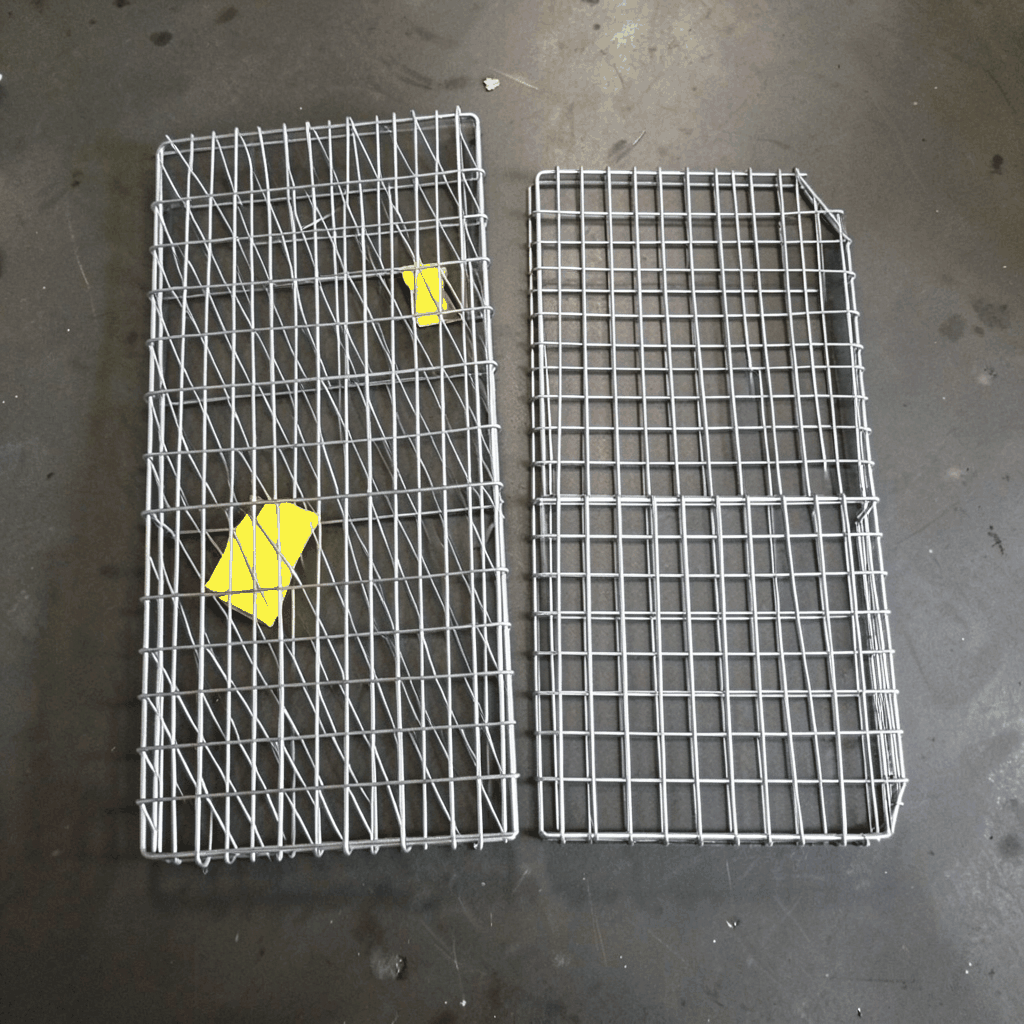
Construction method matters as well. Welded mesh panels hold their geometry at each intersection and are often selected for rigid fencing and security enclosures. Woven mesh can provide flexibility and a continuous surface, which is useful for certain containment and architectural applications. Expanded metal and laser-cut screens create distinctive patterns that can be used for gates, façades, balcony guards, and privacy partitions. The open-area percentage should be reviewed alongside the nominal mesh size because two patterns with similar dimensions may provide different visibility and airflow.
Edges and connections deserve attention during specification. A folded edge, perimeter frame, reinforced rail, or properly designed tensioning system can improve rigidity and reduce sharp exposed ends. Gate frames should be matched to the fence panel so that the access point does not become the weakest section of the perimeter. Shuo Ke’s custom processing capability allows mesh products to be developed around panel size, opening pattern, frame form, finish, and installation requirements.
Balancing privacy, airflow, and surveillance
Visibility and privacy are often treated as opposite goals, but mesh can provide several intermediate levels. A partially open fence allows security personnel to observe activity while reducing visual detail for people outside the boundary. This can be useful at commercial loading areas, residential properties, building services zones, and facilities that need to conceal equipment without creating a solid wall.
Airflow is another important consideration. Solid panels can increase wind load and may require heavier posts and foundations. Open mesh allows wind to pass through, reducing pressure on the structure in many applications. However, very open patterns may provide insufficient privacy or allow small items to be thrown through. Fine mesh may improve screening but can collect dust, leaves, or snow, so maintenance conditions should be considered before choosing the smallest possible aperture.
Lighting can change the apparent privacy level. A fence that looks open in daylight may reveal less at night when the protected area is unlit. Conversely, strong internal lighting can make activity clearly visible from outside. Security lighting, camera placement, and the position of buildings should therefore be coordinated with fence selection. The best mesh specification supports surveillance rather than relying on visual obstruction alone.
Practical specification recommendations
A clear design brief makes it easier to select a suitable fence mesh and avoid paying for features that do not support the application. Before requesting fabrication, identify the site conditions, the expected service life, the desired appearance, and the level of access control required. It is also useful to distinguish between the visual function of the fence and its structural or security function.
- Define whether the priority is open visibility, partial screening, privacy, airflow, or small-object exclusion.
- Select the opening pattern together with wire diameter, panel thickness, post spacing, and frame construction.
- Consider stainless steel, aluminum, galvanized steel, coated iron, or another alloy according to corrosion exposure and budget.
- Check gates, hinges, locks, anchors, and panel connections as part of the same security system.
- Request samples, drawings, finish information, and dimensional tolerances before approving large-volume production.
A project may also need separate mesh specifications for different perimeter zones. The main boundary could use a rigid medium-aperture panel for visibility and deterrence, while an equipment cage could use a finer opening to protect controls and ventilation points. Decorative laser-cut screens or architectural mesh can then be used at entrances and public-facing elevations without forcing every part of the site to use the same pattern.
Shuo Ke can help translate these requirements into customized metal mesh products for residential, commercial, architectural, industrial, and municipal projects. Its product range includes fences, gates, guardrails, screens, cladding, filters, baskets, and other formed or processed mesh components. Reviewing aperture, material, finish, dimensions, and installation conditions together helps produce a fence that looks appropriate and performs reliably.
When mesh size is chosen with the full site context in mind, visibility becomes a controlled design feature rather than a compromise. Share your drawings, opening requirements, material preference, and security objectives with Shuo Ke Wire Mesh Product Technology Co., Ltd. to develop a fence or enclosure solution suited to the project’s appearance, environment, and performance needs.