The Structural Role of Wire Mesh in Reinforced Concrete Column Forms
Wire mesh is often associated with fencing, partitions, screens, and decorative applications, yet its engineering value extends into concrete construction. In reinforced concrete column forms, appropriately selected metal mesh can support reinforcement positioning, improve confinement, create a stay-in-place forming surface, or contribute to a controlled interface between concrete and adjacent materials.
Its structural function depends on the mesh type, wire diameter, opening size, steel grade, coating, anchorage, and relationship with the primary reinforcing cage. A mesh product should never be treated as a universal replacement for longitudinal rebar or designed ties without verification. Instead, it must be integrated into a complete column-forming and reinforcement system.
For contractors, fabricators, and designers, the practical advantage lies in combining reliable geometry with efficient installation. Welded wire mesh, expanded metal, perforated sheets, and custom-fabricated cages can help maintain column dimensions, reduce movement during concrete placement, and support specialized construction details when they are engineered for the intended load and exposure conditions.
How mesh participates in the column load path
A reinforced concrete column transfers axial compression, bending, and shear through a combined system of concrete and steel reinforcement. Longitudinal bars carry a significant share of tensile and flexural demand, while transverse reinforcement restrains those bars and confines the concrete core. Wire mesh may assist this system when it is designed as transverse reinforcement, a confinement layer, or a structural skin.
The mesh must have a clear and intentional load path. Forces can enter the mesh through direct bearing, welded intersections, mechanical anchorage, ties, studs, or connection to conventional reinforcing bars. If the mesh is merely placed inside the form without adequate development or attachment, it may have little structural effect even when its material strength is high.
In columns subject to compression, confinement is especially important near lap splices, plastic hinge zones, beam-column joints, and regions exposed to seismic actions. A properly detailed steel mesh can limit lateral expansion of the concrete core and delay bar buckling. However, the required spacing, overlap, yield strength, and anchorage depend on the governing structural code and the column’s dimensions, loads, ductility class, and reinforcement ratio.
Mesh used as formwork and reinforcement support
In some construction systems, metal mesh functions as stay-in-place formwork. It holds fresh concrete in position while allowing the concrete to harden around a reinforcing cage. This can reduce stripping work and provide a textured surface that may improve the mechanical bond of a later concrete pour, render, grout layer, or structural connection.
A stay-in-place mesh form is different from ordinary temporary shuttering. It must resist fresh-concrete pressure, vibration, impact during placement, and local deformation at corners and joints. The opening geometry should allow concrete to pass through and consolidate without creating voids. Excessively small openings can obstruct aggregate movement, while oversized openings may allow grout loss or produce an irregular surface.
Mesh can also act as a spacer and reinforcement-cage stabilizer. Custom-welded panels or circular mesh cages can hold longitudinal bars at consistent cover distances, helping maintain column alignment during lifting and concrete placement. This support function improves construction quality, but it does not automatically give the mesh a code-recognized reinforcing role. The designer should define whether it is temporary support, permanent formwork, secondary reinforcement, or part of the primary structural system.
Selecting materials, geometry, and protective finishes
Material selection begins with the exposure environment. Carbon steel offers strength and economic efficiency for many conventional concrete applications, while galvanized steel can provide additional protection during storage, handling, and service. Stainless steel is useful where chloride exposure, moisture, chemicals, or architectural appearance make corrosion resistance a priority. Aluminum and copper mesh may suit specialized non-load-bearing or decorative systems, but their structural compatibility with alkaline concrete and reinforcing steel requires careful technical review.
Wire diameter and mesh opening govern stiffness, handling, concrete flow, and anchorage. Heavier wire improves resistance to bending and impact, but it can increase congestion within the column cage. Small openings distribute restraint more uniformly, whereas larger openings may simplify concrete placement and reduce material weight. The best configuration balances structural demand with the need for full compaction around bars and at the column corners.
Fabrication quality is equally important. Welded intersections should remain intact during transport and vibration. Cut edges should be free of severe burrs that could damage workers, coatings, or adjacent reinforcement. Bent panels should match the specified radius and dimensions, and prefabricated cages should maintain their shape under lifting loads. For custom metal mesh products, drawings should identify wire grade, mesh pitch, panel size, weld pattern, bend tolerance, coating, and inspection requirements.
| Mesh configuration | Typical role in a column form | Main advantages | Design and installation concerns |
|---|---|---|---|
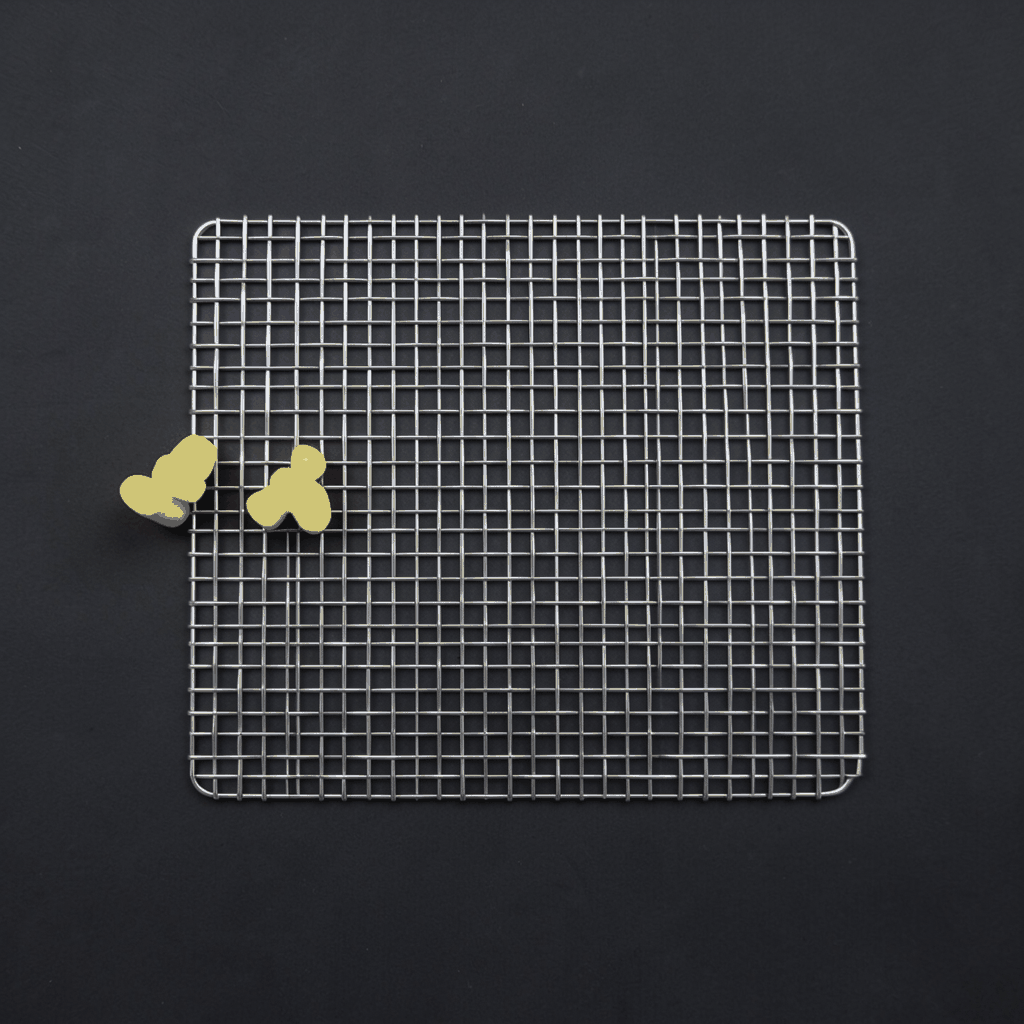
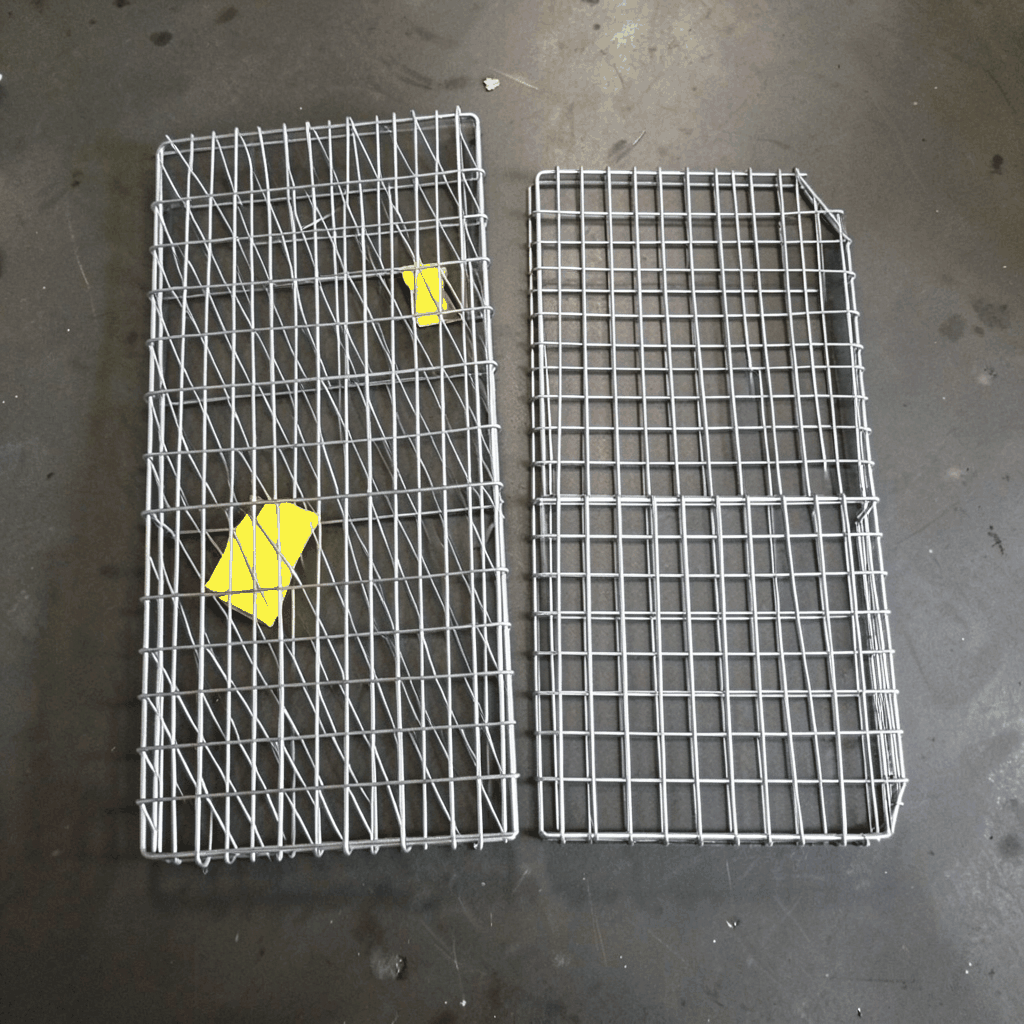
| Welded wire mesh panel | Cage stabilization, secondary reinforcement, or stay-in-place form surface | Consistent geometry, quick fabrication, easy panel assembly | Weld quality, lap length, cover, congestion, corner continuity |
| Circular welded mesh cage | Confinement support and reinforcement positioning | Efficient for round columns, repeatable dimensions, fast placement | Connection to longitudinal bars, cage lifting, diameter tolerance |
| Expanded metal mesh | Stay-in-place formwork and rough bonding surface | Lightweight, continuous sheet, useful for construction joints | Fresh-concrete pressure, edge restraint, opening deformation |
| Perforated metal sheet | Controlled form surface or architectural concrete interface | Predictable openings and clean fabrication | Concrete flow, bond performance, corrosion protection, added weight |
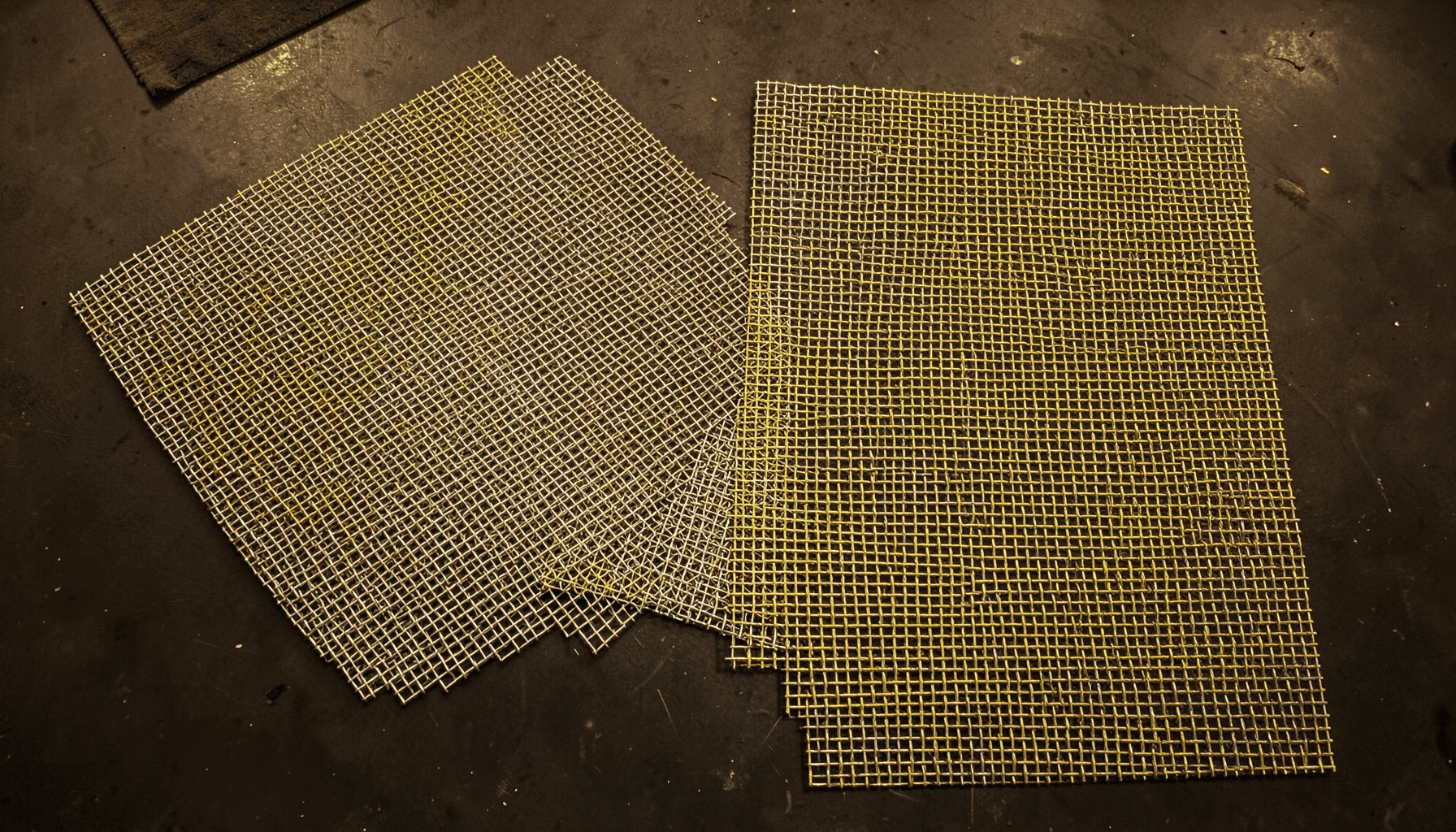
| Stainless steel mesh | Corrosion-resistant secondary or specialized structural component | Strong durability in aggressive environments | Cost, galvanic compatibility, specification of stainless grade |
| Galvanized steel mesh | Temporary or permanent form support in moderate exposure | Improved handling and corrosion resistance | Coating damage, concrete compatibility, cut-edge protection |
Detailing mesh inside reinforced concrete columns
Correct placement is central to performance. The mesh must remain at its designed elevation and orientation while the column form is closed, lifted, and filled. Chairs, clips, ties, spacers, or welded attachments can help prevent displacement. These supports should be strong enough for construction actions but arranged so they do not reduce the specified concrete cover or create points of weakness.
At corners, changes in column size, construction joints, and beam-column intersections, simple panel overlaps may be insufficient. The mesh should provide continuous restraint or be connected in a manner that transfers the required forces. Open ends and cut sections may need edge bars, return bends, supplementary ties, or welded closures. The structural drawings should clarify whether overlaps are lapped, tied, welded, mechanically fastened, or connected through separate reinforcement.
Concrete placement must be planned around the mesh geometry. The mix should be compatible with the smallest opening and the most congested zone. Internal vibration should reach the full depth without striking or displacing the mesh. Where a stay-in-place mesh creates a roughened construction interface, the surface condition must be compatible with the next pour, and loose laitance or weak material should be removed according to the project specification.
Engineering checks that determine structural suitability
The primary design check is whether the mesh can resist the forces assigned to it. Depending on its intended role, this may include tensile demand, shear transfer, confinement pressure, fresh-concrete pressure, impact, bending between supports, and local forces at welds or connectors. A product’s nominal wire strength alone does not establish its usable capacity; effective area, buckling, development, corrosion allowance, and connection efficiency also matter.
Column-form design should consider construction-stage conditions separately from final structural performance. A mesh panel may be adequate after concrete hardens but too flexible while fresh concrete is being placed. Conversely, a robust temporary form may contribute little to the final column if it is not anchored into the reinforcement system. Calculations should address both stages, including lifting, storage, bracing, vibration, and stripping where applicable.
Inspection and documentation support reliable installation. Useful records include material certificates, coating information, weld inspections, dimensional checks, mesh identification, and photographs before the form is closed. Site personnel should verify clear cover, bar spacing, lap locations, column dimensions, cage alignment, and the absence of damaged or heavily corroded wire. Any field modification should be reviewed because cutting or bending can interrupt the intended load path.
Integrating mesh with conventional reinforcement
Wire mesh generally works best as part of a coordinated reinforcement assembly. Longitudinal rebar remains essential for axial-flexural resistance in most reinforced concrete columns, while ties or hoops provide recognized transverse restraint under the applicable design standard. Mesh may supplement these components, simplify cage fabrication, or provide an engineered form surface.
Compatibility between materials and details deserves attention. Different metals can create galvanic concerns in wet or chloride-bearing environments, particularly where coatings are damaged or dissimilar metals remain electrically connected. Steel embedded in concrete also requires adequate alkaline protection, cover, and crack control. Stainless mesh can improve durability, but the selected grade, weld filler, and connection hardware should be compatible with the environment and adjoining reinforcement.
Prefabrication can improve consistency when the mesh cage is produced to controlled dimensions. A manufacturer such as Shuo Ke Wire Mesh Product Technology Co., Ltd. can process welded mesh, stainless steel mesh, galvanized products, and custom metal components according to project drawings. The engineering team should provide the performance requirements, while the fabricator confirms manufacturability, tolerances, weld arrangement, surface treatment, packaging, and delivery sequence.
Practical recommendations for project teams
- Define the mesh function clearly as structural reinforcement, confinement, stay-in-place formwork, cage support, or a combination of these roles.
- Specify wire material, diameter, opening, coating, weld quality, connection method, dimensional tolerance, and required testing.
- Check fresh-concrete pressure, vibration effects, lifting loads, cover, bar congestion, and concrete flow before approving the form detail.
- Detail corners, laps, openings, construction joints, and beam-column intersections rather than relying on generic panel overlap.
- Inspect mesh condition, cage alignment, connections, cover, and reinforcement stability before concrete placement.
A successful column-form system depends on coordination between structural design, mesh fabrication, reinforcement installation, and concrete placement. When the mesh is selected only for convenience, it may complicate consolidation or provide less restraint than expected. When it is specified with a verified load path and suitable fabrication details, it can improve dimensional control, accelerate assembly, and contribute to a durable and technically sound concrete element.
For customized welded mesh panels, reinforcement cages, stay-in-place form components, or corrosion-resistant metal mesh solutions, contact Shuo Ke Wire Mesh Product Technology Co., Ltd. with the column dimensions, reinforcement arrangement, exposure conditions, installation method, and applicable project standards. Its engineering and fabrication team can help develop a mesh configuration suited to the structural and construction requirements of the project.