The use of crimped mesh in aggregate separation for concrete
Concrete production depends on consistent aggregate grading. Sand, gravel, crushed stone, and recycled concrete particles must be separated into controlled size ranges before they are proportioned with cement, water, and admixtures. If the particle distribution is unstable, the finished concrete may require excessive cement paste, show poor workability, or develop inconsistent strength.
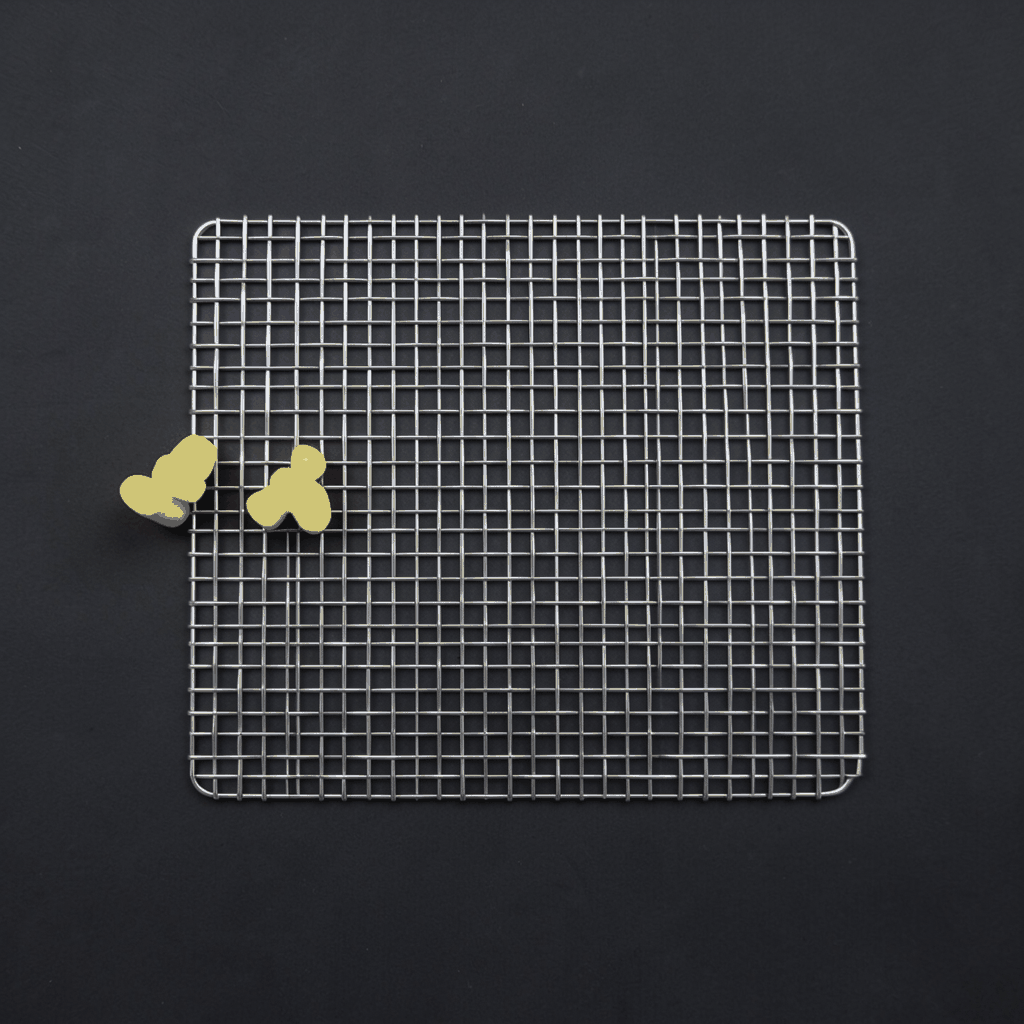
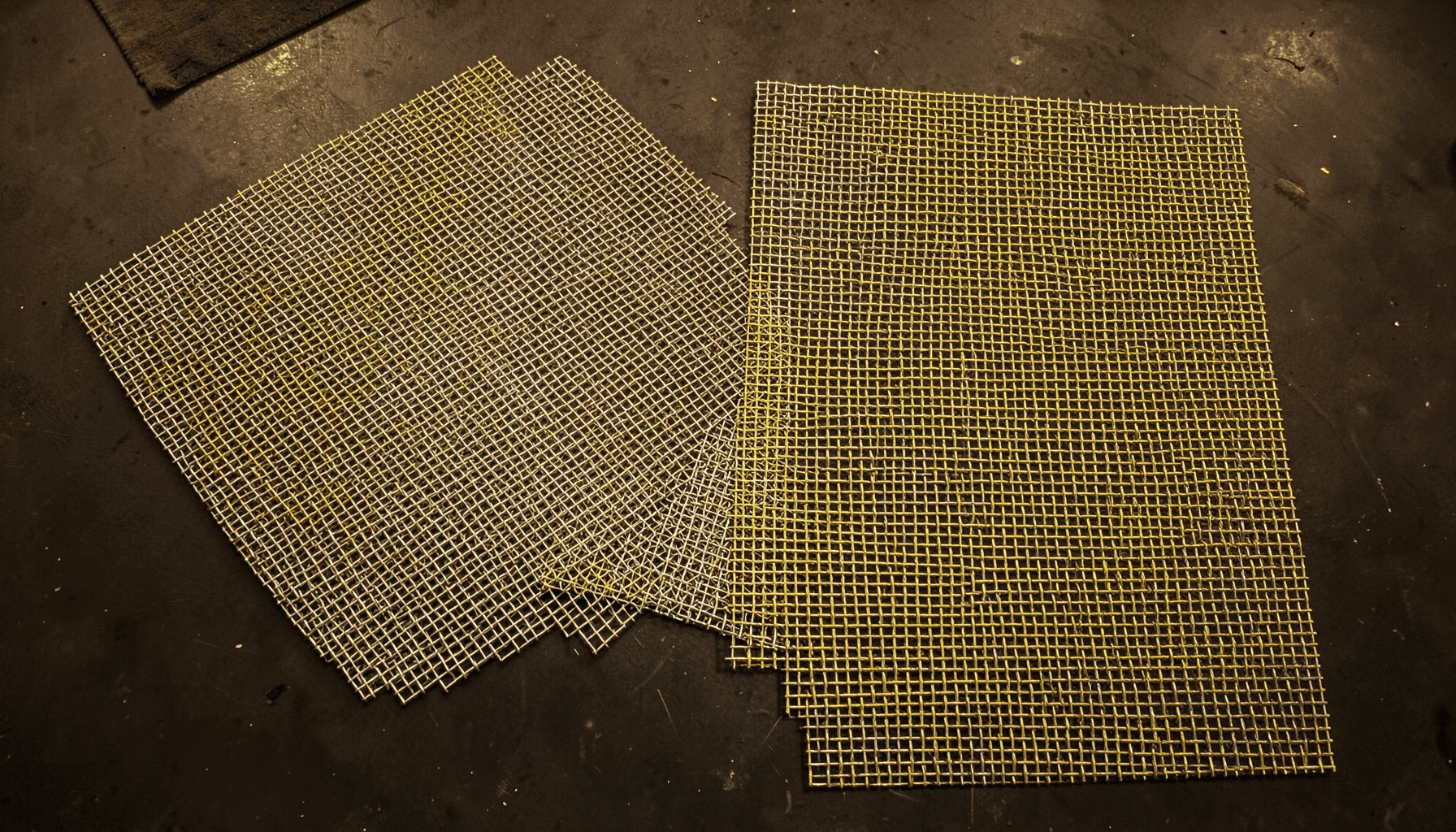
Crimped wire mesh is widely used as screening media for this purpose. Its formed wire structure creates accurate openings while providing the strength needed for vibrating screens, inclined decks, and other aggregate processing equipment. The mesh can be manufactured from stainless steel, high-carbon steel, mild steel, or other alloys according to abrasion, corrosion, and temperature requirements.
For a metal mesh manufacturer and processor such as Shuo Ke Wire Mesh Product Technology Co., Ltd., aggregate screening is an engineering application in which opening accuracy, service life, installation method, and material selection must be considered together. A suitable screen does more than separate particles; it supports stable production and reduces maintenance interruptions.
Why aggregate grading matters in concrete
Aggregates occupy most of the volume of ordinary concrete, so their size distribution has a direct effect on mix performance. Coarse aggregate provides structural volume, while fine aggregate fills spaces between larger particles. When these fractions are correctly graded, the concrete can achieve good compaction with an efficient amount of cement paste.
Oversized particles can create blockages, segregation, and weakly compacted areas. An excess of fines may increase water demand and reduce permeability resistance. In ready-mix plants, inaccurate screening can also cause variation between batches, making it difficult to maintain slump, density, pumpability, and compressive strength.
Crimped mesh screens separate aggregate by allowing smaller particles to pass through defined apertures while retaining larger pieces. The screening result depends on more than nominal opening size. Feed rate, moisture, vibration, deck angle, particle shape, wire diameter, and the total open area of the screen all influence efficiency.
How crimped wire mesh performs
Crimped mesh is produced by forming or bending the wires before or during weaving. Common constructions include pre-crimped, lock-crimped, intermediate-crimped, and flat-top patterns. These profiles hold the wires in position and create regular square or rectangular openings across the screening surface.
The formed wires give the mesh greater dimensional stability than a simple plain weave of similar wire diameter. The intersections resist movement under vibration, while the open structure permits material to stratify and pass through the deck. In aggregate plants, this combination helps the screen maintain a predictable separation over repeated operating cycles.
A crimped screen also offers a practical balance between open area and mechanical strength. A very large aperture may improve throughput but allow unacceptable oversize into the next stage. A very small aperture can improve classification but reduce capacity and increase the risk of blinding. The correct design matches the mesh to the target aggregate fraction and the equipment’s operating conditions.
Material selection is equally important. High-carbon steel is often selected for abrasive crushed stone, while stainless steel may be appropriate where washing, moisture, chemical exposure, or hygiene requirements create corrosion concerns. Aluminum and other alloys can serve specialized applications, although their suitability must be assessed against impact and wear loads.
Choosing aperture size and mesh construction
The aperture should be selected from the required aggregate grading curve rather than from a general mesh specification. Engineers normally consider the maximum permitted particle size, the desired passing percentage, and the downstream equipment. A screen used for primary scalping will have different requirements from a finishing screen used to produce fine sand or small stone.
Wire diameter affects both strength and open area. Thicker wire generally provides better resistance to impact and abrasion, but it reduces the percentage of open space. Thinner wire increases screening area but may wear or deform sooner when exposed to sharp, heavy particles. Crimp depth and weave pattern also influence the effective opening and the way particles travel across the deck.
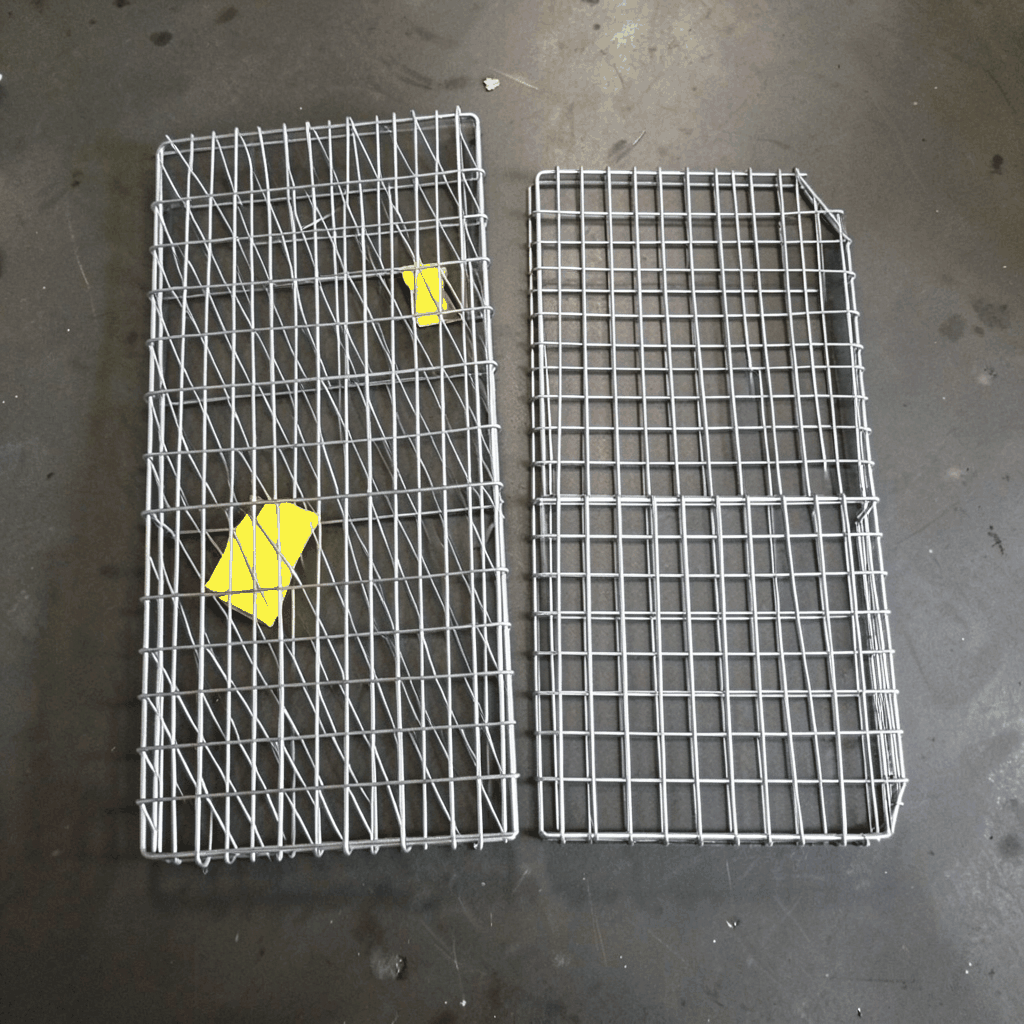
The support system must be compatible with the mesh. Panels may be fixed with hooks, bolted clamps, tension rails, or custom frames. A screen that is correctly manufactured but poorly tensioned can vibrate unevenly, develop premature fatigue, or allow material to bypass the intended separation zone. Accurate dimensions and edge treatment are therefore essential for a reliable installation.
| Screening requirement | Suitable mesh consideration | Main benefit | Important control point |
|---|---|---|---|
| Coarse crushed stone | Heavy wire with robust crimping | Improved impact and wear resistance | Check support spacing and tension |
| Sand and fine aggregate | Smaller aperture with adequate open area | More precise particle classification | Control moisture and blinding |
| Washed aggregate | Corrosion-resistant alloy or protected steel | Better performance in wet conditions | Inspect joints, clamps, and frame contact |
| Recycled concrete aggregate | Heavy-duty mesh and reinforced edges | Handles irregular particles and impact | Remove steel fragments and monitor wear |
| Final grading before batching | Accurate aperture and stable weave | Consistent batch proportions | Verify screen condition and calibration |
Managing moisture, blinding, and wear
Moist aggregate can stick to wire surfaces and close the openings. This condition, known as blinding, reduces effective screening area and may cause undersize material to remain with the oversize fraction. Clay contamination and irregular particle shapes can make the problem more severe, particularly when the aperture is small.
Plant operators can reduce blinding through suitable vibration, controlled feed rates, cleaning systems, and correct deck inclination. In some applications, rubber balls or other anti-blinding devices are placed below the screen surface. Washing may also be used when the process design permits wet classification, although the additional water requires suitable drainage and slurry management.
Abrasion is another major factor. Crushed granite, quartz-rich stone, slag, and recycled concrete can wear wire surfaces rapidly. As the wire becomes thinner, the aperture may change and the screen may lose structural integrity. Localized wear can also create oversized openings through which unclassified material passes.
Regular inspection should focus on wire diameter, broken intersections, stretched panels, loose clamps, damaged hooks, and changes in aperture size. Measuring high-wear areas with a simple gauge or caliper can help identify gradual loss before it affects concrete quality. Replacing a worn section early is often less costly than correcting an entire batch of incorrectly graded aggregate.
Integrating screens into a concrete plant
Crimped mesh can be installed in vibrating screens, linear screens, inclined screens, and some custom screening machines used in aggregate preparation. The screen deck may contain several mesh sections, with each section assigned to a particular grading stage. Material flow should be distributed evenly so that one area does not carry a disproportionate load.
Feed control has a strong effect on separation efficiency. A deep, fast-moving bed of material can prevent smaller particles from reaching the mesh surface. A controlled feed allows the aggregate to spread, stratify, and contact the openings. The screen angle and vibration frequency should be adjusted according to material size, moisture, and required capacity rather than operated at maximum settings by default.
Screening results should be checked through regular sampling. Sieve analysis can confirm whether each aggregate fraction meets its specification, while visual inspection can reveal contamination, excessive fines, or unexpected oversize. When the grading curve begins to drift, the cause may be a worn mesh, overloaded deck, altered feed material, or incorrect machine settings.
For plants handling recycled aggregates, screening should be coordinated with magnetic separation and contamination control. Steel fragments, wood, plastic, and other foreign materials can damage the mesh or compromise the final concrete. A properly designed process uses the crimped screen as one part of a broader material preparation system.
Recommendations for reliable screening performance
A practical screening specification should account for production conditions from the beginning. Mesh suppliers need information about the aggregate type, maximum feed size, target output, machine model, screen dimensions, operating hours, and whether the process is dry or wet. This allows the wire material, aperture, crimp pattern, and edge treatment to be selected for actual service rather than nominal specifications.
For customized metal mesh solutions, drawings and samples can help confirm fit before full production. The manufacturer may also advise on panel segmentation, reinforced borders, mounting holes, tension hooks, or replacement sections. These details are especially valuable when an existing screen has unusual dimensions or when the plant is converting from another type of screening media.
- Match the aperture to the required aggregate grading and downstream process.
- Select wire diameter according to impact, abrasion, and acceptable open area.
- Confirm panel dimensions, tensioning method, and support spacing before ordering.
- Monitor moisture, clay content, feed rate, and vibration to reduce blinding.
- Inspect worn areas regularly and replace damaged panels before grading changes.
Extending service life through maintenance
Maintenance begins with safe shutdown and cleaning. Material trapped around the frame or clamps can create uneven tension and hide damaged wires. Operators should remove buildup, inspect the underside of the deck, and check that fasteners remain tight. Any unusual noise or change in vibration should be investigated promptly.
A planned replacement schedule is more effective than waiting for a complete screen failure. Wear rates can be recorded by operating hours, aggregate type, and deck position. If the feed end wears faster than the discharge end, reinforced sections or a staged screen arrangement may improve total service life.
Storage also affects mesh condition. Spare panels should be kept dry, supported evenly, and protected from impact or distortion. Stainless steel screens should be stored away from carbon-steel contamination when corrosion appearance is important. Clear identification of aperture, wire diameter, material, and panel dimensions helps prevent installation errors during urgent replacement.
The use of crimped mesh in separating aggregates for concrete production combines mechanical screening with precise material control. When the mesh is correctly specified and maintained, it helps concrete plants produce stable aggregate fractions, protect downstream equipment, and reduce avoidable downtime. Shuo Ke Wire Mesh Product Technology Co., Ltd. can develop customized crimped mesh and related metal mesh components for industrial processing requirements, including material selection, dimensions, edge treatment, and application-specific fabrication. Contact the company with your aggregate, machine, and screen-panel specifications to develop a dependable solution for your production line.