Plain Weave, Twill Weave, and Dutch Weave Mesh Explained
Woven wire mesh is one of those quietly essential products that most people never think about until they need a screen, a filter, or a decorative panel that has to perform reliably for years. In Australia, where conditions swing from coastal salt spray in Sydney and Perth to dust-laden mine sites in the Pilbara and humidity in Brisbane, the weave pattern chosen for a mesh can determine whether a system succeeds or fails. Plain weave, twill weave, and Dutch weave are the three families most often specified by engineers, architects, and fabricators, and each behaves differently when subjected to load, pressure, abrasion, or filtration demands.
Understanding these weaves is also important for buyers sourcing from international manufacturers. A Chinese supplier may quote a stainless steel mesh by its nominal aperture, but the way wires interlace changes the open area, the flow characteristics, and the mechanical strength. Knowing how plain, twill, and Dutch constructions differ helps Australian specifiers ask sharper questions and avoid the costly mismatch of receiving a product that technically meets a wire diameter but fails in service.
How woven wire mesh is built
Every woven mesh starts with two sets of wires: warp wires running lengthwise and weft wires running across. The pattern in which these wires pass over and under each other defines the weave. Wire diameter, mesh count (the number of openings per linear inch), and the choice of material together determine the final product's behaviour, but the weave geometry is the foundation of nearly every performance characteristic.
Manufacturing tolerances matter more than many buyers realise. A plain weave that is supposed to be 4 mesh with a 1 mm aperture can vary noticeably between mills depending on how tightly the wires are drawn during weaving. For Australian projects certified to AS standards, especially in food processing or pharmaceutical applications, traceability of weaving parameters and material certificates is often requested as part of the procurement package. Suppliers who can document their looms, calibration routines, and post-weave flattening or calendering steps tend to deliver more consistent results.
Plain weave: the standard workhorse
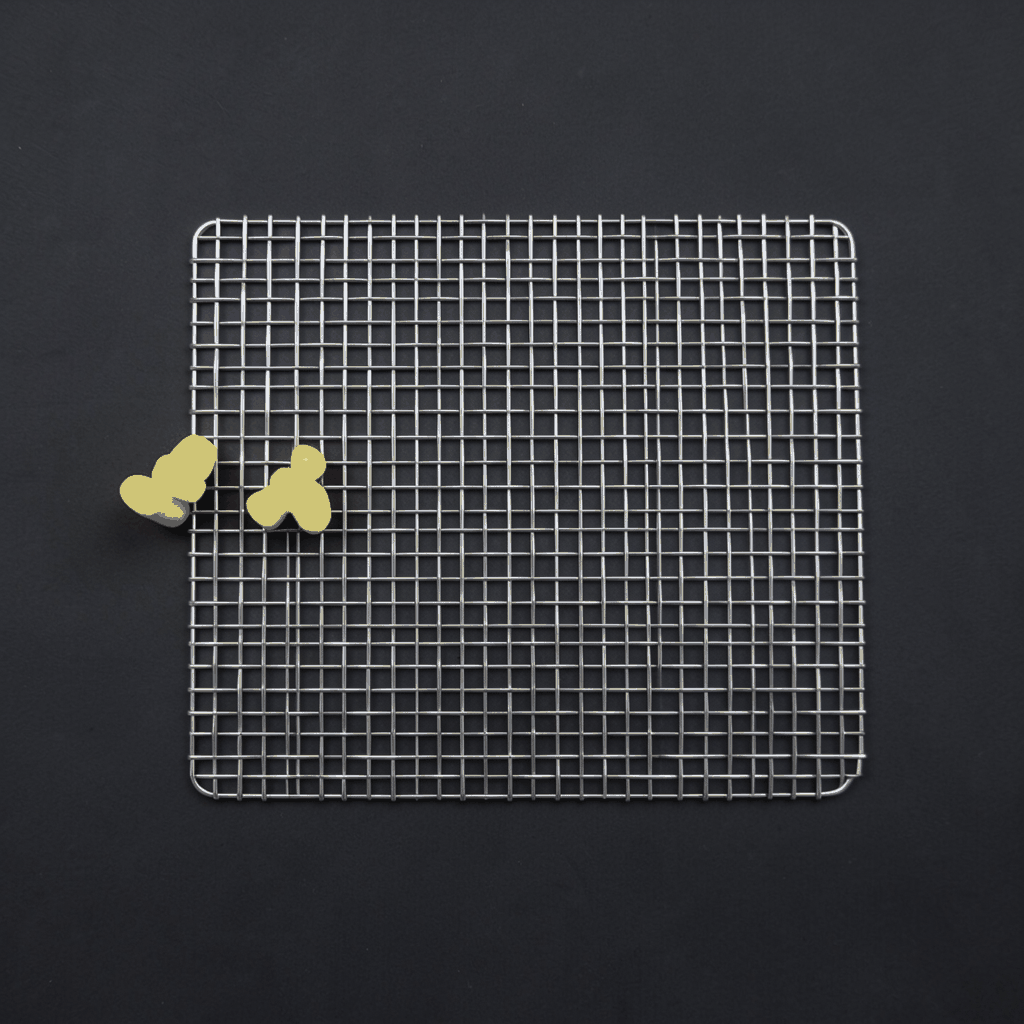
Plain weave is the simplest and most common construction. Each weft wire passes alternately over and under successive warp wires, creating a square, balanced pattern with a roughly equal open area in both directions. The wires sit at right angles, and because every crossover is locked, plain weave offers excellent rigidity for its weight.
In Australia, plain weave stainless steel mesh is widely used for security screens on residential windows in Melbourne and Brisbane, machine guards in food factories, and basic particle separation in agricultural applications. It is also the default pattern for decorative architectural panels where a clean, symmetrical grid is desired. The flat surface makes it easy to clean, which is a practical advantage in commercial kitchens that must comply with Australian hygiene regulations.
The main limitation of plain weave is that the wire diameter limits the achievable aperture. To produce very fine filtration grades, the wires must become extremely thin, which reduces strength. Plain weave also tends to have a higher open area than twill or Dutch weaves, which is helpful for airflow but sometimes problematic when fine retention is the goal.
Twill weave: strength in finer apertures
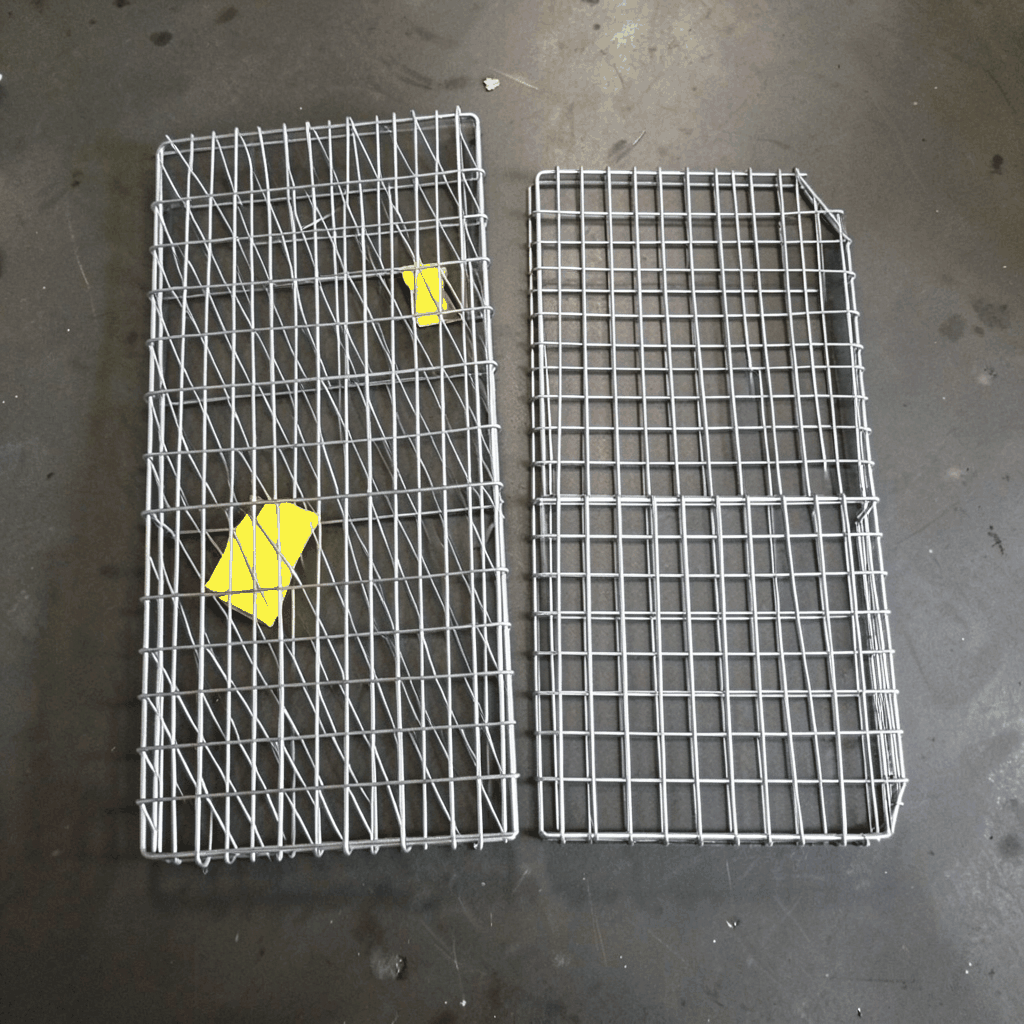
Twill weave follows a different pattern: each weft wire passes over two and under two warp wires, with the pattern staggered on successive wefts. This creates a diagonal line across the surface of the mesh, and the structure allows the use of larger wires in a given mesh count than plain weave can support.
The practical effect is greater mechanical strength and the ability to reach finer apertures without sacrificing wire thickness. Twill weave is therefore a popular choice for filtration applications where differential pressure is significant, such as in mining dewatering screens in Western Australia or in oil and gas separators on offshore platforms. It also resists deformation better under load, which makes it suitable for conveyor belts, vibrating screens, and architectural cladding panels that may be subject to wind pressure in high-rise construction along the Sydney foreshore.
Because the diagonal structure can trap particles, twill weave is harder to clean than plain weave. For sticky or fibrous materials, this can be a drawback, and operators sometimes compensate with ultrasonic cleaning routines or by specifying a smoother surface finish from the mill.
Dutch weave: precision filtration
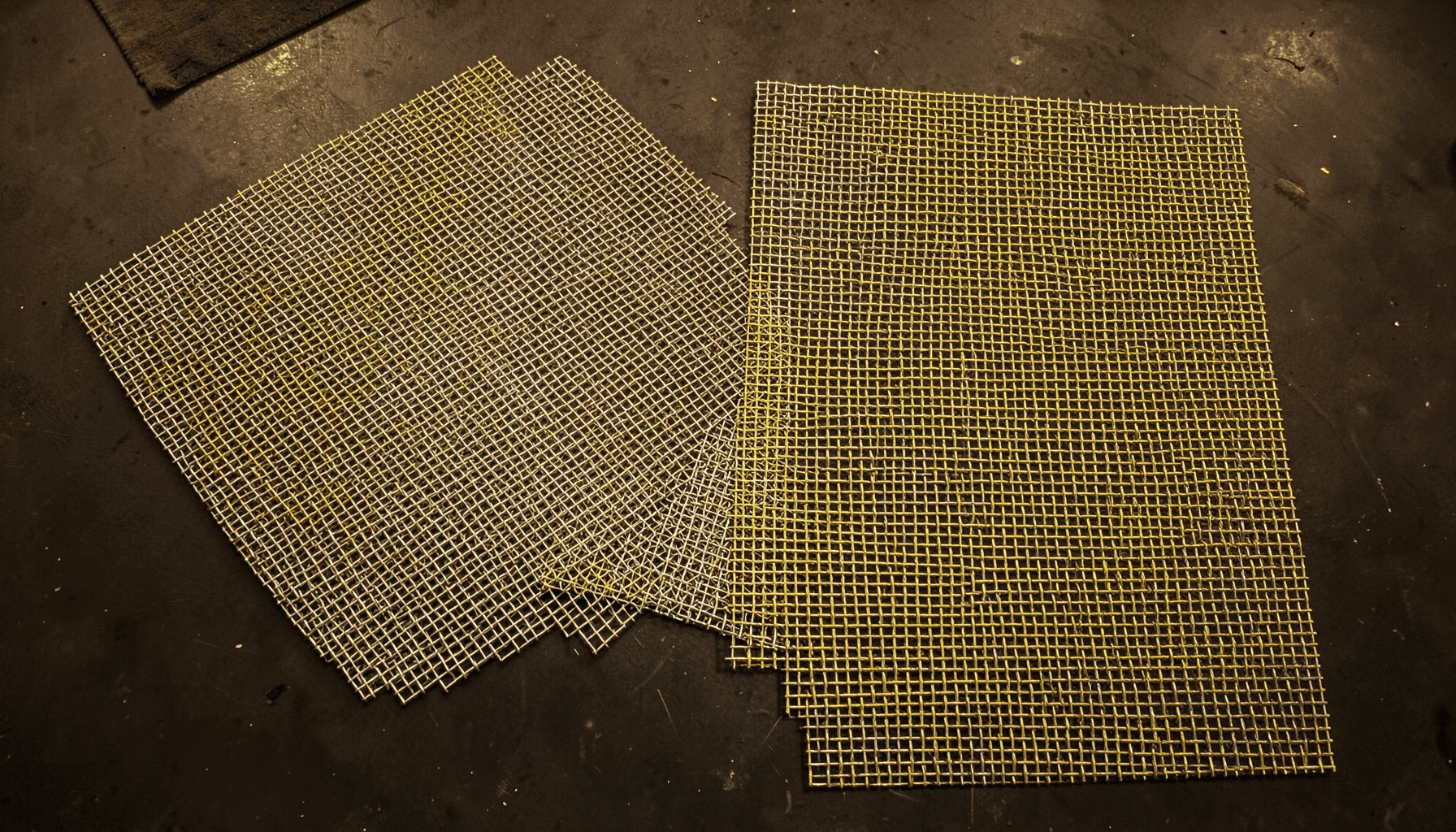
Dutch weave is engineered specifically for fine filtration. In plain Dutch weave, the warp wires are thicker than the weft wires, and the weft wires are packed tightly together so that the apertures are defined by the small gaps between the closely set wefts. In twilled Dutch weave, the same wire size differential is combined with a twill pattern, which further increases strength and allows even finer absolute retention.
Dutch weave produces exceptionally low open area, sometimes only a few percent of the total surface, which is exactly what is needed when capturing fine solids from liquids or gases. Australian wineries in the Barossa Valley and Margaret River use Dutch weave filters to clarify juice and wine, while water treatment plants in Adelaide rely on similar weaves for pre-filtration before membrane systems. Mining operations in Queensland use heavy-gauge Dutch weave for slurry screening where standard weaves would blind almost immediately.
The trade-off is flow rate. Because open area is so restricted, pressure drop across a Dutch weave screen is significantly higher than across a plain weave of the same nominal size. Designers must balance retention requirements against pump or blower capacity, and this is where the supplier's experience becomes valuable. A manufacturer who understands both the weaving process and the end use can recommend the right combination of wire diameters and weave type to meet a target micron rating without choking the system.
Comparing aperture, flow, and strength
A common point of confusion is the difference between nominal and absolute aperture. Plain weave tends to deliver apertures close to its nominal value because the wires are symmetrical. Dutch weave, by contrast, has slit-like openings defined by the spacing between weft wires, and the actual opening size is smaller than the nominal mesh count suggests. This is why Dutch weave is often specified by micron rating rather than by mesh count.
Strength also scales differently across the three weaves. Plain weave provides good tensile strength in both directions but limited flex life. Twill weave offers superior fatigue resistance because each wire crosses fewer intersections and can move slightly under load. Dutch weave, particularly twilled Dutch, delivers the highest mechanical strength per unit area, which is why it is used in pressure-loaded filters and in safety-critical applications such as hydraulic line screens.
For Australian conditions, the choice often comes down to environment as much as to function. Coastal installations from the Gold Coast to Fremantle face salt-driven corrosion that favours 316L stainless steel or higher alloys. Bushfire-prone regions classified under the BAL scale may require non-combustible mesh infill in screens and fences, which all three weaves can satisfy when fabricated from appropriate alloys but which influences the choice of frame and fixing method.
Choosing the right weave for Australian projects
Specification should start with the end use, not with the mesh. A specifier designing a decorative facade in a Melbourne laneway might prioritise surface appearance and cleanability, pointing toward plain weave in a brushed or bead-blasted finish. A process engineer upgrading a dewatering screen in a Pilbara iron ore plant will care far more about wear resistance and open area stability, which often points to twill weave in heavy wire diameters.
Climate and location also shape the decision. In humid subtropical Brisbane, stainless steel grade selection matters as much as weave choice, because even a perfectly woven mesh will fail prematurely if the alloy is unsuited to the environment. In dry inland regions, dust loading can blind fine weaves quickly, so coarser plain or twill weaves with larger apertures are often selected and paired with downstream filtration for finer particles.
Working with a manufacturer that offers customisation across weave type, wire diameter, material, and panel dimension gives Australian buyers more room to optimise. Whether the application is architectural screening in a Sydney apartment tower, a barbecue mesh for a commercial outdoor kitchen, or a precision filter for a winery, the same logic applies: match the weave to the function, then match the material to the environment, and verify both with documented testing.
Material grades and fabrication considerations
Material selection interacts directly with weave choice. Stainless steel 304 remains a versatile, widely available option for general architectural and light industrial use, but 316 is the safer pick in marine or chemically aggressive settings. For higher temperatures, such as in foundry filtration or kiln screens, 310 or Inconel grades may be specified. Aluminium and brass are sometimes chosen for decorative applications because of their colour and finish, though they lack the corrosion resistance of stainless steel.
Fabrication steps after weaving can change the character of the mesh. Calendering compresses the wires to create a flatter, more rigid surface, which is useful for fine filtration. Annealing softens the mesh after work hardening, making it easier to form into cylinders or cones. Cutting, welding, and edge finishing all need to be performed with care, particularly with Dutch weave, where the tight wire packing can be disrupted by rough handling.
Practical specifications worth discussing with your supplier
- Confirm the wire diameter and mesh count against a drawing, and request an actual aperture test for Dutch weave orders.
- Ask for material certificates to ASTM or equivalent standards, and specify 316L when coastal or chemical exposure is expected.
- Clarify tolerance on open area, especially for filtration applications where a small variation can shift retention performance.
- Request sample panels before bulk production when the weave is being used for a visible architectural surface.
Questions to clarify before ordering
- What is the operating environment, including temperature, moisture, and chemical exposure?
- What is the target micron rating or aperture, and is retention or flow rate more critical?
- Are there any regulatory standards, such as Australian food-grade or mining safety codes, that the mesh must meet?
- What fabrication services, such as cutting, welding, or framing, does the supplier provide in-house?
For Australian projects that depend on consistent quality and timely delivery, Shuo Ke Wire Mesh Product Technology Co., Ltd. supplies plain weave, twill weave, and Dutch weave products in stainless steel, aluminium, copper, iron, and special alloys, with custom dimensions and fabrication available. Contact the team with your specification, drawing, or sample, and request a tailored quote for your next project.