Using Iron Mesh to Create Rustic Farmhouse Style Room Dividers
Rustic farmhouse interiors are built around honest materials, practical forms, and a comfortable sense of age. Iron mesh fits naturally into this design language because it adds structure without making a room feel closed off. Its open pattern allows light, air, and visual connection to move between areas while introducing the darker, handcrafted character associated with rural architecture.
A mesh room divider can separate a dining area from a kitchen, define an entryway, screen a home office, or give a bedroom greater privacy. Unlike a solid partition, it creates boundaries without losing the spacious quality of an open-plan floor layout. With the right finish, frame, and installation method, iron mesh can look equally convincing in a renovated farmhouse, a modern country home, or a commercial space inspired by rural design.
The best results come from treating the divider as both a decorative feature and a functional architectural element. Mesh type, wire diameter, panel size, mounting hardware, and surface protection all affect the final appearance and service life. Careful planning helps the divider feel integrated rather than added as an afterthought.
Why Iron Mesh Suits Farmhouse Interiors
Iron has a visual weight that complements reclaimed timber, exposed brick, natural stone, leather, and aged plaster. Its dark surface creates contrast against pale walls and warm wood, while the repeated mesh pattern adds texture without competing with the room’s main features. This combination gives a farmhouse interior a grounded, workshop-inspired quality.
The material also supports the practical spirit of country design. Iron mesh is strong, adaptable, and available in many woven, expanded, perforated, and welded patterns. A fine opening can provide partial privacy, while a larger opening keeps the divider visually light. The choice can be tailored to the purpose of each room instead of relying on a single standard design.
Aged, blackened, bronze, or matte powder-coated finishes can reinforce the rustic effect. For a cleaner farmhouse look, a low-sheen charcoal finish works well. A distressed finish may be suitable for a vintage setting, but it should be controlled so that the divider appears intentionally weathered rather than poorly maintained.
Choosing the Right Mesh Pattern
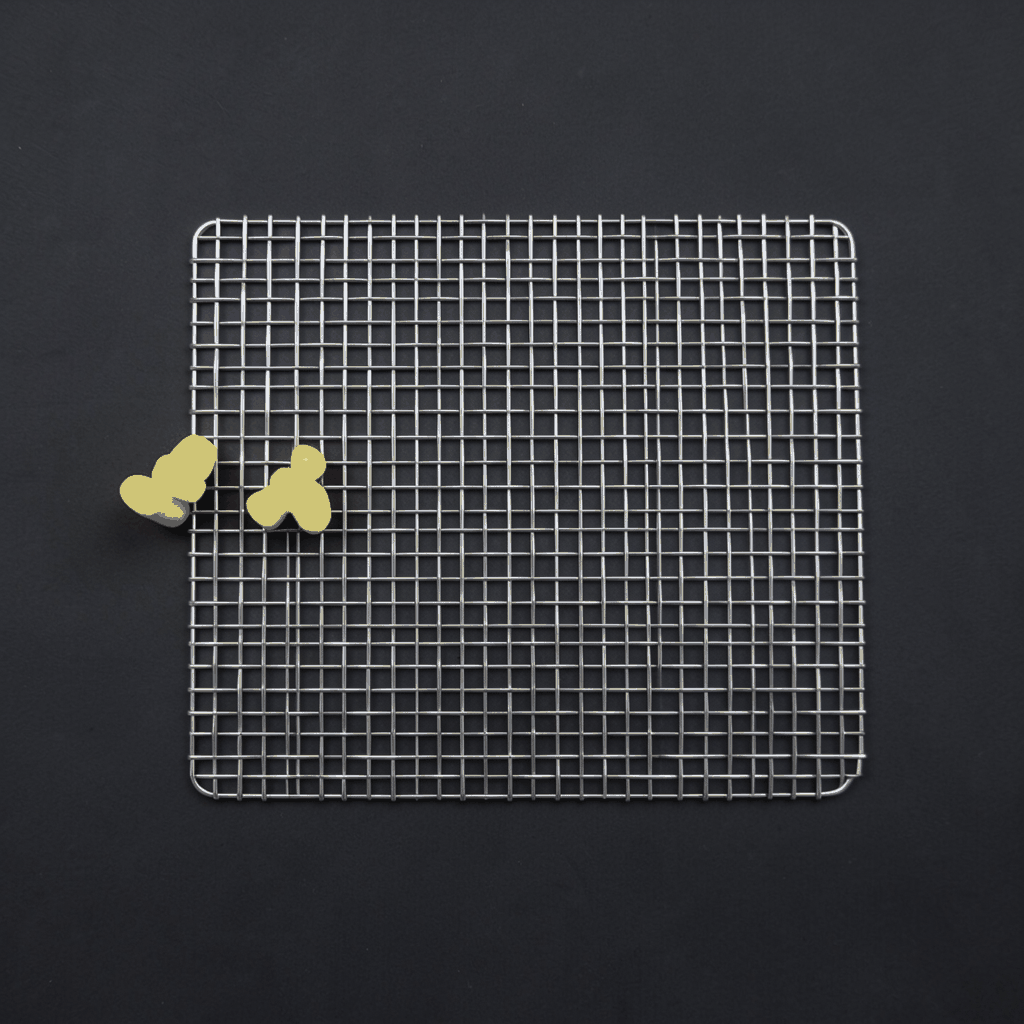
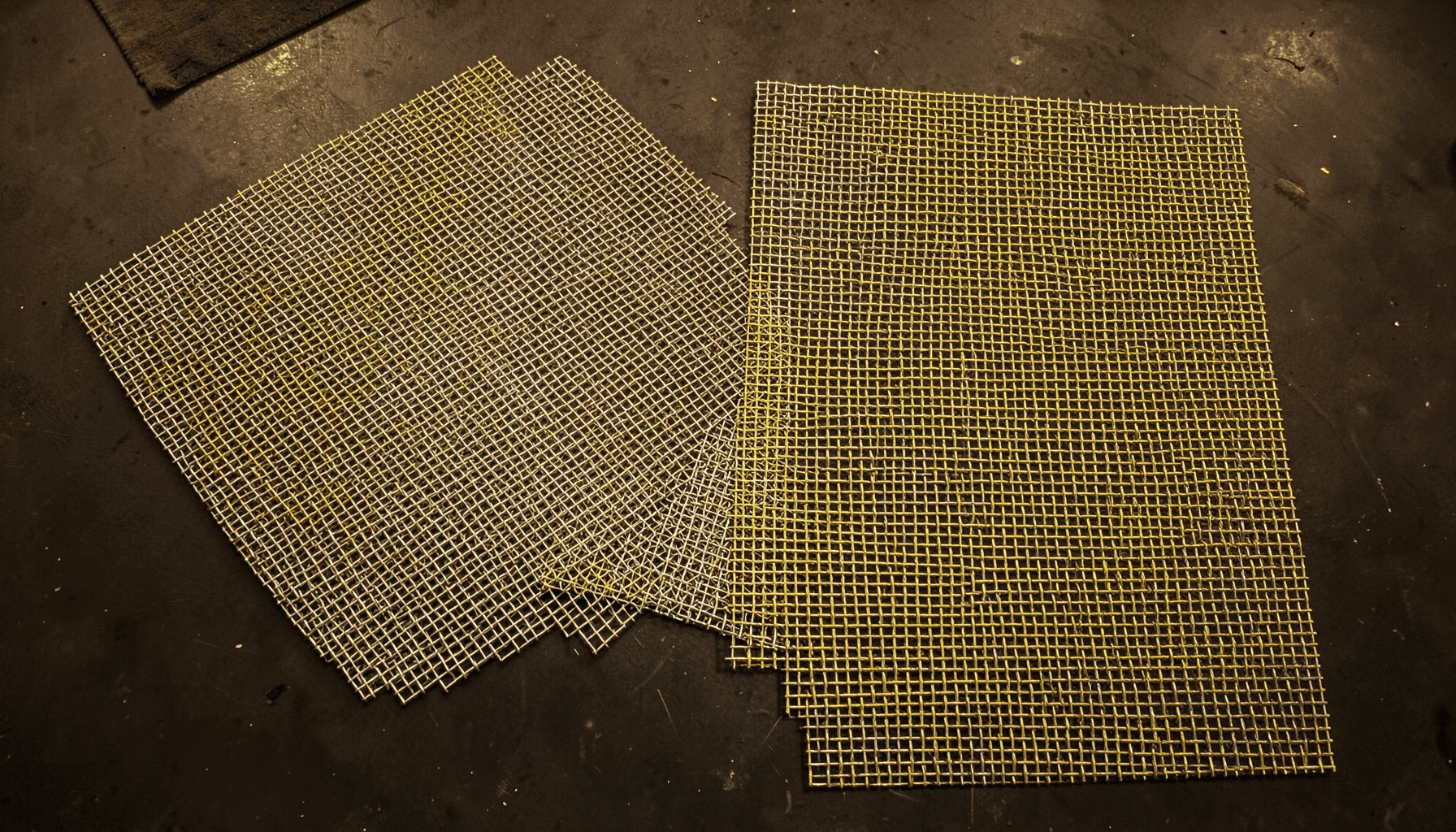
Woven wire mesh is a versatile option for interior screens. Plain weave patterns create a subtle grid that works with simple farmhouse furniture, while twill or decorative weaves offer a richer surface for feature partitions. The flexibility of woven mesh can also soften the appearance of a large divider, especially when it is installed inside a wood or metal frame.
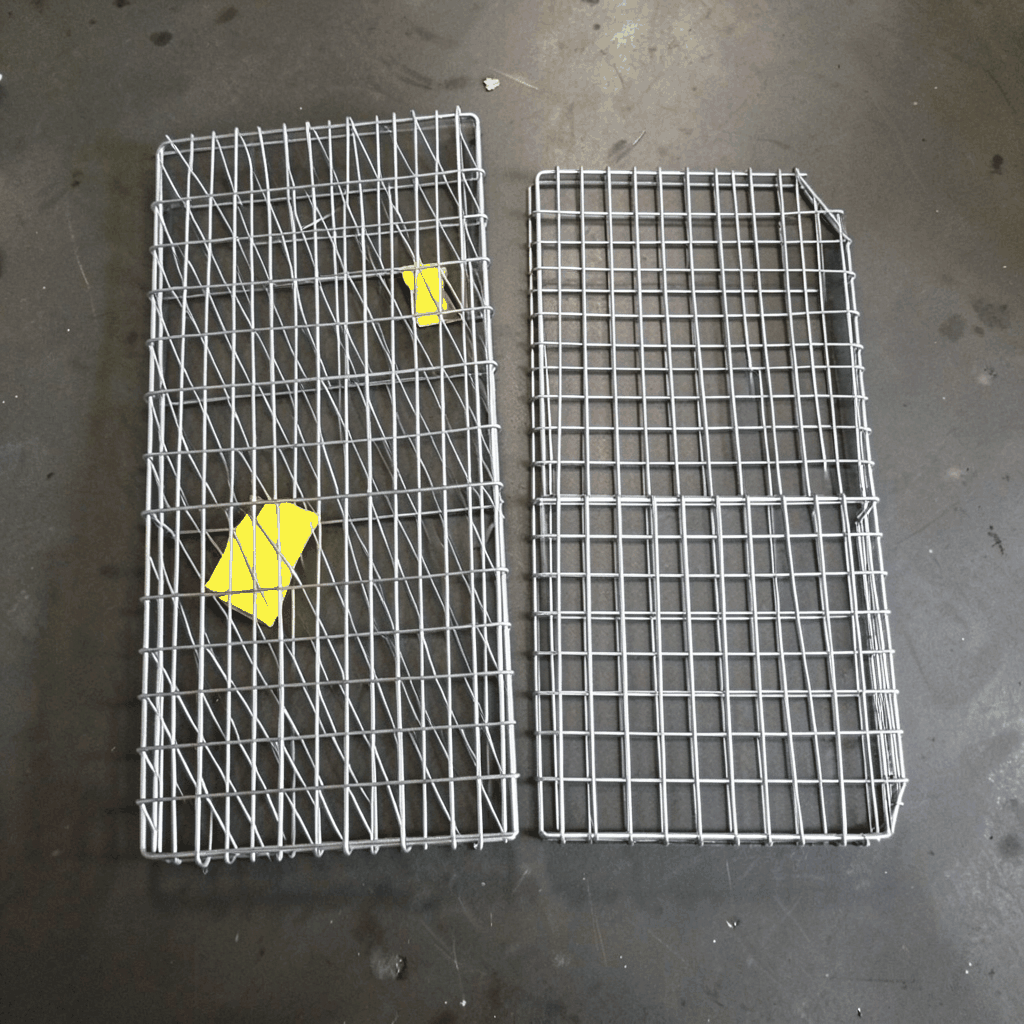
Welded wire mesh has a more regular and architectural appearance. It is useful for fixed partitions, storage screens, stair guards, and room dividers that need a firm, stable panel. The clean intersections provide a strong visual rhythm and pair well with square steel tubing, reclaimed oak, and industrial-style lighting.
Expanded metal mesh introduces a more rugged surface through its diamond-shaped openings. It can create a strong workshop or barn-inspired aesthetic, especially when used as a sliding screen. Perforated sheet metal offers another direction, with round, square, or custom openings that can be selected for privacy, airflow, and visual density.
When selecting a pattern, consider what the divider must do during everyday use. A decorative screen may prioritize appearance, while a divider near a staircase or busy passage needs stiffness and secure edges. A specialist manufacturer can help balance opening size, panel strength, transparency, and fabrication requirements.
Balancing Privacy, Light, And Airflow
The openness of iron mesh makes it valuable in rooms where a solid wall would feel too restrictive. In a farmhouse kitchen, a mesh divider can conceal countertop clutter while still allowing daylight to reach a dining area. In a bedroom, a denser pattern can create a sense of separation without blocking ventilation.
Privacy depends on more than the percentage of open area. Viewing angle, lighting, distance, and the colors behind the screen all affect how much can be seen. A dark mesh placed in front of a light wall may appear more prominent, while a screen backed by shadow can provide greater visual concealment. Layering the mesh with linen curtains, timber slats, or translucent panels can increase privacy when needed.
Sliding and folding systems are especially practical for flexible spaces. A sliding iron mesh panel can remain open during the day and close when a room needs definition. Hinged panels may suit smaller openings, while fixed screens are appropriate where a permanent architectural division is preferred. The operating hardware should match the weight of the panel and be designed for repeated movement.
The following comparison can help establish a starting point for different farmhouse applications:
| Mesh Style | Visual Character | Privacy Level | Suitable Applications | Common Frame Pairing |
|---|---|---|---|---|
| Fine Woven Mesh | Soft, detailed, lightly industrial | Medium to high | Bedrooms, home offices, dining areas | Timber or slim steel |
| Welded Wire Mesh | Regular, structured, practical | Low to medium | Kitchens, entryways, storage screens | Square steel tube |
| Expanded Metal | Rugged, bold, workshop-inspired | Medium | Sliding partitions, loft-farmhouse interiors | Black steel or reclaimed wood |
| Perforated Iron Sheet | Graphic and architectural | Medium to high | Feature screens, corridors, commercial interiors | Steel angle or box section |
| Decorative Woven Mesh | Textured, refined, highly customizable | Varies | Reception areas, feature walls, upscale residences | Brass, bronze, or painted steel |
Framing And Mounting Details
A well-designed frame gives an iron mesh room divider a finished appearance and protects the mesh edges. Reclaimed timber creates a warmer farmhouse expression, particularly when the wood has visible grain, knots, or subtle saw marks. Steel framing creates a more industrial interpretation and can be painted to match window frames, lighting, or door hardware.
The frame should be proportioned to the panel size and mesh weight. Oversized openings may require intermediate rails or vertical supports to prevent movement and vibration. A narrow mesh panel may need only a perimeter frame, while a tall divider may benefit from discreet reinforcement that also contributes to its design.
Mounting details deserve attention because they influence both safety and appearance. Fixed screens can be anchored to the floor, wall, ceiling, or adjacent structure, depending on the building layout. Sliding partitions require a properly supported track, suitable rollers, and enough clearance for smooth operation. Hinged screens should use strong pivots or commercial-grade hinges when the panels are large or frequently used.
For residential projects, concealed fixings can preserve a clean decorative look. In a more utilitarian farmhouse interior, visible bolts and brackets may be used as design features. Whichever approach is selected, the hardware must be corrosion-resistant and compatible with the iron finish.
Integrating Mesh With Rustic Materials
Iron mesh works best when it is repeated thoughtfully through the interior rather than isolated as a single dark object. A screen can coordinate with iron pendant lights, cabinet pulls, shelf brackets, fireplace accessories, or window muntins. Repeating the material in small details helps the divider feel connected to the overall room scheme.
Wood is the most natural companion material. A thick oak frame can make a mesh partition feel traditional and substantial, while a slim pine frame produces a lighter, more casual effect. Reclaimed boards can add character, but they should be properly cleaned, dried, and sealed before being used near moving hardware or finished interior surfaces.
Brick and stone provide a strong backdrop for dark iron. A mesh divider placed near a masonry wall can emphasize the texture of both materials, creating depth without excessive decoration. For softer interiors, pair the screen with linen upholstery, woven rugs, ceramic accessories, and warm white paint to prevent the metal from feeling too severe.
Color temperature also matters. Warm lighting brings out bronze and brown tones in a dark finish, while cooler lighting makes black mesh appear sharper and more contemporary. Sample panels should be viewed in the actual room at different times of day before the final finish is approved.
Finishes, Maintenance, And Longevity
Interior iron mesh can be finished in several ways, including paint, powder coating, oil treatment, patination, and protective clear coating. Powder coating provides a consistent surface and is available in matte black, charcoal, bronze, brown, and custom colors. It is a practical choice for high-use areas because it resists everyday scuffing and creates an even appearance across the frame and mesh.
A traditional painted finish can be distressed to support a reclaimed or vintage look. However, intentional aging should not expose vulnerable areas unnecessarily. If the screen is installed in a humid kitchen, entrance, bathroom-adjacent area, or coastal property, a suitable primer and protective coating are important for rust prevention.
Routine care is simple. Dust can be removed with a soft brush, vacuum attachment, or dry microfiber cloth. For heavier dirt, use a slightly damp cloth and a mild cleaner, then dry the surface promptly. Abrasive pads and strong chemicals may damage the coating and create uneven patches that are difficult to repair.
The environment should guide material selection. Standard iron may be appropriate for dry interior rooms, while galvanized steel, stainless steel, or specially coated metal may be preferable where moisture and condensation are common. Shuo Ke Wire Mesh Product Technology Co., Ltd. can assist with selecting materials, mesh forms, surface treatments, and fabrication details for residential, commercial, and architectural applications.
Planning A Custom Divider
Every room has different dimensions, sightlines, circulation needs, and structural conditions. Begin by recording the opening width, finished floor-to-ceiling height, nearby skirting boards, electrical points, and the direction of movement through the space. These measurements determine whether a fixed, hinged, folding, or sliding system will be most practical.
The divider’s purpose should also be defined early. A screen used to separate a dining area may need only visual definition, while a home office divider may require denser mesh and acoustic support from fabric or wood elements. If the screen is intended to protect a stair, balcony edge, or elevated platform, local building and safety requirements must be reviewed before fabrication.
Useful decisions to settle during the design stage include:
- Select the mesh opening according to privacy, airflow, and desired visual weight.
- Choose a frame material that complements existing wood, masonry, or metal features.
- Specify a corrosion-resistant finish for kitchens, entrances, and humid environments.
- Confirm panel weight, track capacity, hinge strength, and fixing locations.
- Request shop drawings or samples before approving the complete production run.
Custom manufacturing is especially valuable when the divider must fit an irregular opening or include decorative details. Laser-cut motifs, curved edges, mixed mesh panels, integrated handles, and coordinated gates or screens can be developed as part of one visual system. This makes it easier to achieve consistent proportions and finishes across a larger interior project.
Making The Divider A Lasting Feature
A rustic farmhouse divider should contribute to the room’s daily comfort, not obstruct it. Leave sufficient clearance around doors, furniture, walkways, and heating equipment. Sliding panels should have a dependable stop, while freestanding screens need a stable base that prevents tipping during normal use.
Scale is equally important. A very dense or heavily framed divider can dominate a small room, whereas an overly delicate panel may disappear in a large open space. Repeating the screen’s vertical or horizontal lines in nearby furniture can help establish visual balance without making the interior feel overly coordinated.
Iron mesh offers a useful middle ground between decoration and construction. It can create a clear boundary while preserving daylight, airflow, and the layered appearance that makes farmhouse interiors inviting. With suitable engineering and a carefully selected finish, the divider can remain attractive through changing décor trends and everyday use.
For a customized iron mesh partition, decorative screen, sliding panel, or architectural metalwork package, contact Shuo Ke Wire Mesh Product Technology Co., Ltd. Share your dimensions, preferred mesh pattern, material, finish, and application requirements to develop a durable room divider suited to your farmhouse interior.