Building secure gates with perforated and woven mesh
A security gate must do more than close an opening. It must resist unauthorised entry, tolerate repeated movement, fit its surroundings and remain safe for everyone nearby. Combining two mesh types gives designers useful control over rigidity, visibility and appearance without settling for a generic fence panel.
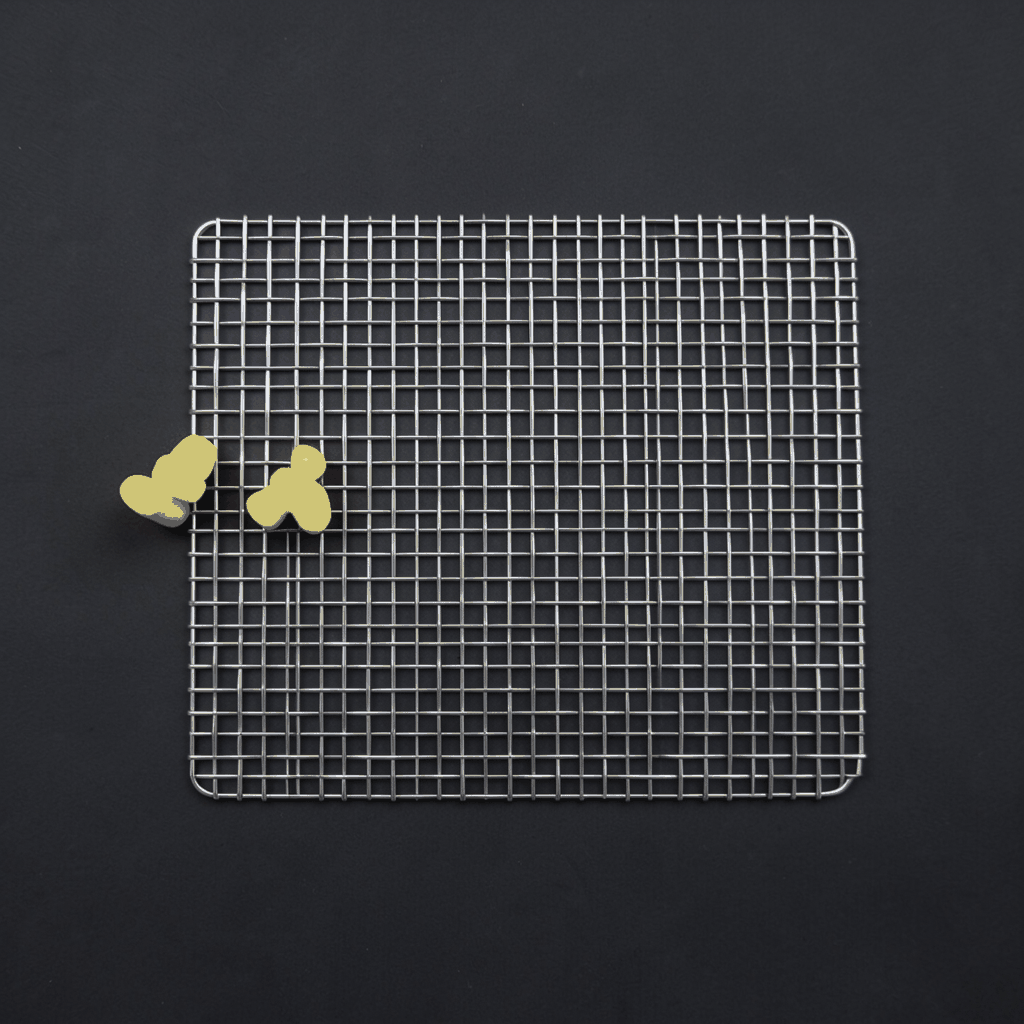
Using perforated and woven mesh for combined security gates balances a continuous, punched surface with a see-through wire screen. Perforated sheet can stiffen selected areas of a leaf, while woven wire preserves sightlines and airflow. The combination suits apartment access points, commercial properties, warehouses, schools, service yards and municipal facilities across Australia.
Balancing strength, visibility and access
Treat the leaf as a set of security zones rather than one uniform screen. A tightly perforated, well-supported lower panel can stiffen the bottom of the leaf and reduce opportunities for tool access near the latch, while a woven upper panel preserves sightlines for staff and cameras. Architectural mesh inserts can create a focal point where the gate faces a street or landscaped courtyard.
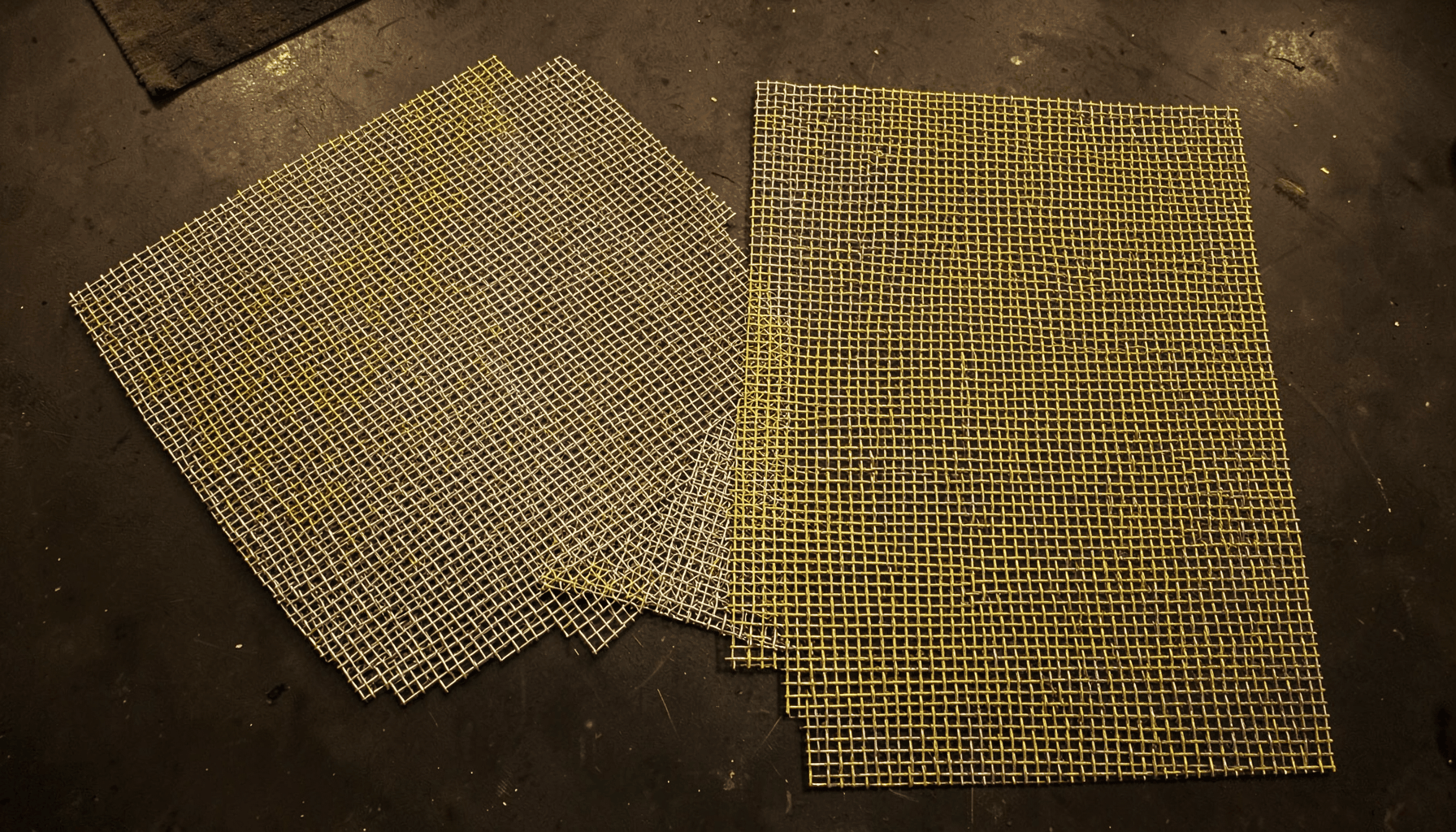
Open area should be selected against the actual risk and use. A visually open panel can still allow a hand or tool to reach a lock if its holes are too large; very fine woven wire can create glare, restrict views or trap debris. Specify hole diameter and pitch for perforated sheet, plus aperture, wire diameter and open area for woven mesh. A physical sample helps confirm how much access the panel permits.
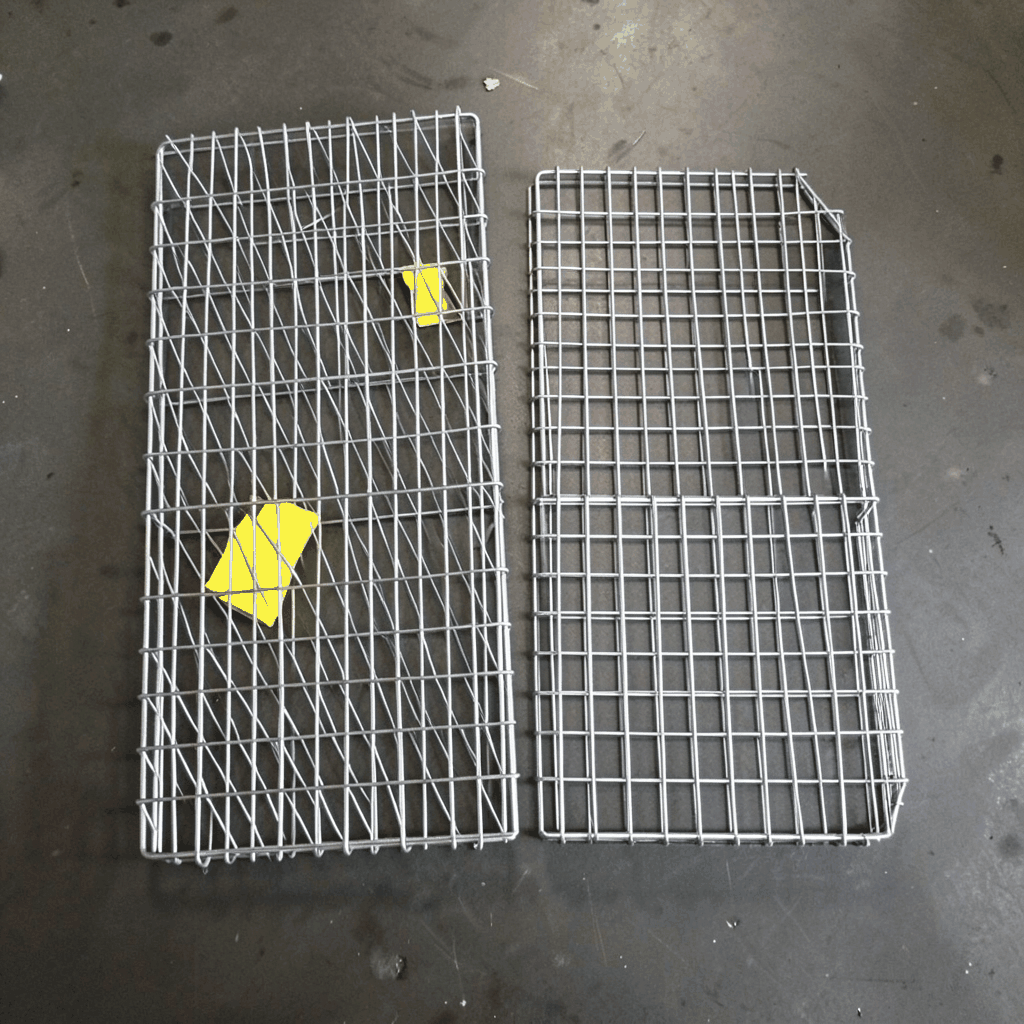
The junction between the two materials needs deliberate detailing. Flush welded sections or carefully positioned fixings can keep the face flat, but exposed bolts and irregular edges become potential snagging points. Check sheet thickness, support spacing and drainage so that neither section can rattle, lift or collect water. The mesh specification should be coordinated with the frame rather than added after the structural design is complete.
Pedestrian gates and vehicle gates should not share the same assumptions. A person may pass close to the latch, while a vehicle can transmit impact and vibration into the leaf. Consider handle projection, swing direction, closing speed and the space available for pedestrians. For an accessible route, confirm the clear opening and threshold against the applicable Australian access provisions instead of relying on the gate's nominal width.
Selecting materials for Australian conditions
Material selection should start with the local exposure, not with appearance alone. Coastal areas around Sydney, Brisbane, the Gold Coast and Perth combine salt-laden air with humidity that can attack unsuitable stainless grades, fasteners and welds. Grade 316 stainless is a sensible starting point for many exposed coastal applications, while 304 requires closer scrutiny in a marine setting or around chlorinated cleaning chemicals.
Hot-dip galvanised steel can provide a durable, economical option for gates and fences when fabrication and repair of welds are properly controlled. Aluminium reduces weight and does not rust in the manner of steel, but stiffness, welding and surface preparation for coatings still need attention. Copper can support a distinctive architectural finish, although its weathering behaviour and maintenance requirements should be accepted before it is specified for an exposed gate.
Treat hinges, locks, anchors and connectors as part of the same material system. A marine-grade frame with ordinary mild-steel screws is not a complete corrosion solution, and contact between dissimilar metals can accelerate deterioration. Match finishes, isolate incompatible metals where needed and specify the service environment clearly. For coastal and tropical sites, detailing the underside of rails and the water traps around fasteners can matter as much as the nominal metal grade.
Engineering frames, hinges and latches
The infill must never be treated as a decorative layer that is independent of the structure. Specify a frame with enough stiffness for the leaf's weight, the spacing of its hinges and the loads created by closing, leaning and vehicle contact. Wide or tall leaves may need intermediate rails or bracing. Deflection at the latch is especially important: a slightly warped gate may fail to close or provide a positive lock, while a gate beside traffic should not be assumed to be a crash-rated barrier without a defined design and test.
Assess design wind actions using the AS/NZS 1170 series and the site's exposure, terrain and wind region. This is particularly relevant to broad driveway gates, open coastal land and properties in tropical northern Australia. Wind pressure can bow the frame, distort the mesh, overload hinges and pull a latch away from its strike. The relevant Australian wind loads therefore need to inform the frame section, bracing and anchor arrangement, rather than being checked only after the mesh has been chosen.
Select hardware for the way the gate will actually operate. Hinges need to carry the leaf without binding, and the latch needs a positive locked position that cannot be easily lifted. Emergency exits may require approved self-closing hardware and any applicable fire-performance provisions. Gates on public or workplace routes also need attention to finger traps, sharp edges, projecting handles and safe operation. These details should be reviewed as part of the gate, not treated as optional accessories.
Matching mesh patterns to the application
Different locations need different balances of security and openness. At an apartment entrance in Melbourne or a commercial forecourt in Brisbane, perforated lower panels and fine woven upper panels can preserve views while giving the entrance a crisp architectural identity. In an industrial setting, a larger woven aperture may improve airflow and supervision, provided the lock zone, climb resistance and vehicle impact needs are handled separately.
Perforated patterns can carry a geometric screen, architectural motif or restrained brand feature without turning the gate into a blank plate. Shuo Ke Wire Mesh Product Technology Co., Ltd. produces laser-cut screens and decorative metal mesh, allowing an approved sample to be judged for shadow, reflection and transparency before full fabrication. Keep openings away from critical hardware where they could create a gripping or hooking point, and check that the pattern remains legible from the approach visitors will use.
Measure the actual opening, not only the adjacent fence line. Allow for post dimensions, hinges, handles, uneven paving and the swing or sliding mechanism. A small planning error can produce binding, a noisy closing cycle or a gate that cannot latch correctly. Site photographs, finished-floor levels and a clear record of opening direction, traffic movements and pedestrian routes give the mesh supplier and installer a buildable layout rather than a nominal width with hidden constraints.
Planning supply, compliance and installation
A useful custom-gate brief includes overall dimensions, opening direction, finished-floor level, post sizes, fixing material, preferred mesh pattern, lock type, service environment and relevant Australian project standards. Check a sample panel at hand scale and under the site's likely lighting; screen images cannot reveal glare, visual noise or the discomfort of very fine wire. Prototype approval before frame fabrication also helps prevent costly changes once cutting, welding and finishing are underway.
Customs and import logistics deserve attention before production begins. A licensed Australian customs broker can confirm the tariff classification, import paperwork, Australian GST and any applicable duty, as well as the consignment's current biosecurity status. Metal goods should not be assumed to need or avoid inspection automatically; the exact material, finish and intended use should be described accurately. Freight, packing and any local handling costs should be included in the comparison between suppliers, not treated as a surprise at delivery.
Plan installation with qualified local trades and the relevant Safe Work Australia requirements. Where a gate opens across a footpath, driveway or vehicle route in Melbourne or Sydney, council permits and traffic management may affect the sequence. For concrete-mounted gates, allow for curing, confirm post alignment and test anchors, clearances, closing action and latching before handover. A well-drawn gate still needs a sound foundation and correct adjustment to operate as designed.
Long-term performance depends on straightforward maintenance. Inspect welds, fasteners and coatings, replace damaged wires rather than bending them back into place, and remove salt and dirt where the finish allows. Stainless steel in a coastal setting still benefits from periodic washing. Keep a record of the mesh specification, wire grade, frame section and finish so that a damaged panel can be reproduced accurately and the repaired gate continues to read as one coordinated installation.
Give the supplier the opening dimensions, service environment, preferred material and access requirements, and request a coordinated recommendation for woven mesh, perforated infill, framing and hardware. A physical sample and an agreed specification help prevent unsuitable details from reaching fabrication while keeping the finished installation consistent with its architectural and security needs.
Contact Shuo Ke Wire Mesh Product Technology Co., Ltd. to discuss custom woven and perforated infill, finish selection and a coordinated specification for your Australian security-gate project.