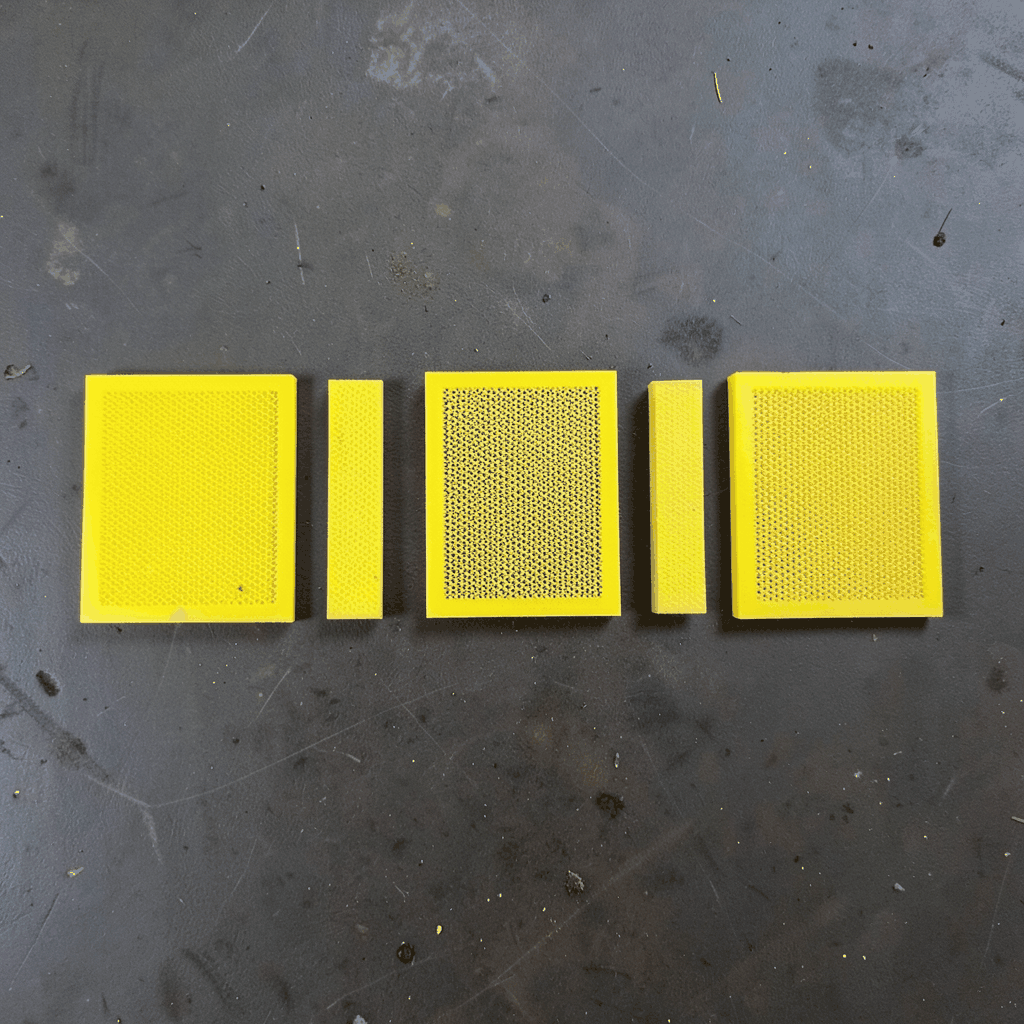
Using stainless steel mesh for brew kettle hop filters and wort screens
Brewing systems depend on reliable separation at several stages, but the kettle is where filtration choices directly affect wort flow, hop utilization, cleaning, and transfer performance. A properly designed mesh filter can retain hop particles while allowing clarified wort to move toward the outlet without excessive resistance.
Stainless steel is widely used for kettle screens, hop filters, false bottoms, and pickup tubes because it combines corrosion resistance with mechanical strength. It can tolerate hot wort, repeated cleaning, and routine handling more effectively than many plastics or coated metals.
The most suitable design depends on the brewing process. A system using whole-cone hops may require a different opening size and surface area than one using pellet hops. Kettle volume, pump capacity, drain geometry, whirlpool behavior, and cleaning methods should all be considered before selecting the mesh.
What the mesh must do inside a brew kettle
A wort screen has two primary jobs: retain solids and maintain flow. During the boil, it should prevent hop material from entering the outlet or transfer line. After the boil, it should allow wort to pass through with enough velocity for efficient draining, chilling, or recirculation.
The filter must also withstand thermal cycling. A brew kettle may move from ambient temperature to boiling conditions and then cool quickly during chilling. Mesh, frame components, welds, and fittings should remain stable through these temperature changes without distortion or separation.
The filtration challenge changes with the type of hop material. Whole hops are relatively large and can form a loose, permeable layer. Pellet hops break down into fine particles that may migrate through coarse openings and create a compact layer over the screen. This layer can restrict flow even when the underlying mesh is correctly selected.
A large filtration area is often more important than an extremely fine opening. Increasing the exposed screen area lowers the average flow velocity through the mesh and reduces the likelihood of rapid blockage. For this reason, a cylindrical pickup screen, broad false bottom, or wraparound filter can outperform a small fine-mesh cap.
Selecting stainless steel and mesh construction
304 stainless steel is suitable for many brewing environments and offers a practical balance of corrosion resistance, availability, and cost. It is commonly used for kettle screens, filter baskets, perforated panels, and fabricated brewing accessories.
316 or 316L stainless steel may be preferred when the equipment faces more aggressive cleaning chemistry, high chloride exposure, or demanding commercial conditions. The molybdenum content in 316 improves resistance to localized corrosion, although it does not remove the need for correct cleaning and rinsing.
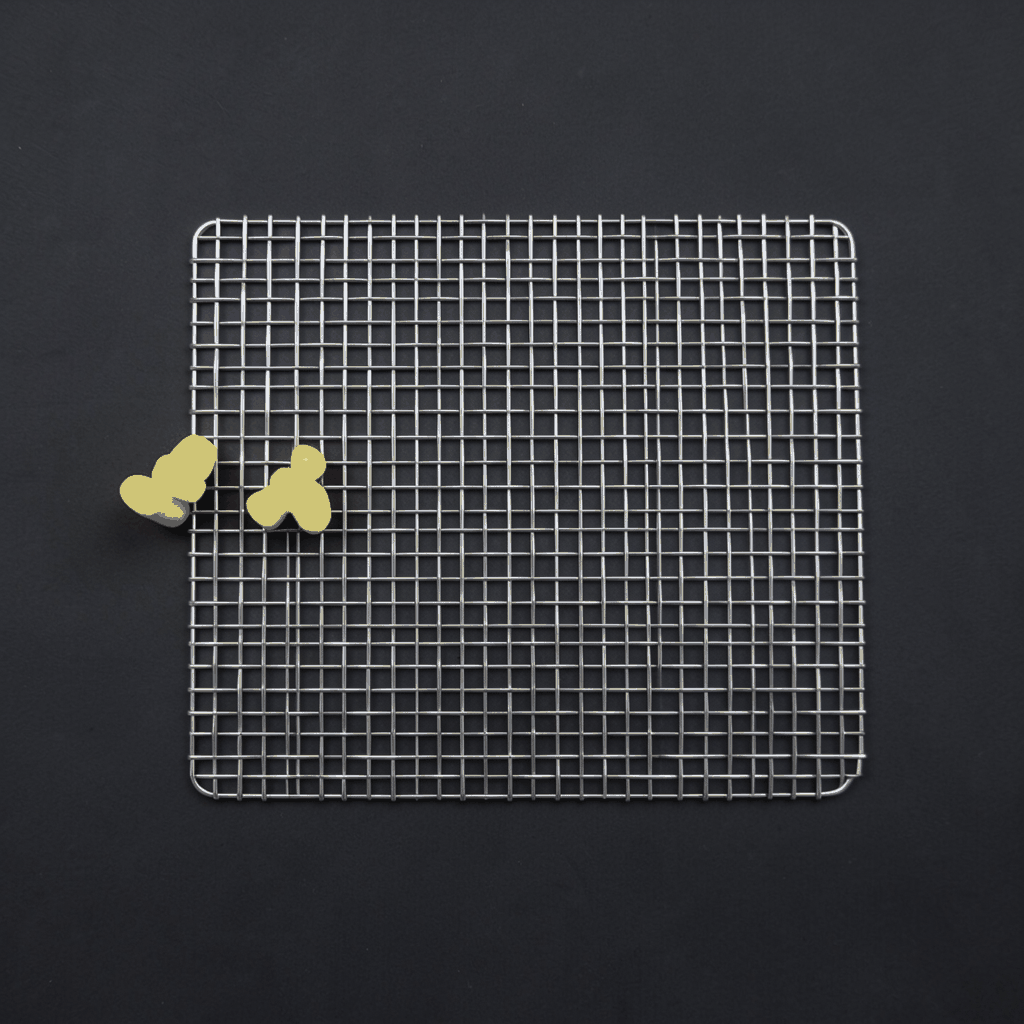
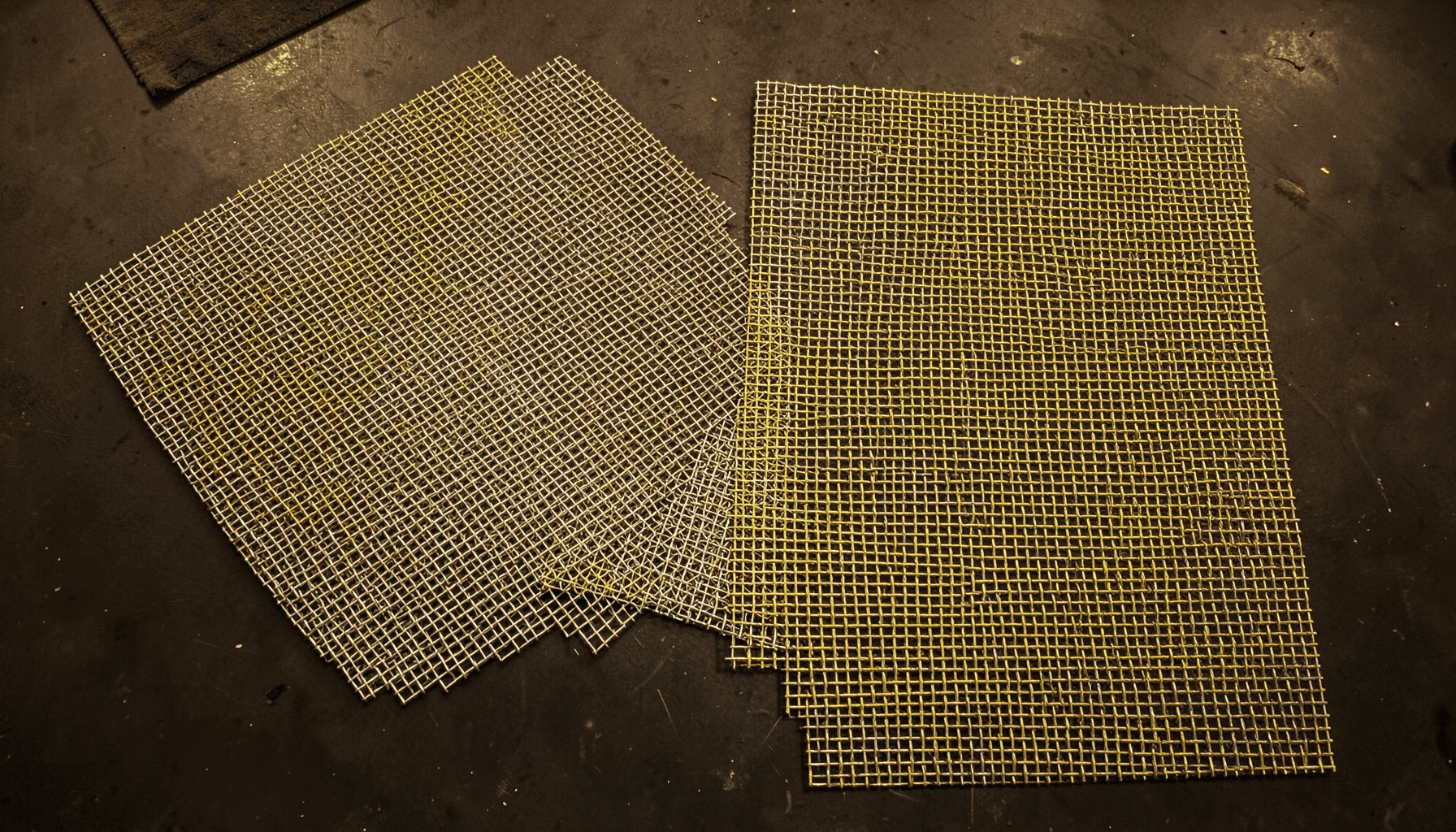
Woven wire mesh provides precise openings and a broad selection of weave patterns. Plain weave is easy to source and works well for many wort screens. Dutch weave can provide finer filtration with stronger wires, but its flow characteristics differ from ordinary square mesh and should be reviewed carefully before fabrication.
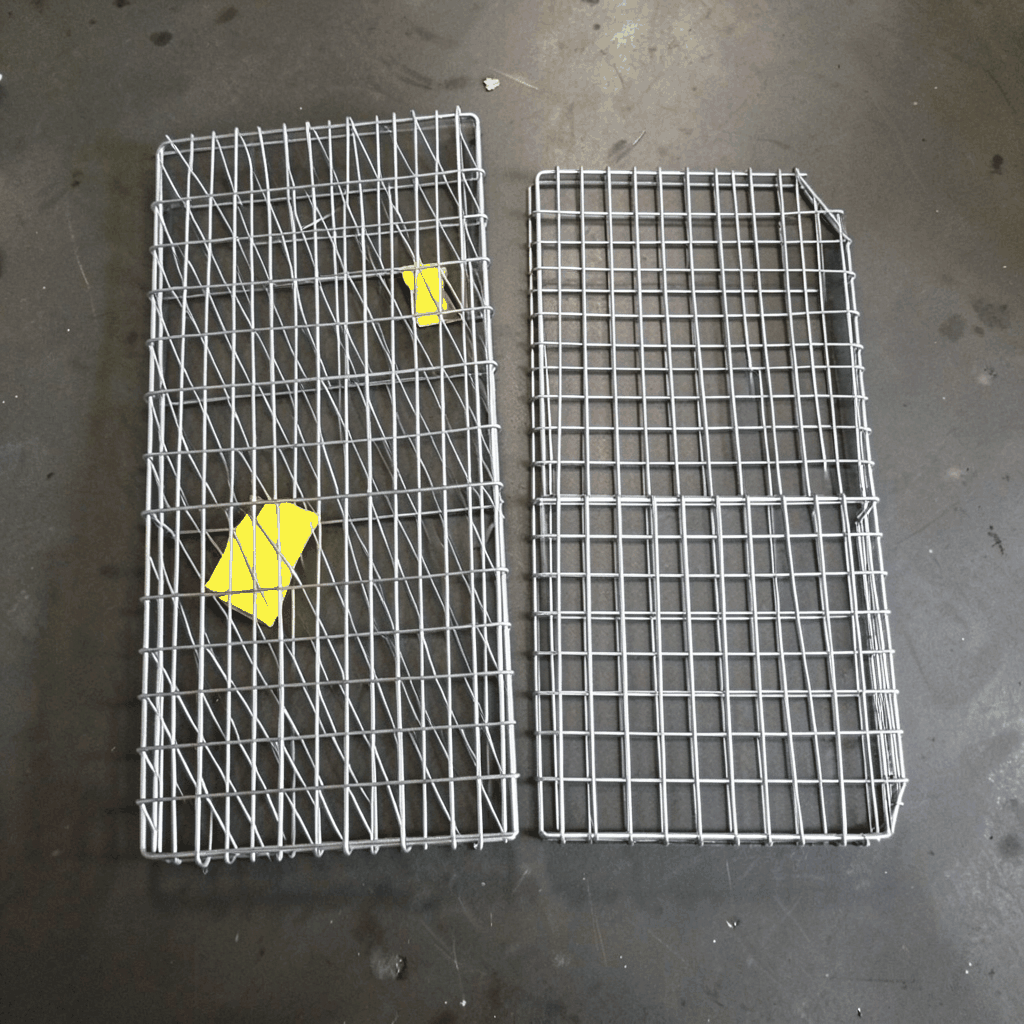
Perforated sheet offers larger, rigid openings and is useful when structural support is important. Expanded metal can provide strength and open area, though its irregular geometry may be less suitable for retaining fine hop particles. Welded wire mesh is rigid and easy to form, but its opening tolerance and weld quality need to meet the intended filtration requirement.
For sanitary brewing equipment, the surface should be smooth, free from sharp projections, and easy to inspect. Continuous welds, rounded edges, appropriate passivation, and polished contact surfaces help reduce residue accumulation. A filter that performs well hydraulically but traps organic matter in seams or corners can create avoidable sanitation problems.
Matching openings to hops and wort flow
Mesh size is commonly described by mesh count, aperture, wire diameter, or micron rating. These terms are related but not interchangeable. A high mesh count does not automatically mean the most effective filter because wire diameter changes the available open area and flow resistance.
Fine mesh may capture more sediment, but it can also blind quickly when exposed to hop pellets, trub, or break material. Coarser mesh usually allows faster drainage and is easier to clean, although it may permit more solids into the downstream line. The correct compromise depends on whether the screen is intended as a primary hop barrier or a final polishing filter.
Flow calculations should consider the open area of the mesh rather than its nominal size alone. The pressure drop increases when the liquid velocity rises, when the mesh becomes covered with solids, or when the screen has insufficient area. A pump that performs well through clean mesh may struggle after a dense hop bed forms.
The location of the filter also matters. A screen positioned directly over a kettle outlet can experience high local loading. A larger surface surrounding a pickup tube distributes suction more evenly. A false bottom can support a thick filter bed, while a hop basket keeps plant material contained before it reaches the kettle bottom.
| Mesh solution | Typical strengths | Main limitation | Suitable brewing use |
|---|---|---|---|
| Plain woven stainless mesh | Precise openings, broad size range, adaptable fabrication | Can deform if unsupported or tightly handled | Hop filters, pickup screens, small filter baskets |
| Dutch woven mesh | Fine retention with strong wires | Higher flow resistance and more difficult cleaning | Fine trub separation or specialized wort filtration |
| Perforated stainless sheet | Rigid, durable, easy to support | Larger openings may pass fine hop particles | False bottoms, heavy-duty kettle screens |
| Welded wire mesh | Strong structure and clean geometry | Opening selection may be less precise than woven mesh | Large baskets, framed screens, commercial equipment |
| Stainless hop basket | Contains hops across a large area | Requires suitable volume and immersion | Pellet or whole-hop containment during boiling |
Designing a screen for practical brewing equipment
A filter should be designed around the kettle outlet, tubing, valve, and transfer pump rather than treated as an isolated component. The screen opening should not become the smallest restriction in the entire system unless that restriction is intentional and manageable.
For a pickup tube, a slotted or cylindrical stainless steel mesh sleeve can create more filtration area than a flat cap. The sleeve should be supported so suction does not pull the mesh inward. End caps and welds must be cleanly finished, with no crevices that retain wort or cleaning solution.
False bottoms need sufficient rigidity to support grain or hop material without collapsing. Although a false bottom is usually associated with the mash tun, similar principles apply to kettle screens: support spacing, load distribution, drain clearance, and access for cleaning all influence long-term performance.
A removable screen basket is often convenient for small and medium brewing systems. It allows hops to be lifted out before transfer and makes visual inspection straightforward. The basket must be large enough to avoid compressing hop material into a dense plug, especially when pellets expand and disintegrate during boiling.
For larger systems, a custom-fabricated screen can be integrated with a kettle wall, drain assembly, or whirlpool outlet. The fabricator should receive details such as kettle diameter, outlet size, expected batch volume, hop type, pump flow, operating temperature, and cleaning chemicals. These details help determine mesh material, aperture, support structure, and connection method.
Cleaning, passivation, and sanitary performance
A stainless steel hop filter is only as sanitary as its least accessible surface. After brewing, hop oils, proteins, polyphenols, and trub can dry onto the mesh. Rinsing soon after use reduces the effort required to remove these residues.
Backflushing can be effective for cylindrical screens and narrow passages. Spray pressure should be directed from the clean side toward the dirty side when possible, pushing solids out of the openings instead of driving them deeper into the weave. A soft brush may help with a removable basket, but abrasive tools can damage the surface.
Cleaning chemicals must be compatible with the selected stainless grade and the equipment’s welds and fittings. Chloride-rich products and prolonged chemical contact can increase corrosion risk. After cleaning, thorough rinsing and complete drainage are important, particularly where the mesh joins a frame or threaded fitting.
Passivation removes free iron and supports the formation of a stable passive oxide layer after fabrication. Electropolishing can further improve cleanability by smoothing microscopic surface irregularities. These treatments are especially valuable for commercial brewing equipment, frequent production cycles, and components that are difficult to inspect internally.
Common problems and ways to avoid them
The most common failure is selecting an opening that is too fine for the expected solids load. A filter can work perfectly with whole hops and then clog rapidly when the same kettle is used with a large pellet addition. Testing with the actual hop format and batch process is more informative than relying on mesh terminology alone.
Another problem is insufficient filter area. When wort is drawn through a small screen at high velocity, hop particles accumulate quickly and form a dense cake. Expanding the screen surface, reducing pump speed during the first part of transfer, or using a whirlpool rest can improve performance.
Poor support can cause mesh collapse, stretching, or fatigue around the outlet. A backing frame, perforated support plate, or properly spaced ribs can preserve the intended opening and prevent localized stress. Welded attachments should be smooth and free from cracks or incomplete fusion.
A screen can also create false confidence if it is used as a substitute for process control. Whirlpool settling, appropriate hop containment, controlled pumping, and adequate trub management reduce the load placed on the filter. The best result usually comes from combining a suitable mesh screen with a stable brewing process.
Recommendations for specification and fabrication
When ordering a custom stainless steel wort screen or hop filter, the following points should be defined:
- Specify 304 or 316 stainless steel according to cleaning conditions, chloride exposure, and production requirements.
- State the intended hop format, batch volume, operating temperature, pump flow, and kettle outlet dimensions.
- Request the aperture, wire diameter, open-area percentage, and mesh tolerance rather than giving only a mesh-count description.
- Choose a screen area and support structure that can handle solids loading without collapsing or creating excessive pressure drop.
- Require smooth edges, sanitary welds, passivation or polishing where appropriate, and a design that can be removed or thoroughly cleaned.
A manufacturer experienced in woven mesh, perforated sheet, welded mesh, and custom metal fabrication can compare several constructions before production. Shuo Ke Wire Mesh Product Technology Co., Ltd. works with stainless steel and other alloys for customized filtration and industrial components, making it possible to adapt the material, geometry, frame, and connection method to a specific kettle system.
Stainless steel mesh for brew kettle hop filters and wort screens should be selected as part of the complete fluid path. Material grade, aperture, wire diameter, open area, screen shape, support, and cleaning access all influence the finished result. A carefully engineered component can provide dependable solids retention without turning the kettle outlet into a recurring blockage point.
Send your kettle drawings, outlet details, target flow rate, hop type, and cleaning requirements to a qualified metal mesh manufacturer for a tailored design and production quotation.