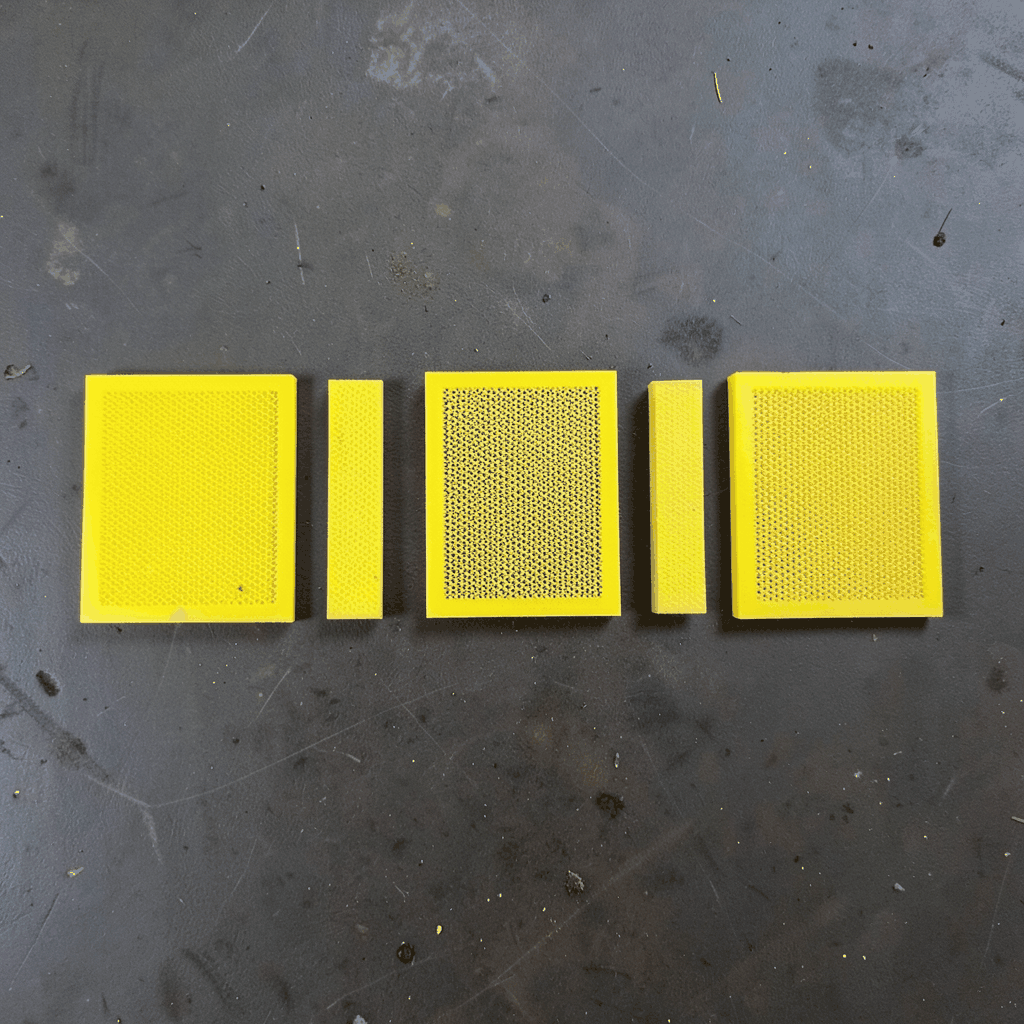
Wire mesh media support trays for chemical vapor deposition
Chemical vapor deposition (CVD) depends on controlled contact between reactive gases, heated surfaces, and the material being coated. A support tray may appear to be a simple handling component, yet its mesh design can influence gas distribution, heat transfer, coating uniformity, particle generation, and maintenance requirements. When the tray supports wafers, coupons, fibers, powders, or small components, its structure becomes part of the process environment.
Wire mesh offers an alternative to solid plates and perforated sheets. Open construction can improve gas access around the load, reduce stagnant zones, and make it easier to remove residual chemicals after a deposition cycle. The right configuration, however, must be selected according to temperature, precursor chemistry, substrate geometry, chamber design, and cleaning method.
For CVD equipment manufacturers and process engineers, a media support tray should be treated as a functional process component rather than a generic metal basket. Wire diameter, aperture size, material grade, edge construction, weld quality, and surface finish all affect performance. A manufacturer experienced in customized industrial mesh can help convert these requirements into a practical tray design.
How the support tray affects a CVD process
A CVD support tray holds the workpiece in a repeatable position while allowing carrier gas and precursor vapors to move through or around the load. This positioning helps maintain a predictable distance from the showerhead, hot wall, induction source, or other heating arrangement. Small changes in elevation or orientation can alter local temperature and deposition rate, particularly in compact reactors.
The tray also affects boundary layers near the substrate. A solid support can block flow beneath the workpiece, while a woven or welded mesh structure creates additional pathways for gas movement. This may help reduce concentration differences between the upper and lower surfaces of a load. The effect depends on open-area percentage, wire profile, tray height, and the chamber’s overall flow pattern.
A properly designed support can also simplify loading and unloading. Trays with reinforced edges, lifting points, or removable sections allow operators to move delicate substrates without direct contact. For batch processes, a modular tray can improve repeatability by keeping each item in a defined location from cycle to cycle.
Selecting materials for heat and chemical exposure
Stainless steel is often considered for moderate-temperature CVD support applications because it offers useful mechanical strength, corrosion resistance, and availability in many mesh specifications. Stainless grades must still be matched to the process. Halogen-containing precursors, oxidizing gases, reducing atmospheres, and repeated thermal cycling can produce different corrosion and contamination risks.
Nickel alloys may be more suitable for demanding high-temperature or chemically aggressive environments. They can retain strength at elevated temperatures and may resist certain precursor combinations better than common stainless grades. Aluminum and copper can be appropriate for selected low-temperature, non-corrosive applications, but their thermal behavior and chemical compatibility require careful review. Iron or mild steel is generally limited to environments where oxidation, scaling, and contamination are acceptable.
Material selection should include more than a comparison of nominal temperature ratings. Engineers should examine:
- Compatibility with precursor gases, carrier gases, and cleaning chemicals
- Risk of catalytic reactions or unwanted film growth on the tray
- Thermal expansion relative to the reactor and supported material
- Potential release of particles, oxides, or metallic contaminants
- Strength retention during repeated heating and cooling cycles
- Availability of the required wire diameter, mesh opening, and fabrication method
Surface condition is equally important. A clean, smooth, well-finished wire can reduce particle retention and make inspection easier. Welded joints should be free from sharp projections, incomplete fusion, and loose wire ends that could break away during handling.
Comparing tray constructions
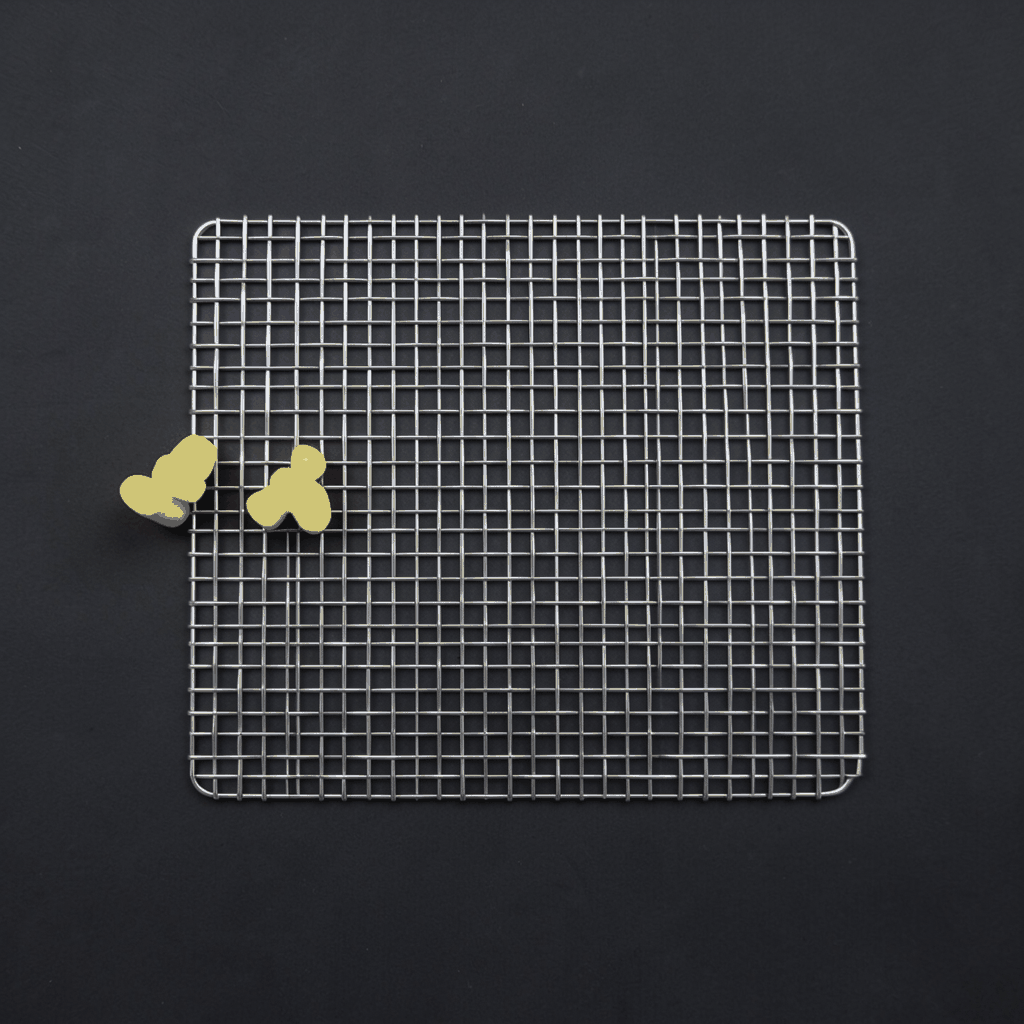
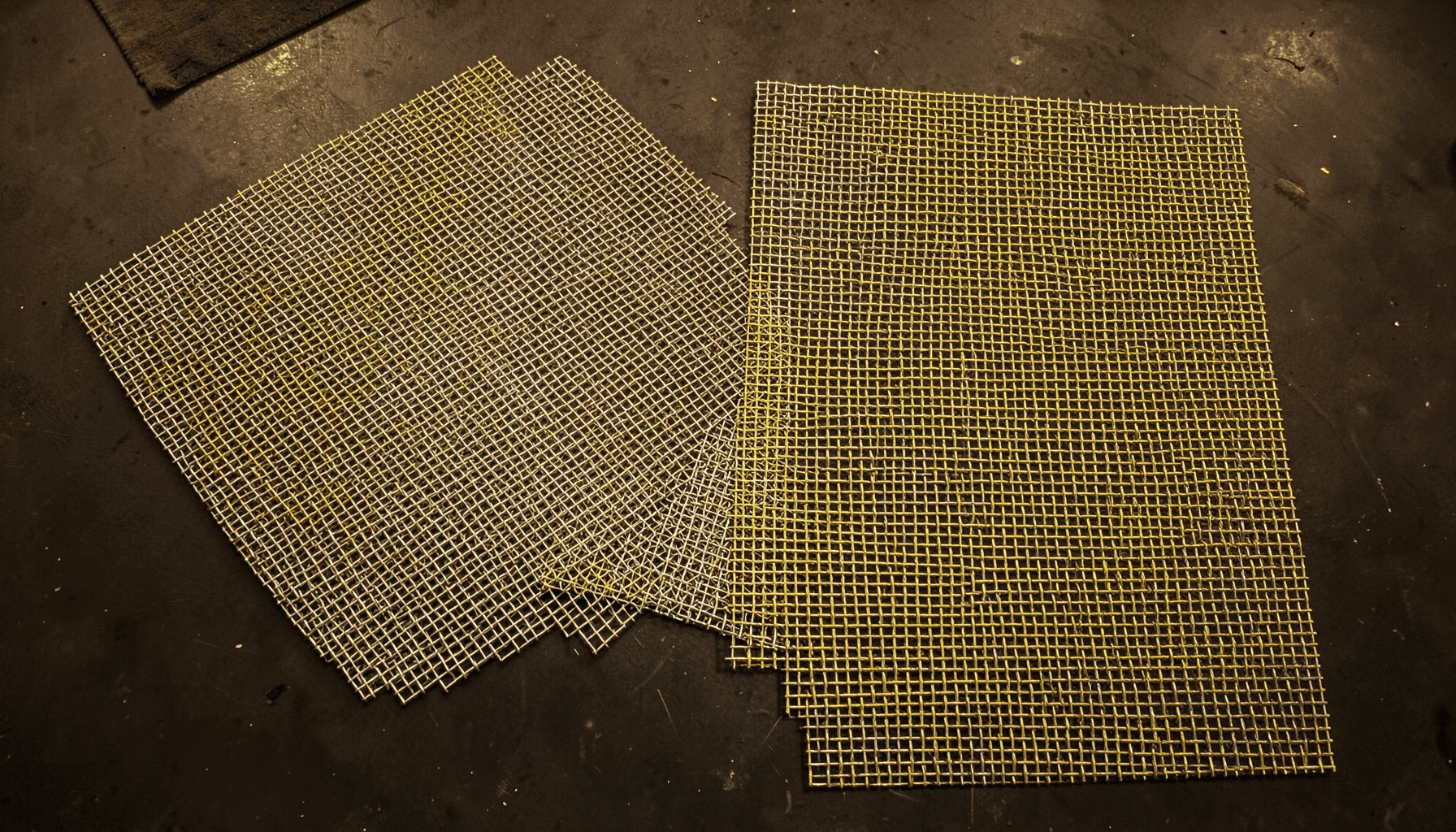
The choice between woven mesh, welded mesh, perforated sheet, and solid plate depends on the balance between gas access, rigidity, thermal behavior, and cleaning. Woven wire mesh provides a high degree of open area and can conform to some curved or lightweight designs. Welded mesh generally offers a more fixed geometry and can be reinforced for heavier loads. Perforated sheet provides a stable surface with defined openings, while a solid plate maximizes support but restricts flow beneath the load.
| Tray construction | Gas passage | Load stability | Typical strengths | Main considerations |
|---|---|---|---|---|
| Woven wire mesh | High, depending on weave and opening | Moderate | Excellent openness, lightweight, adaptable | May require edge reinforcement and careful tension control |
| Welded wire mesh | High and consistent | Moderate to high | Fixed openings, strong frame integration, easy customization | Weld quality and heat distortion must be controlled |
| Perforated sheet | Moderate | High | Rigid support, repeatable hole pattern, simple loading surface | Less open flow area and greater material mass |
| Solid plate | Low beneath the load | Very high | Maximum stiffness and continuous support | Can create stagnant zones and retain heat or residue |
| Layered or framed mesh | Adjustable | High when properly supported | Combines flow, stiffness, and modular handling | More joints and a higher fabrication requirement |
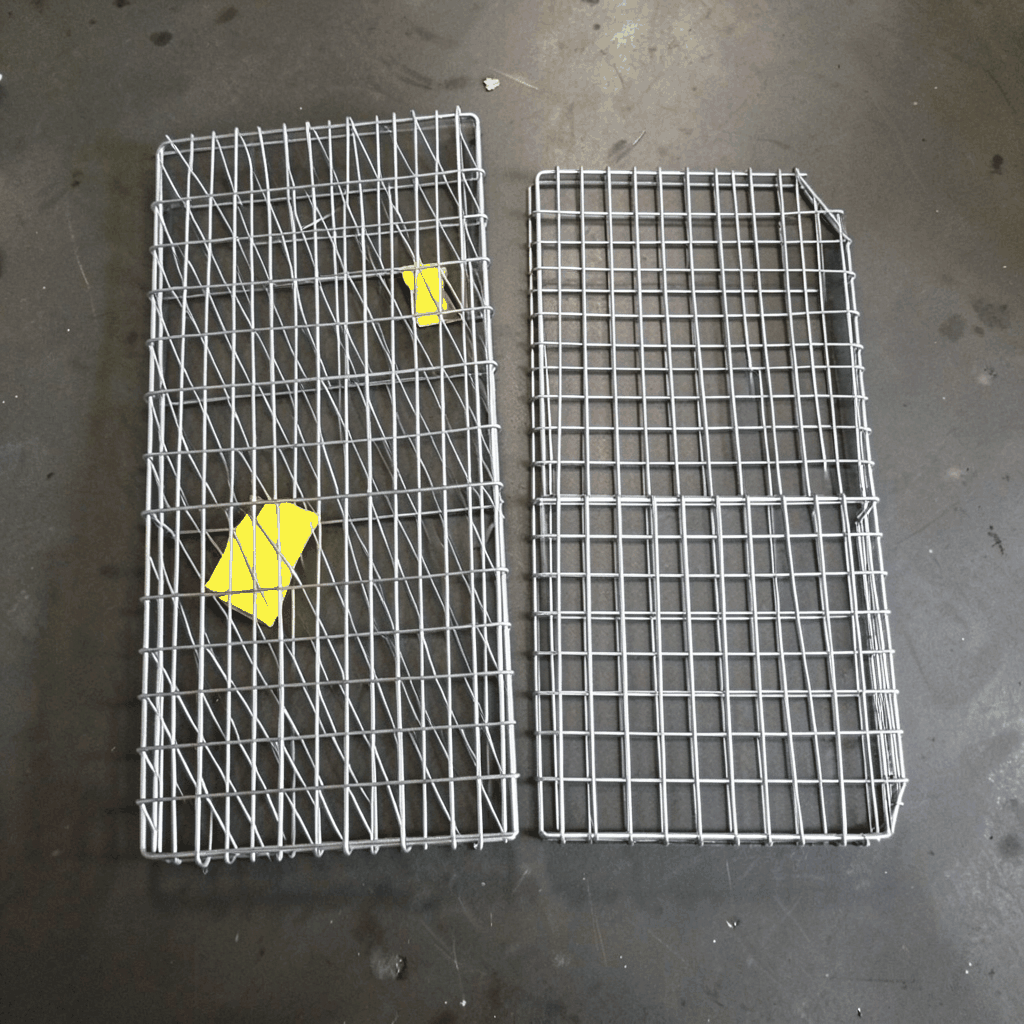
In many reactors, welded wire mesh is a practical compromise. It can be produced with a rigid perimeter frame, cross supports, and custom mounting features while preserving open space for gas circulation. The correct opening should be large enough to support the workpiece without sagging or tipping, but small enough to prevent small parts from dropping through.
For fragile wafers or irregular components, a hybrid design may be preferable. A fine mesh surface can be placed inside a coarse structural frame, or a mesh tray can be paired with removable retaining rings. This approach avoids using an excessively fine, heavy mesh throughout the entire tray.
Managing gas flow and deposition uniformity
Open area is one of the most important design variables in a CVD media tray. High openness can reduce flow resistance, but it does not automatically guarantee uniform deposition. The tray frame, support bars, raised edges, and workpiece arrangement can create local obstructions. Computational fluid dynamics or chamber trials may be useful when the process has tight uniformity limits.
Mesh orientation can also matter. In woven mesh, the warp and weft arrangement produces a repeating geometry that may affect local flow and shadowing. Welded mesh offers a more predictable grid, but the weld nodes may still influence contact points and local coating growth. A tray should be evaluated together with the substrate spacing, gas inlet arrangement, exhaust position, and thermal source.
The support should prevent direct metal-to-substrate contact where contact marks are unacceptable. Small raised bosses, edge rails, or minimal contact points can keep the active surface exposed. At the same time, excessive elevation may create temperature differences or change the residence time of reactive gases around the workpiece.
For powder or granular media, mesh opening and layer depth become critical. The tray must retain the material during loading and unloading while allowing sufficient gas penetration through the bed. A shallow, evenly distributed powder layer generally provides more consistent exposure than a deep pile. Reinforced sides can help contain the media without severely restricting cross-flow.
Designing for temperature and mechanical stability
Thermal expansion can change tray dimensions, mesh tension, and support contact during a deposition cycle. A tray fitted tightly into a cold chamber may bind when heated. Conversely, excessive clearance can allow movement, vibration, or misalignment. Slotted mounting holes, floating supports, or carefully calculated expansion gaps can accommodate predictable dimensional changes.
Wire diameter affects both stiffness and thermal mass. Thicker wire supports greater loads and resists distortion, but it adds mass and may heat or cool at a different rate from thin mesh. Fine wire reduces obstruction and weight but may sag, warp, or suffer damage during cleaning. The selected design should account for the tray’s unsupported span, load distribution, maximum temperature, and number of cycles.
A perimeter frame is often valuable for industrial handling. It can protect the mesh edge, improve flatness, and provide stable lifting locations. Internal braces may be added beneath large trays, although their placement should not create unnecessary shadowing or impede exhaust flow. Corners should be rounded or finished to reduce snagging and prevent damage to gloves, substrates, or chamber liners.
Repeated thermal cycling can reveal weaknesses that are not obvious in a room-temperature inspection. Prototype testing should include several heating and cooling cycles, loaded deflection checks, dimensional inspection, and examination of welds or woven joints. If the tray becomes coated during operation, the added film thickness and changing mass should also be considered.
Reducing contamination and simplifying maintenance
Any component inside a CVD reactor can collect deposited film. A support tray with narrow gaps, rough welds, or enclosed cavities may retain residues that later flake off as particles. Open, accessible geometry makes visual inspection and cleaning more straightforward. Smooth transitions and limited crevices are useful when the tray must be cleaned frequently.
The cleaning method should be agreed before fabrication. Some processes use solvent cleaning, alkaline or acidic treatment, plasma cleaning, thermal burn-off, or abrasive methods. Each method places different demands on the mesh material and welds. Chemical cleaning can attack an unsuitable alloy, while aggressive abrasion can damage fine wire or alter the surface condition.
A replaceable tray system may reduce downtime. Instead of cleaning a tray inside the reactor, operators can exchange it for a prepared spare and clean the removed unit in a controlled area. Identification marks, orientation features, and standardized outer dimensions help prevent loading errors. If the process deposits a valuable or difficult-to-remove coating, a sacrificial insert can protect the structural frame.
Contamination control also benefits from disciplined fabrication. Components should be degreased, thoroughly rinsed, dried, and packaged to prevent handling residue before installation. Depending on the application, passivation, electropolishing, or another surface treatment may be appropriate. The treatment should be chosen with attention to dimensional changes, gas compatibility, and the desired surface roughness.
Customizing a tray for industrial equipment
A CVD tray rarely works as an isolated flat mesh panel. It may need to fit a reactor boat, slide into guide rails, attach to a rotating fixture, or align with a robotic loading system. Custom dimensions and integrated features can reduce adapters and help maintain repeatable positioning.
Shuo Ke Wire Mesh Product Technology Co., Ltd. produces and processes metal mesh products in stainless steel, aluminum, copper, iron, and other alloys. For a CVD support application, relevant manufacturing capabilities may include custom woven or welded mesh, framed assemblies, formed edges, reinforced sections, and fabricated industrial baskets or trays. The final specification should be developed around the actual process rather than selected only from a standard catalog.
A useful engineering package should define the tray length, width, height, mesh opening, wire diameter, frame profile, allowable flatness, load capacity, operating temperature, atmosphere, and cleaning procedure. Drawings should identify critical tolerances and contact areas. If the tray will be exposed to a proprietary precursor, the customer should provide the applicable chemical compatibility information under confidentiality arrangements.
Prototype quantities can be used to verify fit, flow behavior, thermal movement, and coating results before a larger production run. Inspection records should cover material certification, dimensions, weld integrity, surface condition, and cleanliness. This approach connects metal mesh fabrication with the quality controls required by advanced coating equipment.
Practical design recommendations
The following practices help create a support tray that is easier to validate and maintain:
- Match the alloy to the complete gas and cleaning environment, not just the peak process temperature.
- Specify open area, wire diameter, and support spacing together so gas flow and mechanical stiffness are balanced.
- Use a rigid, finished perimeter frame when the tray will be lifted, inserted into guides, or used for repeated batch handling.
- Minimize crevices, loose wire ends, rough welds, and inaccessible pockets that can retain deposited film.
- Test a representative prototype through thermal cycling, cleaning, loading, and deposition before approving production quantities.
A well-engineered wire mesh media support tray can improve handling, gas access, and process consistency while lowering the risk of distortion and contamination. Its performance depends on the interaction of material, mesh geometry, frame design, thermal movement, and reactor conditions. Treating these factors as a single system leads to better results than choosing a mesh opening or alloy in isolation.
Shuo Ke Wire Mesh Product Technology Co., Ltd. can support customized industrial mesh development for trays, baskets, screens, and related reactor components. Share the chamber dimensions, operating conditions, supported material, load requirements, and preferred cleaning method to begin a specification review and develop a practical CVD support solution.