Welded Mesh for Heavy-Duty Window Security Grilles
Window security remains a practical priority for Australian property owners, particularly in inner-city suburbs where ground-floor apartments, terrace houses and shopfronts face elevated exposure to opportunistic intrusion. In Sydney's Inner West, Melbourne's inner northern corridors and Brisbane's older timber housing belts, security grilles are a familiar feature on lower-level windows. Demand has grown steadily as owners look for barriers that resist forced entry while preserving daylight, ventilation and street appeal.
Welded mesh has earned its place in this category through a combination of rigidity, repeatable manufacturing tolerances and a clean visual profile. Where chain link sags and woven cloth can be peeled apart, properly specified welded panels distribute impact across a continuous grid of fusion-bonded intersections. This structural behaviour translates into reliable performance against prying, kicking and the kinds of tool attacks attempted during residential break-ins.
For builders, security specialists and procurement officers sourcing from overseas suppliers, welded mesh offers practical advantages in fabrication and logistics. Panels can be cut to size, framed, coated and shipped flat-packed for efficient installation on Australian sites, including retrofit projects in established suburbs where window openings are non-standard.
Structural Behaviour of Spot-Welded Panels
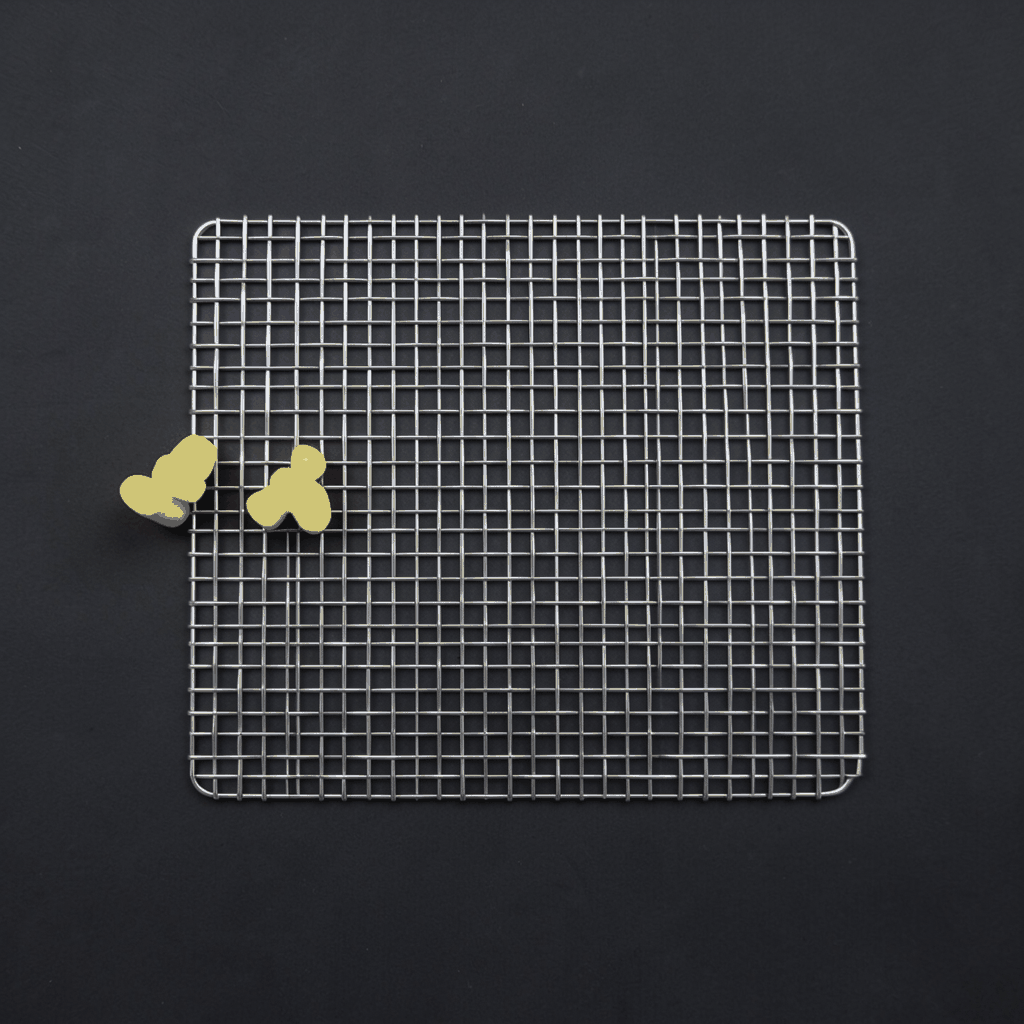
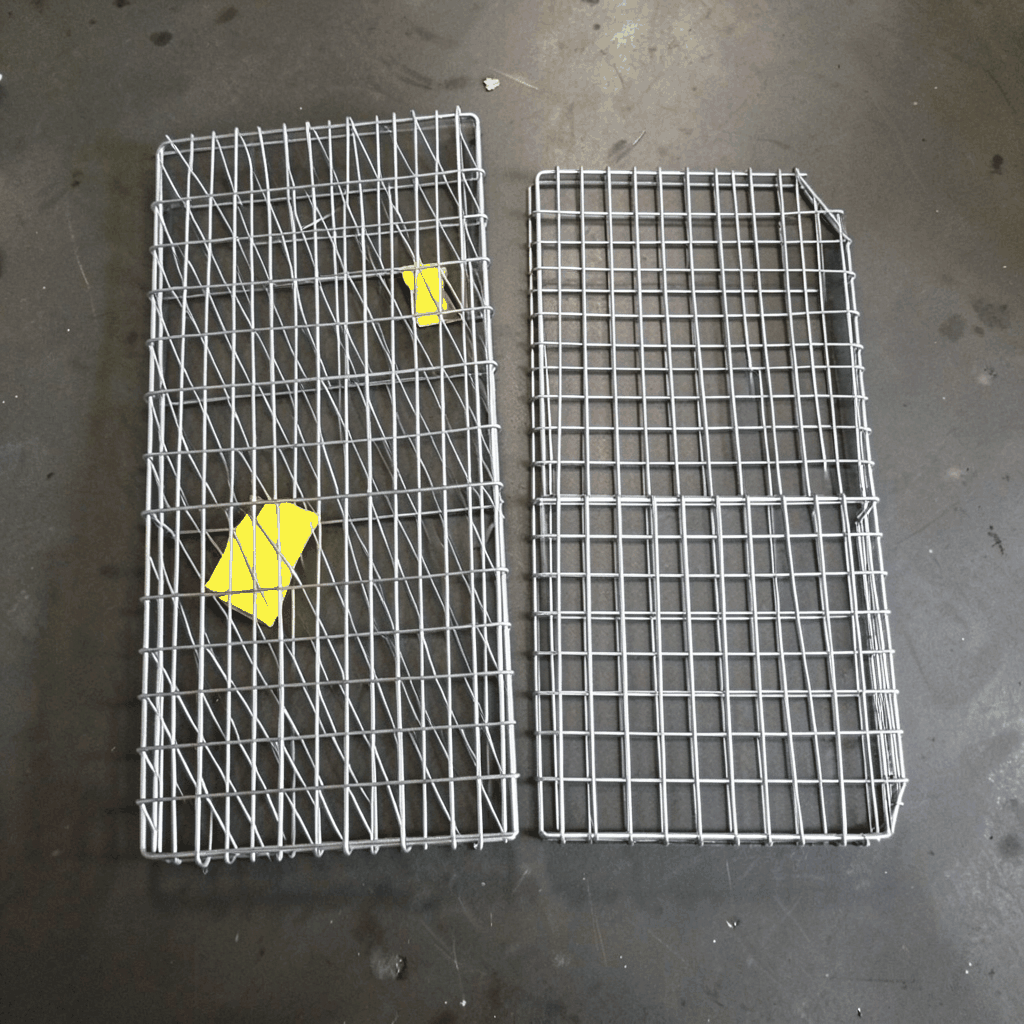
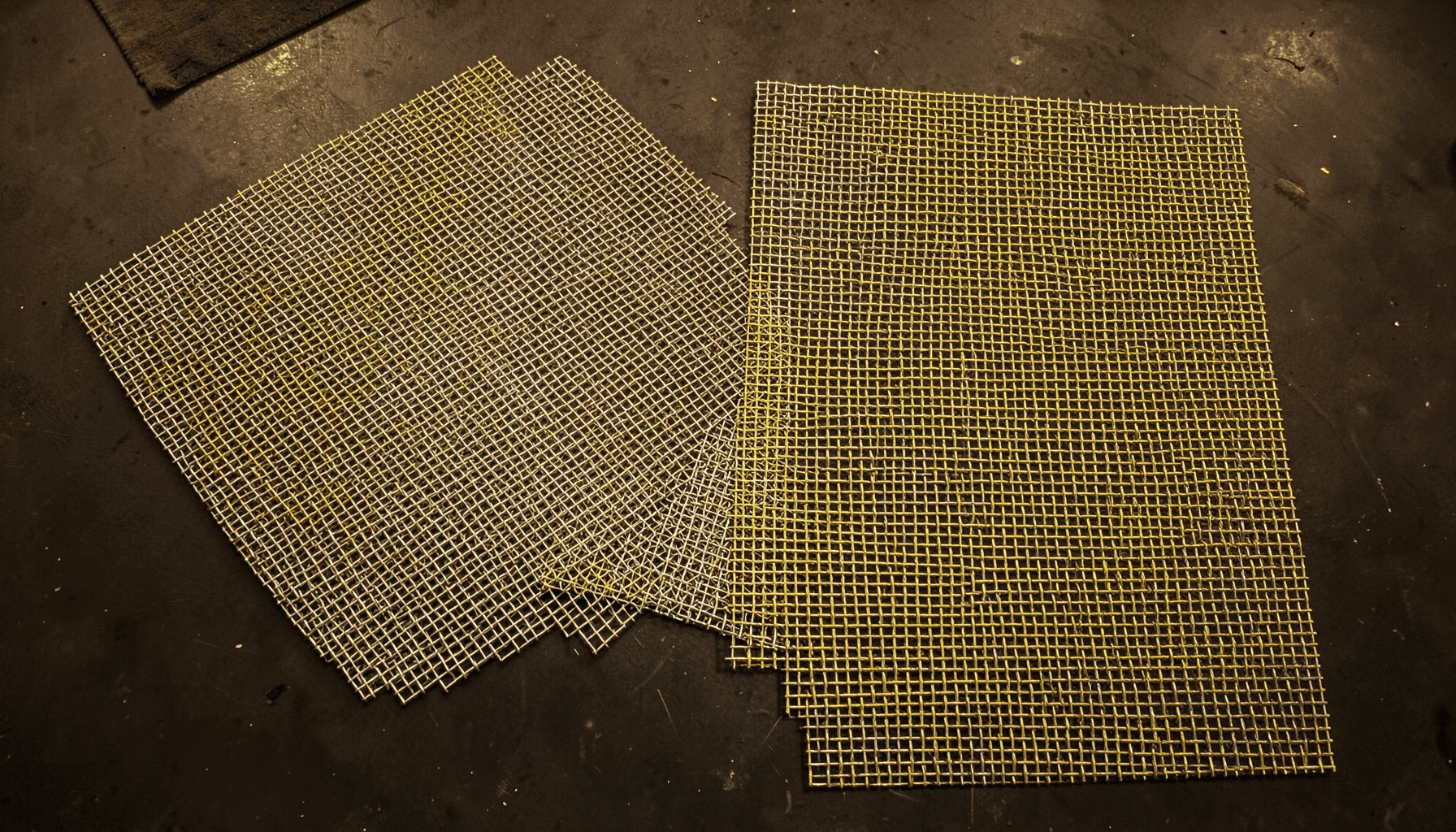
Welded mesh is produced by resistance-welding perpendicular wires at every crossing, creating a rigid sheet where each intersection is fused rather than interwoven. The result behaves more like a perforated plate than a flexible screen: forces delivered at one wire spread to neighbouring wires through the welded nodes, so the panel resists deformation and recovers its shape after minor impact.
This behaviour matters for window grilles exposed to kicking, shoulder charges or lever attacks. A grille that flexes and recovers makes sustained intrusion more difficult and time-consuming, which is often the deciding factor in an aborted burglary. Compared with expanded metal, welded mesh offers straighter sightlines and a flatter surface, allowing tighter tolerances when fitting into narrow window reveals.
For heavy-duty applications, panels are typically manufactured from wire diameters of 6 mm to 12 mm, with apertures chosen to balance security, ventilation and emergency egress requirements. Heavier wire diameters increase the panel's cut resistance but add weight, so frame specification must be matched accordingly.
Material Selection for Local Conditions
Material choice determines how well a welded grille survives Australian conditions. Coastal suburbs such as Bondi, Coogee, Fremantle and Cairns expose metalwork to salt-laden air that accelerates corrosion of standard grades. For these environments, grade 316 stainless steel offers the highest resistance to pitting and tea staining, making it the preferred option where budgets allow. Grade 304 stainless steel performs adequately in suburban areas a few kilometres inland and remains widely specified across greater Melbourne and Adelaide.
Hot-dip galvanised steel is a cost-effective alternative for inland and suburban projects, including much of western Sydney, the western Melbourne growth corridors and regional centres like Toowoomba and Ballarat. A zinc coating of at least 85 microns provides long protection before maintenance is needed, particularly when topped with a UV-stable powder coat.
Aluminium welded mesh, while lighter, suits less demanding exposures and is often selected for upper-storey windows where weight matters. In tropical Darwin, where humidity is persistently high, aluminium's natural oxide layer performs reasonably well, though care must be taken to avoid contact with dissimilar metals that trigger bimetallic corrosion.
Compliance With Australian Standards
Security grilles sold in Australia are expected to comply with the AS 5039-2008 series, which covers security screen doors and window grilles, alongside AS 5040 for installation and AS 5041 for test methods. These standards define knife shear, dynamic impact and pull-through tests that a compliant grille must pass when mounted in its intended frame. Specifiers should request test certificates or evidence of compliance from the manufacturer before committing to a welded mesh system.
In Queensland, additional state-level requirements apply, particularly for rental properties where the Residential Tenancies Authority prescribes minimum barrier and locking standards. Strata schemes in Sydney and Melbourne frequently require committee approval before external modifications are installed, and the same committees typically ask for documented evidence of compliance before signing off.
Properties in designated bushfire-prone areas, including the Adelaide Hills, parts of the Blue Mountains, the Perth Hills and many rural-urban fringes, must also satisfy BAL (Bushfire Attack Level) requirements. BAL-12.5 to BAL-29 zones call for ember-resistant screens with compliant aperture sizes, while BAL-40 and BAL-FZ (Flame Zone) demand more substantial barriers. Welded mesh panels can be configured to meet BAL-12.5 and BAL-29 ratings when apertures are kept at or below 2 mm and frames are properly sealed.
Aperture Size, Wire Diameter and Sightlines
The trade-off between security, visibility and ventilation is resolved through aperture selection. Standard welded mesh apertures for security grilles range from 40 mm by 40 mm down to 10 mm by 10 mm in heavier configurations. Smaller openings increase cut resistance and reduce the ability to grip the panel from outside, but they also reduce airflow and light transmission.
For ground-floor bedroom windows where emergency egress is a concern, apertures should not be so small that occupants cannot climb out in a fire. AS 5039 addresses this through minimum opening sizes that allow hand or foot purchase for escape. Heavier wires combined with moderately sized apertures often deliver the best balance for residential windows.
Wire diameter interacts with aperture size to determine panel weight and stiffness. An 8 mm wire at 50 mm centres provides a robust panel suitable for commercial shopfronts, while a 6 mm wire at 40 mm centres is commonly used for residential grilles on sliding and awning windows. Custom apertures and wire combinations are routinely produced for non-rectangular windows, including arched and circular heritage openings found in Victorian terraces and Federation bungalows.
Design Integration With Australian Architecture
Visual acceptance matters as much as raw security, particularly in heritage conservation areas and streetscape-sensitive suburbs. Powder-coated welded mesh panels can be matched to common Australian colour palettes, from light grey and charcoal to traditional heritage greens and creams. Custom colours are achievable for developers working on multi-unit projects where consistent visual treatment across a façade is desired.
In heritage precincts such as Paddington in Sydney, East Melbourne, or parts of Adelaide's parklands, local councils often require security treatments that do not visually dominate the streetscape. Slim-line frames combined with mid-toned welded mesh can satisfy security standards while remaining sympathetic to older facades. Laser-cut decorative inserts can also be combined with welded mesh sections for feature windows on commercial frontages.
Commercial and strata applications often require repeatable panel sizes for multiple openings within a single building. Working with a manufacturer that can hold consistent tolerances across production runs ensures that panels fit accurately into prepared reveals and align visually across long façade lines.
Fabrication, Logistics and On-Site Installation
Australian window types vary considerably between building eras and climates. Older homes often feature double-hung or timber-framed awning windows with non-standard reveals, while newer apartments use aluminium sliding or louvre windows. Custom welded mesh panels can be fabricated to suit any of these formats when accurate site measurements are supplied.
Frame integration is a critical detail. Panels set into pressed steel or extruded aluminium frames gain significant additional rigidity, particularly at the perimeter where forced entry is most likely attempted. Frames should be fixed through the reveal into the structural surround using appropriate anchors for the substrate, whether brick, concrete, blockwork or timber stud.
Professional installation by a licensed security installer is strongly recommended, both for warranty purposes and to ensure compliance documentation is properly recorded. Many insurers request evidence that security grilles have been installed by an accredited tradesperson, particularly for commercial premises in higher-risk precincts such as Fortitude Valley, Surry Hills and parts of Collingwood.
Long-Term Performance and Maintenance
Even high-grade welded mesh benefits from routine care, particularly in coastal environments where salt deposits accumulate on horizontal surfaces. A freshwater rinse every few months, followed by a wipe-down with a mild detergent, keeps salt films from settling and extends the interval before any surface staining appears.
Periodic inspection of weld points is worthwhile, especially after severe weather or attempted break-ins. While properly executed resistance welds do not loosen under normal conditions, mechanical damage can crack a coating or distort a panel. Touch-up kits provided by the manufacturer allow small areas to be recoated before corrosion takes hold.
For powder-coated panels in full sun exposure, such as west-facing windows in Brisbane or Perth, UV-stable polyester powders hold colour well for a decade or longer before any noticeable fading. Recoating is possible without removing the panel if the original coating is properly prepared.
Practical Recommendations for Specifying Welded Mesh Grilles
- Specify grade 316 stainless steel for coastal suburbs and properties within roughly one kilometre of the shoreline.
- Request documented AS 5039, AS 5040 and AS 5041 compliance from the manufacturer before placing an order.
- Match wire diameter and aperture to the intended application: heavier wire for commercial and ground-floor residential, lighter configurations for upper-storey windows.
- Confirm BAL ratings for properties located in designated bushfire-prone areas.
- Use UV-stable polyester powder coatings in colours approved by local council or strata committees.
- Engage accredited security installers and retain compliance certificates for insurance and audit purposes.
Shuo Ke Wire Mesh Product Technology Co., Ltd. supplies custom welded mesh panels in stainless steel, galvanised steel, aluminium and a range of alloys, with finishes and aperture configurations tailored to Australian security and architectural requirements. Contact the team to discuss project specifications, request compliance evidence and obtain a quotation for delivery across Australian capital cities and regional centres.