Wire mesh conveyor belts for glass annealing lehrs
Glass annealing lehrs require a conveyor belt that can operate through sustained heat while maintaining a stable, smooth path for delicate products. Bottles, jars, tableware, float-glass components and technical glass all depend on controlled cooling as they travel through the lehr. The conveyor surface must support the load without marking, distorting or interrupting the temperature profile.
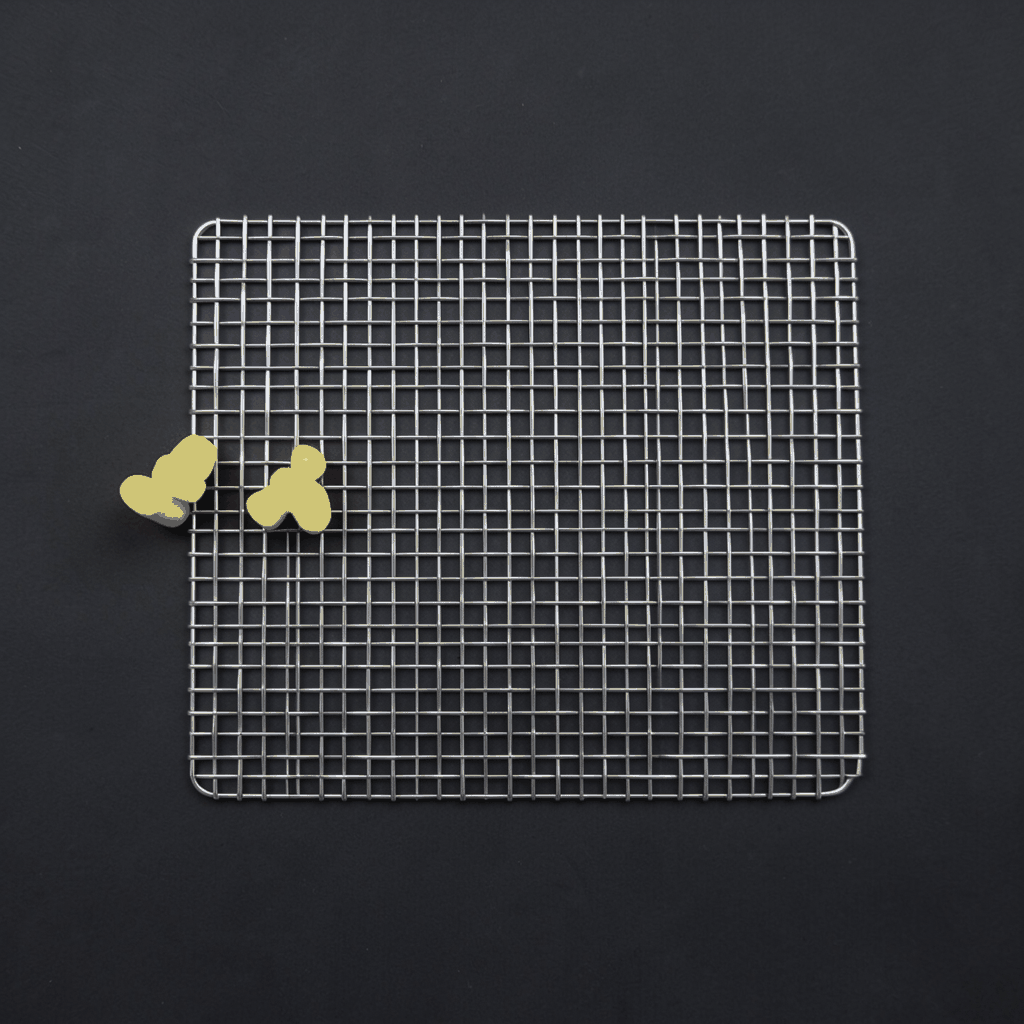
Wire mesh conveyor belts are widely used in this environment because their open structure allows heated air to circulate around the glass. Compared with solid conveying surfaces, woven metal belts can promote more even cooling and reduce the risk of trapped heat beneath the product. The correct mesh pattern also supports reliable movement through long, temperature-controlled sections.
For Australian glass processors, belt selection involves more than choosing a stainless steel wire diameter. Operating temperature, load distribution, lehr width, drive arrangement, edge construction, cleaning access and replacement logistics all affect service life. A belt designed for a Melbourne container-glass plant may require different corrosion protection or tracking features from one operating near the coast in Brisbane or Perth.
Shuo Ke Wire Mesh Product Technology Co., Ltd. manufactures and processes metal mesh products for industrial and architectural applications. Its capabilities in stainless steel, iron, aluminum, copper and other alloys support custom conveyor belt designs, including woven mesh, reinforced edges and made-to-order dimensions for glass handling equipment.
How the annealing process affects belt selection
Annealing removes internal stresses from glass by controlling its cooling rate. After forming, glass enters the hotter section of the lehr and then passes through progressively cooler zones. The conveyor belt must remain dimensionally stable as it experiences repeated heating and cooling cycles, often over many hours each day.
A belt with insufficient heat resistance can stretch, warp or develop uneven tension. These changes may create tracking problems, vibration and inconsistent product movement. On a glass container line, instability can lead to contact between bottles or jars, increasing the risk of scuffing, tipping and breakage. A stable belt helps maintain the intended distance between products as they move through the cooling tunnel.
Open mesh construction is valuable because it permits air to pass through the belt. This helps the lehr’s fans and ducting deliver heat more consistently around the lower and upper surfaces of the glass. The aperture must be large enough to support effective circulation while remaining fine enough to prevent small items, narrow bases or fragments from catching in the mesh.
The belt’s thermal expansion must also be considered. Metal length changes as temperature rises, so the conveyor should include suitable tensioning and take-up arrangements. A belt supplier can calculate the expected expansion from the working temperature, belt length and material grade, then recommend an appropriate construction that avoids excessive slack during startup or over-tensioning at operating temperature.
Mesh patterns and materials for hot glass handling
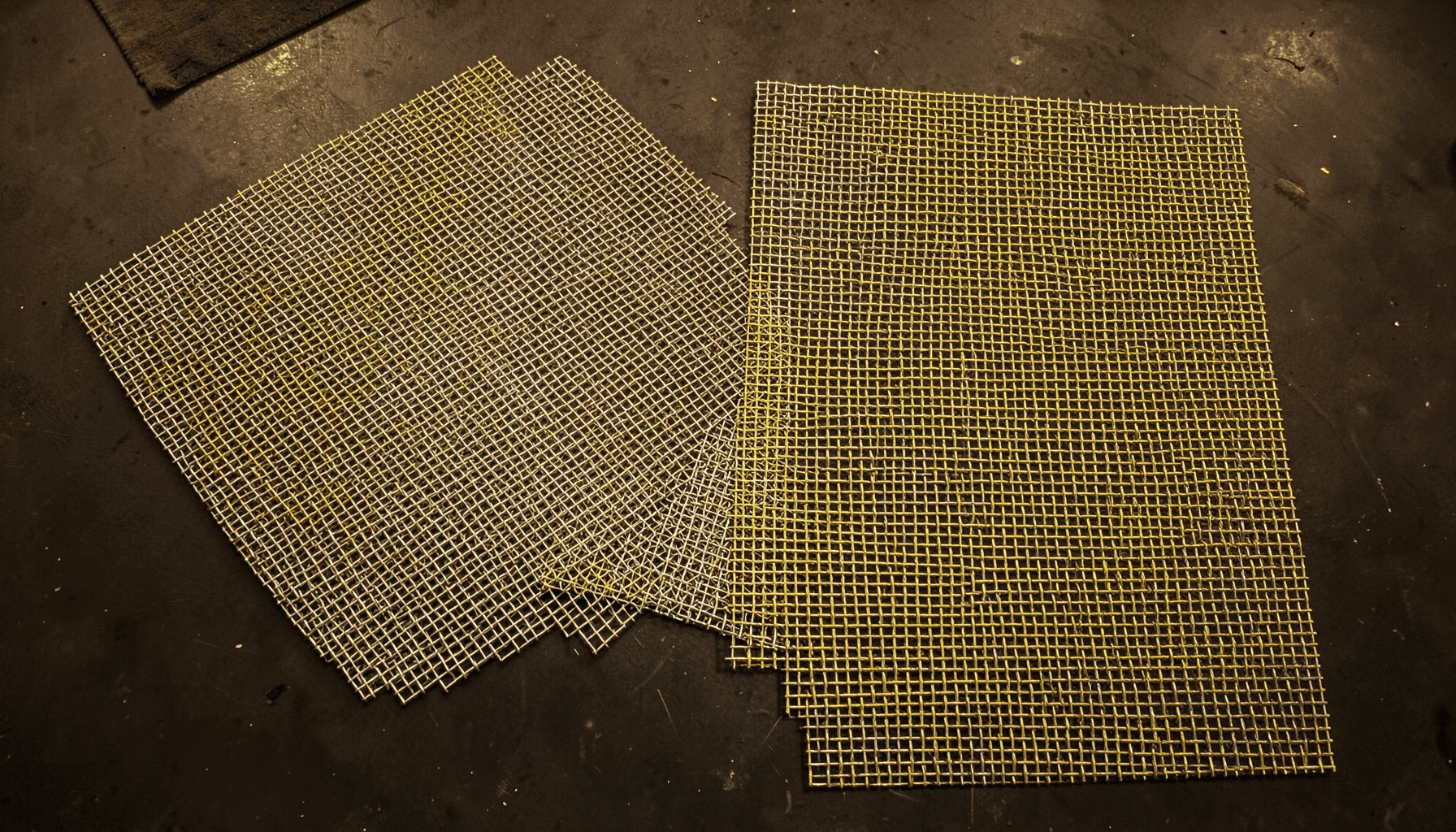
Balanced weave and compound balanced weave belts are common choices for industrial conveying because their interlocking spirals provide a continuous surface with good flexibility. Compound balanced designs use multiple spiral wires and straight rods in each repeat, creating a tighter, more stable mesh. They are useful where the belt must carry smaller glass products or maintain a smoother conveying surface.
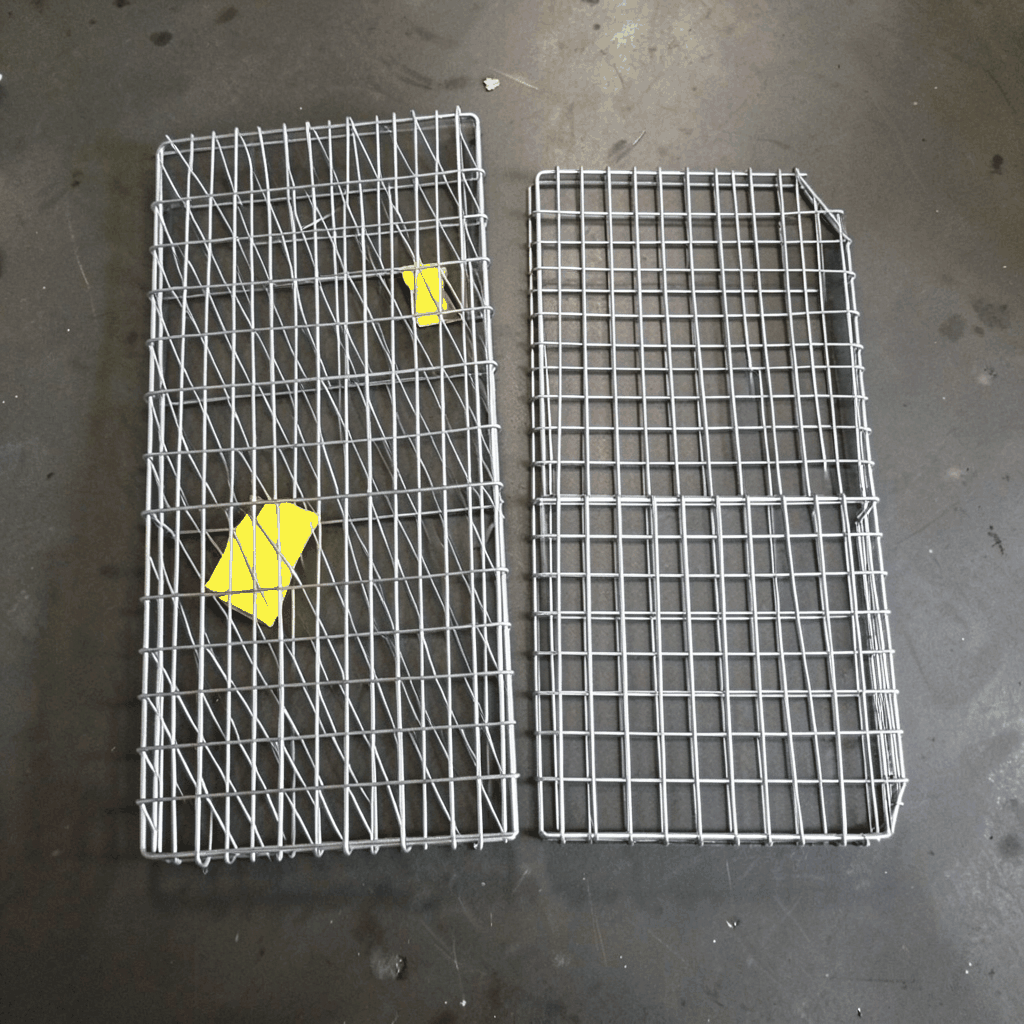
Rod-reinforced belts can provide additional strength for wide lehrs and heavier loads. Welded or linked edge arrangements help transfer drive force and reduce the chance of the belt spreading at the sides. Depending on the conveyor design, the belt may be supplied with chain edges, sprocket-compatible side members, or reinforced selvages that work with the existing drive system.
Stainless steel is often selected for annealing applications because it combines mechanical strength with resistance to oxidation and corrosion. Grade 304 stainless steel may suit many general industrial settings, while 316 or similar molybdenum-bearing grades can be useful where moisture, cleaning chemicals or saline air create a higher corrosion risk. Heat-resistant grades such as 310S may be considered for sections exposed to particularly elevated temperatures, subject to the actual thermal conditions and mechanical requirements.
Material choice should reflect the whole operating environment rather than the nominal temperature alone. A coastal plant in Sydney, Brisbane or Adelaide may face more atmospheric corrosion than an inland facility. Frequent washdown, glass dust, lubricants and alkaline residues can also affect wire surfaces. The selected alloy, wire diameter and surface finish should be checked against the lehr atmosphere, cleaning method and expected maintenance interval.
Design details that improve reliability
Belt width, pitch and wire diameter must match the product range and the conveyor’s drive system. A fine mesh may suit small glassware, while a heavier open mesh can be preferable for large bottles or thick glass components. Excessively fine openings can collect powder and broken glass, while oversized openings may allow unstable products to rock during transfer.
The belt should be designed around the existing sprocket or drum arrangement. Correct pitch and transverse rod spacing are essential for positive engagement and smooth running. The belt must also suit the conveyor’s turning radius, support rails and return path. If these details are overlooked, a technically strong belt can still experience premature wear or poor tracking.
Edge construction deserves particular attention. The edges often carry concentrated stress from the drive and guiding system, especially on wide conveyors. Reinforced edges can reduce lateral distortion, while carefully specified rods help prevent premature cracking or loosening. For long lehrs, a central support or suitable cross-rod arrangement may be required to limit sag between carrying rollers.
Surface flatness is important when products have a low centre of gravity or a narrow base. A correctly tensioned mesh belt presents a predictable conveying plane and reduces sudden movement. At transfer points, the belt should align closely with the incoming and outgoing equipment to avoid catching bottle feet, glass sheets or trays.
Custom manufacture is useful when replacing an obsolete belt or modifying an existing lehr. Measurements may include belt width, overall length, mesh pitch, wire diameter, spiral direction, rod spacing, edge style, sprocket details and the number of drive locations. Supplying photographs and a simple equipment drawing can help a manufacturer verify the design before production.
Maintenance in Australian production environments
Glass fragments, fines and coating residues can accumulate in the mesh and around the support rails. Regular inspection helps identify blocked openings, bent rods, loose edge components and worn contact points before they cause a line stoppage. Cleaning schedules should suit the glass type and production volume, with particular attention to transition zones where debris can be carried into the return path.
Temperature changes during shutdown and startup can expose weaknesses that are difficult to see during steady operation. Operators should watch for unusual belt noise, side drift, uneven tension and marks appearing on the glass. These signs may indicate worn sprockets, poor alignment, excessive loading or a belt that has changed length through thermal cycling.
Australian facilities often need to plan maintenance around long delivery distances and limited local inventory. A replacement belt for a plant outside Adelaide, Perth or regional Queensland may require careful coordination of manufacturing, export packing and inland freight. Keeping accurate belt specifications and photographs on file can shorten the time required to produce a replacement and reduce the risk of ordering an incompatible design.
Coastal locations also deserve additional attention. Salt-laden air around Sydney’s industrial ports, Brisbane’s bayside areas or Western Australian processing sites can accelerate corrosion on exposed components. Stainless steel may resist the environment more effectively than untreated carbon steel, although the complete conveyor assembly still requires suitable cleaning, inspection and protection.
Energy efficiency is another local consideration. Electricity and gas costs can make stable lehr operation especially important for Australian manufacturers. A belt with consistent open area supports predictable airflow, while smooth running reduces unnecessary drive load. Correct tension and alignment help avoid heat loss caused by extended stoppages, repeated restarts and product accumulation inside the lehr.
Selecting a custom belt supplier
A suitable supplier should be able to discuss both wire mesh construction and the operating conditions of the glass line. Useful technical information includes the type of glass, product dimensions, maximum loading, lehr temperature zones, belt speed, conveyor width, drive method and cleaning regime. These details allow the belt to be designed for the actual process rather than selected from a generic catalogue.
Manufacturing control is important when the belt includes tight pitch tolerances, reinforced edges or special alloy wire. Consistent spiral formation and rod placement support smooth tracking and reduce stress at the joints. The belt should arrive with clearly documented dimensions and, where appropriate, installation guidance for joining, tensioning and initial running-in.
Shuo Ke can provide customized metal mesh solutions for industrial equipment and engineered applications. Its experience with different metal types and fabricated mesh structures allows customers to specify the balance of open area, strength, flexibility and corrosion resistance required for their annealing process. A custom quotation can be based on drawings, samples or measured details from the existing conveyor.
The procurement process should also account for packaging and site handling. Long or wide belts need protection from bending and impact during transport. For Australian customers, robust export packing and clear identification of belt orientation can simplify receiving at a plant in Melbourne, Sydney, Brisbane, Perth or a regional manufacturing centre.
Before approving a design, verify compatibility with the drive sprockets, support system and available take-up travel. Confirm the alloy, wire size, pitch, belt length and edge arrangement in writing. A properly specified replacement can improve reliability, reduce unplanned downtime and give the annealing line a more stable operating surface.
Choose a wire mesh conveyor belt that matches the thermal profile, product load and mechanical arrangement of the glass annealing lehr. Contact Shuo Ke Wire Mesh Product Technology Co., Ltd. with your belt dimensions, product details and operating conditions for a customized industrial mesh solution built for dependable glass handling.