Wire Mesh Enclosures for Industrial Robot Safety Zones
Industrial robots improve production speed, repeatability, and workplace efficiency, yet their moving arms, tooling, and transferred materials can create serious hazards. A properly designed enclosure separates personnel from the robot’s operating envelope while keeping essential production tasks visible and accessible.
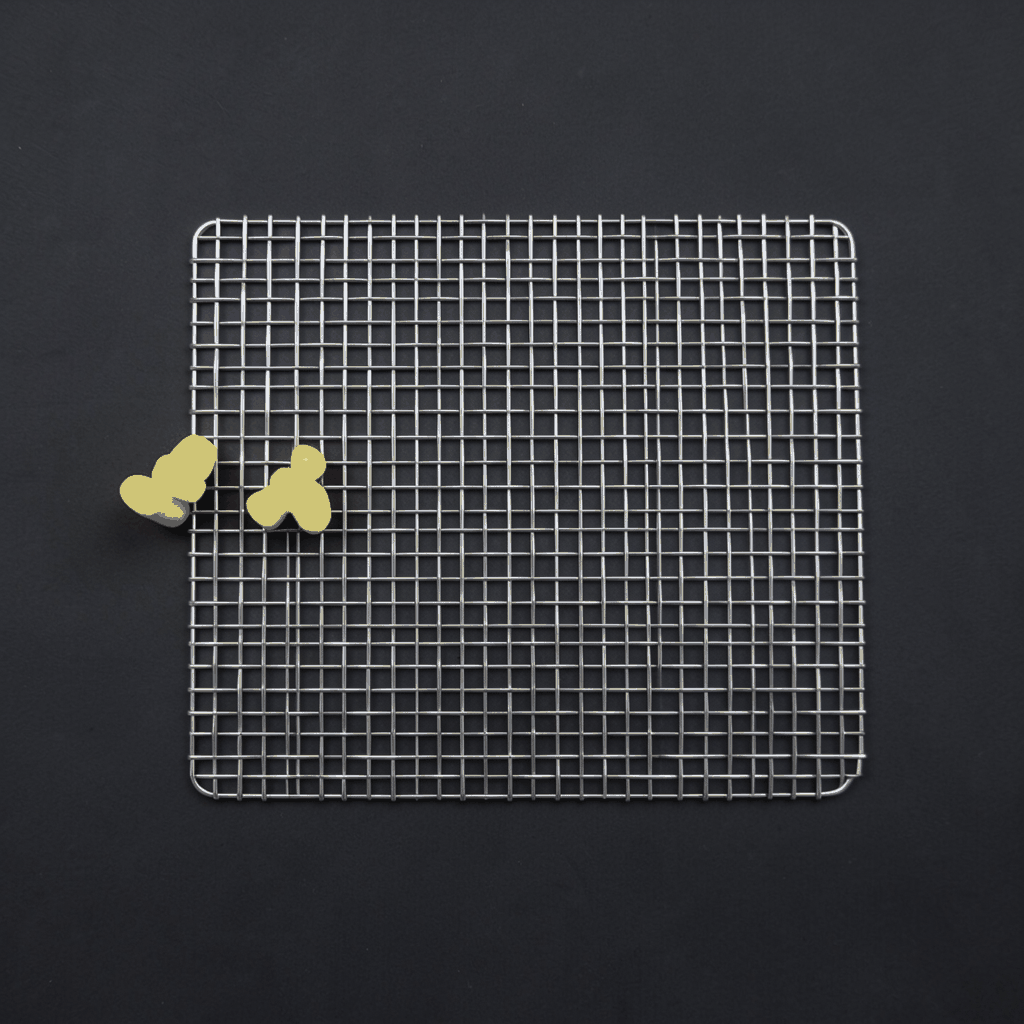
Wire mesh guarding is a practical solution for robot cells, palletizing stations, welding systems, packaging lines, and automated material-handling areas. It combines physical separation with visibility, ventilation, and adaptable access points. Compared with solid barriers, mesh panels often make it easier to monitor equipment, identify faults, and maintain suitable airflow around machinery.
The enclosure should be treated as part of the complete safeguarding system rather than as a simple fence. Panel height, aperture size, door position, interlocking, emergency access, and the distance between the robot and barrier all influence the level of protection. Careful planning helps manufacturers create a safer work cell without making routine operation unnecessarily difficult.
Why Robot Cells Need Dedicated Guarding
A robot can move quickly through a large and unpredictable range. Its hazard area may include the arm, end-of-arm tooling, workpieces, fixtures, conveyors, and stored pneumatic or hydraulic energy. Even when the robot is programmed to follow a fixed path, a programming error, sensor failure, or dropped load can change the risk profile.
A wire mesh safety fence establishes a clear boundary around the robot work envelope. It discourages unauthorized entry and prevents workers from reaching moving components during automatic operation. When combined with safety-rated door switches, access gates, light curtains, or area scanners, the enclosure supports a layered safeguarding strategy.
Visibility is one of the main advantages of industrial mesh partitions. Operators can observe cycle status, material flow, and warning indicators without entering the cell. Supervisors can inspect the process from outside the danger zone, while maintenance staff can identify leaks, loose components, or abnormal movement before opening the enclosure.
Design Features That Support Safe Operation
An effective robotic cell enclosure begins with a risk assessment. Designers should map the robot’s maximum reach, possible rebound or falling-object paths, transfer points, and locations where an individual could become trapped. The guard should prevent access to hazardous areas while allowing necessary loading, unloading, inspection, and maintenance activities.
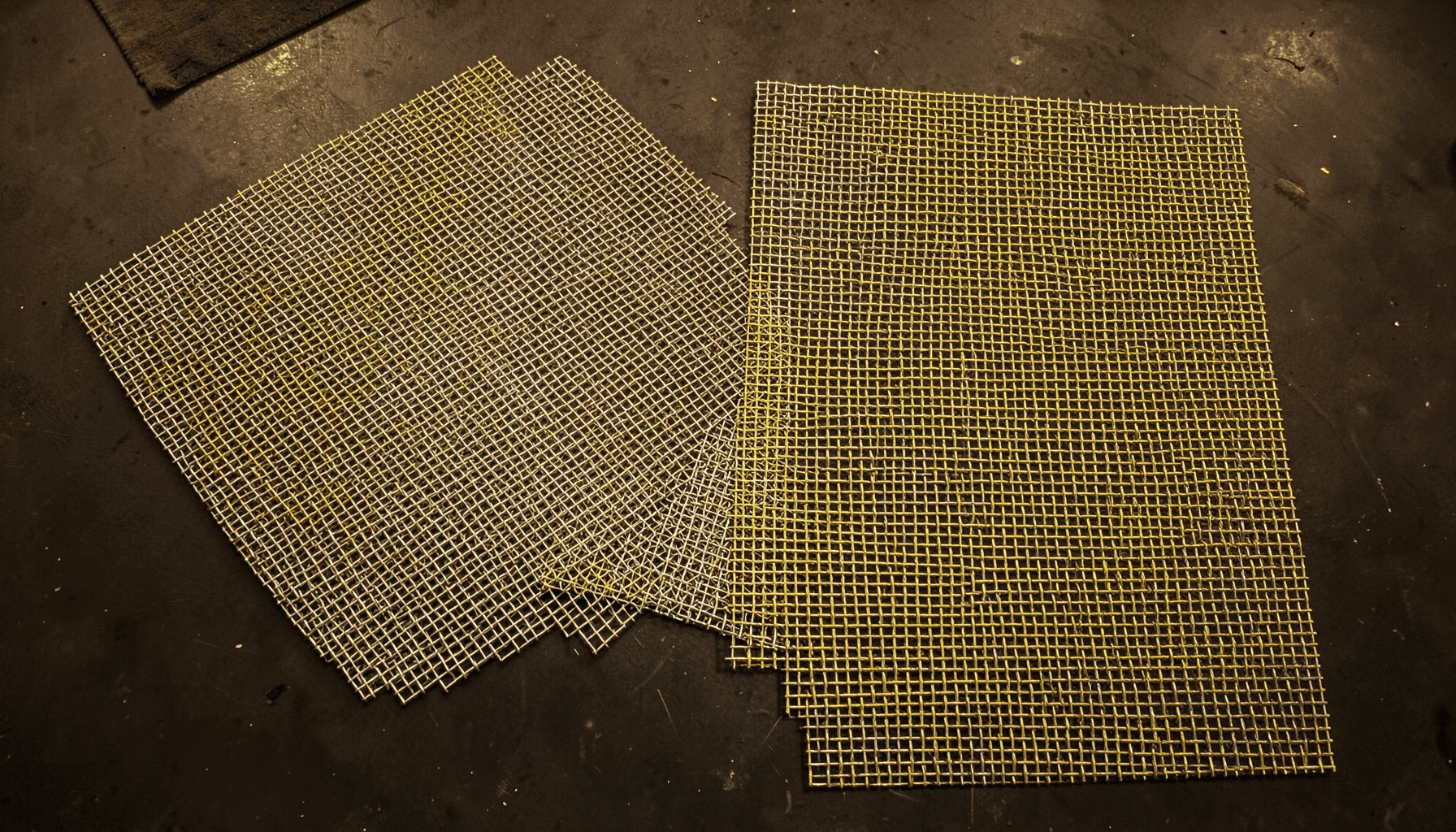
Mesh aperture and panel spacing need careful selection. Openings should be small enough to prevent a person from reaching through to moving equipment, with the final dimensions determined by the applicable safety standard and the distance from the hazard. The frame should resist impact, vibration, and repeated use, while posts require secure anchoring to the floor or supporting structure.
Access gates deserve the same attention as fixed panels. A personnel gate should normally be monitored by a safety interlock that stops or prevents hazardous motion when the gate opens. Larger sliding or swing gates may be required for tooling changes, die replacement, forklift movement, or pallet transfer. Their design should avoid pinch points and provide a clear, controlled opening path.
The enclosure can also include roof panels, pass-through openings, cable routes, warning signs, and integrated control stations. These details help prevent bypassing and reduce the temptation to modify the barrier after installation. A professional manufacturer such as custom mesh solutions can support material selection, panel fabrication, finishing, and made-to-measure configurations for complex production layouts.
Selecting Materials And Finishes
Stainless steel mesh is suitable for demanding environments where corrosion resistance, hygiene, and long service life are priorities. It is frequently used in food processing, chemical production, pharmaceutical areas, and facilities that require regular washdown. Stainless steel also provides a clean appearance for production spaces where the enclosure is visible to visitors or customers.
Aluminum offers low weight and good corrosion resistance, which can simplify handling during installation or future reconfiguration. It may be useful for modular partitions, temporary production changes, or applications where the supporting floor has limited capacity. Mild steel provides strong and economical guarding, while a powder-coated finish can improve corrosion protection and allow the enclosure to match the facility’s visual standards.
The choice of wire mesh should reflect the environment as well as the robot’s hazards. Fine mesh can reduce the chance of reaching through openings, while heavier welded panels can provide greater resistance to impact from workpieces or mobile equipment. In areas with sparks, heat, cutting fluids, or abrasive dust, the selected alloy, wire diameter, frame profile, and coating should be reviewed together.
A consistent finish also helps with inspection. Bright stainless surfaces can make contamination easier to see, while powder-coated steel can create clear visual separation between the guarded cell and surrounding work areas. Edges, welds, fasteners, and panel joints should be finished so they do not create sharp projections or snag hazards.
Comparing Common Enclosure Approaches
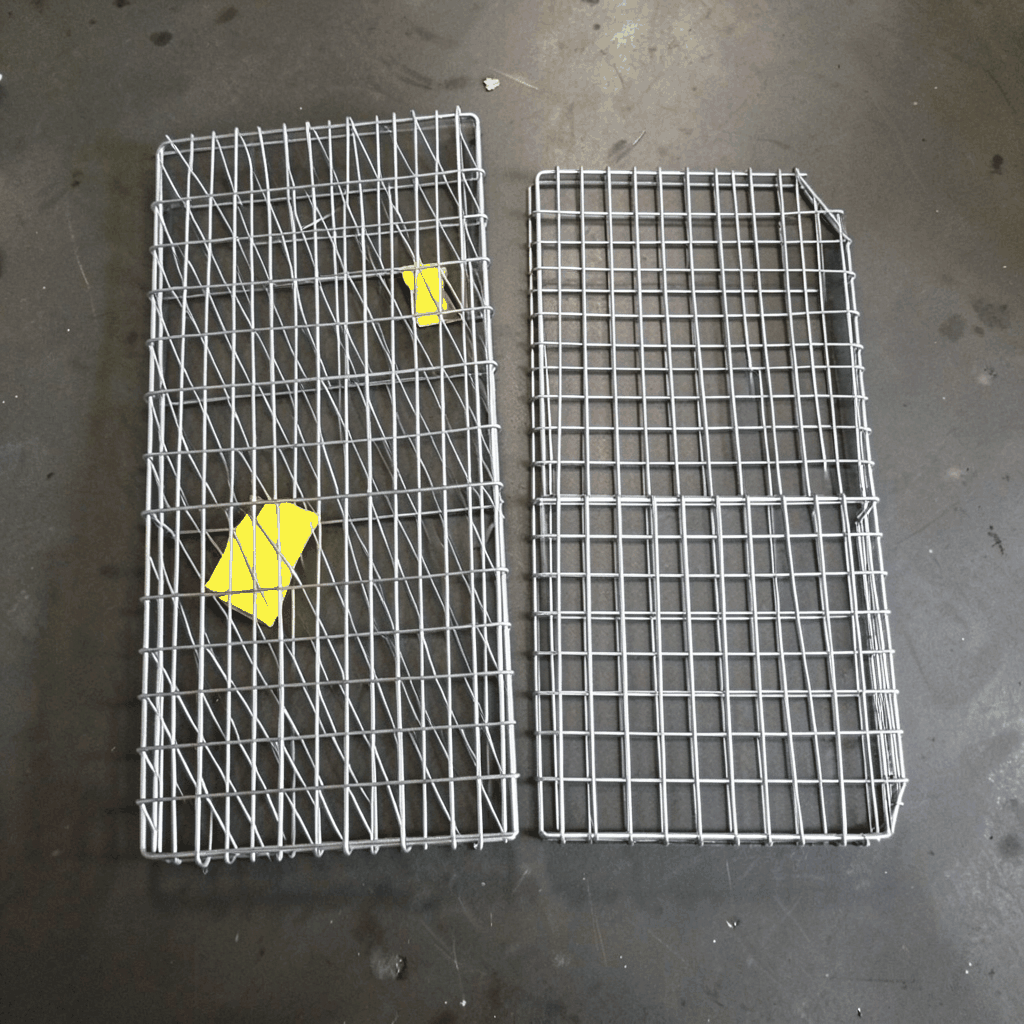
Different production environments call for different guarding arrangements. A fixed welded mesh fence may be appropriate for a stable robot cell with infrequent access, while modular bolted panels are more useful where equipment layouts change. A hybrid enclosure can combine mesh panels with solid sheets, transparent polycarbonate, or specialized access equipment.
The best choice depends on the hazard, operating cycle, maintenance frequency, floor plan, and expected future changes. The following comparison provides a practical starting point:
| Enclosure approach | Main advantages | Typical applications | Important planning point |
|---|---|---|---|
| Welded steel mesh panels | Strong, durable, economical | Heavy-duty robot cells, welding, palletizing | Requires accurate layout and robust anchoring |
| Stainless steel mesh | Corrosion resistant and easy to clean | Food, pharmaceutical, chemical production | Higher material cost may be justified by hygiene needs |
| Aluminum modular panels | Lightweight and easier to reconfigure | Flexible assembly lines and changing layouts | Check rigidity and impact requirements |
| Sliding or swing access gates | Supports maintenance and material movement | Tool changes, pallet transfer, service access | Use suitable interlocks and control access carefully |
| Mesh with solid lower panels | Limits debris, sparks, or low-level access | Cutting, grinding, and material handling | Preserve visibility while controlling specific hazards |
| Mesh with transparent sections | Improves observation and presentation | Show cells, inspection areas, visitor-facing facilities | Select impact-resistant glazing and secure mounting |
Regardless of the arrangement, a guard should not create new risks. The design must maintain escape routes, preserve access to emergency stops, allow safe removal of jams, and avoid obstructing fire protection equipment. Any opening for conveyors, cables, or materials should be sized and positioned so it cannot become an unintended entry route.
Integrating Gates, Controls, And Safety Devices
The enclosure is most effective when its physical structure and control system work together. A monitored gate can send a stop signal to the robot controller, while a trapped-key system or access-control arrangement can manage entry during maintenance. The appropriate solution depends on the robot’s stopping time, residual energy, restart behavior, and the level of access required.
Emergency stop buttons should be visible and reachable from appropriate positions around the cell. Reset controls should be located where the operator can verify that no person remains inside the guarded area. Automatic restart after a gate closes should generally be avoided unless the complete safety design specifically permits it and the operating procedure controls the related risks.
Light curtains, pressure-sensitive mats, laser scanners, and camera-based systems can supplement mesh guarding where frequent material transfer is necessary. For example, a robot cell may use fixed fencing along three sides, a safety scanner at a loading point, and an interlocked gate for maintenance. This approach can preserve production flow without leaving an unprotected gap.
Safety distances must account for both human reach and system stopping performance. A fast-moving robot may continue to travel after a protective device is triggered, so the barrier or sensing field must be positioned far enough away to prevent contact. Validation should be completed by competent safety personnel using applicable local regulations and recognized standards such as ISO 10218, ISO 13857, ISO 14120, and ISO 13849 where relevant.
Installation And Long-Term Maintenance
A well-fabricated guard can underperform if it is poorly installed. The floor should be checked for level, anchor locations, embedded services, and the loads imposed by posts and gates. Panel joints should be aligned, fasteners tightened correctly, and gaps checked against the approved design. Where forklifts or pallet trucks operate nearby, protective bollards may be needed to shield the enclosure from impact.
Installation teams should verify that doors swing or slide as intended and that no panel interferes with robot motion, conveyors, sensors, or tooling access. Interlocks and emergency stop devices need functional testing after installation and whenever the cell is modified. A documented handover should identify inspection points, reset procedures, isolation requirements, and authorized personnel.
Regular inspection helps preserve the original level of protection. Operators can check for bent mesh, loose anchors, damaged coatings, missing fasteners, misaligned gates, and bypassed switches during routine rounds. Maintenance teams should examine hinges, rollers, latches, interlock actuators, and grounding arrangements at scheduled intervals.
Any change to the robot program, tooling, conveyor arrangement, fence position, or access method can affect the safety assessment. Repairs should use compatible parts and maintain the designed aperture, strength, and clearance. If a panel is removed for service, the cell should remain under an approved isolation procedure until the guard and safety devices are restored and tested.
Practical Recommendations For Project Planning
A reliable project usually begins before the robot or fence is delivered. Involve the robot integrator, production manager, maintenance team, safety specialist, and enclosure supplier early enough to coordinate access, utilities, controls, and future service needs. Accurate drawings and a three-dimensional cell layout can reveal conflicts that are difficult to solve after installation.
Keep the enclosure modular where expansion is likely. Standardized posts, panels, gates, and brackets can shorten replacement time and make future changes easier. At the same time, avoid treating modularity as a reason to accept weak joints or improvised openings. Every removable section should have a defined purpose and a secure method of attachment.
Useful planning priorities include:
- Map the complete robot reach, tooling envelope, transfer path, and possible falling-object zones.
- Select mesh aperture, wire diameter, frame strength, and finish according to the hazard and environment.
- Position gates and material openings to support production without creating uncontrolled access.
- Connect interlocks, emergency stops, scanners, and reset controls to a validated safety circuit.
- Create inspection, cleaning, repair, and change-management procedures before the cell enters service.
Clear documentation is equally important. Keep the approved layout, risk assessment, component information, wiring diagrams, inspection records, and operating instructions together. Mark authorized access points and display warning signs that explain the robot’s automatic operating status. Training should cover normal production, alarm response, jam clearing, lockout procedures, and the limits of operator intervention.
Build A Safer, More Productive Robot Cell
Wire mesh guarding gives manufacturers a durable way to separate people from robotic hazards while maintaining visibility and practical access. Its value comes from the complete design: suitable materials, correctly sized openings, strong framing, controlled gates, reliable safety devices, and disciplined maintenance.
For a new installation or an enclosure upgrade, define the robot cell boundaries first, then coordinate the guard with the equipment layout and safety controls. A properly engineered solution can support compliance, reduce unplanned access, and keep production areas organized for years of service. Work with an experienced metal mesh manufacturer to turn the safety concept into a precise, serviceable enclosure built for the demands of your facility.