Wire Mesh for Cage Construction in Laboratory Animal Research
Every housing component in a biomedical facility — the lid, the side panel, the door, the divider, the floor, the waste basket — is a small piece of engineering that has to survive years of repeated handling, washing and animal contact. Rodent cages are built almost entirely from wire and sheet, and the quality of that metal work decides how well a facility manages containment, ventilation and hygiene at the same time. A panel that flexes, rusts at a weld or traps debris in a crevice creates problems far beyond the housing unit itself.
The expectations attached to that hardware have widened considerably. Group housing for mice and rats, enrichment platforms, tunnel systems and visual contact between adjacent cages now sit alongside the classic ventilated box, driven by refinement and reduction principles in animal research. Australian institutions follow the Australian Animal Welfare Standards and Guidelines for Laboratory Animals, work through institutional animal ethics committees, and increasingly prepare for AAALAC International accreditation, so housing design is reviewed as part of the welfare case rather than treated as incidental joinery.
Shuo Ke Wire Mesh Product Technology Co., Ltd. manufactures and processes architectural and industrial metal mesh from stainless steel, aluminium, copper, iron and other alloys, supplying woven and welded mesh, perforated sheet, laser-cut screens, partitions, fencing and filtration components to buyers in residential, commercial, municipal and industrial markets. That production base is directly relevant to laboratories, because the same weaving, welding, cutting and finishing lines that produce façade panels produce cage mesh to drawing, in grades that suit sterilisation, chemical cleaning and long service life.
Mesh specification as a welfare and compliance decision
Cage mesh is not chosen on price alone. Aperture, wire diameter and panel stiffness determine whether an animal can escape or trap limbs, whether bedding escapes through a floor, and how air moves through a stack of cages on a rack. A facility that runs individually ventilated cages needs mesh that permits adequate air exchange while preventing transfer between compartments, and a rack holding twenty-four cages needs panels rigid enough not to bow when doors are opened and animals push against them.
Those requirements are written into the ethics approval and the standard operating procedures of the facility. Institutions around Melbourne's Parkville biomedical precinct, Sydney's Westmead and Randwick campuses, and Brisbane's QUT Gardens Point laboratories each maintain their own dimensional standards for rodent housing, and auditors ask for the material specification behind every component. The practical outcome is that cage panels are usually described in terms of aperture, gauge, finish, edge treatment and fixing method, with a tolerance band on panel flatness so that doors seat correctly against frames.
Species differences matter just as much as the committee paperwork. Mesh sized for adult mice will not contain juvenile rats, and a floor built purely from wire can cause discomfort where an animal expects a solid resting surface. Rabbit housing in Australian veterinary and research facilities follows different expectations again, with greater space per animal, solid flooring elements and enough panel strength to resist kicking. Specifiers who treat cage construction as a single product category tend to under-order one species and over-specify another.
Materials for heat, chemicals and coastal air
The chemistry of the cleaning room decides the grade. Laboratory cages pass through heated cage washers, are wiped with quaternary ammonium compounds, and in some facilities are exposed to peracetic acid or chlorine-based disinfectants, occasionally with hydrogen peroxide vapour. 304 stainless steel handles routine detergent cleaning but can pit in the presence of chlorides at high temperature, particularly when weld zones are not passivated properly. Grade 316L, with its molybdenum content and low carbon weld, resists pitting and intergranular corrosion far better, which is why it dominates high-pressure steam sterilisation duties and coastal locations.
Aluminium offers a lighter alternative for large panels, curtains and partitions, and it machines and forms easily, but it requires careful passivation and is attacked by alkaline cleaners and acidic residues if left unprotected. Galvanised and powder-coated steel still appear in utility applications such as waste baskets, trolley guards and rack accessories, where the environment is drier and the cost sensitivity higher. Copper alloys remain relevant where corrosion resistance in fresh water matters, including screens and guards around aquatic systems and holding tanks.
Australian conditions add their own angle. Salt-laden air along the Sydney, Brisbane and Perth coastlines shortens the life of unprotected mild steel and of aluminium that has not been anodised or coated. High ultraviolet levels across Queensland and inland Australia degrade polymers and can degrade coated surfaces over time, so mesh destined for outdoor holding yards, aviaries or field research compounds needs finishes rated for solar exposure. Spare panels and doors should be ordered from the same grade as the installed set, otherwise replacements accelerate corrosion patterns around the original fixings.
Weaving, welding and the formats that suit each job
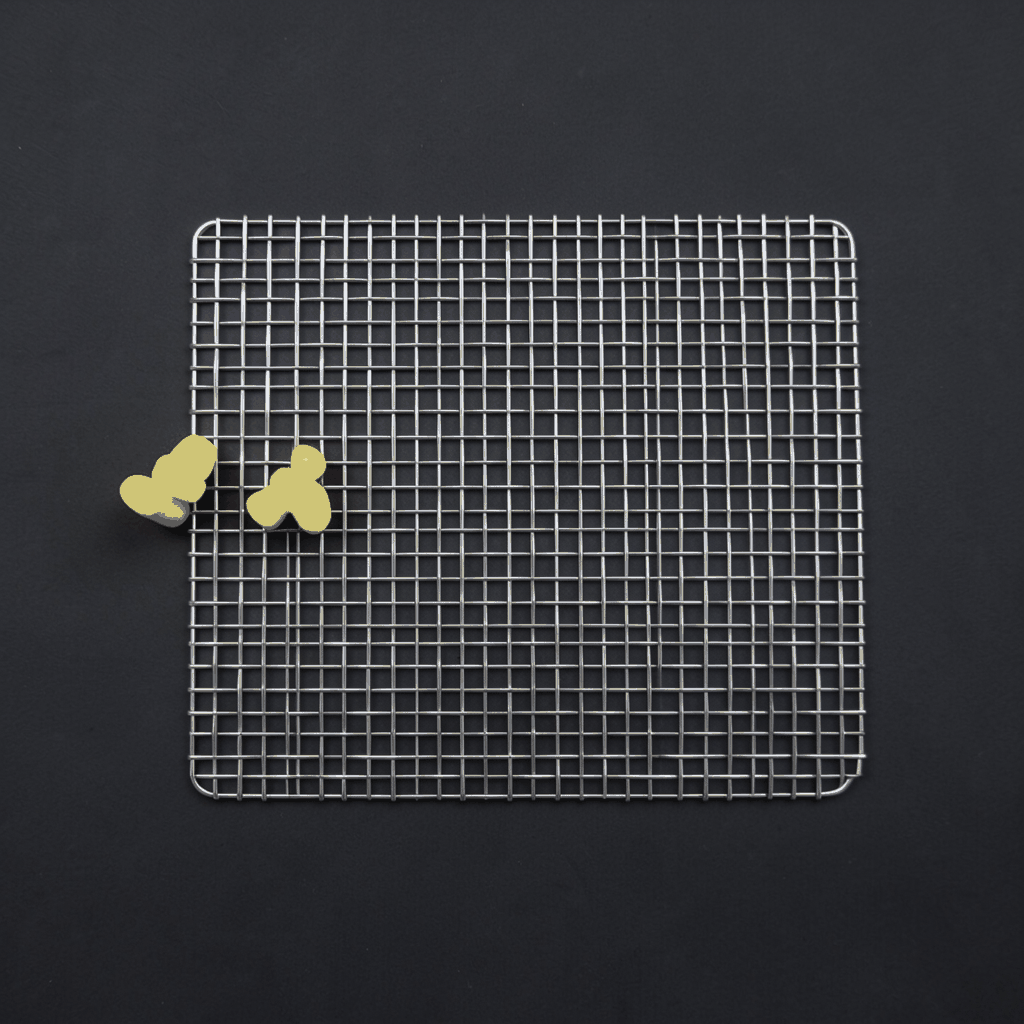
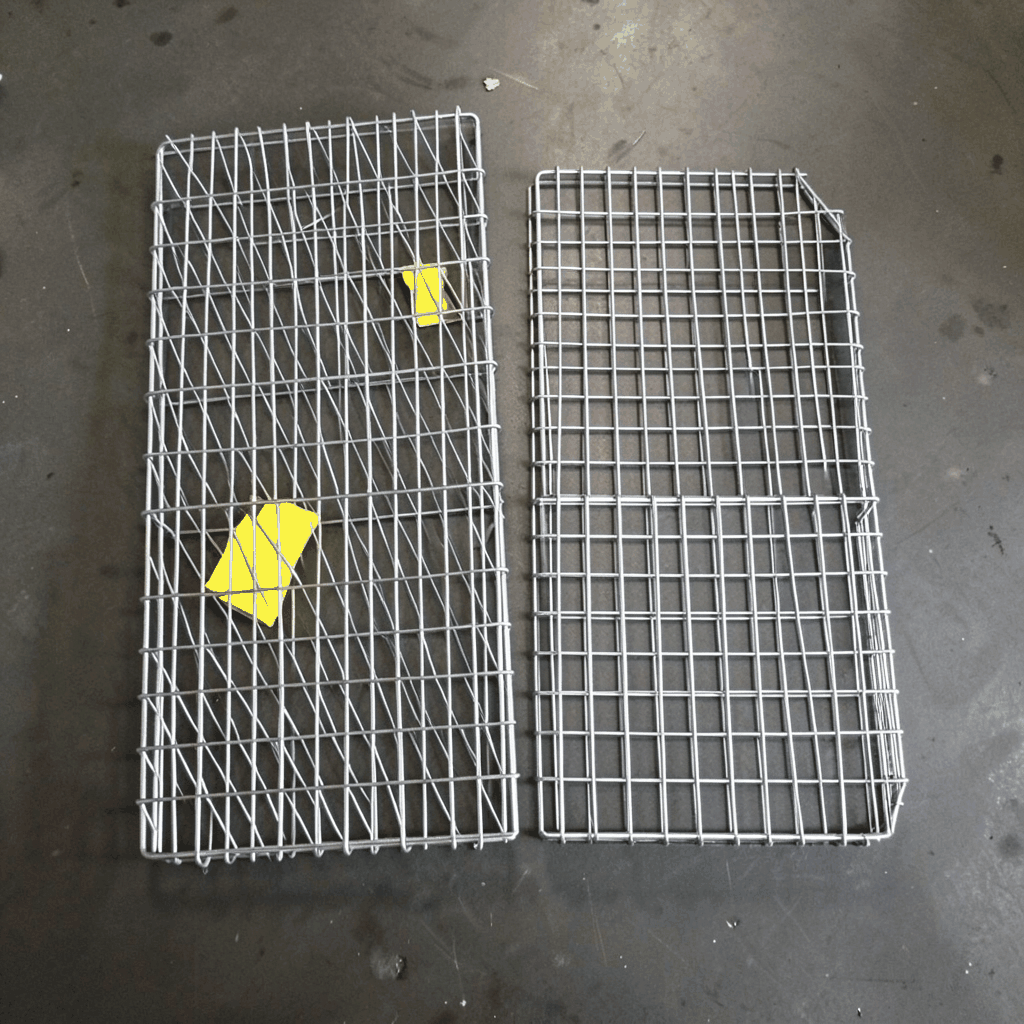
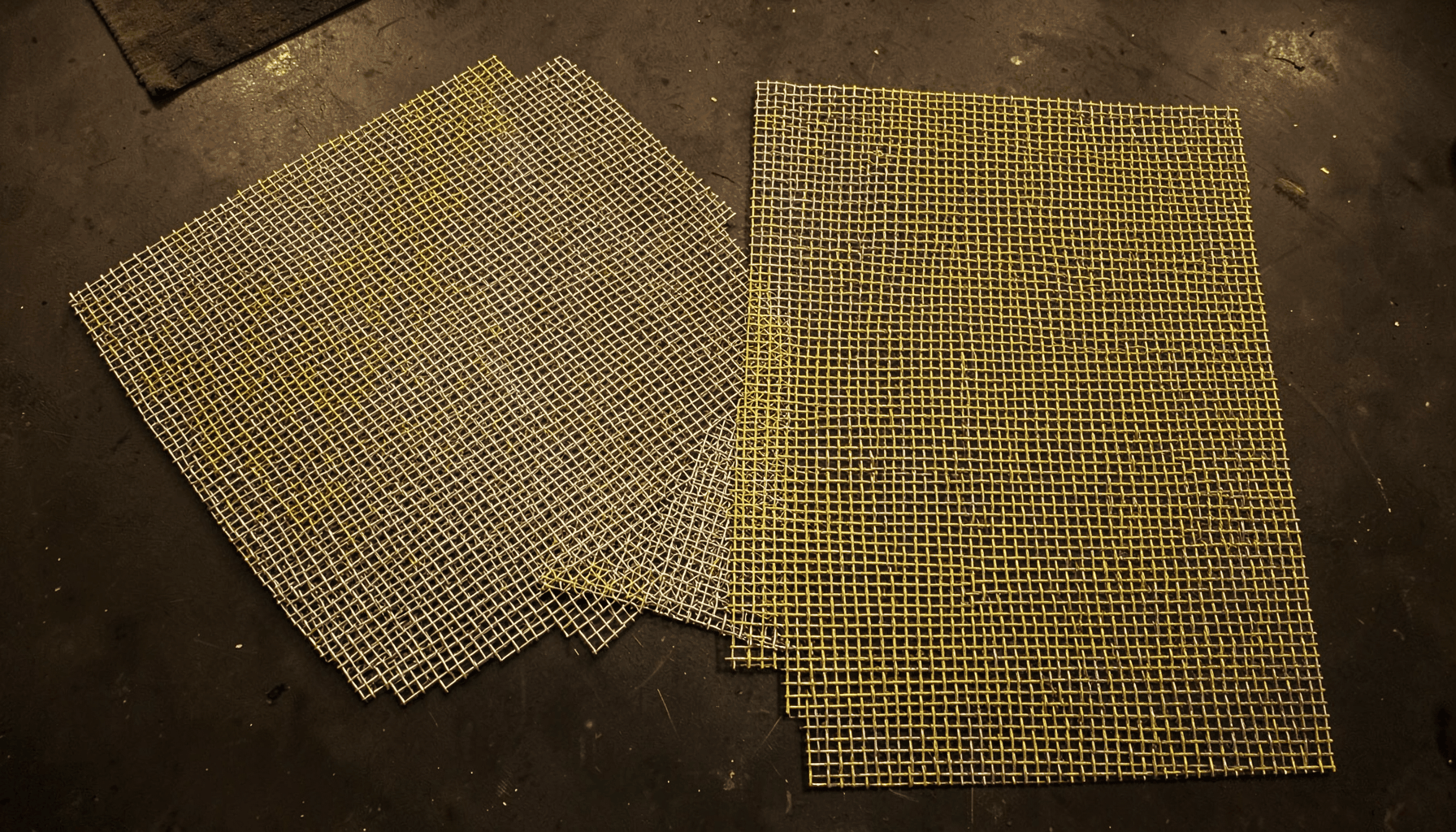
Four mesh formats cover most laboratory requirements. Woven square mesh, produced on interlocking or Dutch weave principles, is the traditional cage panel: flexible enough to form, strong in the plane of the panel, and comparatively light. Welded wire mesh offers a flat, rigid panel with square apertures and consistent edge geometry, which suits dividers, gates and panels that must hold their shape without a frame. Perforated and expanded sheet give solid surfaces with stamped openings, useful for splash guards, feeder shrouds and cabinet panels. Sintered and filtered mesh serves airflow and waste handling roles, in fan pre-filters, debris screens and instrument guards.
The difference between woven and welded construction shows up in the working life of a cage. A woven panel concentrates load at each crossover point, so wire fatigue becomes the failure mode once the panel has been cycled many thousands of times through door operation and impact. Spring-tempered steel is used in industrial mesh precisely because it stores and releases energy under repeated loading rather than taking a permanent set, and published trials on spring steel mesh wear in high-impact crushing screens give a useful reference for how a spring steel wire behaves when it is repeatedly stressed, abraded and released. Welded panels resist deformation more predictably but introduce weld intersections that must be ground, cleaned and inspected, because a rough weld bead is a dirt trap.
Laser-cut screen panels occupy a related space, where patterns are cut from sheet rather than woven or welded. The process suits decorative partitions, signage panels and non-structural screening in offices and procedure rooms adjoining animal facilities, and it allows apertures to be shaped rather than limited to squares. For the actual housing, the practical questions remain aperture size for the species, edge treatment to prevent sharp points, the gauge required at each joint, and whether the panel will be finished in a way that survives the facility's disinfection regime.
Hygiene, cleanability and the cage washer
Cleaning is the single largest operating cost in a laboratory animal facility, and cage design either supports that process or fights it. Good cage design drains in one direction, with a sloped floor toward a removable tray, and presents no ledges, hollows or unsealed joints where residue can accumulate. Welds need continuous fillets, crevices in knuckle-style mesh should be avoided in food-contact zones, and corners benefit from generous radii that a wash jet can actually reach. Panels that can be lifted out and returned to the rack separately clean faster than fixed assemblies, and cages designed around a tunnel or rack system should be disassemblable without tools.
Stainless surfaces perform best when they are finished properly. A pickled and passivated surface resists biofilm; electropolishing goes further and leaves a very smooth, low-surface-energy finish that resists fouling, though it costs more per panel. Standard grades of stainless steel, in sheet and woven mesh, are commonly specified for autoclave duties at temperatures around 121 to 134 degrees Celsius, but operators should confirm with the manufacturer that the grade, welds and any surface treatment have all been validated for that cycle rather than assumed from the base metal alone.
Fixtures matter as much as panels. Lids, handles, hinges, water bottle fittings, feeder guards and casters are all points where a cage spends its working life, and stainless hardware keeps the whole assembly consistent. Facilities running ventilated racks need compatible return-air grilles and filter screens sized so that panels do not sit in the airflow path in a way that creates turbulence at the cage level. Where soiled bedding is handled, baskets and screens should be smooth-walled and open enough to permit full drainage.
Supply, import clearance and local service in Australia
Most cages reach Australia as complete units or as panels destined for local assembly, and the practical details of that route are worth planning early. Australian Border Force and the Department of Agriculture, Fisheries and Forestry apply biosecurity rules to incoming goods, and equipment used around imported or quarantined animals needs clean, documented surfaces, free of soil, bedding and organic matter, with supporting certificates of treatment. Equipment arriving for quarantine or for use in an import animal facility should be scheduled ahead of the stock movement, so that cleaning and inspection do not hold up an experiment.
The alternative path is local fabrication, drawing on the stainless steel workshops and fabricators around Melbourne, Sydney and Brisbane. That route offers quick access to replacements and modifications, but it works best when the mesh itself is supplied as stock or semi-finished product with consistent properties, because a locally welded panel using an unspecified wire can differ from a factory panel in strength, finish and corrosion behaviour. Buyers who compare quotations will see the gap between a woven panel supplied from production lines and a locally welded equivalent, and the difference usually sits in flatness, weld finish and dimensional consistency across a full set of twenty or more cages.
Currency, freight and lead time shape the commercial picture too. Quotation practices that state the incoterm, the payment schedule and the tolerance on aperture dimensions help facilities plan purchases across financial years, and stock held in Australia or nearby reduces the exposure of breeding colonies to shipping disruption. For institutions that run large, multi-site programmes, the most valuable conversation happens before specification is fixed, when a manufacturer can advise on aperture, gauge and finish against the species, the washer chemistry and the cleaning cycle.
What to specify when ordering mesh for animal housing
Panels, apertures and hardware:
- Aperture and gauge matched to species, including neonates, plus panel dimensions with an agreed flatness tolerance
- Floor design combining solid resting areas with mesh sections, and the slope and tray arrangement specified
- Ventilation path stated: grille sizing, return-air requirements and any filter mesh specification
- Fixing and hardware details covering hinges, latches, water bottle fittings and removable lids
Material, finish and logistics:
- Grade and finish named explicitly, such as 316L versus 304, passivated, electropolished or coated
- Cleaning compatibility confirmed against the facility's disinfectant and steam sterilisation cycle
- Documentation supplied for material certification, inspection records and any treatment certificates
- Delivery terms, incoterm, lead time and the plan for spare panels, doors and replacement hardware
If you are planning a housing refurbishment, a new animal facility or a pilot run of cage panels for a study group, Shuo Ke can prepare drawings, sample panels and material documentation for review before bulk production. Send the species, cage dimensions, aperture requirement and cleaning regime, and a specification can be returned with mesh options, finishes and a quotation for tooling and delivery into Australia. Sample pieces and small trial batches are available for facilities that need to validate autoclave cycles and cage washer chemistry before committing to a full set, and technical drawings can be adjusted to suit existing racks, door furniture and local standard operating procedures.