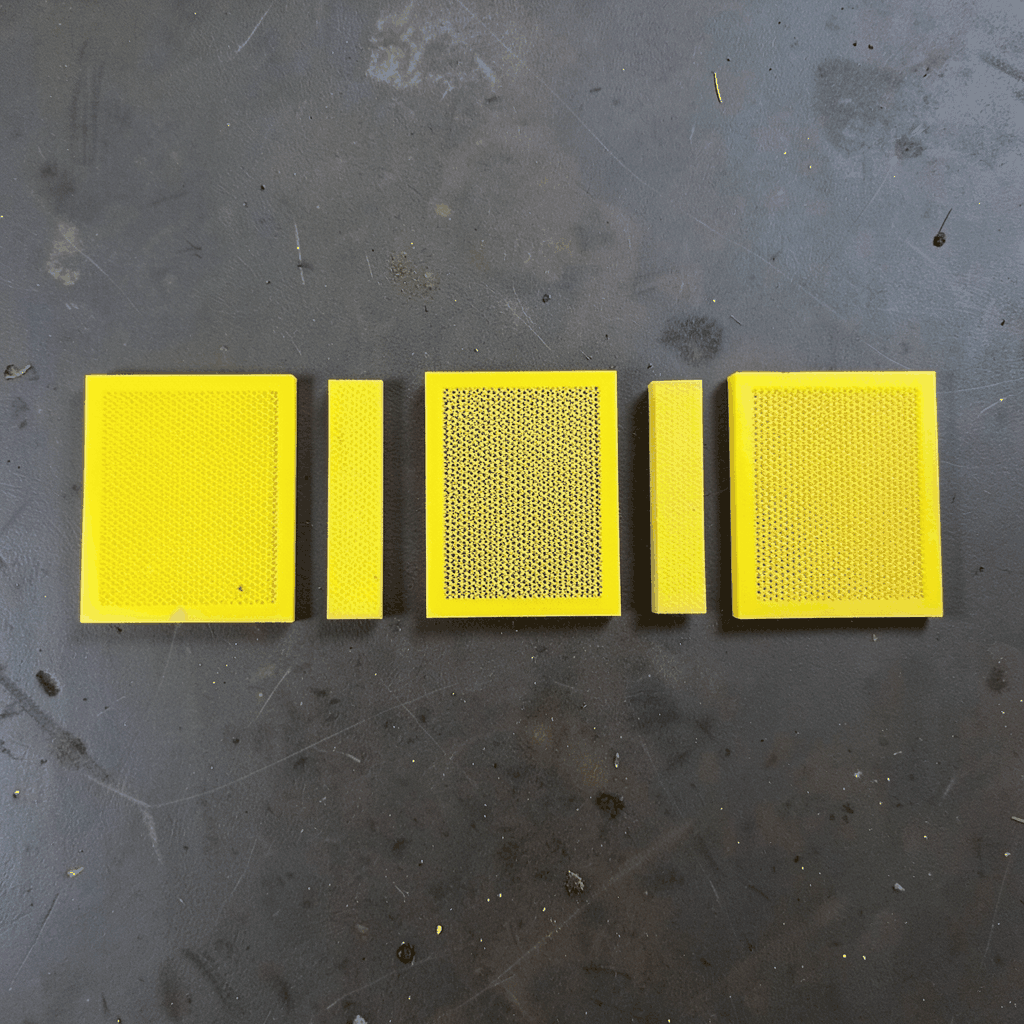
Wire mesh for molded pulp packaging tooling
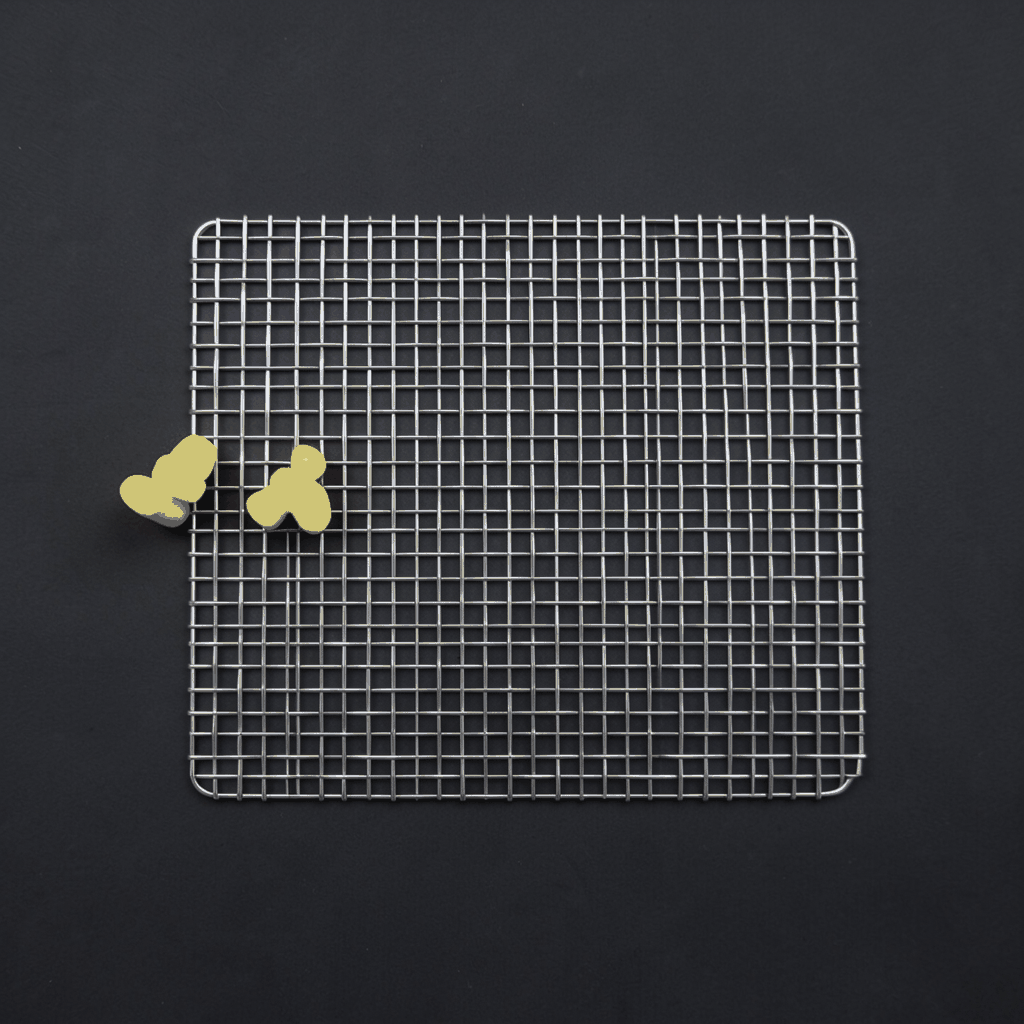
Molded pulp packaging turns agricultural or recovered fibre into rigid trays, inserts and protective sleeves. The forming die sets the shape, while drainage, pressing and drying determine wall quality and cycle speed. Wire mesh for molded pulp packaging tooling normally serves as a vented support, separator, retainer or protective screen rather than the moulding surface itself.
Success depends on how that mesh interacts with the whole machine. A screen that drains quickly can still cause fibre bridging, uneven vacuum, surface marks or a warped shell if its stiffness and placement are wrong. Open area, wire diameter, edge restraint and mounting must therefore be matched to the furnish, press geometry and thermal cycle rather than chosen from a generic mesh catalogue.
Australian production adds local realities that affect specification. Many converters and engineering suppliers are based around Melbourne or Sydney, where rapid access to CNC machining, laser cutting and local repair matters when a packaging line is waiting for parts. Queensland cane regions supply bagasse with a different fibre profile from many recycled-paper grades, while hot, humid coastal sites can accelerate corrosion. The Australian Packaging Covenant Organisation and the NSW and Queensland container-deposit schemes influence demand for recycled-content packaging, while food-contact exports require evidence suited to FSANZ and destination-market rules.
A practical specification identifies the mesh’s job before choosing a product. It should state whether the component carries load, distributes suction, permits drainage, supports a drying shell or prevents access to moving parts. It should also establish the cleaning regime, expected service life and acceptance criteria, giving a custom mesh supplier enough information to propose a material and fabrication route that can be tested on the actual line.
Where mesh belongs in the tooling system
A moulded-pulp line contains several distinct stations, and mesh can serve a different purpose at each one. The wet-forming area may use a perforated support behind a vacuum box or a retaining grid around a cavity. Transfer and pressing fixtures may need a gentle support for fragile shells. Drying equipment can use an open framework to hold a formed pack while allowing moisture and heat to move away.
The most useful component is often hidden. A ventilated plenum screen can distribute suction across a broad area, reducing the formation of weak spots caused by concentrated pressure. A coarse support grid can carry a newly formed item without blocking the air paths needed for drying. Decorative-looking wire panels may also act as guards over openings, although they must retain enough stiffness and have suitably protected edges.
Not every machine benefits from an added mesh layer. Sealing lands, release surfaces and the final contact face of a mould should remain exactly as designed by the machine builder. An insert that projects into a seal or changes the gap under the press can reduce output or damage the tool. Where suitability is uncertain, the safest approach is a removable trial component installed away from the critical sealing zone.
Choosing materials for Australian conditions
Stainless steel is usually the first candidate for wet tooling because it combines strength, heat resistance and cleanability. Grade 316 or 316L is prudent near coastal plants, washdown zones or chloride-bearing inputs; Grade 304 can suit controlled indoor environments with mild cleaning chemistry. A stainless component should be specified with the correct finish, weld treatment and passivation process so it does not become a source of iron contamination or rough edges.
Aluminium offers a lighter alternative for frames, guards and non-critical retainers. Anodising can improve surface durability, but the fabricator still needs to account for moisture, cleaning chemicals and galvanic contact with dissimilar metals. A separated washer or insulating fastener can prevent pitting where aluminium meets stainless steel. Other metals, including iron and copper alloys, may suit temporary fixtures, but they need careful corrosion and wear assessment before entering a production cycle.
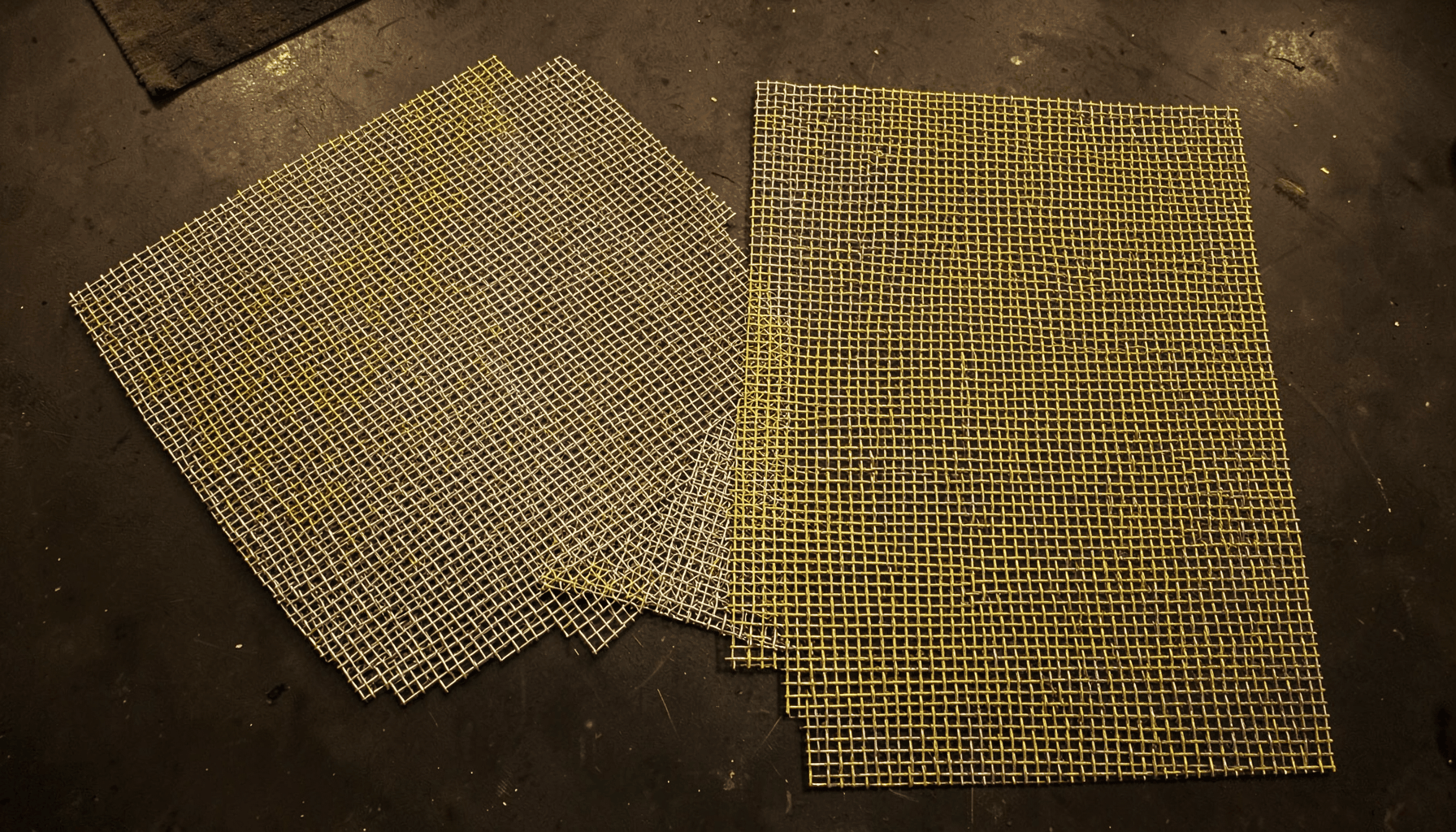
Woven wire and perforated sheet should also be treated as different engineering products. Woven mesh offers a controlled open area and many wire or aperture combinations, yet strands can deform and fine apertures can trap fibre. Perforated or laser-cut sheet has greater stiffness and fewer projecting strands, but its punched pattern may create local pressure zones. The choice depends on whether uniform suction, drainage, structural support or protection matters most at that point in the tooling.
Aperture ratio, vacuum and airflow
Aperture size determines how readily water, pulp fibres and air can pass through a screen. An aperture that is too small can hold a wet mat across the opening and slow dewatering. One that is too large may let fibres bridge or allow a fragile shell to distort between supports. Wire diameter matters too, because a stronger mesh has less open area even when its aperture measurement is unchanged.
The principles behind aperture and airflow apply directly to tooling screens, although pulp loading changes the result over time. Vacuum must reach the mould face evenly, while drainage paths remain open during the shortest practical cycle. Rectangular apertures can also create directional stiffness, so orientation relative to the press may affect how a support grid holds its shape.
The correct dimensions come from process trials rather than theory alone. A pilot should compare at least two aperture sizes and open-area levels using the proposed fibre blend, wetness and cycle time. Measurements should cover fill weight, wall thickness, drying time, vacuum consistency and visible fibre retention. A mesh that improves drainage but adds ten minutes to every shift is not a successful tooling change.
Supporting wet forming and heat drying
During wet forming, the mesh must provide support without becoming a second moulding surface. Projecting wire can print a pattern into a thin wall, and a boundary that sits too close to the cavity can alter the fibre distribution. Keeping the screen behind a dedicated support land preserves the designed gap, while controlled tension prevents the panel from flexing as vacuum loads change.
Heat drying introduces a different set of conditions. Moisture leaves the pack as steam, so the supporting structure must allow airflow around the shell rather than trapping a pocket of condensation. Stainless steel tolerates repeated thermal cycling better than many plated steels, but the alloy still needs an expansion allowance where it bridges moving fixture parts. Flat panels can also grow slightly as they heat, so mounting should avoid rigidly trapping that movement.
Cleanability and product contact deserve separate attention. Where packs will hold food, the mesh should have smooth welds, deburred edges and a surface that can withstand the plant’s cleaning chemicals without flaking. Documentation may need to cover material identity, coatings and applicable food-contact conditions for both Australian and export markets. The least complicated stainless construction is often easier to validate than a coated or mixed-material assembly.
Fabricating mesh for reliable maintenance
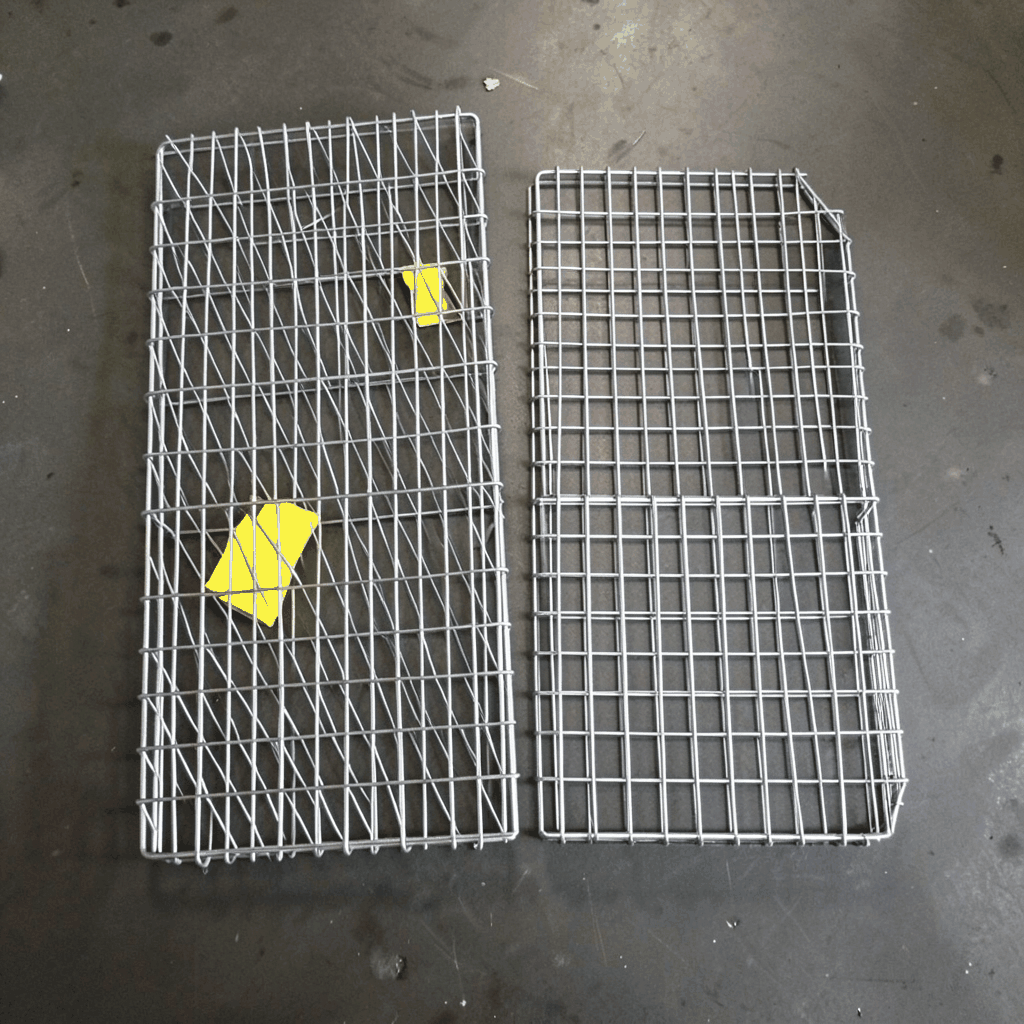
Good fabrication starts with the machine drawing and the component’s functional brief. The panel needs the correct outside dimensions, a defined open area, adequate flatness and mounting points that align with existing fixtures. Edge bands or rolled borders prevent cut wire from becoming a hazard, while a tensioned or welded frame limits bowing. Replaceable mesh sections are valuable where abrasive pulp or repeated cleaning will shorten service life.
Local serviceability matters because a machine idle in Brisbane or Melbourne cannot wait for an overseas replacement. Australian crews describe a handover as “sorted” when the drawing, spare panel and fitting instructions match the equipment on site. Standardised frames, exposed fixings and stocked replacement modules allow local maintenance staff to restore function without removing the complete plenum or ordering a newly engineered assembly.
Quality records should identify the alloy, mesh specification, fabrication method, heat treatment and inspection results. Buyers can request dimensional reports, weld samples, salt-spray testing where corrosion is relevant, and material traceability. Suppliers working to AS/NZS ISO 9001 or ISO 14001 management systems can fit these records into an existing quality process. Any modification near press guarding should also be checked against Safe Work Australia requirements and the machine builder’s safety instructions.
Recommendations for durable tooling
Specify the function, exposure and acceptance test before selecting a mesh type. The most reliable component is usually one designed for a clearly defined role in the process.
- Map every contact point, seal and airflow path, and keep trial mesh away from the moulding surface and sealing lands.
- Match the alloy to the wash regime and site conditions, using 316 or 316L stainless, or properly isolated aluminium, where corrosion risk warrants it.
- Validate aperture size and open area with the actual fibre blend, vacuum level and heat cycle rather than relying on clean-air flow data.
- Design for local maintenance with protected edges, removable panels, clear drawings and spare modules that can be stocked in Australia.
These measures reduce the chance of a trial component becoming an uncontrolled permanent modification. A short installation record can state the mesh orientation, cleaning limits, inspection points and replacement criteria. It also gives operators a clear basis for raising an issue before a damaged screen affects pack quality or line speed.
Develop a custom mesh package
A useful enquiry includes the machine make and model, tooling drawings or photographs, fibre type, target cycle time, operating temperature, cleaning chemicals and expected annual volume. If a mesh already failed, samples of the damaged section and notes about where blockage or distortion occurred can reveal more than dimensions alone. This information allows material, aperture and frame options to be shortlisted before fabrication.
Shuo Ke Wire Mesh Product Technology Co., Ltd. manufactures and processes architectural and industrial metal mesh products for customers in Australia and other markets. Its capabilities include stainless steel, aluminium, copper, iron and alloy products, together with woven mesh, laser-cut screens, fences, gates, guardrails, filters, baskets and barbecue mesh. For a packaging-tooling project, that manufacturing breadth supports a combined approach in which a vented panel, guard and retaining frame can be developed as one matched package.
Contact Shuo Ke Wire Mesh Product Technology Co., Ltd. with your machine details and drawings, and request a tooling-specific sample and quotation. A production-line trial can verify fit, drainage, airflow and serviceability before the component is built for ongoing Australian use.