Engineering Wire Mesh Guards for Industrial Robot Cells
Australian factories have moved quickly toward automation. In Brisbane food processing halls, Adelaide automotive component plants, and the robotic palletising cells outside Perth, machines now handle tasks that used to need three or four blokes with spanners. That shift has changed what a "guard" means. It is no longer a yellow steel cage that screams "keep out." It is a precision-engineered barrier that protects humans without slowing the work down. Wire mesh has turned out to be a very practical material for that job, because it holds its shape, lets air and light through, and can be cut, welded, and framed to suit almost any robot footprint.
The demand for protective guarding around industrial robots has grown alongside the rollout of collaborative cells and high-speed articulated arms. Many Aussie operators were used to sourcing their safety fencing locally, and they expect fabricators to understand local standards, local timelines, and the rough-and-tumble of a workshop floor that runs a 5:00 am start. Producers such as cialistas engineering mesh ship woven and welded mesh systems out of China that meet those expectations, pairing them with frames, posts, and fixings engineered for the kind of heavy-duty use you get in mining support yards and contract manufacturing shops from Newcastle to Geelong.
Why Mesh Works Better Than Solid Panels Around Robots
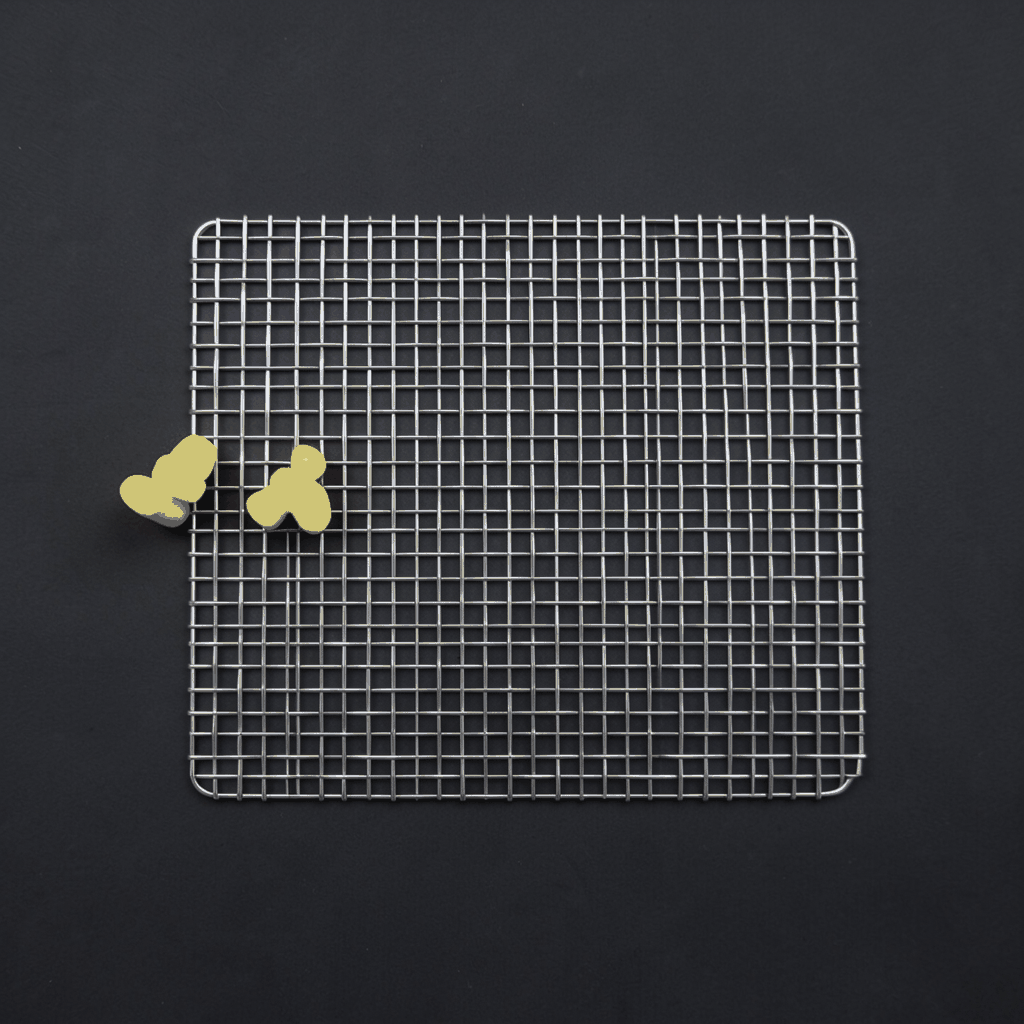
A solid steel panel blocks everything. It also blocks the supervisor's view, the maintenance tech's torch beam, and the airflow that keeps servo drives cool. Wire mesh is the opposite. A 12 mm or 25 mm aperture welded mesh gives you a clear line of sight, which matters when a stop button is the difference between a near miss and a Workers' Compensation file. Operators can see the end-effector moving, see whether a fixture has shifted, and react before a cycle goes wrong.
Mesh also handles heat and vibration better than sheet metal. Around welding robots, plasma cells, and foundry automation, heat plumes and metal spatter are a daily reality. Mesh panels let those plumes escape upward and let extraction hoods work as intended. Perforated sheet bends under cyclic loading, but welded wire cloth with a properly framed perimeter keeps its geometry for years.
Visibility is another quiet benefit. Most Aussie supervisors walk the floor at least twice a shift. With mesh guards, they can spot a tool change in progress, an operator leaning too close, or a misplaced workpiece from five or six metres away. That visibility also satisfies the consultation principle under Australian work health and safety law, which expects workers and safety reps to be able to observe the hazard they are protected from.
Picking the Right Mesh Grade for Harsh Aussie Conditions
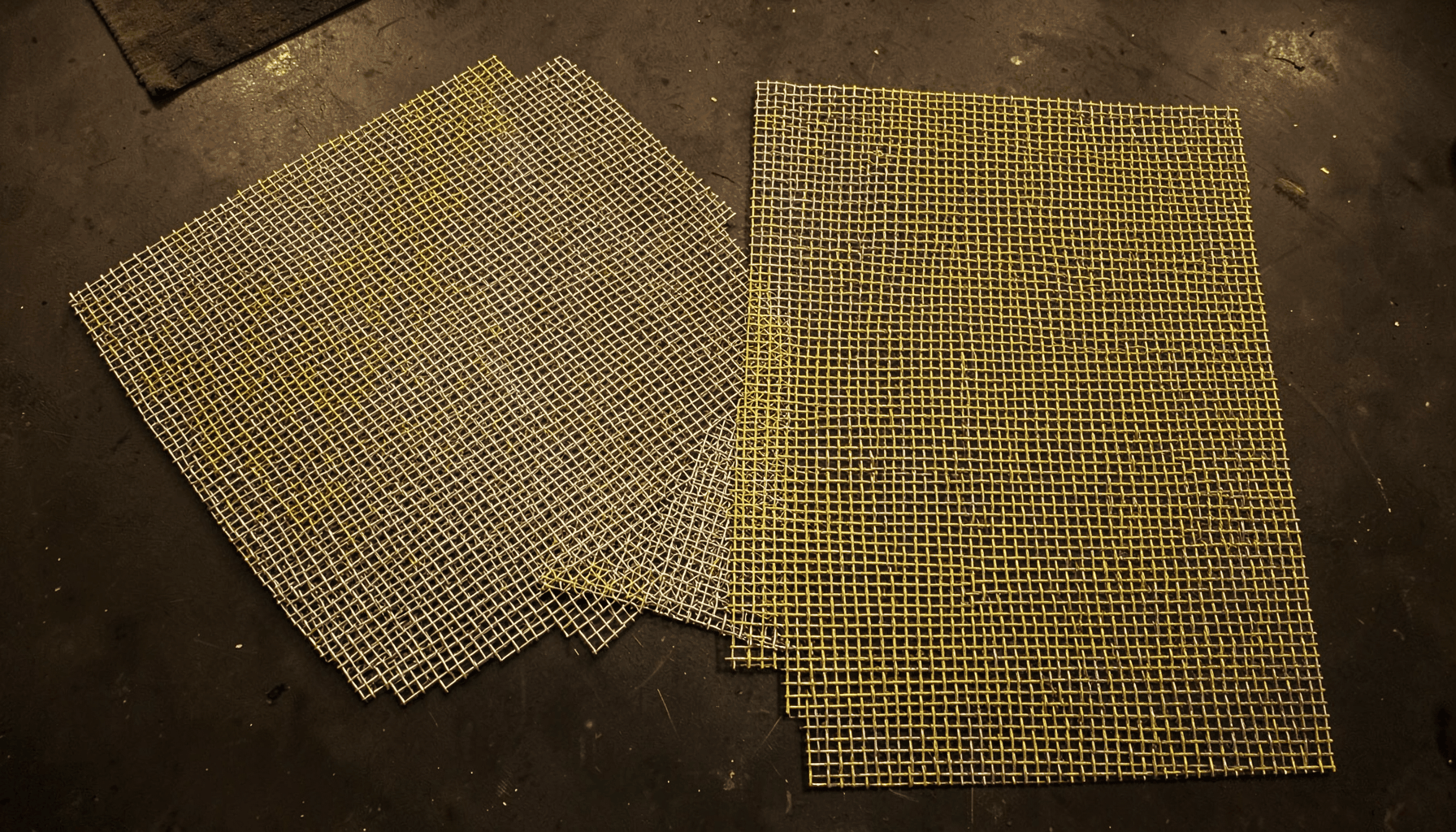
Australian conditions are not gentle on steel. Coastal factories deal with salt spray, Pilbara mining workshops deal with abrasive dust, and Sydney inner-west fabricators deal with humid harbour air. The wrong mesh grade can rust out inside three years. Stainless steel woven cloth or welded panels in 304 or 316 grade handle most of those exposures. For genuinely harsh environments, galvanised mild steel after fabrication remains a strong option and is still the go-to for the back-of-house facility guards in Kalgoorlie and Port Hedland.
Aperture size should match the hazard. A finger-sized aperture will pass a finger. Standard AS 4024 and ISO 13857 guidance uses reach distance to determine the maximum opening allowed, and most Australian safety engineers run the numbers carefully. A 20 mm or 25 mm square aperture, framed with a 25 mm square hollow section, is a popular balance for guarding around palletising robots and CNC tending cells, because it keeps fingers and tie-down straps out while still letting technicians see what is happening inside.
Material thickness matters too. A 3 mm wire in a 25 mm aperture holds its shape after a bump from a forklift tine or a dropped 20-litre drum. Heavier 4 mm or 5 mm wire adds rigidity for taller panels, especially in cells where a robot arm moves vertically and an accidental collision would otherwise fold a lighter panel like a tin can opener on a snag.
Meeting Australian Safety Standards Without a Headache
Safe Work Australia sets the national framework, and each state runs its own regulator. In NSW it is SafeWork NSW, in Victoria it is WorkSafe, in Queensland it is Workplace Health and Safety Queensland, and so on. The national model WHS Act and Regulations reference AS 4024.1 (the safeguarding series) and ISO 10218 for industrial robot safety. A wire mesh guard that meets those standards, with the right interlocked access doors and a fixed distance from the robot's reach envelope, satisfies the regulator's expectation that the guarding is robust and fit for purpose.
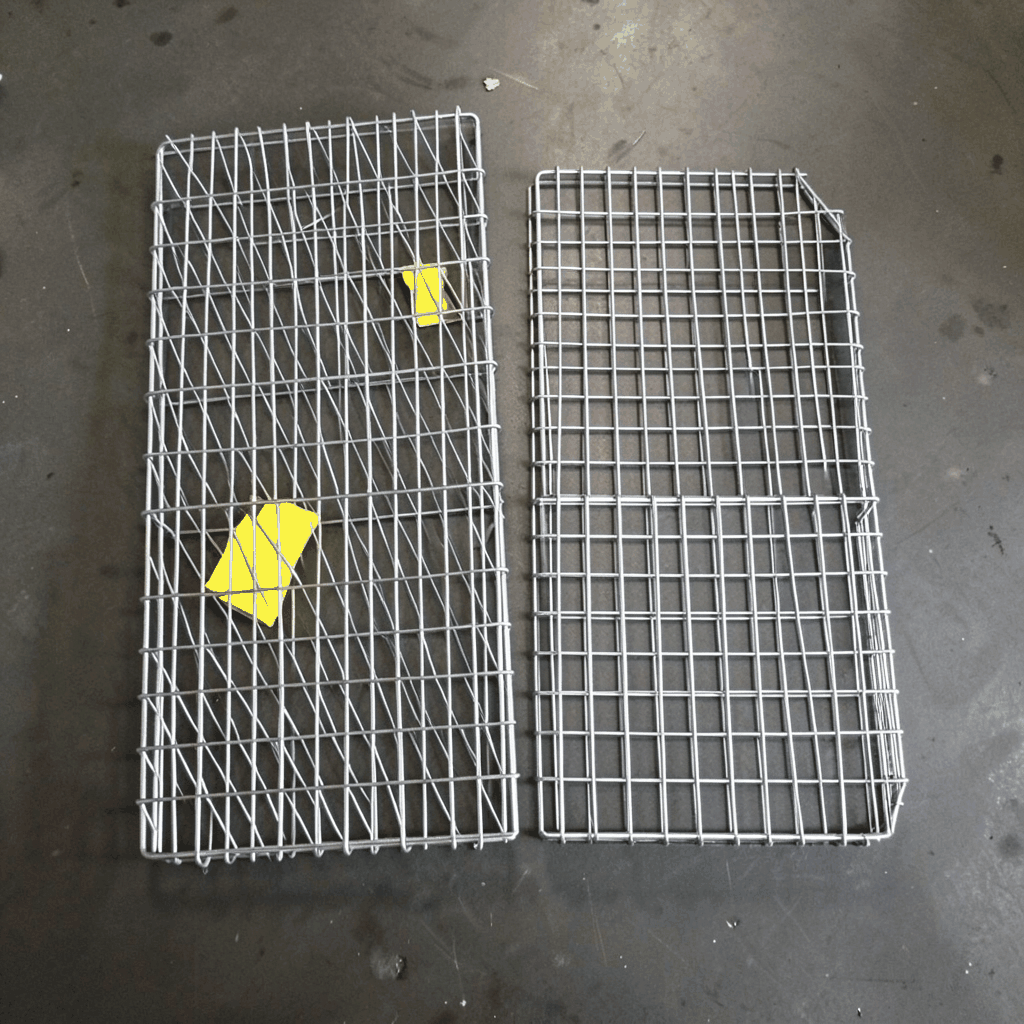
Compliance is not just about the panel. The frame, the post, the fixings to the floor, and the access gates all count. A welded mesh panel sitting on a flimsy clip rail is not a guard; it is a fence waiting to fall over. Genuine compliance means concrete-anchor posts, full-height gates with safety-rated hinges, and electrical interlocks that drop the robot into a safe stop when a gate is opened. The standard also calls for signage and a documented risk assessment, which a decent fabricator will help you put together.
For collaborative robots, where a human can share the workspace under controlled conditions, mesh still plays a role as a perimeter marker and a speed-and-separation monitor boundary. The cobot's safety-rated monitored stop is the primary protection, but the mesh tells the human worker where the cell ends, which keeps compliance straightforward during a SafeWork audit and gives the safety rep something tangible to point at.
Designing Guards for Visibility, Access, and Throughput
Good mesh guard design is part engineering and part choreography. Maintenance crews need access at the end of every shift. Tool setters need to swap end-effectors. Quality control techs need to see the part. A well-planned cell has a full-height mesh access door with a safety interlock on the operator side, plus a smaller hinged panel for tooling changes on the rear, and a removable upper panel for crane access when a robot needs a service lift. None of that is hard to build if the mesh is welded to a frame that takes standard hardware.
Lighting is often overlooked. Yellow-tinted safety lights cut through mesh poorly. White LED floodlighting reads cleanly through stainless mesh at 50 mm aperture and finer, which is why many Melbourne aerospace suppliers specify a tight aperture for cells where a quality inspector needs to read surface finish through the guard. Coatings matter too. A black powder-coated frame with a brushed stainless mesh panel looks tidy, fits the visual standard of a modern Australian factory floor, and resists fingerprints better than raw mill finish on the touchpoints.
Throughput is the hidden driver. A guard that takes two minutes to open and two minutes to close steals a percentage point of OEE every cycle. Quick-release panels, sliding upper sections, and interlocked swing gates all cut that loss. Wire mesh lends itself to lightweight framed panels that one operator can lift off without breaking a sweat, which is a real win for the smaller contract manufacturers around Dandenong, Wetherill Park, and Carole Carole Carole Carole Carole Carole Carole Carole.
If your work needs new guarding around an automated cell, send through your cell layout, the robot's reach envelope, the floor fixing preference, and any access point requirements. A short brief is enough to get a quote back with mesh grade, aperture, frame size, gate hardware, and lead time, plus drawings you can hand to your safety rep or your installation crew on the morning the truck pulls into the loading bay.