
Creating Custom Mesh Baskets for Industrial Parts Washing
Industrial parts washing depends on consistent contact between cleaning chemistry, heated water, and every exposed surface of a component. A basket is the working interface between the washing system and the parts inside it. If its openings are too small, fluid circulation suffers. If its structure is too open or flexible, small components can shift, escape, or contact one another during processing.
A well-designed washing basket must therefore perform several jobs at once. It should retain the load securely, allow spray and drainage, withstand chemicals and repeated heating, and fit the dimensions of the washer. The right design also reduces manual handling and helps operators transfer parts from washing to rinsing, drying, inspection, or assembly.
Custom fabrication is valuable when standard baskets cannot accommodate unusual part sizes, delicate surfaces, high-temperature processes, or specialized equipment. By selecting the right alloy, mesh pattern, wire diameter, frame, handles, and support points, manufacturers can create a container that matches the complete cleaning cycle rather than simply holding parts.
Define The Washing Process
The first design step is to document how the basket will be used. Important information includes the type of parts, maximum load weight, operating temperature, cleaning chemicals, cycle duration, spray direction, and washer dimensions. Parts washed in an alkaline system may require different material protection from components cleaned with acidic solutions, solvents, or abrasive media.
Part geometry also affects the basket configuration. Flat pieces may stack efficiently in shallow trays, while irregular castings may require deeper containers with internal dividers. Small fasteners, pins, and fittings need openings small enough to prevent loss, yet large enough to avoid trapping dirt and restricting circulation. Fragile or polished parts may need soft contact points, rounded edges, or a suspended arrangement that limits impact.
The production environment should be considered as well. A basket used once per week may have different reinforcement requirements from one loaded and unloaded dozens of times each shift. Forklift access, robot handling, conveyor transfer, overhead lifting, and manual carrying all influence the placement of handles, feet, lifting bars, and locating features.
Choose Materials For Service Conditions
Stainless steel is a common choice for industrial washing baskets because it offers corrosion resistance, mechanical strength, and dependable performance at elevated temperatures. Stainless wire mesh can be used in aqueous cleaning, rinsing, passivation, and drying operations when the selected grade matches the chemical environment. The exact grade should be reviewed against the detergent formulation and process temperature.
Aluminum can reduce basket weight and may suit applications where easy manual handling is important. It must, however, be evaluated for compatibility with the cleaning chemistry and galvanic contact with other metals. Carbon steel or iron may be suitable for less corrosive applications, especially when a protective finish is applied, but exposed coatings can eventually wear at contact points and welds.
Copper and specialty alloys may serve particular thermal, electrical, or chemical requirements, although they are less common for general parts washing. Material selection should include the mesh, frame, fasteners, hinges, handles, and welds. Using a corrosion-resistant mesh with unsuitable hardware can create weak points, contamination, or premature failure.
Balance Retention And Fluid Circulation
Mesh opening is one of the most important variables in a washing basket. The opening must be smaller than the smallest part or loose component being processed, while still allowing spray, detergent, rinse water, and air to pass through efficiently. Engineers evaluating mesh opening and flow should also consider wire diameter, open-area percentage, flow direction, and the possibility of debris accumulation.
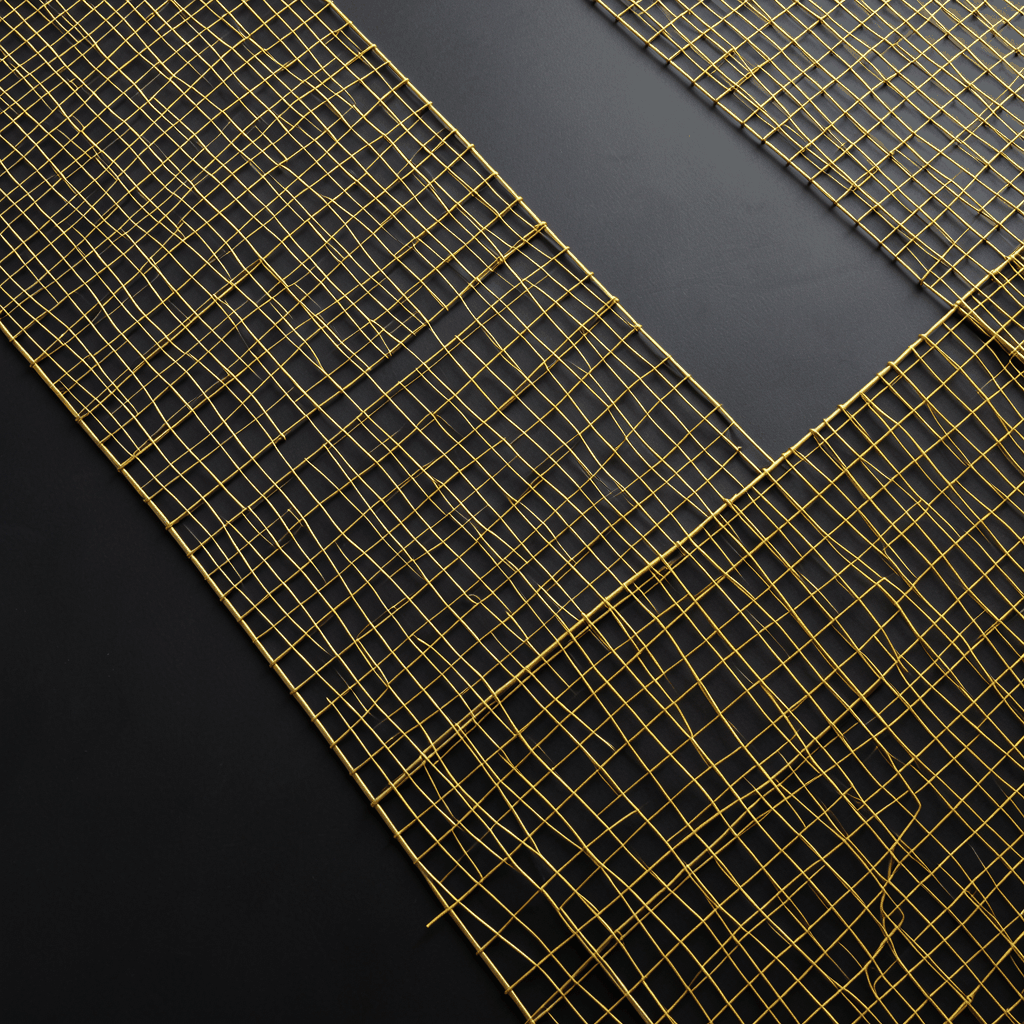
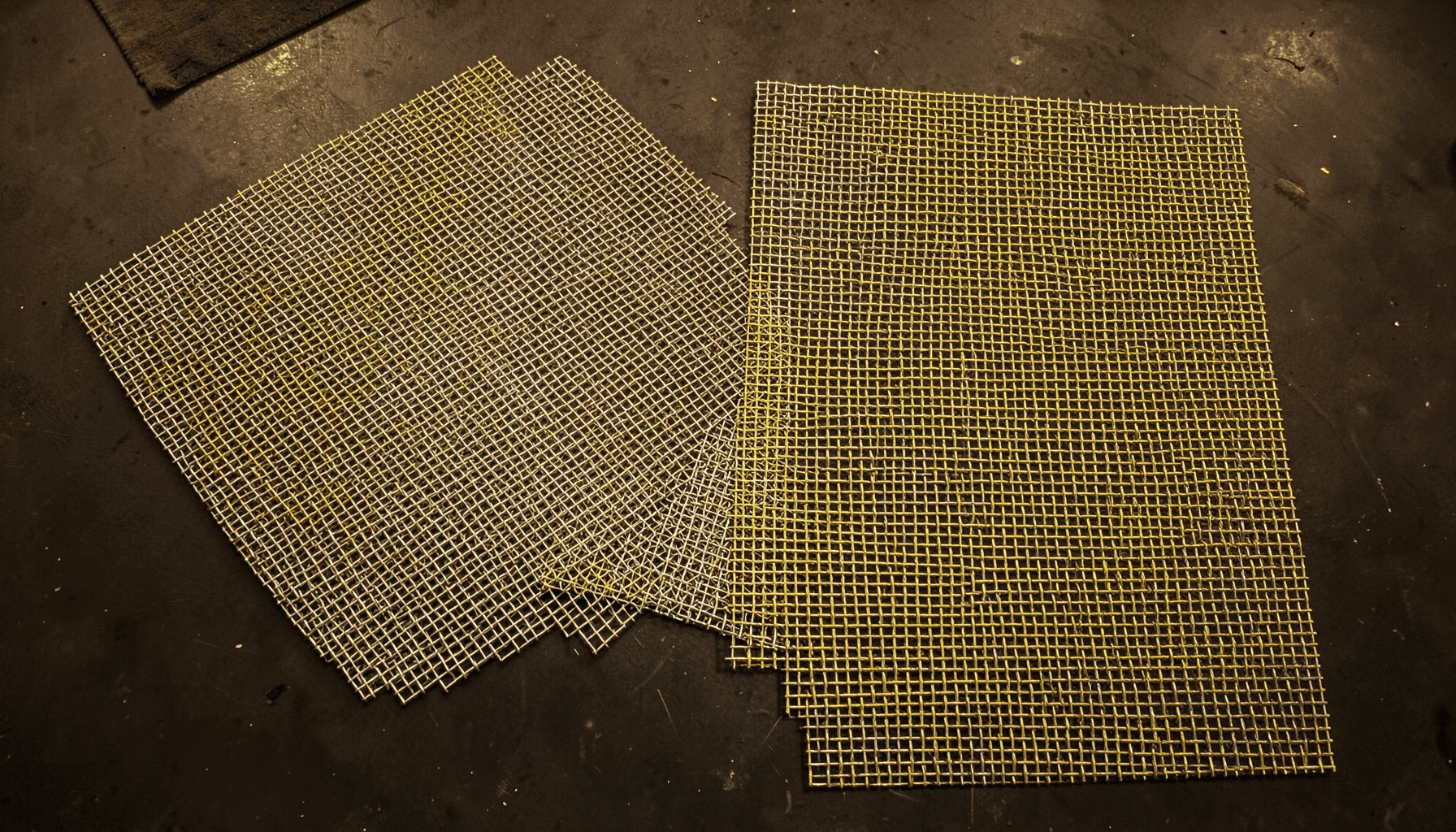
Woven wire mesh provides a broad range of aperture patterns and can be useful when high open area is required. Welded wire mesh offers a more rigid grid and is often preferred for heavier loads or baskets that must retain their shape during repeated handling. Perforated sheet can provide a smooth, durable surface with controlled hole sizes, while expanded metal may combine strength with useful drainage and ventilation.
| Design Variable | Primary Effect | Typical Consideration |
|---|---|---|
| Mesh opening | Retains parts and controls fluid passage | Keep openings smaller than the smallest loose component |
| Wire or sheet thickness | Affects strength, weight, and durability | Increase thickness for heavy or abrasive loads |
| Open-area percentage | Influences spray access, drainage, and drying | Balance circulation with retention |
| Basket depth | Determines capacity and part stacking | Avoid excessive layers that block cleaning |
| Frame construction | Controls rigidity and dimensional stability | Reinforce corners, edges, and lifting points |
| Internal dividers | Prevent movement and part-to-part contact | Use removable partitions for varied product runs |
| Base supports | Improve drainage and handling | Add feet or runners for clearance beneath the load |
Basket shape should follow the movement of fluid through the washer. A perforated base with raised feet can help water drain after the spray cycle and reduce pooling beneath the load. Sloped or radiused corners make it easier for liquid and debris to leave the basket, while smooth transitions reduce areas where residue can collect.
Engineer The Basket Structure
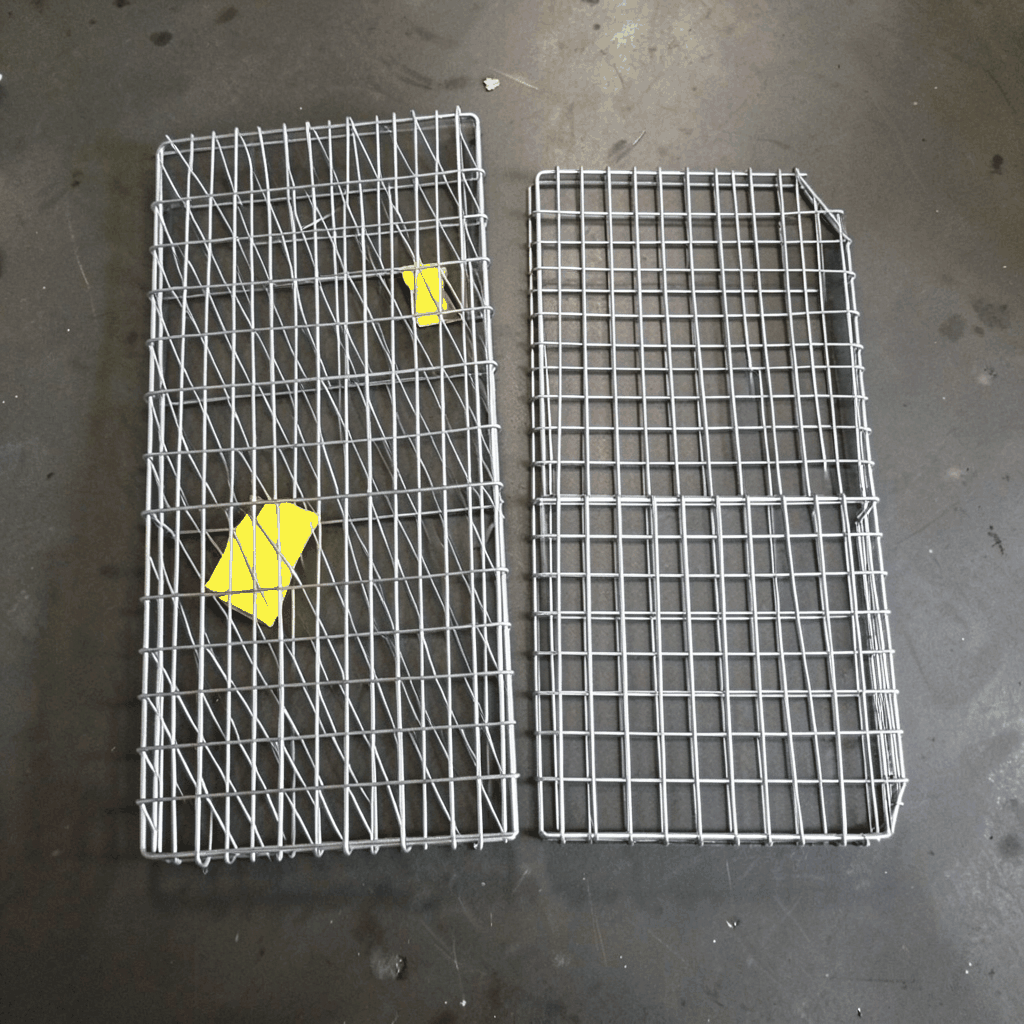
A durable basket starts with a rigid perimeter frame. This frame may be formed from wire, angle, round bar, tube, or shaped sheet, depending on the load and handling method. Reinforced rims protect the mesh from bending during lifting, and corner supports help the basket retain its dimensions after repeated thermal cycling.
Welded joints should be positioned where they can carry the load without creating sharp projections. Continuous or carefully spaced welds can improve strength, while ground and finished welds reduce snagging and make the basket easier to inspect. For applications involving fine powders, oils, or sticky residues, crevices around joints should be minimized.
Handles and lifting points require particular attention. A pair of side handles may work for smaller baskets, while larger units may need four-point lifting bars, reinforced lugs, or a frame compatible with a hoist. The lifting system must keep the basket level and prevent sudden load shifts. Handles should also remain accessible when baskets are stacked or placed on a washer conveyor.
Add Features For Safer Handling
Custom parts washing baskets can include dividers, trays, removable inserts, lids, and stacking guides. Dividers separate components with different shapes or surface requirements and help prevent contact damage during spray impact. Removable inserts make it possible to process mixed product families without ordering a different basket for each part.
Lids or retaining screens are useful when lightweight parts may float, move, or become airborne under high-pressure spray. A lid should secure quickly and remain stable during lifting, yet permit operators to load and unload efficiently. For automated lines, locating pins, guide rails, and standardized external dimensions can improve repeatability between stations.
Surface finish influences both cleanliness and service life. Passivated stainless steel can improve corrosion resistance, while electropolishing may provide a smoother surface for applications where residue retention must be minimized. Coated carbon steel may be appropriate in selected environments, but the coating system should be tested for chipping, abrasion, and chemical exposure before it is used in continuous production.
Test Cleaning And Operating Performance
Prototype testing should use representative parts, the intended chemistry, and the actual washer settings whenever possible. Visual inspection can reveal blocked areas, trapped debris, water retention, or movement during the cycle. More demanding validation may include cleanliness testing, residual contamination checks, dimensional inspection, and examination of sensitive surfaces.
Loading pattern matters as much as basket construction. A basket that performs well with a single layer may produce inconsistent results when parts are stacked several levels deep. Operators should receive clear loading guidance covering orientation, maximum quantity, separation requirements, and weight limits. Marked fill lines or interchangeable dividers can make correct loading easier to repeat.
The basket should also be evaluated after repeated cycles. Inspect the mesh for distortion, the frame for cracks, and the welds for fatigue or corrosion. Check handles, feet, latches, and lifting points for looseness or deformation. A preventative maintenance schedule based on cycle count can help identify wear before a basket fails during transfer.
Information That Speeds Fabrication
A clear specification allows a metal mesh manufacturer to translate production needs into a practical design. Drawings are helpful, but photographs, sample parts, washer layouts, and loading descriptions can also reveal issues that a simple length-and-width measurement may miss. The more accurately the operating conditions are described, the easier it is to select suitable materials and reinforcements.
Shuo Ke Wire Mesh Product Technology Co., Ltd. produces and processes stainless steel, aluminum, iron, copper, and other metal mesh products for industrial and architectural applications. Its custom manufacturing approach can support baskets, screens, partitions, filters, and related fabricated mesh components where dimensional accuracy, durability, and functional design are important.
Useful details to provide include:
- Overall basket length, width, height, and allowable dimensional tolerance
- Part dimensions, minimum component size, weight, shape, and surface sensitivity
- Maximum basket load and preferred loading arrangement
- Washer opening, conveyor dimensions, transfer method, and lifting equipment
- Cleaning chemicals, operating temperature, spray pressure, and cycle frequency
- Preferred alloy, mesh pattern, aperture, wire diameter, finish, and hardware
- Requirements for dividers, lids, handles, feet, stacking, drainage, or automation
A manufacturer can use this information to review the basket’s open area, structural strength, handling safety, and compatibility with the washing system. Sample production followed by testing is often the most reliable way to confirm that the design performs correctly before a larger batch is made.
Custom baskets should be treated as process equipment rather than disposable containers. When the mesh, frame, and accessories are matched to the parts washer, they can improve cleaning consistency, protect components, and reduce labor during material transfer. A precise design also makes it easier to standardize loading and identify performance problems.
Send your part dimensions, washing conditions, load requirements, and equipment details to Shuo Ke Wire Mesh Product Technology Co., Ltd. to develop a metal mesh basket configured for your industrial cleaning process. A purpose-built solution can bring secure retention, effective fluid circulation, and dependable service into one engineered product.