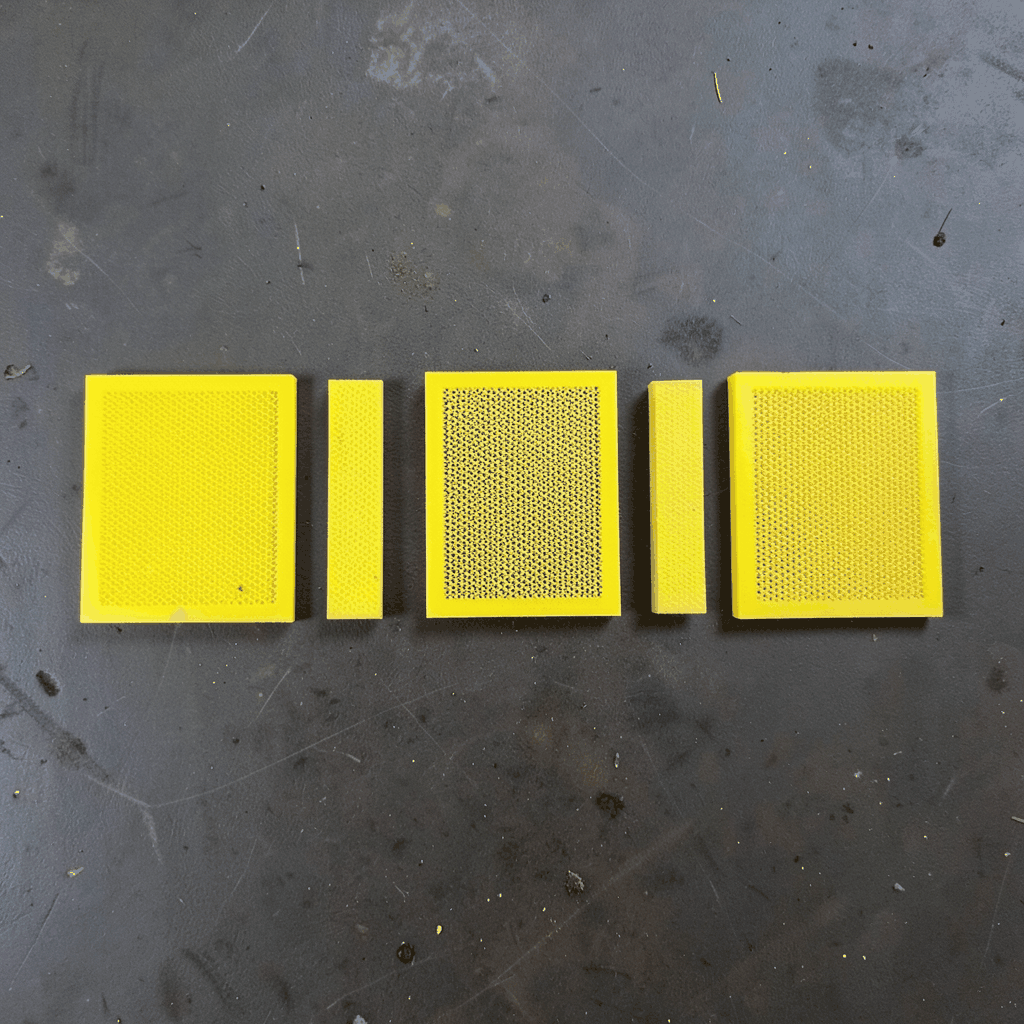
Custom Mesh Racks for Cooling and Drying Industrial Parts
Cooling and drying are essential stages in many Australian manufacturing processes. Machined components, stamped parts, castings, fabricated assemblies and coated products often need controlled airflow after washing, rinsing, heat treatment or surface finishing. A well-designed rack supports those stages by keeping parts separated, stable and accessible to air, while reducing handling time and the risk of contact marks.
Custom mesh racks for cooling and drying industrial parts can be produced around the actual dimensions, weight, temperature and cleaning method used in a facility. Shuo Ke Wire Mesh Product Technology Co., Ltd. manufactures and processes metal mesh products in stainless steel, aluminium, iron, copper and other alloys, allowing industrial buyers to specify practical frames, trays, baskets and support structures for demanding work areas.
Why Mesh Supports Improve Industrial Processing
Solid shelves and tightly packed trays can trap heat, moisture, cleaning fluid and residues around a component. Expanded metal, woven wire and perforated mesh create open surfaces that encourage ventilation from above and below. This can shorten drying cycles and produce more consistent results between batches, especially when components have recesses, channels or uneven profiles.
A mesh rack also provides a repeatable placement pattern. Operators can load parts into defined spaces instead of stacking them directly on top of one another. That separation helps prevent scratching and allows hot components to cool without excessive contact. For painted, plated or anodised products, the correct mesh opening and support profile can reduce visible marks on finished faces.
The rack design should match the process rather than simply provide maximum openness. Fine wire mesh may suit small fittings and delicate components, while heavier welded mesh or expanded metal may be better for castings, tools and fabricated parts. If liquid drainage is important, a sloped tray or raised edge can direct runoff away from the work area without obstructing airflow.
In factories where parts move between washing, drying, inspection and packing, racks may be fitted with castors, forklift pockets, lifting points or guide rails. These details support safer movement and reduce manual transfers. A rack can also be designed to fit an existing conveyor, drying cabinet, trolley system or automated loading station.
Selecting Metal for Heat, Moisture and Chemicals
Stainless steel is frequently chosen for industrial drying baskets and cooling frames because it offers good corrosion resistance, structural strength and a cleanable surface. Grades such as 304 may suit general washing and drying environments, while 316 stainless steel can be considered where salt, chlorides or aggressive cleaning agents are present. The correct grade depends on the chemicals, temperature and exposure time involved.
Aluminium provides a lighter alternative for mobile racks and handling frames. Its lower weight can help operators move loaded equipment and may reduce transport demands within a plant. It needs careful consideration where strong alkaline cleaners, high temperatures or galvanic contact with other metals could affect service life. Protective finishes may be useful, although the coating must be compatible with the working environment.
Carbon steel and iron can offer economical strength for dry areas or applications where the rack will receive a suitable protective finish. Galvanised surfaces may be appropriate for some general industrial settings, while powder coating can add colour coding and surface protection. Coatings should be assessed carefully if racks enter ovens, wash bays or processes involving abrasion, because damaged areas can become maintenance points.
Australian conditions make material selection especially important. Coastal operations near Sydney, Melbourne, Perth or Adelaide can experience salt-laden air, while Brisbane and northern Queensland facilities may deal with higher humidity and intense rainfall. Mining, agricultural and food-processing sites may also expose racks to dust, washdown water or chemicals. Choosing mesh and finish based on the local environment can prevent premature corrosion and unplanned replacement.
Designing Racks Around the Part and Process
A useful rack begins with the part, not a standard shelf size. Important measurements include component length, width, height, weight, centre of gravity, contact points and the number of parts required per load. The design should also consider whether parts arrive hot, wet, oily, painted or freshly coated, since each condition influences spacing and support requirements.
Support points should be positioned where they will not damage critical surfaces. Small feet, removable dividers, formed wire clips and shaped cradles can hold parts in place while preserving airflow. For irregular components, a tiered rack may provide more usable capacity than a flat tray. Adjustable mesh panels are valuable when product sizes change regularly.
Air movement is another key design factor. Open sides and raised shelves allow fans or natural convection to reach more surfaces. However, excessive spacing can reduce capacity and increase the footprint of each batch. A supplier can balance mesh aperture, shelf pitch and rack height according to the available drying room, fan direction and expected cycle time.
Loading ergonomics should be considered alongside thermal performance. If operators in a Melbourne workshop or a regional Queensland plant must reach repeatedly into deep racks, the design may create unnecessary strain. Handles, pull-out shelves, rounded edges and sensible working heights can improve daily use. For automated lines, the frame may require consistent external dimensions, defined locating points and sufficient rigidity for robotic handling.
Custom fabrication is also useful when a rack must integrate with an existing production system. Shuo Ke’s experience across industrial mesh baskets, filters, guards and architectural metalwork supports the development of purpose-built solutions. The same principles used for decorative mesh inserts — selecting a suitable mesh pattern, finish and frame — can be adapted to create a functional industrial enclosure or support surface.
Safety, Cleaning and Australian Compliance
A cooling or drying rack is workplace equipment, so its design should support the duties imposed by Australian work health and safety legislation. Requirements vary by state and territory, but businesses generally need to identify hazards, maintain safe plant and equipment, and provide appropriate information and training. A rack that is unstable, difficult to move or overloaded can become a manual-handling, crush or falling-object hazard.
Load capacity should be stated clearly and based on the frame, mesh, shelves, wheels, welds and fixing points as a complete system. The safe working load may differ for a stationary rack, a mobile rack and a rack lifted by forklift or crane. Centre-of-load markings, locking castors and forklift entry points can reduce misuse. Where lifting is required, engineered lifting features and documented procedures should be considered.
Edges and joints deserve close inspection. Cut wire ends, sharp perforations and rough welds can damage gloves, components or skin. Smooth folded edges, capped tube ends and consistent weld finishing make the rack easier to clean and safer to handle. Drainage openings should prevent fluid pooling, while removable trays can simplify the removal of swarf, scale and residue.
Cleaning requirements are particularly important in food, pharmaceutical, medical and precision manufacturing environments. Mesh openings must be large enough to avoid blockage but small enough to support the smallest component. Stainless steel may be preferred where frequent washdown is required. If a rack is used with a chemical cleaner, the buyer should confirm concentration, temperature and compatibility before finalising the material.
Australian buyers should also account for local logistics and site access. A rack built for a Perth workshop may need corrosion protection suited to a dry, dusty environment, while a unit shipped to a remote mine must be robust enough for long-distance freight and rough handling. Standard pallet dimensions, loading dock clearances and available forklift capacity can influence the final frame size as much as the production process does.
Building a Practical Procurement Specification
Clear information helps a manufacturer produce a rack that performs correctly on the first delivery. Buyers should provide drawings or sample parts where possible, along with photographs of the loading area and details of the washing, cooling or drying equipment. A brief production description can reveal requirements that are easy to miss when only dimensions are supplied.
The following points create a useful starting specification:
- Part details: State the component dimensions, weight, surface finish, fragile areas and required orientation during cooling or drying.
- Operating conditions: Describe temperature ranges, moisture, oils, solvents, detergents, salt exposure and expected cleaning frequency.
- Mesh and frame: Nominate a preferred material or ask for a recommendation based on corrosion, strength, aperture size and service life.
- Handling method: Confirm whether the rack will be carried by hand, moved on castors, stacked, lifted by forklift or connected to automated equipment.
- Capacity and maintenance: Define the number of parts per load, safe working load, access requirements, replaceable components and inspection schedule.
A prototype or trial rack can be worthwhile when parts are unusually shaped or the drying cycle is sensitive to airflow. Testing can identify contact marks, tipping risks, uneven drainage and areas where heat remains trapped. It also allows operators to assess loading speed and cleaning effort before the design is approved for a larger quantity.
Finish and appearance may matter even in an industrial plant. Powder-coated frames can support colour coding by product line, while brushed stainless steel may provide a clean appearance in customer-facing production areas. Where a rack is installed near public access, offices or retail operations, a considered mesh pattern can provide practical separation without making the space feel enclosed.
Manufacturing quality should be assessed through weld consistency, dimensional accuracy, mesh attachment, edge treatment and the suitability of the chosen finish. A reliable supplier should be able to discuss tolerances, material certificates where required, packaging and replacement parts. These details are important when racks are used every day and downtime affects delivery schedules.
A purpose-built rack can improve airflow, protect finished surfaces and simplify material movement throughout an Australian facility. Send Shuo Ke Wire Mesh Product Technology Co., Ltd. your part dimensions, operating conditions and handling requirements to develop a durable mesh solution for cooling, drying, washing or controlled storage.