Designing sliding mesh gates for demanding industrial sites
Industrial gates have to do far more than mark a boundary. At a warehouse, processing plant, logistics yard or municipal compound, the gate controls vehicle access, protects equipment, supports site security and needs to work reliably through thousands of operating cycles. A mesh sliding gate adds visibility and airflow to that arrangement while creating a strong physical barrier.
The best results come from treating the mesh panel and the sliding mechanism as one engineered system. Gate width, frame stiffness, ground conditions, corrosion exposure, automation, pedestrian safety and maintenance access all affect the final design. For Australian sites, a practical solution must also suit local weather, vehicle movements and the expectations of contractors who need equipment to be “fit for purpose” rather than merely attractive.
Start with the site and access pattern
A sliding gate should be designed around the actual movement of people, forklifts, trucks and service vehicles. Begin by recording the clear opening, available run-back space and the direction in which the gate will travel. A telescopic or bi-parting arrangement may be preferable where a standard sliding leaf cannot move far enough along the fence line.
The gate location should not force vehicles to stop on a public road or make a truck swing across another traffic lane. At a busy Melbourne distribution centre, for example, a few metres of additional stacking space can prevent delivery queues from reaching the street. At a regional site in Queensland or Western Australia, the layout may need to accommodate long rigid trucks, semi-trailers and occasional oversize loads.
Ground levels are equally important. A sloping driveway, uneven pavement or drainage channel can interfere with wheels and bottom guides. A site survey should identify potholes, expansion joints, underground services, stormwater paths and areas where sediment may collect. When there is limited room for a ground track, a cantilever gate can keep the opening clear, although its supporting posts and counterbalance section require a stronger foundation.
Choose a mesh infill suited to the job
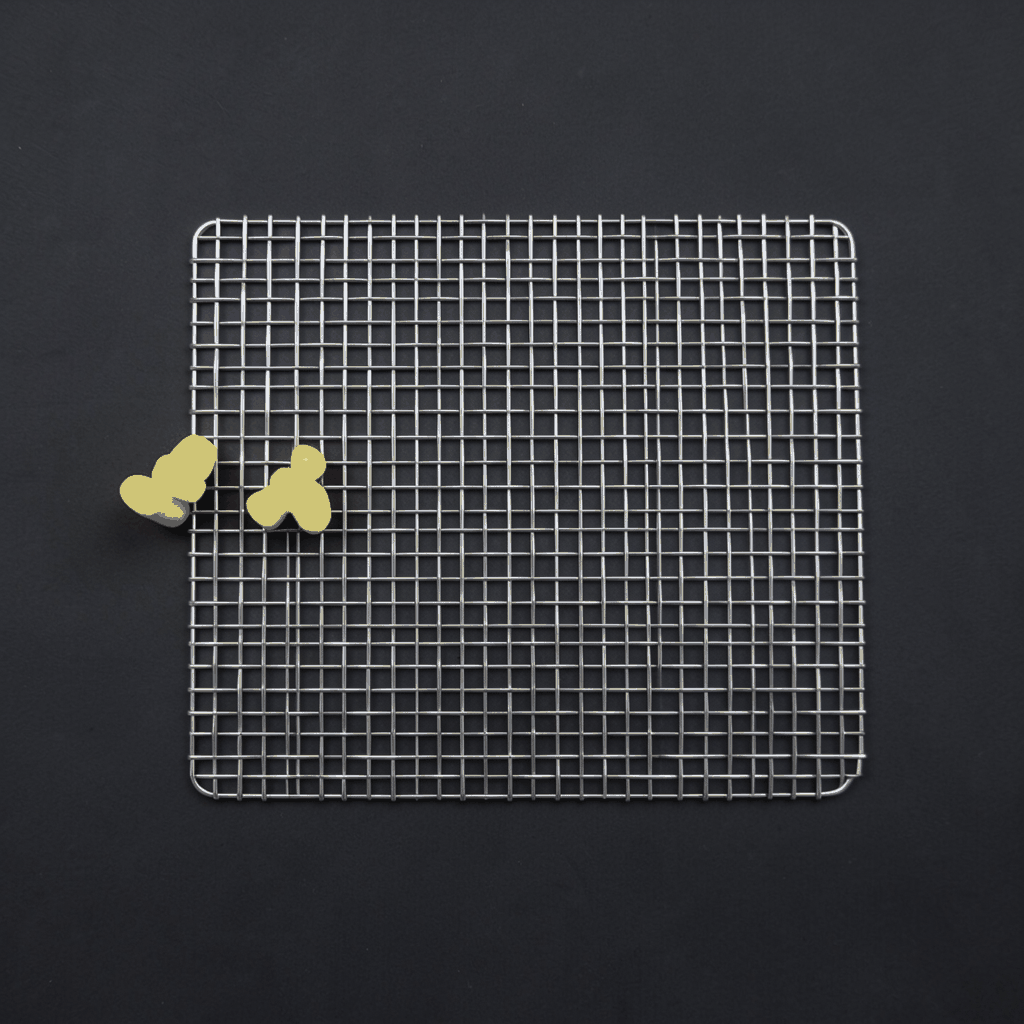
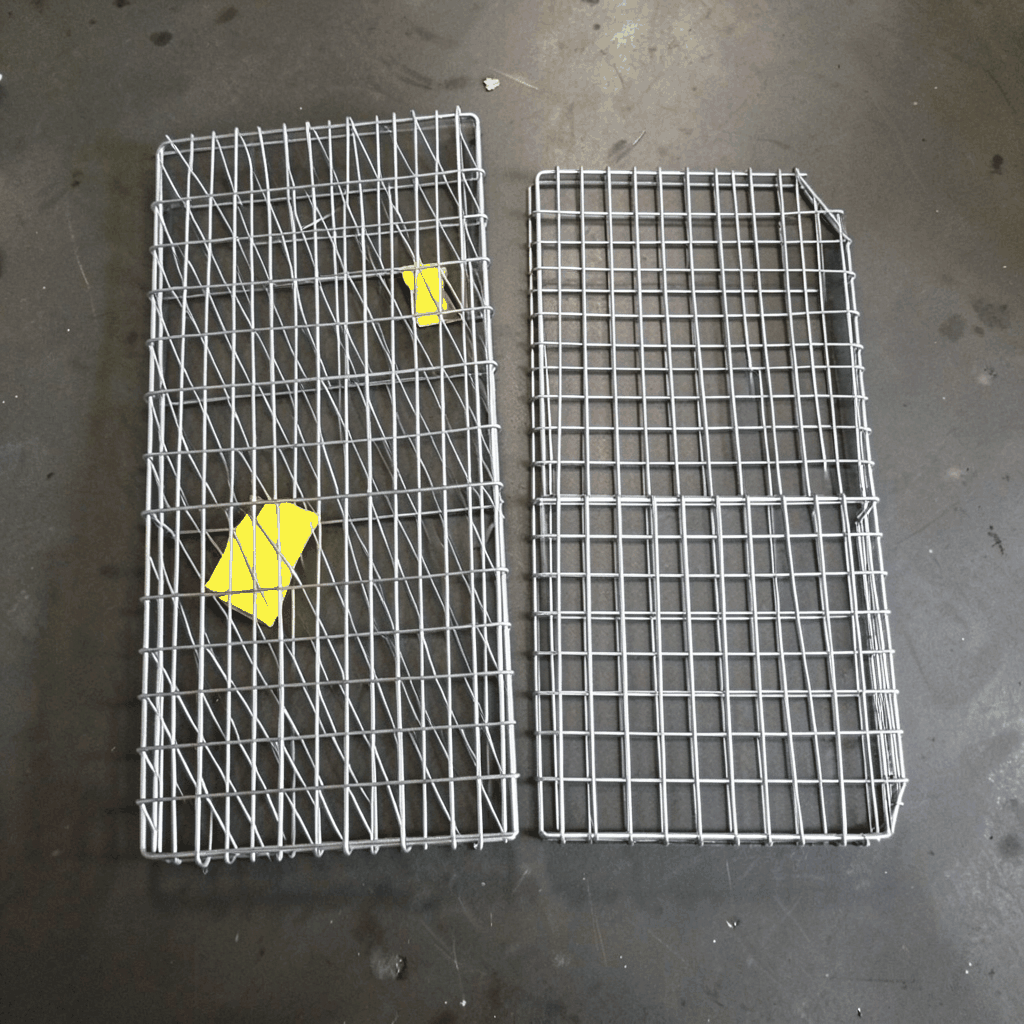
Wire mesh gives an industrial gate a useful balance between strength, visibility and ventilation. Welded mesh creates a clean, rigid panel with consistent openings, while woven or crimped wire mesh can provide a different visual character and useful flexibility in selected applications. Expanded metal and perforated sheet may be considered where a more enclosed screen is needed.
The opening size should reflect the security risk. Small apertures make it harder to reach through the panel, climb the gate or pass objects between the wires. Larger apertures can improve airflow and visibility around loading zones. The frame must be sized to support the infill without excessive deflection, particularly on wide cantilever leaves exposed to wind.
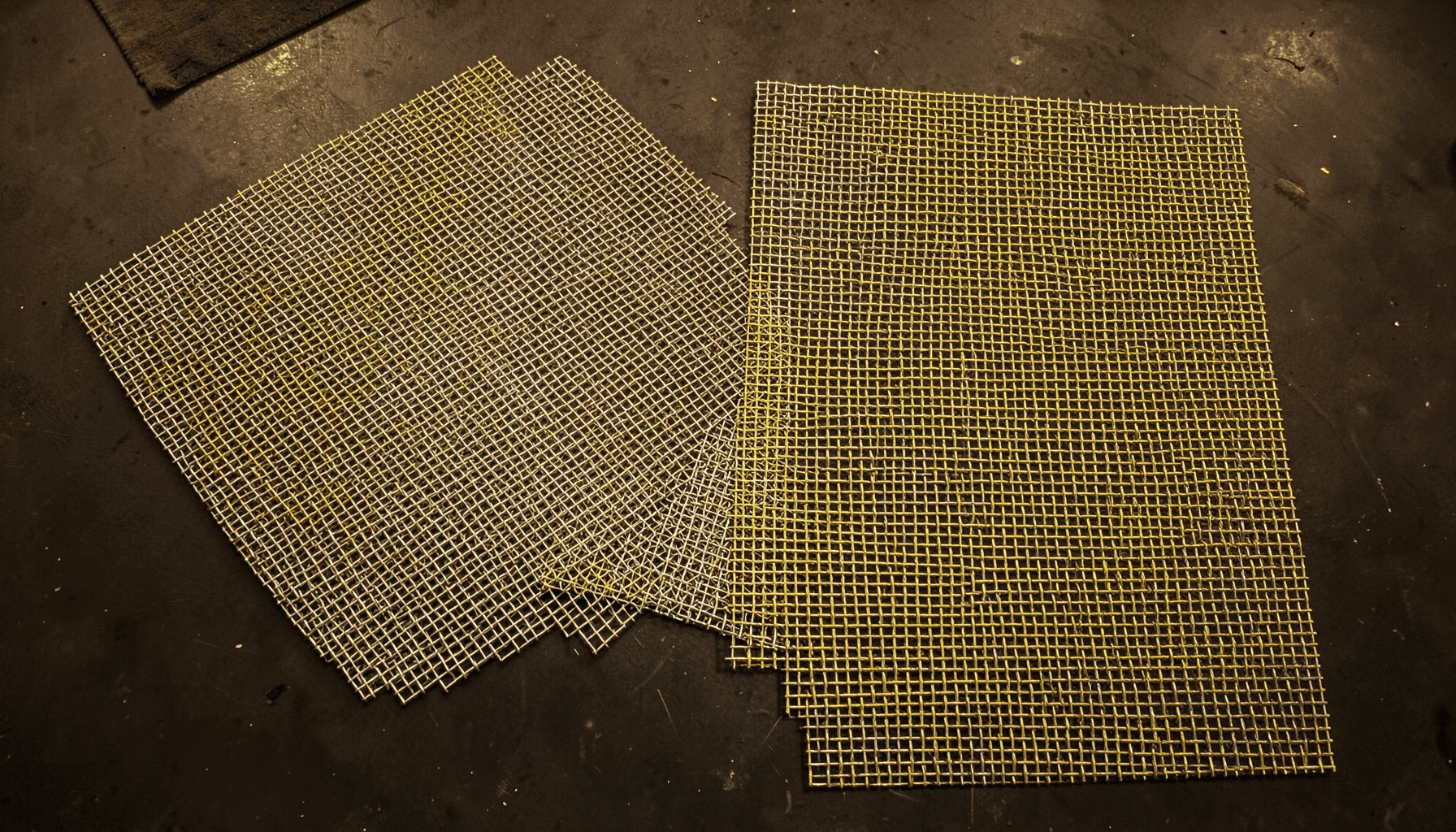
Accurate mesh sizing matters when panels must align with a fabricated frame and moving gate hardware. A useful reference on pre-crimped mesh sizing explains how consistent wire placement can support more precise industrial fabrication. This is valuable when several gate leaves, fence bays or matching screens need to maintain a uniform appearance across a large site.
Engineer the sliding mechanism as a complete assembly
A sliding gate can run on a ground track or use a cantilever system. Ground-track gates usually suit stable, level paving and can carry substantial loads with a relatively compact frame. They need regular attention to keep the rail free from gravel, mud, leaves and forklift debris. In dusty industrial areas, blocked tracks are a common reason for stiff movement and premature wheel wear.
Cantilever gates run on carriage assemblies positioned beside the opening, with no rail across the vehicle path. This can improve access for forklifts and reduce trip hazards, but the gate leaf extends beyond the opening and requires sufficient side clearance. The counterbalance also adds weight, so posts, welds, base plates and concrete footings must be designed accordingly.
Guide rollers should restrain the upper part of the leaf without binding it. Rollers, bearings and wheel assemblies need a suitable load rating, and anti-lift details should prevent the panel from being lifted out of its guides. Stops at both ends of travel must absorb the gate’s moving mass without relying on the motor gearbox as a brake. These details are easy to overlook when a project focuses only on the mesh finish.
Match the gate to Australian weather conditions
Material selection should respond to the site atmosphere. Stainless steel is often suitable for coastal locations, food-processing environments and areas where frequent washing occurs. Aluminium offers low weight and useful corrosion resistance, while galvanised or coated steel can be a cost-effective choice for many inland industrial sites. Copper and other decorative metals may be selected for architectural gates, though their appearance and maintenance requirements differ from standard security mesh.
A facility near Newcastle, Wollongong or the Gold Coast may experience salt-laden air that accelerates corrosion around welds, cut edges and fasteners. In Darwin, Townsville and other cyclone-prone areas, wind pressure can place considerable stress on a large mesh leaf even when the mesh itself is open. Wind exposure should be considered alongside the porosity of the infill, the solid frame area and the frequency of severe weather.
Protective treatment must cover the whole fabricated assembly, not just the wire. Hot-dip galvanising, powder coating, duplex systems or stainless construction may be suitable depending on the environment. Dissimilar metals should be isolated where galvanic corrosion is possible. Drainage holes, sealed ends and accessible wash-down points help prevent water and contaminants from remaining inside hollow sections.
Integrate automation and safe operation
Automation should be selected after the gate weight, travel distance, cycle frequency and site conditions are known. A small residential motor is rarely appropriate for a heavy industrial mesh gate operating throughout the day. The drive unit needs sufficient starting torque, a suitable duty rating and protection against dust, moisture and accidental impact.
Safety equipment should include monitored edges, photocells or light curtains, emergency release provisions and controls that prevent the leaf from moving when a person or vehicle is in the danger zone. The control arrangement must suit the traffic pattern. A keypad may work for authorised staff, while proximity cards, remote transmitters, intercoms or integration with a broader access-control system may be preferable for a busy depot.
Pedestrian access should be separated from vehicle movement wherever practical. A dedicated personnel gate is safer than asking workers to pass through a moving vehicle gate. Warning signs, flashing indicators, audible alerts and clearly marked exclusion zones can reinforce the design. Australian workplaces often involve contractors, delivery drivers and casual visitors, so controls should remain understandable to people who do not know the site routine.
Plan fabrication, installation and maintenance
A detailed fabrication drawing should show the clear opening, overall leaf size, mesh type, wire diameter, frame sections, guide positions, carriage locations, end stops, access doors and coating specification. It should also record the finished surface level and the tolerances needed for smooth travel. Consistency between the gate, adjoining fence and wall or elevator cladding can give a large industrial property a more deliberate architectural appearance.
Custom fabrication is particularly useful when the opening is unusually wide, the boundary follows an irregular line or the gate must coordinate with laser-cut screens, security fencing or decorative metalwork. A specialist metal mesh manufacturer can combine practical engineering with the required visual finish, using stainless steel, aluminium, iron or other alloys according to the environment and budget.
Installation should begin with accurate footing positions and verified concrete strength. The posts need to remain plumb while the concrete cures, and the track or carriage line must be checked before the gate is loaded. After installation, the leaf should be tested manually before the operator is commissioned. It should move freely through the full travel without scraping, twisting or forcing the guides.
A maintenance schedule keeps small issues from becoming access failures. Inspect wheels, bearings, guide rollers, welds, fasteners, coating damage, sensors and emergency releases at defined intervals. Clean ground tracks after storms and construction work, lubricate components as specified by the manufacturer and record force-testing or safety checks. In remote Australian sites, keeping critical rollers, bearings and control components on hand can reduce lengthy downtime.
The right sliding mesh gate gives an industrial site controlled access without making the boundary feel closed or visually heavy. It can provide ventilation, surveillance, durable security and a clean architectural finish when the structure, infill and automation are designed together. Shuo Ke Wire Mesh Product Technology Co., Ltd. can support projects requiring customised mesh panels, fabricated frames and coordinated metal solutions for commercial, industrial and municipal applications.
Share the opening dimensions, site location, preferred mesh material, expected traffic and automation requirements with the manufacturer at the design stage. A properly engineered gate can then be fabricated to suit the Australian environment, installed with clearances that work in practice and maintained for dependable daily service.