
Designing Wire Mesh Enclosures for Safe Gas Cylinder Storage
Industrial gas cylinders require controlled storage, clear identification, and protection from impact, tampering, weather, and unsafe handling. A well-designed wire mesh enclosure creates a visible physical boundary while allowing ventilation around cylinders that may contain oxygen, nitrogen, propane, acetylene, carbon dioxide, or other compressed gases.
Mesh construction is especially useful for factories, laboratories, workshops, construction sites, restaurants, hospitals, and municipal facilities. Unlike a solid cabinet, an open metal enclosure allows staff to see cylinder status and maintain airflow. The design still needs to reflect the gas type, cylinder quantity, site conditions, handling method, and applicable fire and safety requirements.
A successful project combines practical engineering with durable fabrication. Mesh size, frame strength, door hardware, roof protection, anchoring, surface treatment, and access control should be considered together rather than selected as separate decorative features.
Define The Storage Risk Profile
The first design decision is to identify what will be stored and how the cylinders will be used. Oxygen cylinders support combustion, flammable gases can create fire or explosion hazards, and toxic or corrosive gases may require more controlled access and specialized emergency procedures. Empty cylinders should also be separated from full cylinders when site procedures or local regulations require it.
Quantity affects the enclosure footprint, ventilation pattern, and internal organization. A small group of cylinders may fit inside a compact wall-mounted or floor-anchored cage, while a distribution area may need separate bays for full, empty, connected, and reserve cylinders. Leave enough clearance for valve protection caps, regulators, hoses, and safe cylinder removal.
The location should be away from ignition sources, vehicle routes, unprotected heat, drains where heavier gases could collect, and areas exposed to falling objects. Keep emergency access paths clear. The enclosure should be visible to workers and emergency responders without placing cylinders in a position where they become an obstruction during evacuation or firefighting.
Select Mesh Materials And Protective Finishes
Stainless steel is a strong choice for outdoor, coastal, hygienic, or chemically demanding locations. Grades such as 304 and 316 may be considered according to the exposure level, with 316 generally offering improved resistance in chloride-rich environments. Stainless wire mesh also provides a clean appearance for hospitals, laboratories, and commercial properties.
Carbon steel offers a cost-effective solution for many industrial yards and indoor storage rooms. It should receive a suitable protective finish, such as hot-dip galvanizing, powder coating, or a multi-layer paint system. Aluminum can reduce weight and resist corrosion, although the frame and mesh must be engineered for the required impact, wind, and security loads. Copper is generally selected for appearance or specialized architectural purposes rather than ordinary cylinder cages.
Finish selection should account for sunlight, rain, salt spray, cleaning chemicals, abrasion, and contact with forklifts or trolleys. Color can support site organization by distinguishing gas categories, restricted areas, or emergency equipment. Designers working on exposed or decorative facilities can also review this material selection guide when comparing metal behavior and outdoor finishes.
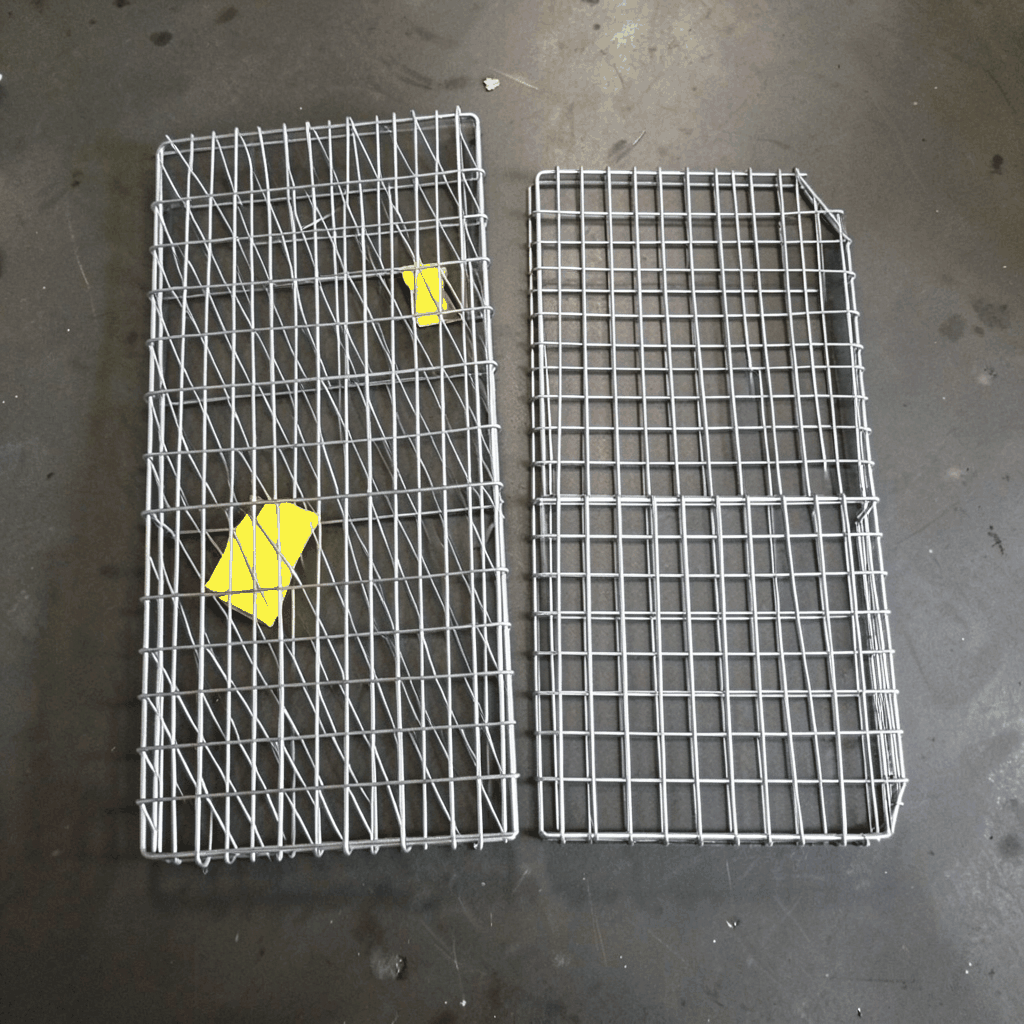
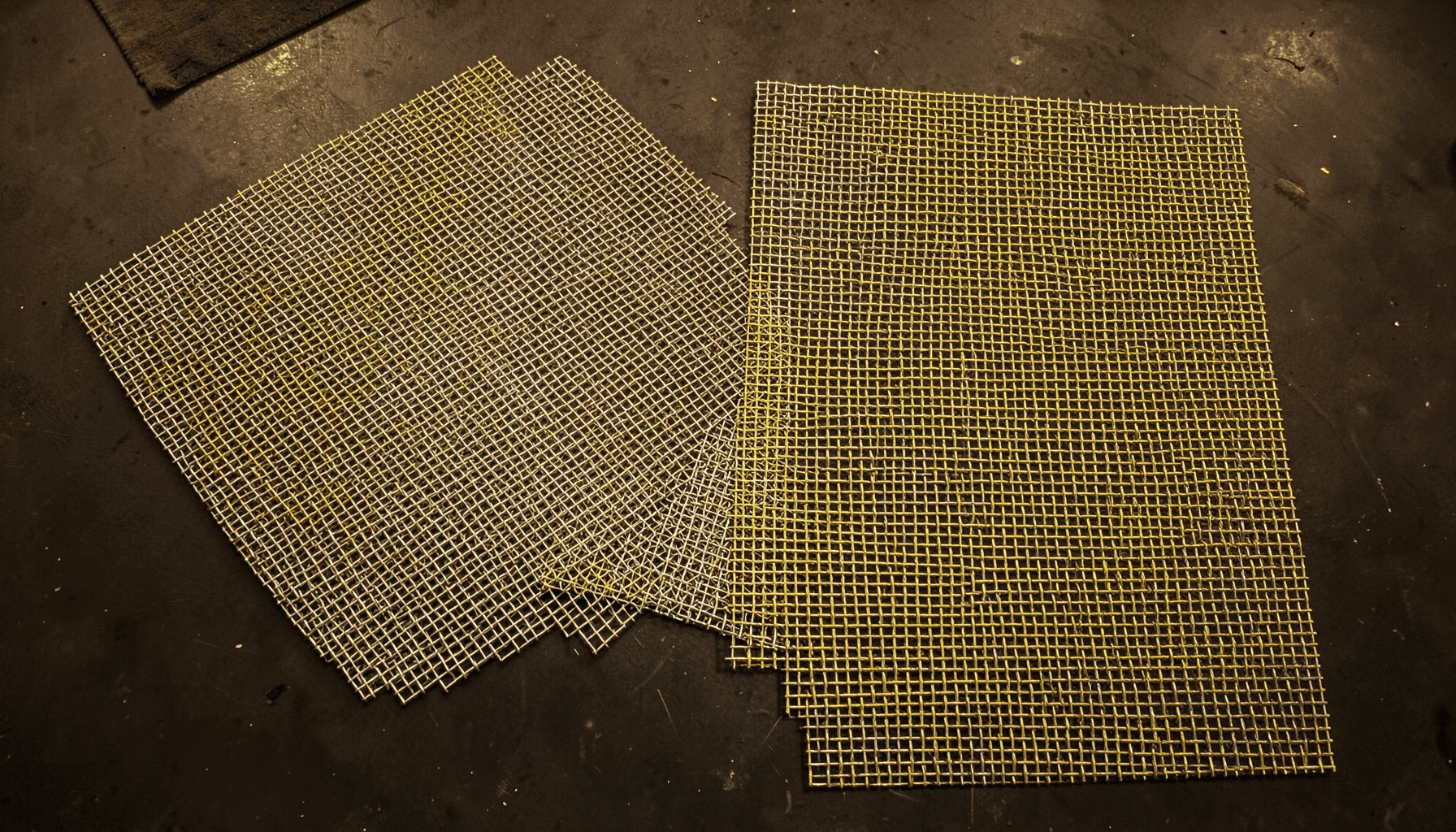
Expanded metal, welded wire mesh, woven wire mesh, and perforated sheet each provide different performance characteristics. Welded mesh is often suitable for rigid security panels, while woven mesh can provide a lighter visual barrier. Expanded metal offers a difficult-to-climb surface and good structural stiffness. The selected opening should prevent unauthorized hand access to valves while preserving ventilation and visibility.
Engineer The Frame, Floor, And Access Points
The enclosure frame transfers loads from the mesh panels, doors, roof, and accidental contact into the foundation. Use posts and rails sized for the enclosure height, panel span, local wind conditions, and expected handling activity. A forklift barrier or bollard system may be necessary where vehicles operate nearby; the mesh wall alone should not be expected to absorb repeated vehicle impact.
Cylinder restraints are essential. Install horizontal chains, straps, rails, or purpose-built support bars at suitable heights so cylinders remain upright. Restraints should be adjustable for different cylinder diameters and easy to release when a trained worker needs to remove a cylinder. Avoid layouts that allow cylinders to roll, lean against mesh panels, or fall through an open gate.
The floor should be level, stable, and resistant to moisture. A concrete pad with anchored base plates is common for outdoor cages. Raised thresholds should be designed carefully so they do not create a trip hazard or interfere with cylinder carts. Drainage should prevent standing water without directing contaminated runoff into sensitive areas.
Access doors need robust hinges, a self-closing or controlled-closing arrangement where appropriate, and a latch compatible with the site security policy. A padlock hasp may suit a basic industrial yard, while a lockable access-control system may be preferable for medical, laboratory, or high-value gas storage. The door opening should permit a loaded cylinder trolley to pass without scraping regulators or protective caps.
Compare Enclosure Configurations
There is no universal cage layout. The best arrangement depends on whether the enclosure is intended for temporary cylinders, daily exchange, long-term reserve storage, or a gas distribution point. A modular design can allow additional bays to be added as demand grows without rebuilding the entire structure.
| Configuration | Suitable Use | Main Benefits | Design Considerations |
|---|---|---|---|
| Single-bay floor cage | Small workshops and maintenance areas | Compact, economical, easy to install | Limited capacity and restricted separation options |
| Multi-bay cylinder enclosure | Factories, hospitals, and gas suppliers | Separates full, empty, and gas categories | Requires clear labeling and wider access planning |
| Wall-mounted mesh cabinet | Indoor service points and compact facilities | Saves floor space and improves visibility | Wall strength and cylinder handling clearance must be verified |
| Roofed outdoor cage | Yards and exposed service areas | Shields valves from rain, snow, and falling debris | Roof must preserve ventilation and withstand wind loads |
| High-security enclosure | Restricted compounds and critical facilities | Better control against theft or unauthorized access | Higher cost, stronger locks, and controlled key management |
| Barrier-protected compound | Vehicle-heavy industrial sites | Adds separation from traffic and equipment | Requires coordinated bollard, gate, and circulation design |
A roof is useful where weather protection is needed, but it should not turn an open-sided cage into a poorly ventilated room. Use a raised or sloped roof that sheds rain while maintaining free air movement around the upper portion of the enclosure. Avoid sealing the top with solid panels unless a qualified safety assessment specifically supports that arrangement.
Separating gases by hazard class is equally important. Flammable gases should be kept away from oxygen and ignition sources, and incompatible products should not share an undivided bay. Labels should remain legible from the normal approach route, with signs identifying the contents, smoking restrictions, emergency contacts, and required personal protective equipment.
Build In Ventilation, Visibility, And Security
Ventilation is one of the main reasons to choose wire mesh instead of solid sheet metal. Open sides allow natural airflow and make leaks, damaged valves, missing caps, or unauthorized access easier to detect. However, mesh alone does not solve every gas accumulation risk. Heavy gases may collect in low points, and enclosed courtyards or partially roofed spaces may need a site-specific ventilation review.
Mesh openings should balance airflow with security. Openings that are too large may allow hands or tools to reach valves, while very small openings can reduce visibility and increase material cost. The enclosure should prevent climbing wherever unauthorized access is a concern. Avoid horizontal elements that form convenient footholds, or position them inside a controlled area where climbing is not practical.
Visibility supports daily inspection. Workers should be able to check cylinder labels, restraint condition, valve caps, corrosion, and signs of leakage without opening every panel. A clear external information panel can display cylinder inventory rules, hazard symbols, emergency instructions, and the date of the last inspection.
Security hardware should be selected for the environment. Stainless hinges and latches resist corrosion in wet areas, while tamper-resistant fasteners can reduce panel removal. For larger sites, access control, camera coverage, and lighting should complement the physical cage. Security measures must still allow emergency responders to reach the cylinders quickly and safely.
Plan Fabrication, Installation, And Inspection
A manufacturer should receive a complete design brief before producing panels. Include cylinder dimensions and weights, quantity, gas categories, enclosure length and height, door orientation, roof requirement, foundation conditions, finish, mesh opening, anchoring method, and site access limitations. Photos, drawings, and vehicle circulation information can help prevent costly changes during installation.
Custom fabrication is valuable when standard cages cannot accommodate irregular footprints, multiple gas categories, sloping ground, architectural requirements, or existing walls. A China-based metal mesh manufacturer and processor such as Shuo Ke Wire Mesh Product Technology Co., Ltd. can produce solutions using stainless steel, aluminum, iron, and other alloys, with fabrication adapted to industrial and architectural applications.
Quality checks should cover weld integrity, frame squareness, panel dimensions, coating coverage, sharp edges, door alignment, latch operation, and anchor locations. All cut edges should be finished so workers do not encounter burrs while moving cylinders. If powder coating or galvanizing is specified, confirm that the process suits the base metal and expected exposure.
Installation should include a final inspection of cylinder restraints, signage, clearances, door swing, drainage, and separation between hazard categories. Establish a maintenance schedule for corrosion, loose fasteners, damaged mesh, worn chains, lock function, and foundation movement. Any impact from a vehicle or dropped cylinder should trigger an inspection before the enclosure returns to service.
Use A Clear Specification Checklist
Before releasing a wire mesh enclosure for production, confirm the following points:
- Identify each gas type, cylinder size, storage quantity, and separation requirement.
- Select mesh, frame, fasteners, and finish according to corrosion, impact, security, and weather exposure.
- Provide upright cylinder restraints that allow safe loading, unloading, and inspection.
- Preserve ventilation and visibility while preventing unauthorized access to valves and regulators.
- Coordinate doors, roof edges, anchors, bollards, signs, drainage, and trolley routes with the site layout.
The finished enclosure should support safe routines rather than complicate them. Staff need a direct path to place cylinders inside, secure them promptly, read labels, and remove empties without lifting or dragging unnecessarily. A practical design reduces handling errors and encourages consistent housekeeping.
Work with the relevant safety officer, gas supplier, fire authority, and local building or workplace regulator before installation. Requirements vary according to gas classification, storage quantity, occupancy, location, and national code. A mesh enclosure is a physical control within a larger safety system, not a replacement for training, leak response procedures, cylinder inspection, or appropriate fire protection.
Bring your cylinder inventory, site dimensions, hazard categories, and access requirements to Shuo Ke Wire Mesh Product Technology Co., Ltd. for a customized enclosure concept. With the right combination of metal mesh, structural framing, restraints, protective finish, and secure access, your storage area can become safer, easier to inspect, and better suited to demanding industrial conditions.