Fabricating Round Wire Mesh Cylinders for Industrial Filter Cartridges
Round wire mesh cylinders are practical support components for industrial filter cartridges, strainers, intake screens, and separation equipment. Their open structure lets fluids or gases pass through while providing a stable surface for filter media, pleated elements, or layered screens. The cylinder also helps prevent collapse when a cartridge operates under pressure, vibration, or repeated cleaning cycles.
Reliable fabrication begins with more than rolling a flat mesh sheet into a tube. Wire diameter, opening size, alloy, seam construction, dimensional tolerance, and end configuration all affect how the finished cartridge performs. A well-designed cylinder must fit the housing accurately, resist deformation, and maintain consistent flow across its working area.
A manufacturer experienced in woven and welded mesh can adapt the construction to the process conditions rather than treating every cartridge as a standard part. Shuo Ke Wire Mesh Product Technology Co., Ltd. works with stainless steel, aluminum, copper, iron, and other alloys, supporting custom metal mesh components for industrial and architectural applications.
Why cylindrical support screens matter
Filter media often has limited mechanical strength when exposed to differential pressure. A perforated or porous layer may wrinkle, buckle, or separate from its support without a rigid internal or external structure. A round wire mesh cylinder distributes pressure around the cartridge and helps preserve the intended filtration area.
The cylindrical form also provides a favorable balance between surface area and installation space. Compared with a flat panel, a tube can present more active filtration area within a compact housing. The open mesh reduces flow resistance while supporting pleated paper, sintered material, nonwoven media, or fine wire cloth.
Applications range from hydraulic oil filtration and fuel treatment to water processing, dust collection, chemical processing, and air intake protection. The required construction changes with each service. A filter exposed to corrosive fluid may need stainless steel, while a lightweight ventilation cartridge could use aluminum or galvanized steel.
Selecting mesh and metal for the service
Mesh specification should start with the operating environment. Stainless steel wire cloth is widely used because it combines corrosion resistance, strength, cleanability, and temperature tolerance. AISI 304 is suitable for many general industrial applications, while 316 or 316L is often preferred where chlorides, chemicals, or marine exposure are present.
Carbon steel and galvanized wire can be suitable for cost-sensitive dry environments, protective screens, and applications where corrosion protection is provided elsewhere. Aluminum offers low weight and good corrosion resistance, although its lower stiffness may require a heavier wire or additional structural support. Copper and brass mesh can be selected for conductivity, appearance, or specialized chemical behavior.
Opening size and wire diameter must be considered together. A fine mesh can improve particle retention but may increase pressure drop and become more vulnerable to clogging. A larger opening lowers resistance and improves cleaning, but it may provide insufficient support for the filter layer. The correct balance depends on particle size, viscosity, flow rate, pressure differential, and cleaning method.
Converting flat mesh into a precise cylinder
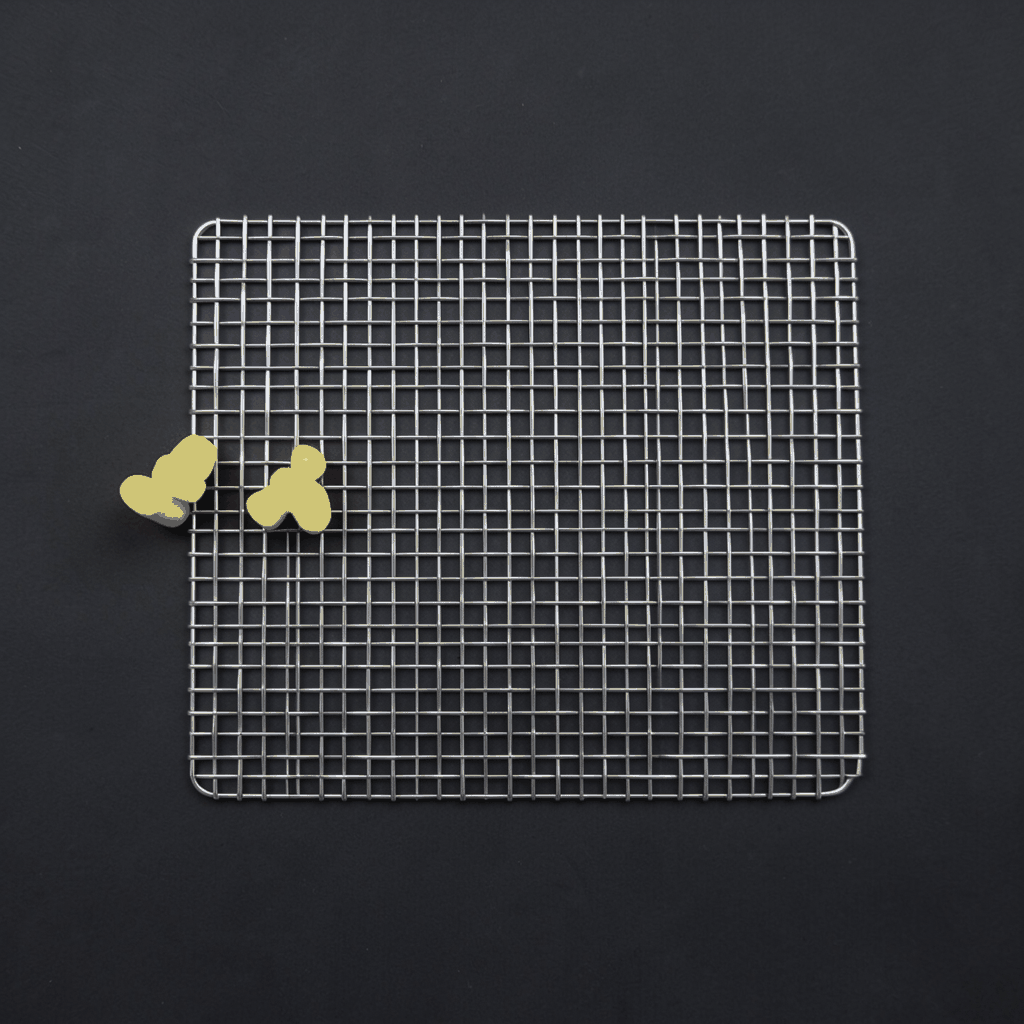
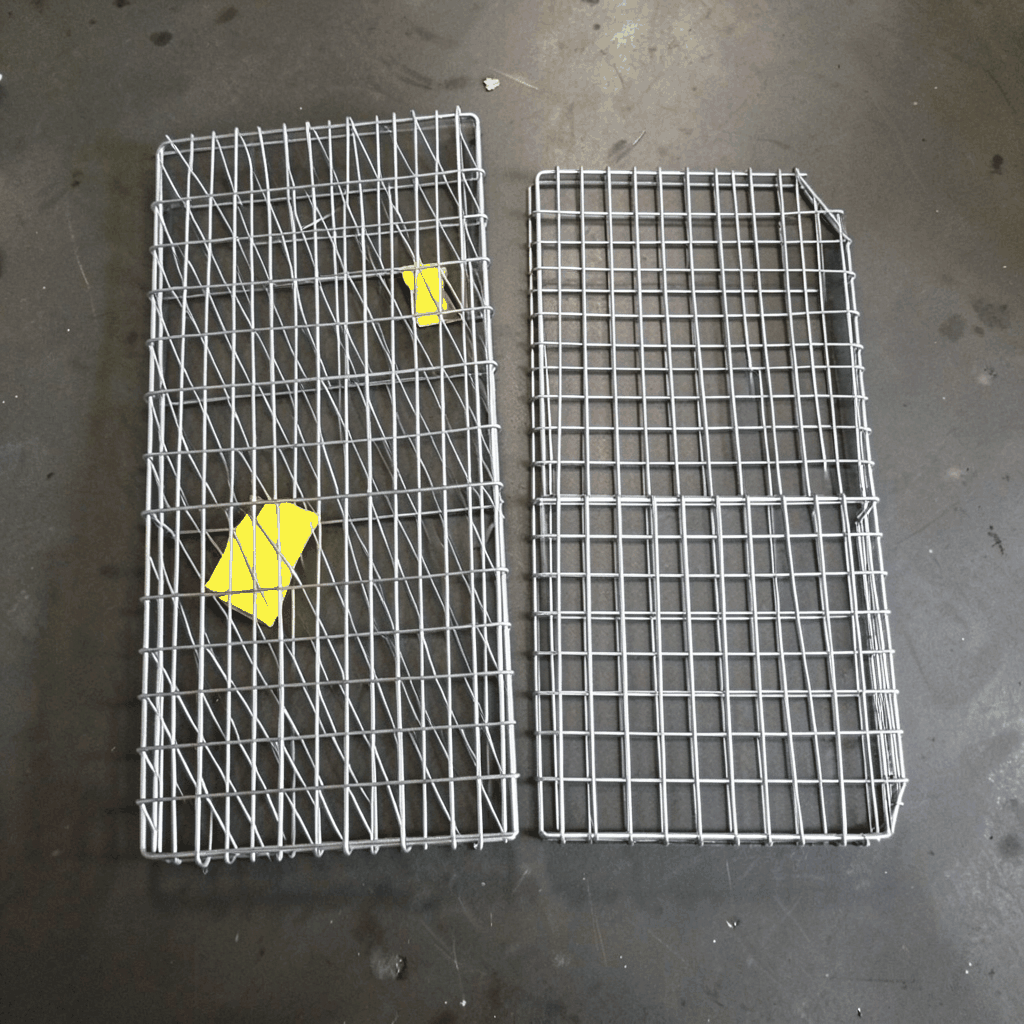
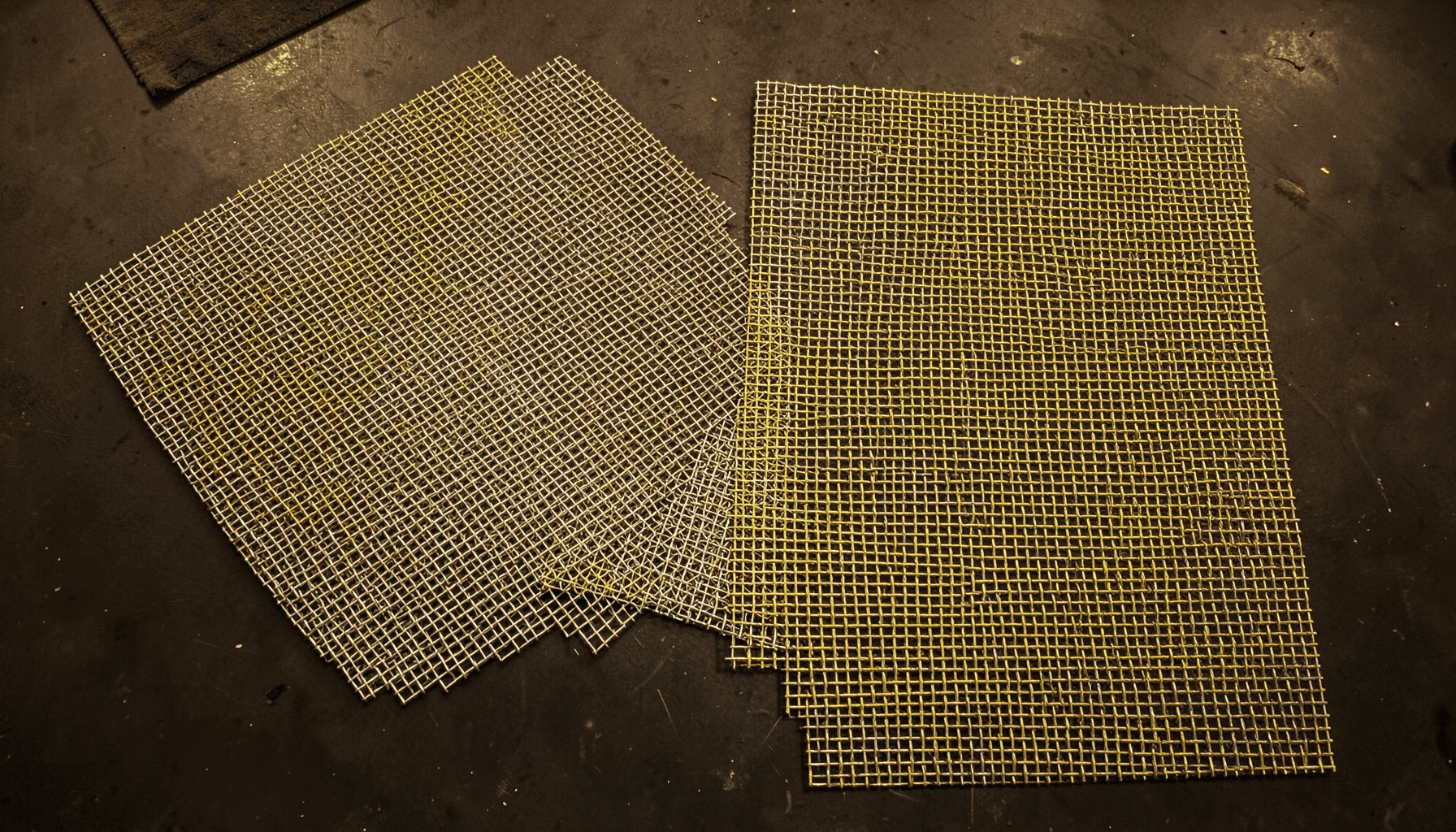
The fabrication process usually starts with cutting a mesh panel to a calculated blank size. The blank must account for the cylinder circumference, seam allowance, wire orientation, and any overlap or joining method. Incorrect allowance can produce a diameter that is too large, an open seam, or distortion at the ends.
The panel is then formed with a rolling machine, press brake, or dedicated cylindrical forming tool. Controlled forming is important because excessive force can flatten the wires, stretch the mesh, or alter the aperture pattern. For fine wire cloth, gradual rolling and suitable tooling help retain a round profile.
Seam construction depends on the application. Resistance welding creates a clean, strong joint with limited added material, while TIG welding can provide precise attachment for stainless steel and other alloys. A folded seam may be appropriate for removable or lower-load components. The finished seam should be smooth enough to avoid damaging adjacent filter media and consistent enough to prevent bypass paths.
End rings, reinforcement, and cartridge integration
A cylindrical mesh screen may be supplied as an open tube, or it may include rings, collars, flanges, caps, or mounting tabs. End components help maintain roundness and simplify installation inside a filter housing. They can also create a positive seal when paired with gaskets, O-rings, or a compression fitting.
For long cartridges, intermediate support rings or longitudinal ribs can prevent buckling. These reinforcements are especially useful when the cylinder is exposed to external pressure, backwashing, pulsed airflow, or frequent handling. The reinforcement pattern should leave enough open area for efficient flow and should not create dead zones where contaminants accumulate.
Dimensional details should be established before production: outside diameter, inside diameter, overall length, wall thickness, seam position, end style, and tolerance. When a cartridge must replace an existing part, a drawing, sample, or accurate measurement can reduce the risk of mismatch. Custom fabrication also makes it possible to integrate the mesh cylinder with a specific housing rather than relying on generic dimensions.
| Design factor | Common choices | Effect on cartridge performance |
|---|---|---|
| Mesh type | Woven, welded, expanded, perforated | Determines aperture stability, strength, and flow behavior |
| Alloy | 304 stainless steel, 316 stainless steel, aluminum, galvanized steel | Influences corrosion resistance, weight, temperature range, and cost |
| Wire diameter | Fine, medium, or heavy wire | Balances open area with rigidity and service life |
| Opening size | Coarse to fine filtration support | Affects particle retention, pressure drop, and cleanability |
| Seam method | Welded, folded, crimped, or overlapped | Controls joint strength, smoothness, and bypass risk |
| End treatment | Open ends, rings, caps, flanges, collars | Determines installation, sealing, and dimensional stability |
| Reinforcement | None, rings, ribs, or support frame | Reduces deformation in long or high-pressure cartridges |
Managing flow, pressure, and filtration performance
A mesh cylinder is a structural component, but its design directly affects process efficiency. The open area should be high enough to limit pressure loss at the target flow rate. If the support screen is too restrictive, the pump or fan must work harder, and the filter may reach its service limit prematurely.
Flow can also be affected by the seam and end fittings. A thick internal bead, poorly aligned overlap, or obstructive ring may create turbulence or reduce the usable area. Smooth transitions and consistent internal dimensions help fluid move evenly through the cartridge.
For applications involving reverse flow or pulse cleaning, the cylinder must withstand repeated pressure changes. Weld quality, wire intersection strength, and reinforcement placement become especially important. A component that performs well under steady forward flow may fail when subjected to cyclic loading, so the cleaning regime should be included in the initial design review.
When mesh cylinders are used with pleated media, the support surface should avoid sharp projections. Burrs or irregular welds can puncture the media during assembly and operation. Finishing, deburring, and inspection are therefore functional requirements rather than cosmetic extras.
Quality control during fabrication
Inspection should begin with the incoming wire mesh. The manufacturer can verify alloy, wire diameter, aperture, sheet width, and surface condition before forming. Material certificates may be required for food processing, pharmaceutical, chemical, or regulated industrial applications.
After forming, the cylinder should be checked for diameter, roundness, length, seam alignment, and end squareness. A simple gauge can reveal whether the part will slide into its housing correctly. For larger or more demanding components, dimensional checks at several points around the circumference help identify taper or localized deformation.
The seam and attachment points deserve close visual inspection. Welds should be continuous or positioned according to the approved drawing, with adequate penetration and no sharp spatter. Where appropriate, dye penetrant testing, pressure testing, or airflow testing can provide further confidence. The inspection method should reflect the consequences of leakage, collapse, or premature failure.
Surface treatment may include passivation for stainless steel, galvanizing for carbon steel, polishing, cleaning, or a protective coating. The treatment must be compatible with the operating fluid and the intended cleaning process. A finish that looks attractive but sheds particles or reacts with process chemicals is unsuitable for filtration equipment.
Customization for industrial and architectural mesh capabilities
The same precision used to fabricate filter supports can be valuable in other engineered mesh assemblies. Manufacturers that produce custom mesh panels understand how material selection, edge treatment, joining, and installation requirements affect a finished component. Those capabilities can transfer well to cartridge screens, protective guards, baskets, and custom enclosures.
Customization may involve unusual diameters, oval or tapered shapes, layered mesh, perforated backing, or a combination of woven wire and welded reinforcement. A project may also require a specific surface appearance, clean-room preparation, conductivity, magnetic behavior, or resistance to high-temperature service.
Clear technical communication improves the result. A useful request should identify the filtered medium, operating temperature, pressure differential, flow rate, target particle size, cleaning method, alloy preference, quantity, and drawing or sample dimensions. Photographs of the housing and the existing cartridge can clarify how the mesh cylinder interfaces with adjacent parts.
For companies managing multiple equipment models, repeatable production is equally important. A supplier should retain approved drawings, mesh specifications, and inspection criteria so replacement batches remain interchangeable. This reduces downtime and prevents small dimensional changes from causing assembly problems.
Practical specifications to confirm before ordering
A complete specification prevents avoidable redesign and helps the fabricator select the right process. It should distinguish between filtration accuracy and support mesh function. In many cartridges, the wire mesh does not perform the final particle separation; it supports a finer medium, so maximum open area and structural stability may be more important than extremely small apertures.
The joining method should also be chosen with maintenance in mind. A welded cylinder is often suitable for permanent service, while a removable or cleanable assembly may benefit from mechanical fastening or a replaceable support sleeve. If the cartridge will be washed, sterilized, or exposed to abrasive particles, the joint and surface finish must tolerate those conditions.
Key decisions to confirm include:
- Specify the alloy and any required material certification.
- Define mesh type, wire diameter, aperture, and open-area target.
- Provide finished diameter, length, tolerance, seam location, and end details.
- State pressure, temperature, flow direction, and cleaning conditions.
- Request deburring, passivation, polishing, coating, or other surface treatment where necessary.
A prototype or first-article inspection is valuable when the cartridge is critical to production. Testing the cylinder in its actual housing can reveal fit, pressure drop, media movement, and cleaning behavior before full-volume manufacture. Once the design is approved, a controlled production record supports consistent repeat orders.
Build a dependable filter support
Round wire mesh cylinders combine filtration support, structural reinforcement, and practical flow management in a compact component. Their performance depends on coordinated choices in mesh, alloy, forming, seam construction, reinforcement, and inspection. Treating the cylinder as an engineered part of the cartridge leads to better reliability than selecting a tube by diameter alone.
Shuo Ke Wire Mesh Product Technology Co., Ltd. can help translate a filter cartridge requirement into a fabricable mesh assembly, using stainless steel, aluminum, iron, copper, and other suitable materials. Share the working conditions, drawings, sample dimensions, and preferred finish with the engineering team to develop a durable cylinder matched to the equipment and production needs.