Selecting the Optimal Mesh Count for Commercial Flour Mills
Choosing the right sieve specification is central to flour quality, mill efficiency, and production consistency. Mesh count determines how many openings appear along one linear inch of woven wire, but it does not by itself define the size of particles that will pass through. Wire diameter, opening shape, tension, flour moisture, and sifting speed all affect the result.
For many commercial wheat flour operations, a practical starting point is an 80–120 mesh range for final flour classification. Coarser fractions such as semolina, middlings, and bran usually require lower mesh counts, while specialty ultra-fine products may call for finer screening. The correct selection should therefore be based on the required particle-size distribution rather than a single universal number.
A flour mill should also treat the screen as a process component rather than a simple accessory. Stainless steel sieve cloth, accurate aperture control, suitable frame construction, and regular inspection help maintain throughput while reducing contamination and unplanned stoppages.
Why Mesh Count Matters In Flour Processing
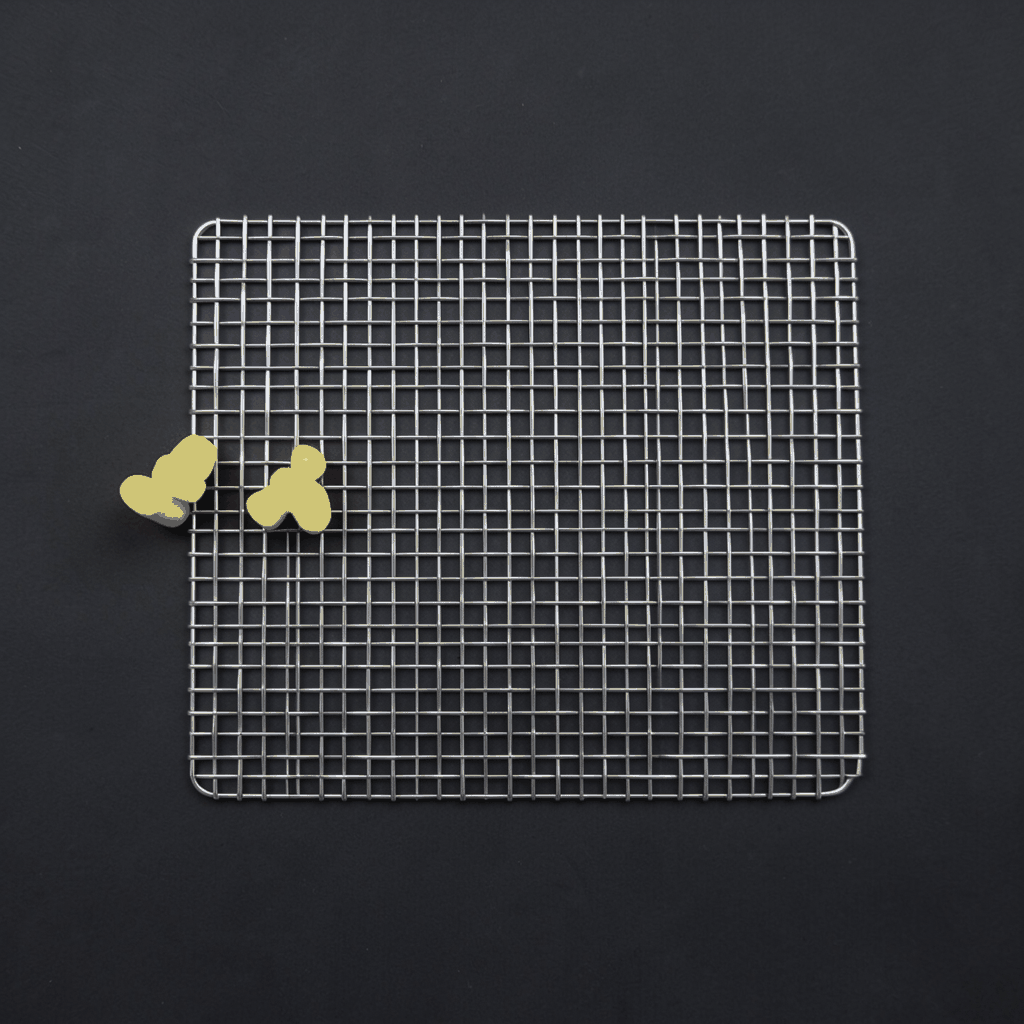
Mesh count describes the number of wire openings per inch. As the count increases, the openings usually become smaller, allowing the screen to retain larger particles and pass finer flour. This relationship is useful for comparing sieve cloth, but it can be misleading when two screens have different wire diameters.
For example, a 100-mesh screen made with relatively thick wire may have a smaller clear aperture than a 100-mesh screen made with finer wire. The open area can also differ substantially, affecting flow capacity. For commercial milling, the aperture in microns and the percentage of open area are often more meaningful specifications than mesh count alone.
Sifting separates ground wheat into flour, semolina, middlings, bran, and oversized particles. A screen that is too coarse may allow undesirable bran specks or incompletely reduced particles into the finished flour. A screen that is too fine can restrict capacity, increase pressure on the plansifter, and create blinding when flour contains excess moisture or fat.
Understanding Aperture And Particle Size
Clear aperture is the actual distance between adjacent wires. It determines the approximate maximum particle size that can pass through a square opening, although particle shape and orientation mean that separation is never perfectly geometric. Flour particles can pass diagonally, deform slightly, or travel through in clusters.
Mesh count can be converted approximately when wire diameter is known. A simplified relationship is:
Aperture (mm) ≈ 25.4 ÷ mesh count − wire diameter (mm)
This formula is useful for preliminary comparison, but commercial buyers should request the manufacturer’s stated aperture tolerance and test data. Micron specifications are easier to align with a laboratory sieve analysis, especially when a mill produces several grades of flour.
A common mistake is selecting a finer mesh because it appears to promise smoother flour. Finished texture depends on roller settings, wheat hardness, moisture conditioning, purifier performance, and sifter residence time as well as the screen. The best flour sieve balances particle control with stable production.
Matching Mesh Count To Flour Streams
For final wheat flour, 80–120 mesh is often a practical working range. Depending on wire diameter, this corresponds broadly to openings from roughly 180 to 125 microns. A 100-mesh screen is frequently used as a starting point for standard refined flour, while an 80-mesh option may support greater throughput or a slightly more open product specification.
Intermediate streams need more open screens. Middlings and semolina are commonly handled with approximately 30–70 mesh, depending on the desired granulation and whether the screen is separating clean endosperm from bran particles. Lower mesh counts reduce resistance and permit larger particles to move efficiently through the plansifter.
Bran and coarse by-products may be classified with screens in the 20–40 mesh range. These screens are designed for separation and recovery rather than producing a fine, smooth flour. A mill producing pastry flour, bread flour, durum products, or fortified blends may use several mesh counts in sequence rather than relying on one screen throughout the process.
| Flour Mill Stream | Typical Mesh Range | Approximate Aperture Range* | Main Purpose |
|---|---|---|---|
| Bran and coarse stock | 20–40 mesh | 600–250 microns | Remove or classify large particles |
| Semolina and middlings | 30–70 mesh | 500–180 microns | Grade intermediate endosperm particles |
| Standard finished flour | 80–120 mesh | 180–125 microns | Control refined flour granulation |
| Fine or specialty flour | 120–150 mesh | 125–90 microns | Produce a finer particle fraction |
| Laboratory verification | Specified by microns | Based on test method | Confirm particle-size distribution |
*Approximate values vary with wire diameter and weave construction.
Choosing Materials For Continuous Sifting
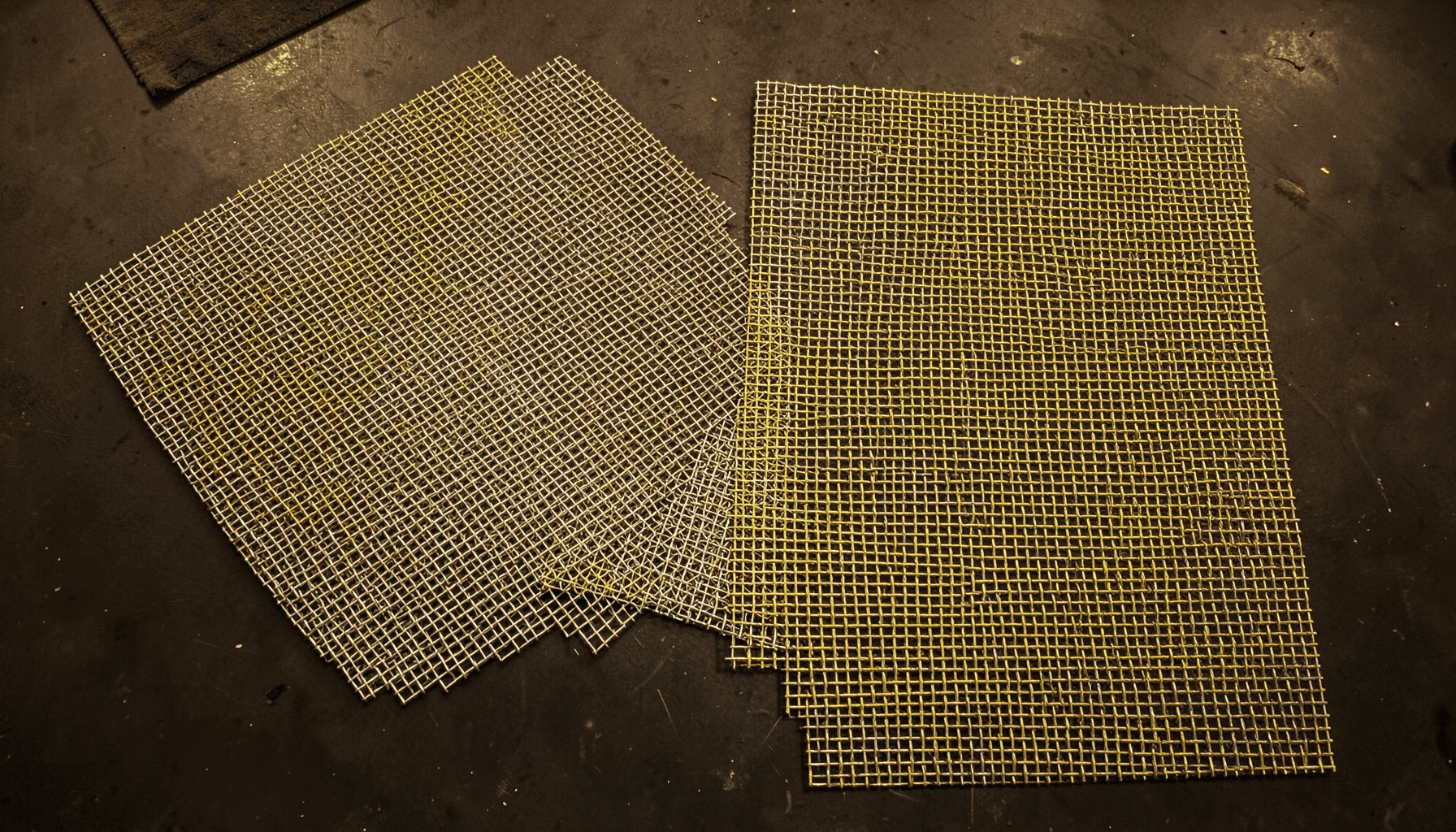
Stainless steel woven wire mesh is generally the preferred material for commercial flour screening because it combines corrosion resistance, strength, cleanability, and dimensional stability. AISI 304 stainless steel suits many dry food-processing environments, while 316 stainless steel can be considered where cleaning chemicals, humidity, or corrosive conditions are more demanding.
The wire surface should be smooth and free from burrs, loose ends, oil residue, and damaged intersections. Food-contact applications require appropriate material documentation and manufacturing controls. In a high-throughput mill, even a small broken wire can create an unacceptable foreign-material risk, so screen integrity should be checked during scheduled maintenance.
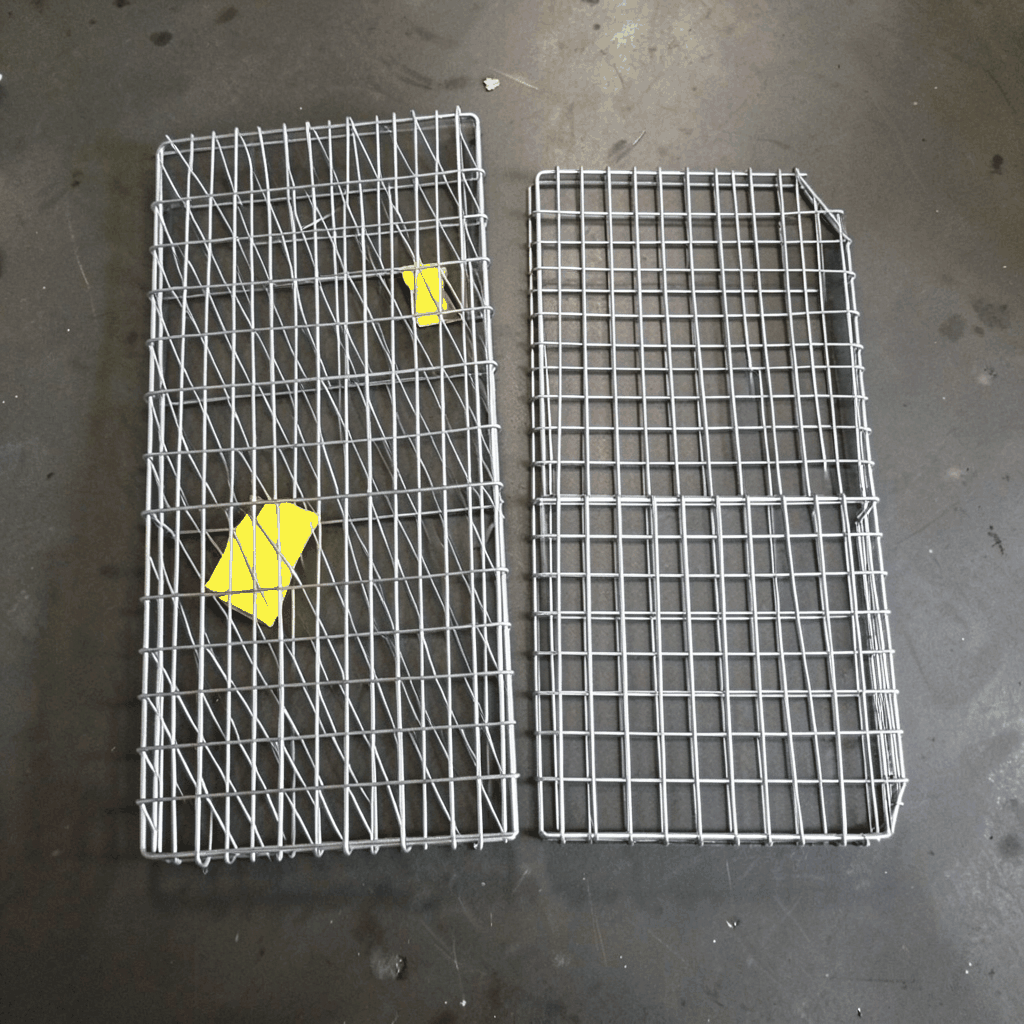
Mesh fabrication can also be adapted to the equipment. A supplier may produce cut-to-size panels, framed sieve sections, tensioned cloth, perforated support plates, or reinforced edges. This type of customization is valuable when a plansifter has unusual dimensions or when several grades must be installed without changing the machine housing. Similar attention to application-specific sizing is used in custom wire mesh dividers for industrial sorting systems, where aperture consistency and mechanical fit affect separation performance.
Balancing Capacity And Separation Accuracy
Finer mesh generally gives tighter particle classification, but it also reduces open area and can lower the quantity of flour that passes through per unit of time. If the feed rate is too high, particles may ride across the screen and leave with the oversize fraction. If the feed is too low, the mill may lose capacity without gaining a meaningful improvement in product quality.
Screen length, deck arrangement, vibration, slope, and cleaning devices influence effective performance. Plansifter screens often work in stages, with larger openings at the beginning of a passage and finer openings later. This arrangement removes coarse material before it reaches the fine screen, reducing loading and prolonging cloth service life.
Flour moisture is another important variable. Wheat is conditioned before milling, but excessive moisture in the finished stream can promote adhesion and screen blinding. Static electricity, oil from specialty ingredients, and high levels of bran can create similar problems. A mesh count that performs well in a dry trial may require adjustment in normal plant conditions.
Verifying The Right Mesh Specification
Before ordering replacement sieve cloth, record the existing mesh count, wire diameter, aperture, panel dimensions, frame style, and equipment position. The same nominal mesh count may be used for different duties, so the location of the screen in the milling flow must also be documented.
Laboratory testing should confirm the target particle-size distribution. A representative flour sample can be tested with calibrated laboratory sieves or particle-size analysis equipment. Results should be compared with the finished product specification, including extraction rate, ash level, bran speck limits, and baking performance where relevant.
A short production trial is recommended when changing mesh design. Measure hourly throughput, oversize return, flour fineness, screen loading, temperature, and cleaning frequency. If the new screen improves one measure but causes excessive recirculation or rapid blinding, the overall process may be less efficient.
Practical Selection Recommendations
The best mesh count is a process decision supported by aperture data, product requirements, and operating evidence. Use the following recommendations as a starting framework:
- Begin with 80–120 mesh for standard finished wheat flour, then refine the choice through particle-size testing.
- Use approximately 30–70 mesh for semolina and middlings, selecting the exact aperture according to the target granulation.
- Reserve 20–40 mesh for bran and other coarse fractions where high capacity is more important than fine classification.
- Specify wire diameter, aperture tolerance, open area, material grade, and weave type instead of ordering by mesh count alone.
- Validate the selected screen under normal moisture, feed rate, vibration, and cleaning conditions before standardizing it across the mill.
Replacement schedules should be based on inspection and performance trends rather than a fixed calendar date. Inspect for stretched cloth, broken wires, corrosion, loose framing, blocked openings, and changes in flour quality. Keeping records for each sieve position helps identify whether a problem comes from the mesh, upstream grinding, feed distribution, or cleaning equipment.
Improving Reliability Through Custom Engineering
Commercial flour mills vary in machine design, product range, and production volume. A standard screen may work adequately in one plant but fail to provide the required capacity or service life in another. Custom-fabricated panels can address differences in dimensions, mounting methods, reinforcement, and access requirements.
For demanding installations, the supplier should review the flour stream, expected loading, cleaning method, operating temperature, and contact requirements before recommending a material and mesh construction. Stainless steel remains a strong general choice, while specialized alloys or support structures may be appropriate for severe wear or chemical exposure.
Correct engineering also reduces the risk of contamination and downtime. Secure edges prevent wire migration, consistent apertures improve product uniformity, and properly supported cloth resists deformation during repeated cleaning. These details matter as much as the nominal mesh count when a mill must maintain continuous production.
A practical starting point for many plants is to test a 100-mesh stainless steel screen for standard finished flour, compare it with 80- and 120-mesh alternatives, and evaluate the results against throughput and laboratory specifications. For dependable replacement parts or made-to-measure screening components, contact Shuo Ke Wire Mesh Product Technology Co., Ltd. with the sifter model, panel dimensions, material requirements, and target flour grade so the screen can be matched to the process rather than selected by count alone.