Welding Wire Mesh for Custom Fence Gates
A custom fence gate must do more than fill an opening. It controls access, supports security, withstands weather, and contributes to the appearance of a property. Welding wire mesh into a rigid gate frame creates a practical solution that can be adapted to different widths, heights, patterns, finishes, and operating systems.
The quality of the finished gate depends on decisions made before the first weld. Material selection, wire diameter, mesh opening, frame design, hinge placement, and surface treatment all affect performance. A well-planned fabrication process prevents sagging, distortion, corrosion, and difficult installation later.
For residential entrances, industrial compounds, municipal facilities, and architectural projects, metal mesh offers a useful balance between visibility and protection. Stainless steel, galvanized iron, aluminum, copper, and coated carbon steel can each produce a different combination of strength, weight, appearance, and maintenance requirements.
Defining The Gate Requirements
The process begins with a clear specification. Fabricators need the finished opening size, required gate height, number of leaves, swing direction, clearance beneath the gate, and preferred locking method. A single-leaf gate is often suitable for narrow pedestrian access, while a double-leaf design is more practical for vehicles or wide service entrances.
The site conditions also influence the design. A coastal property may require stainless steel or a high-performance protective coating because salt air accelerates corrosion. A factory gate may need a heavier frame and smaller mesh openings to resist impact. A decorative garden gate can use a lighter frame, expanded visual patterns, or a colored finish without requiring the same level of industrial reinforcement.
The mesh should be selected according to its function rather than appearance alone. Small apertures improve containment and security, while larger openings reduce weight and improve visibility. If the gate will carry an access-control device, automatic operator, or privacy screen, the frame must be designed to support those components without twisting.
Selecting Mesh, Wire, And Frame Materials
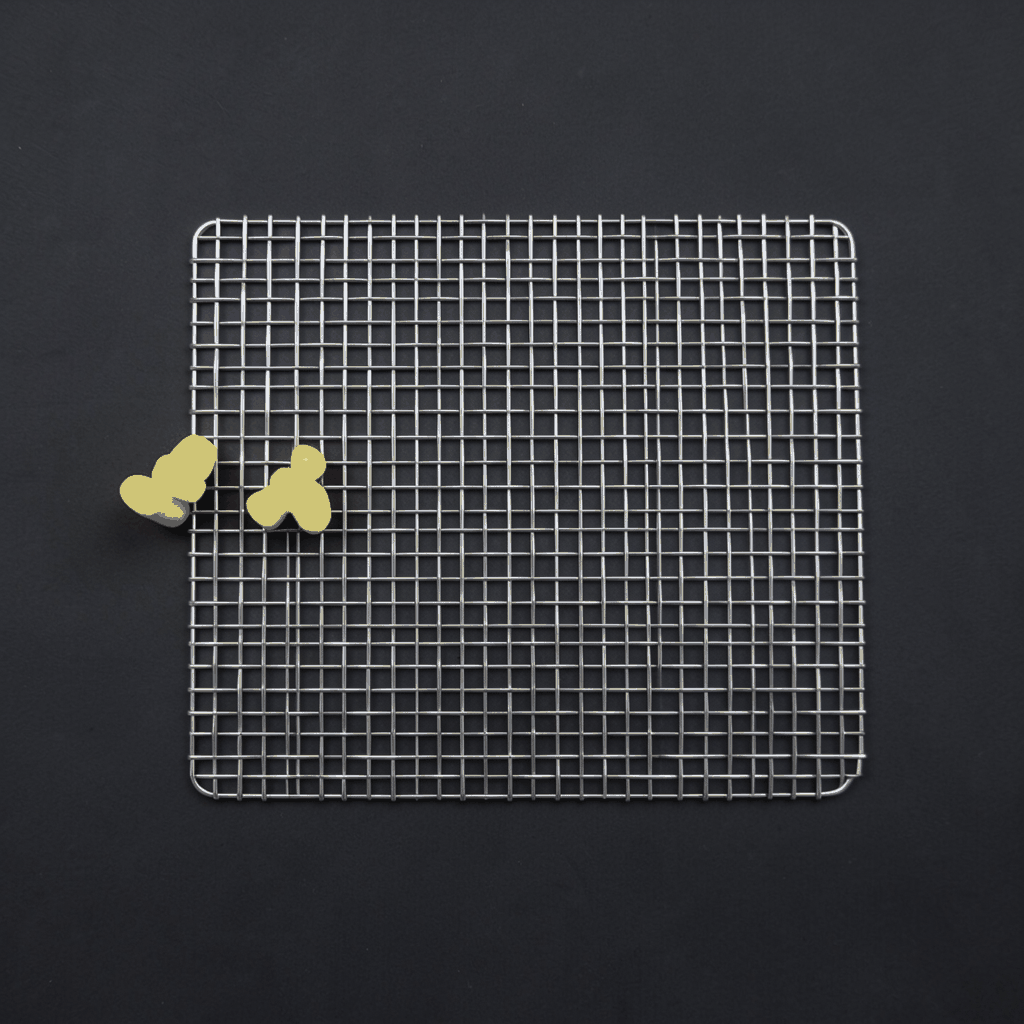
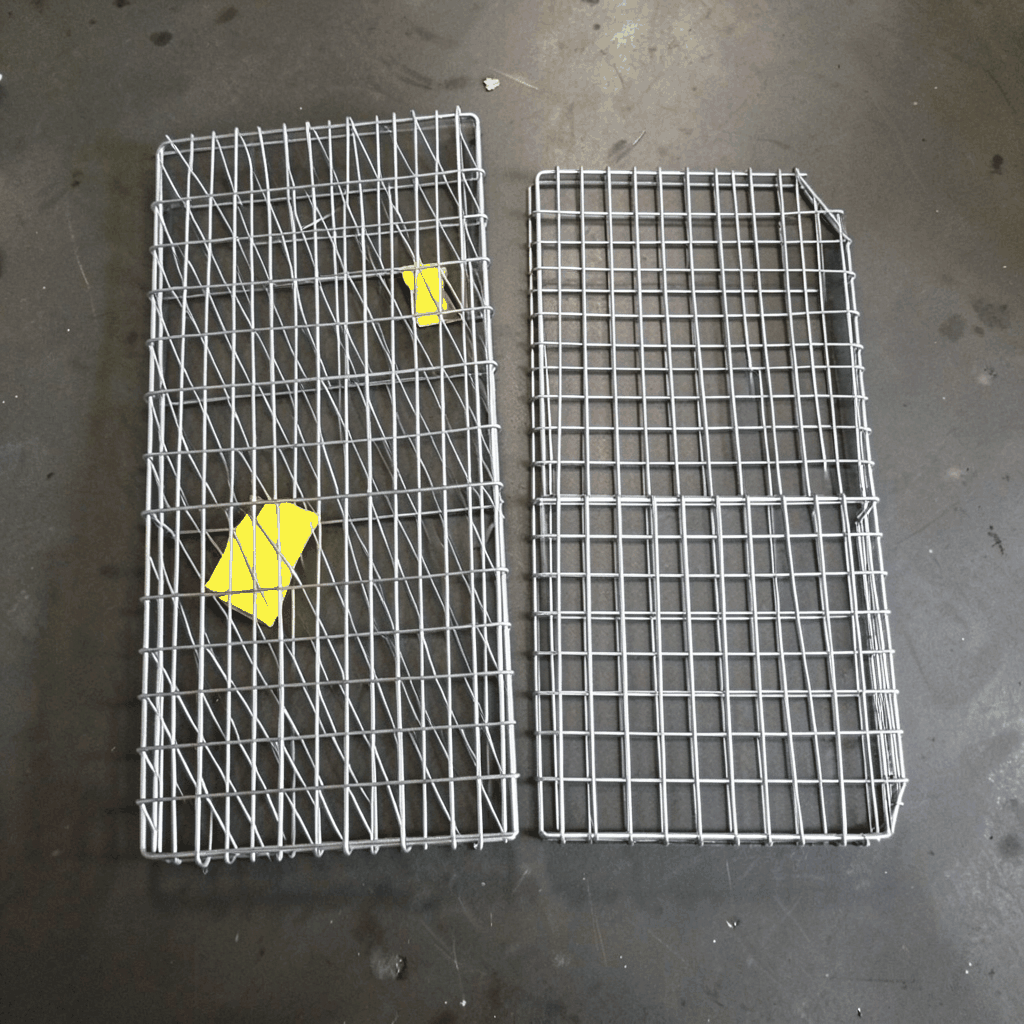
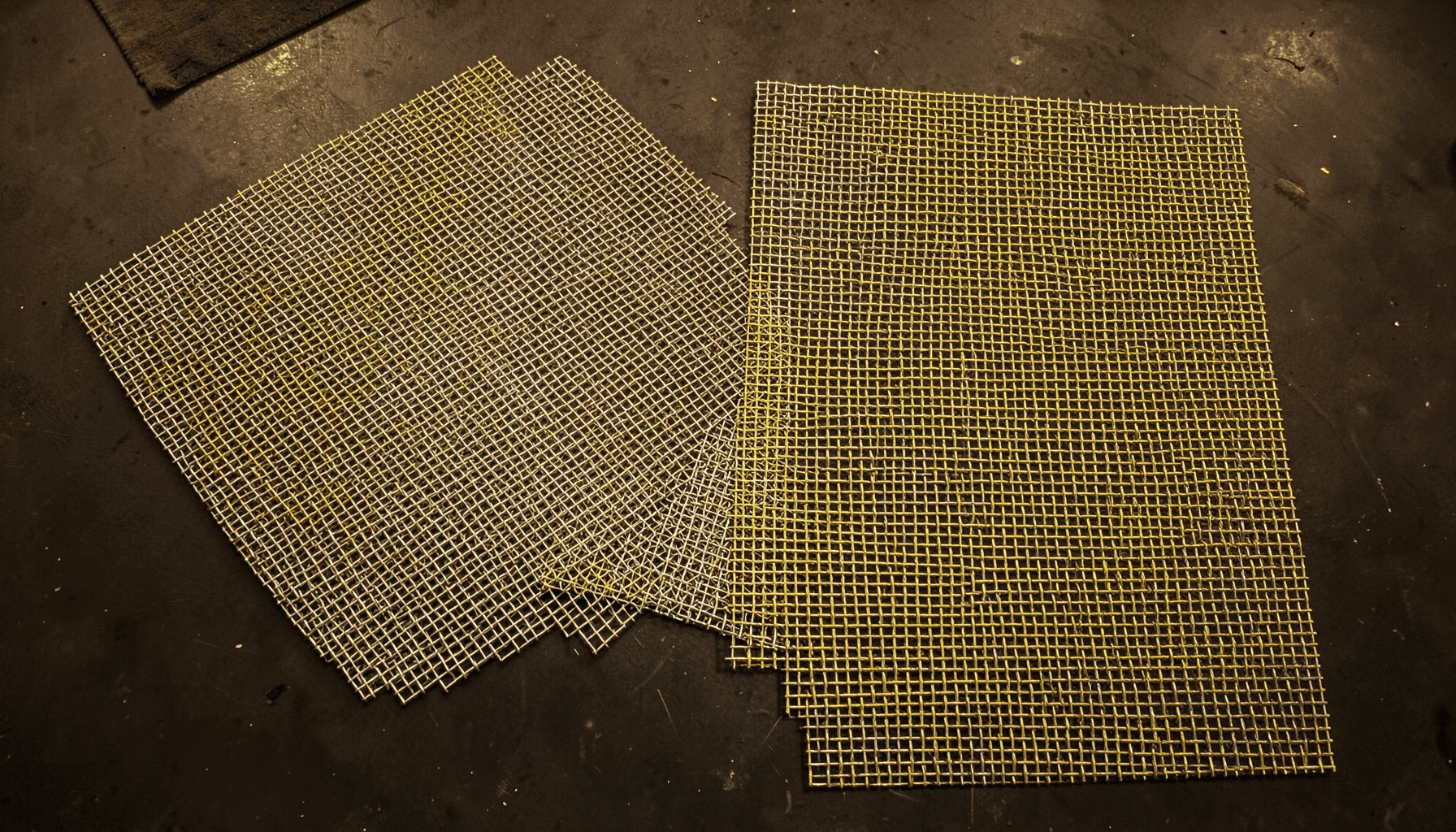
Welded wire mesh is formed by joining longitudinal and transverse wires at regular intersections. The welds create a stable panel with consistent openings, which makes it easier to cut, fit, and attach to a gate frame than loosely woven mesh. Common specifications include wire diameter, aperture size, panel dimensions, and material grade.
Stainless steel is suitable for exposed locations where corrosion resistance and a clean architectural appearance are important. Galvanized steel provides economical protection for many outdoor applications, while powder-coated steel adds color and a sealed finish. Aluminum reduces the overall weight of a large gate, although its frame and weld procedure require careful engineering because aluminum behaves differently from steel during fabrication.
Material compatibility matters at joints and fasteners. When dissimilar metals are combined in a damp environment, galvanic corrosion can occur. Designers should consider isolation washers, compatible coatings, stainless fasteners, and drainage paths. Guidance on outdoor mesh materials can also help when selecting a metal for a gate exposed to weather, public contact, or changing environmental conditions.
Preparing The Mesh And Gate Frame
Before welding, the mesh panel should be checked against the approved drawing. The fabricator verifies the opening count, panel squareness, wire condition, and cut dimensions. Any burrs or sharp protrusions must be removed, especially when the gate will be installed near pedestrians, children, livestock, or maintenance personnel.
The frame is usually made from square tube, rectangular tube, angle, or formed channel. It should be cut accurately, placed on a flat fixture, and temporarily clamped before permanent welding. Measuring the diagonals is a simple way to confirm that the frame is square. If the diagonals differ, the gate can bind in its opening or leave uneven gaps.
Mesh positioning deserves the same attention as frame preparation. The panel may be centered within the frame, set toward one face, or recessed for a particular visual effect. Small expansion gaps can be useful where temperature changes are significant. The mesh should be supported at enough points to prevent vibration, oil-canning, and local stress around the perimeter.
| Component or decision | Common options | Main fabrication consideration | Typical benefit |
|---|---|---|---|
| Mesh material | Stainless steel, galvanized steel, aluminum, coated steel | Match corrosion resistance and welding method to the site | Reliable outdoor service |
| Mesh opening | Small, medium, or large aperture | Balance security, visibility, airflow, and weight | Functional customization |
| Frame section | Square tube, rectangular tube, angle, channel | Select a section that resists bending and supports hardware | Better rigidity |
| Joint method | MIG, TIG, resistance weld, mechanical fixing | Control heat and penetration for the selected metal | Strong, clean connections |
| Surface finish | Galvanizing, powder coating, paint, polishing | Treat weld zones and cut edges consistently | Improved durability |
| Gate hardware | Hinges, latch, drop bolts, operator brackets | Reinforce attachment points before finishing | Smooth operation |
Controlling The Welding Process
The welding method depends on the metal, wire diameter, frame thickness, production volume, and required appearance. MIG welding is widely used for carbon steel and stainless steel because it offers efficient production and consistent bead placement. TIG welding gives greater control over heat and appearance, making it useful for thin stainless steel or visible architectural joints. Resistance welding is commonly used during mesh production, while frame-to-panel attachment may use spot welds, short fillet welds, or mechanical fasteners.
Heat control is essential. Continuous welding along a thin mesh edge can cause shrinkage and pull the panel out of alignment. A better approach is to use short welds distributed around the frame, alternating sides and allowing the assembly to cool between passes. Tack welds should be placed at regular intervals first, followed by inspection of the panel position before final welding begins.
Welders should use clean surfaces, correct shielding gas, suitable filler metal, and settings matched to the material. Stainless steel requires attention to contamination and heat tint, while galvanized steel requires safe handling of zinc coatings and appropriate treatment of exposed areas. Aluminum needs a clean oxide-free surface and controlled heat input to avoid burn-through or distortion.
For a decorative gate, weld appearance is part of the finished design. Excessive spatter, uneven beads, and visible grinding marks can undermine an otherwise precise mesh pattern. For an industrial gate, structural consistency may take priority, but welds still need to be continuous where specified, free from cracks and undercut, and suitable for the expected load.
Reinforcing Hardware And Moving Parts
A welded mesh panel is only one part of a functional gate. Hinges carry the dead load and transfer opening forces into the posts or masonry. Their size and spacing should reflect the gate’s weight, width, operating frequency, and exposure to wind. Heavy gates may need adjustable hinges or bearing-supported hardware so that alignment can be corrected after installation.
Latch plates, lock boxes, drop bolts, handles, and automation brackets should be planned before the frame is closed. Reinforcement plates or internal sleeves can distribute concentrated loads and prevent thin tubing from deforming. A pedestrian gate may use a spring latch and keyed lock, whereas a vehicle gate may require a bottom bolt, electric strike, magnetic lock, or operator mounting plate.
Clearances should be checked around the full movement path. The gate needs sufficient space to swing without striking posts, walls, curbs, landscaping, or adjacent leaves. For sliding designs, the mesh panel and frame must remain rigid enough to travel without excessive deflection. Safety edges, stops, and anti-pinch details become especially important when an automatic system is included.
Finishing, Inspection, And Installation
After welding, the gate should be inspected for squareness, flatness, weld continuity, sharp edges, and correct hardware placement. Test fitting the gate in a temporary frame or jig can reveal interference before the product reaches the jobsite. The finished panel should open and close smoothly, with an even reveal and a latch that engages without force.
Surface preparation depends on the selected finish. Carbon steel may be hot-dip galvanized after fabrication, while other gates may receive zinc-rich primer and powder coating. Stainless steel may be brushed, polished, or passivated. If a coating is applied after welding, weld discoloration, grinding residue, oil, and dust must be removed so the finish bonds evenly.
Cut edges and repaired weld areas deserve special attention because they are common entry points for corrosion. Galvanized surfaces may need zinc-rich repair coating, while painted or powder-coated gates require compatible touch-up procedures. Drain holes should be included in hollow sections where water could collect, and the final design should avoid pockets that remain wet after rain.
Installation is the last quality check. Posts must be plumb and firmly anchored, because even a precisely fabricated gate can operate poorly when its supports move. The installer should verify hinge alignment, latch height, ground clearance, stop positions, and lock operation. For a gate supplied by a custom mesh manufacturer, drawings and installation tolerances should travel with the product so that site adjustments do not compromise the frame.
Practical Choices For A Reliable Result
Custom fabrication becomes more predictable when the design team, manufacturer, and installer share the same information. Drawings should identify mesh orientation, frame dimensions, weld locations, finish requirements, hardware allowances, and acceptable tolerances. Samples or small mockups can be useful when the gate is part of a larger architectural façade or must match existing screens and railings.
Shuo Ke Wire Mesh Product Technology Co., Ltd. works with stainless steel, aluminum, iron, copper, and other alloys for decorative and industrial mesh applications. Its experience with fences, gates, guardrails, cladding, filters, and custom metal components supports projects where practical engineering must work together with a deliberate visual design.
Before approving production, use these checks:
- Confirm the actual opening and site measurements, including posts, slopes, and swing clearance.
- Match mesh aperture, wire diameter, and frame strength to security, airflow, visibility, and expected impact.
- Specify the welding method, joint appearance, reinforcement points, and treatment of cut or welded areas.
- Select a finish suited to moisture, salt exposure, chemicals, ultraviolet light, and routine maintenance.
- Test the completed gate with its real hinges, latch, lock, and automation components before shipment.
A carefully welded wire mesh gate can provide long-term security without appearing heavy or closed off. The right combination of material, mesh geometry, frame reinforcement, controlled welding, and protective finishing produces a gate that works reliably and supports the character of the surrounding property.
For a project requiring custom dimensions, architectural detailing, or industrial-grade performance, contact Shuo Ke Wire Mesh Product Technology Co., Ltd. with the opening size, application, material preference, mesh pattern, finish, and hardware requirements. A detailed specification allows the manufacturer to develop a durable welded gate solution suited to the site and ready for efficient installation.