Why Crimped Wire Mesh Helps Concrete Recycling Screens Stay Clear
Concrete recycling screens must separate useful aggregates from fines, dust, rebar fragments, wood, and other unwanted materials while handling heavy, abrasive loads. When the screening surface becomes blinded by damp powder or packed with irregular particles, throughput falls and the recycled product becomes less consistent.
Crimped wire mesh offers a practical way to reduce this problem. Its shaped wires create stable openings, controlled vibration, and contact points that help material move across the screen instead of forming a dense layer over the aperture. The result is a screening surface that can remain productive for longer between cleaning cycles.
For recycling plants, demolition contractors, aggregate processors, and municipal material recovery operations, the correct mesh is more than a choice of hole size. Wire diameter, weave pattern, material grade, panel tension, feed conditions, and deck design all affect whether a screen resists clogging in daily service.
Why concrete recycling screens become blocked
Concrete rubble contains a wide range of particle shapes and sizes. A single feed may include coarse aggregate, cement dust, moisture, clay, asphalt, wood, and thin metal fragments. Flat or elongated pieces can lie across an opening and create a bridge, while fine particles can fill the spaces around them.
Moisture makes the problem more severe. Dust from crushed concrete can become cohesive when wet, causing particles to stick to the screening surface. Fine cement paste may smear across wires and form a hard layer that narrows the effective aperture. This condition is often called blinding, pegging, or clogging, depending on the material and the way the opening is obstructed.
A screen can also lose efficiency when its apertures deform under impact. If the wire is too light for the feed or the panel is poorly supported, openings may close unevenly. The machine may continue operating, but less material passes through, and the operator may compensate by reducing the feed rate or extending the screening cycle.
How crimped wires improve material movement
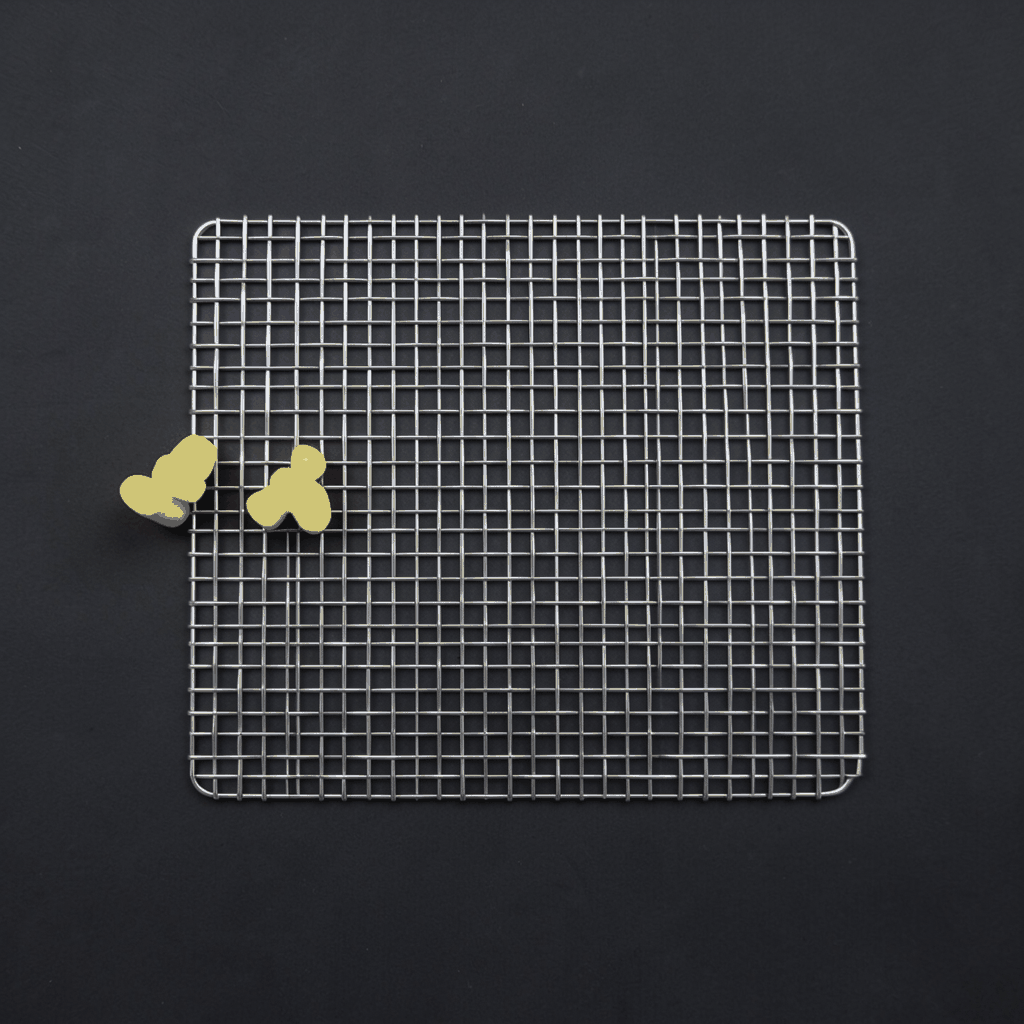
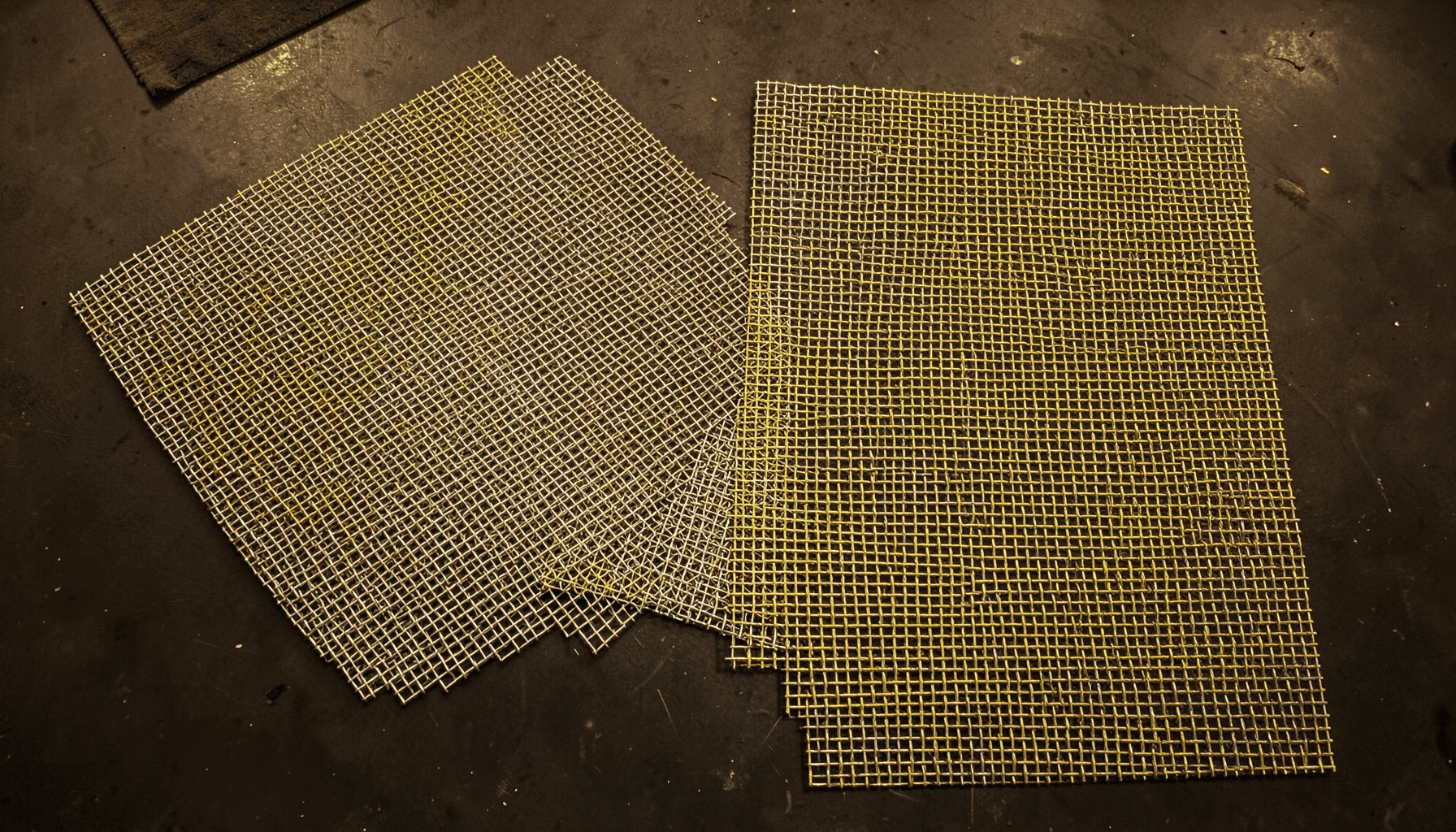
Crimped wire mesh is manufactured by forming the wires before they are woven or assembled into a screening panel. The bends lock the wires into a stable pattern and help maintain consistent square, rectangular, or slotted openings. Compared with a flat, smooth surface, the profile creates more varied contact points for particles moving over the deck.
That geometry encourages particles to roll, shift, and reorient as the screen vibrates. Oversized pieces are less likely to sit flat over an aperture, while smaller particles have more opportunities to find an opening. The repeated changes in direction can reduce the formation of a compact blanket of fines.
The crimped structure also supports a controlled degree of vibration at the wire level. Each impact from the feed and each movement of the screening machine can help dislodge loose material. It does not eliminate clogging under every condition, but it can make the screen less prone to rapid blinding than a poorly selected flat or rigid surface.
This effect is especially valuable when recycled concrete contains irregular particles that would otherwise wedge into the openings. The wire profile gives the material a less predictable path, which can reduce the stable bridging that causes a screen to stop passing product efficiently.
Opening shape and wire design affect screening efficiency
The nominal aperture is only one part of screen performance. Two panels may have the same opening measurement but behave differently because they use different wire diameters, crimp styles, or open-area ratios. A thicker wire may provide greater wear resistance, yet it also reduces the percentage of open space and can limit fine-particle throughput.
For concrete recycling, the opening should be selected according to the target product size and the actual feed distribution. If the aperture is too small, the deck may blind quickly and require frequent washing or manual cleaning. If it is too large, unwanted oversize material may pass through and reduce the quality of the recycled aggregate.
Common crimped mesh arrangements include pre-crimped, inter-crimped, lock-crimped, and flat-top patterns. Pre-crimped and inter-crimped designs can provide dependable opening control with useful screening action. Lock-crimped mesh offers strong wire retention for demanding service. A flat-top profile presents a smoother carrying surface and can help reduce wear on delicate products, but it must be matched carefully to the feed because a smoother surface may provide less agitation.
Wire diameter should be considered alongside impact energy. Heavy demolition debris may require high-tensile steel or abrasion-resistant alloy wire, while a lighter feed may benefit from a larger open area and more flexible screening action. The best design balances wear life, capacity, cut-point accuracy, and resistance to aperture deformation.
Material selection for abrasive recycling duties
Crushed concrete is highly abrasive, particularly when it contains exposed sand, hard aggregate, and cement-rich fines. High-carbon steel and other wear-resistant steels are often selected for heavy-duty screening because they can withstand repeated impact and sliding abrasion. Stainless steel may be preferred where corrosion resistance, cleanability, or exposure to moisture is important.
Material selection should reflect the operating environment rather than relying on a general grade recommendation. Outdoor recycling yards may expose screens to rain, deicing salts, and dirty wash water. Indoor plants may have less corrosion but more continuous dust and higher production hours. A suitable alloy can help preserve wire strength and opening accuracy over a longer service period.
The same stainless steel mesh benefits valued in food-processing baskets—corrosion resistance, cleanability, and dependable structure—can also matter in recycling equipment exposed to wet processing or frequent washing. The final choice still depends on abrasion, impact, cost, and the required service life.
For particularly severe conditions, it may be useful to combine different screen types across a plant. A robust crimped wire panel can handle the primary scalping stage, while a finer panel or polyurethane section performs sizing farther downstream. This staged approach prevents one screen from carrying every separation task.
Comparing common screening surfaces
The most suitable surface depends on the material, moisture level, required cut point, and available maintenance resources. Crimped wire is often selected because it combines open area with structural stability, but other media can be effective in specific parts of a recycling line.
| Screening surface | Clogging resistance | Abrasion resistance | Opening stability | Typical application |
|---|---|---|---|---|
| Crimped wire mesh | Good when correctly tensioned and sized | High with suitable steel grade | High | Primary and secondary concrete screening |
| Woven plain wire mesh | Moderate; can blind with damp fines | Moderate to high | Moderate | Dry, uniform aggregate sizing |
| Perforated metal plate | Moderate; large holes resist fine blinding | High | Very high | Heavy impact and coarse scalping |
| Polyurethane screen panel | Good for wet or sticky materials | High in many applications | High, with flexible apertures | Fine screening and damp feed |
| Rubber screen panel | Good shock absorption and material release | Moderate to high | High | Noisy or high-impact installations |
Crimped wire generally provides more open area than a thick perforated plate and more mechanical stability than a lightly woven fine mesh. It can also be fabricated in custom dimensions for vibrating screens, trommel systems, static screens, and sorting equipment. That flexibility helps processors fit the screening surface to existing machinery.
Polyurethane and rubber panels can outperform metal when wet fines are the dominant problem, but they may have different limits for heat, sharp metal contamination, or very coarse impact. A hybrid deck can use wire mesh where high open area and abrasion resistance are needed and flexible panels where sticky material is most likely to accumulate.
Installation and operating practices that limit clogging
Even a well-designed crimped mesh can underperform if it is installed without correct support. The panel must sit firmly on the deck, with suitable tension and no loose areas that allow excessive movement. Uneven tension can distort the aperture, increase wire fatigue, and create pockets where fines collect.
Feed distribution is equally important. A concentrated stream can overload one section of the screen and leave other areas underused. A spreader or properly designed feed chute helps distribute concrete across the working width. The feed should also reach the deck at a controlled speed; excessive drop height increases impact damage, while insufficient movement may reduce the agitation needed to clear the openings.
Moisture management can have a strong influence on blinding. If the process allows it, separating wet material before fine screening or using a controlled spray system can improve flow. Random water application, however, may turn dust into paste and make the problem worse. Operators should observe whether moisture is washing material through the apertures or creating a sticky coating.
Routine inspection should focus on broken wires, elongated openings, loose fasteners, worn support bars, and material buildup. Replacing a panel before severe distortion develops can protect the next screening stage and prevent contaminated product from reaching stockpiles. Recording wear patterns also helps identify whether the issue comes from feed impact, tension, aperture selection, or uneven loading.
Practical recommendations for a longer-running screen
A screening specification should be based on measured feed conditions rather than a generic mesh catalog. Important inputs include the largest particle size, target aggregate fraction, moisture content, expected tons per hour, abrasive mineral content, and the presence of rebar or other metal debris.
The following practices can improve resistance to blinding and maintain separation accuracy:
- Select a crimp style and wire diameter that preserve the required aperture under impact and vibration.
- Match the open area to the target cut point instead of choosing the largest possible opening.
- Use abrasion-resistant steel for dry, harsh feed and corrosion-resistant alloy where wet processing is frequent.
- Ensure accurate panel tension, firm deck support, and even material distribution across the screen.
- Inspect buildup and wear on a scheduled basis, then adjust feed, moisture control, or screen specification before capacity declines.
Custom fabrication can be useful when standard panels leave unused deck space or fail to fit the machine’s clamping system. A manufacturer experienced in woven wire mesh and fabricated screening components can adjust panel dimensions, edge treatment, wire material, and opening pattern to suit the equipment.
Why customization improves concrete recovery
Concrete recycling systems differ widely in vibration frequency, deck angle, feed height, and discharge arrangement. A mesh that performs well on a compact mobile crusher may not provide the same result on a high-capacity stationary plant. Custom sizing helps maintain full contact with the support structure and reduces edge gaps where material can bypass the intended separation.
Customization can also address unusual feed compositions. A contractor processing clean demolition concrete may prioritize open area and production rate. A municipal facility handling mixed construction waste may need stronger wire, reinforced edges, and a pattern that tolerates rebar fragments and wood contamination. A wet-processing operation may require corrosion-resistant material and a surface that can be cleaned repeatedly.
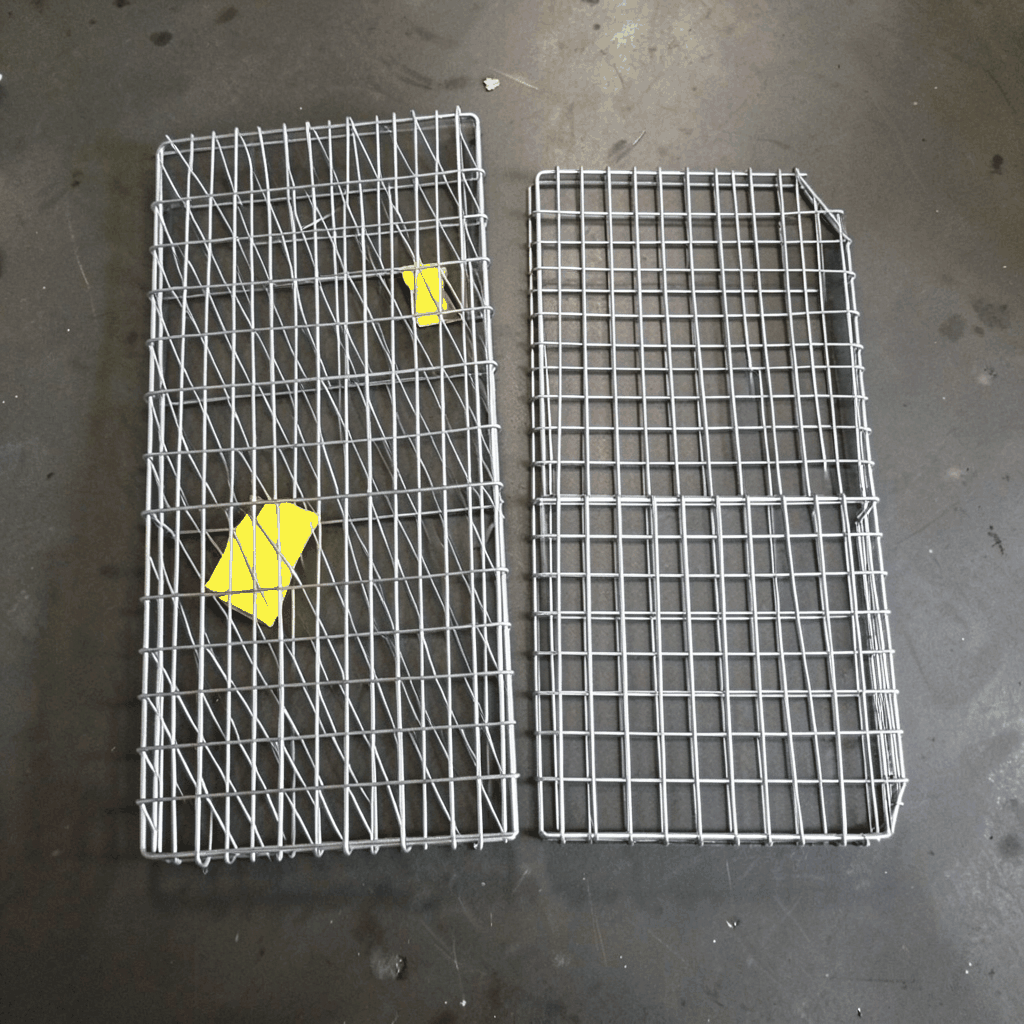
Crimped wire mesh can be supplied as panels, rolls, or machine-specific components, depending on the screen design. Fabrication details such as welded borders, hooked edges, reinforced sections, and mounting holes can reduce installation time and improve fit. These practical details contribute to consistent screening just as much as the wire pattern itself.
When the mesh is engineered for the actual application, the screen has a better chance of maintaining open area, resisting wear, and moving material without excessive buildup. That improves aggregate recovery, reduces unscheduled cleaning, and supports a more predictable recycled product.
For concrete recycling operations that are losing capacity to blinding or frequent screen cleaning, Shuo Ke Wire Mesh Product Technology Co., Ltd. can provide customized metal mesh solutions based on material, aperture, alloy, panel size, and equipment requirements. Contact the company to discuss a crimped wire mesh design that supports reliable separation and longer operating intervals.