
Wire mesh for heavy-duty shelf decking in warehouses
Warehouse shelving has to cope with repetitive loading, pallet movement, forklift traffic, dust, temperature changes and occasional impacts. A well-designed wire mesh deck gives stored goods a stable support surface while allowing light, air and sprinkler water to pass through the racking. For Australian distribution centres, workshops, retail back rooms and industrial stores, it can be a practical alternative to solid steel panels or timber boards.
The right decking depends on the rack dimensions, pallet type, load pattern and operating environment. Mesh panel thickness, aperture size, support bars, finish and fixing method all affect performance. When these details are specified correctly, warehouse wire decking can improve visibility, housekeeping and fire protection while helping operators use vertical storage space more effectively.
How mesh decking supports warehouse operations
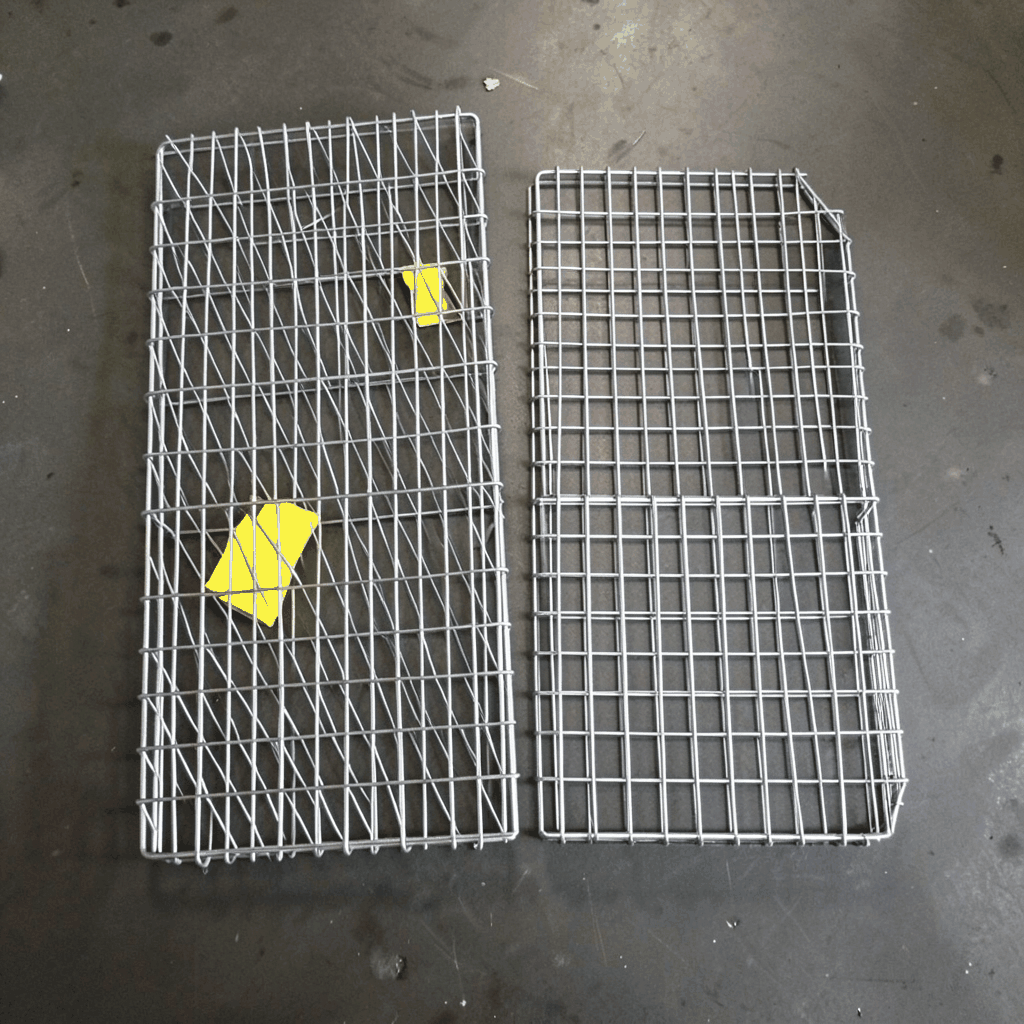
Wire mesh shelf decking is usually installed between front and rear rack beams to form a level load-bearing platform. The panel may have welded transverse wires, longitudinal support wires or reinforced channels that transfer weight into the beams. This arrangement helps distribute pallets and cartons across the bay instead of concentrating force at a few contact points.
Open mesh also improves visibility between storage levels. Warehouse staff can see labels, damaged packaging and misplaced stock without removing every item from the shelf. Light reaches lower tiers more easily, which can reduce the need for additional lighting in some facilities. Air circulation is useful in general storage areas, food logistics and temperature-controlled rooms where stagnant air can contribute to condensation.
A properly fitted deck can accommodate loose cartons, plastic totes and small containers that would be unsafe on bare beams. Where the aperture is too large for the stored products, a closer mesh or a solid tray can be selected for the affected levels. This makes it possible to match the shelf surface to the inventory rather than using one configuration throughout the building.
Choosing wire, aperture and load capacity
Steel is commonly selected for warehouse decking because it offers strong welded joints and good resistance to repeated handling. Galvanised steel can suit general indoor storage, while powder-coated finishes provide colour coding and an additional protective layer. Stainless steel is valuable in washdown areas, food processing facilities, laboratories and coastal locations where corrosion resistance is a higher priority. Aluminium may be useful where low weight and corrosion performance matter, although its mechanical properties must be assessed for the planned load.
Aperture size should be chosen around the smallest items placed directly on the deck. A narrow opening helps prevent cartons, pails and tool cases from tipping into the level below. At the same time, a more open structure reduces material use and supports better sprinkler penetration. The best balance depends on the stock profile, fire engineering requirements and whether pallets are handled by forklift or placed manually.
Load ratings must be based on the complete installation, not simply the wire diameter. Engineers and rack suppliers need to consider uniformly distributed loads, point loads from pallet feet, beam spacing, panel deflection and impact risk. A deck rated for evenly distributed cartons may not be suitable for a concentrated machine component. Clear load plates and bay identification help workers keep everyday storage within the approved capacity.
Australian conditions and compliance considerations
Australian warehouses often combine large pallet movements with seasonal heat, dust and long travel distances between receiving and dispatch areas. Facilities in Brisbane and coastal Queensland may need greater attention to humidity and corrosion, while sites around Sydney, Melbourne and Perth can face airborne dust, temperature variation or salt exposure depending on their location. In cold stores, the coating and weld quality should be suitable for condensation and repeated temperature changes.
The common Australian pallet footprint of approximately 1165 by 1165 millimetres should be checked against the rack bay and deck dimensions before fabrication. Imported pallets, half pallets and unusual stillages can create different contact points. Local logistics businesses may also move mixed loads through the same aisle, so the mesh surface must tolerate frequent repositioning and occasional misalignment during forklift placement.
Storage rack design and inspection should be coordinated with applicable Australian requirements, including AS 4084 for steel storage racking where relevant, along with state or territory work health and safety obligations. Model WHS laws are implemented differently across jurisdictions, so a warehouse in Victoria may have administrative requirements that differ from one in Western Australia or New South Wales. Load signage, rack inspections, competent installation and documented repairs are important parts of a safe system.
Wire decking does not remove the need for rack protection. Upright guards, end-of-aisle barriers and bollards can reduce damage from forklifts and pallet jacks. Any bent panel, failed weld or displaced support should be isolated and assessed rather than straightened informally while the bay remains in service.
Mesh finishes for demanding environments
The surface finish should reflect the building atmosphere and cleaning routine. Hot-dip galvanised wire mesh is a common choice for dry warehouses, workshops and distribution centres because the zinc coating protects exposed steel surfaces. Electro-galvanised or powder-coated products may be suitable for cleaner indoor environments where the panels are not exposed to heavy abrasion or frequent washdown.
Stainless steel mesh can provide a longer service life in food, beverage, chemical and marine-related operations. It is easier to clean and less vulnerable to surface rust when the correct grade is selected. A coastal warehouse near Adelaide, Newcastle or the Gold Coast may benefit from a more corrosion-resistant specification than a dry inland facility, particularly if roller doors remain open and salty air enters the building.
The finish should also be checked at cut edges, welds and contact points. Poorly protected areas can become early corrosion sites even when the broad panel surface appears sound. For specialised industrial applications, manufacturers that work with filtration and process equipment understand the importance of consistent openings and clean welds; examples include custom mesh filter discs for demanding refinery environments.
Design details that improve safety and service life
Deck panels should sit securely on the rack beams and resist movement during pallet placement. Depending on the racking design, retaining clips, locking tabs, safety pins or purpose-formed supports may be used. The fixing method should prevent a panel from lifting or sliding if a pallet catches its edge. Panels should also be sized to avoid excessive gaps at the front, rear and sides of the bay.
Reinforced front edges can help withstand contact from pallets and improve the visual alignment of each level. Raised support bars may create a flatter surface for cartons, while additional stiffeners can reduce deflection across wide spans. For long runs, modular panels make replacement easier because a damaged section can be removed without dismantling an entire row of shelving.
Good housekeeping supports the decking system. Stretch wrap, broken cartons and loose strapping should not be allowed to accumulate on the mesh, where they can obstruct sprinkler discharge or conceal damage. In busy Australian fulfilment centres, where online orders can produce constant stock movement, scheduled checks after peak periods can identify overloaded bays and bent panels before they become larger operational problems.
Colour coding can support warehouse discipline as well. A different finish may identify quarantine stock, hazardous goods areas or pedestrian-accessible shelving, provided the marking system is documented and visible. Decking should never be treated as a walkway or work platform unless it has been specifically designed, guarded and approved for that purpose.
Custom fabrication for different storage systems
Standard mesh panels are useful when beam lengths and shelf depths are consistent, but many facilities contain mixed rack types. Selective pallet racking, carton live storage, tyre shelving, archive systems and mezzanine storage may require different panel widths, edge profiles and support arrangements. Custom fabrication allows the mesh to follow existing dimensions instead of forcing a costly rack replacement.
A manufacturer can produce panels from stainless steel, galvanised steel, aluminium or other alloys and adapt the wire diameter, opening, perimeter frame and support bars to the application. Cut-outs may be required around sprinklers, columns, posts or conveyor interfaces. Careful drawings should record clear span, bearing length, beam profile, allowable load and any obstructions before production begins.
Custom work is particularly useful for Australian sites that have expanded in stages. A Melbourne warehouse may have older rack bays alongside a newer automated picking zone, while a regional facility may need replacement decking for a discontinued imported system. Matching the existing structure can reduce installation time and avoid unnecessary changes to aisle widths, pallet flow or forklift routes.
Quality control should include dimensional checks, weld inspection and finish verification. Panels should arrive labelled by size or location when many variations are involved. Installation instructions and load documentation give site managers a clear reference for future inspections, replacement ordering and contractor handover.
For reliable warehouse shelving, specify the storage load, pallet footprint, beam arrangement and environmental conditions before selecting a mesh panel. Shuo Ke Wire Mesh Product Technology Co., Ltd. can develop metal mesh components for industrial and commercial requirements, including tailored materials, finishes and dimensions. Contact the company with rack drawings or site measurements to discuss a durable decking solution suited to Australian warehouse conditions.