Wire Mesh Guards For Protecting Industrial Fan Blades
Industrial fans keep factories, warehouses, workshops, agricultural buildings and processing facilities ventilated, but their rotating blades present a serious mechanical hazard. A person’s hand, loose clothing or a dropped tool can reach the fan assembly when an opening is exposed or a guard is damaged. Wire mesh guards create a physical barrier while allowing air to move through the system.
For Australian businesses, fan protection must suit the site as well as the equipment. A guard installed in a dry Melbourne workshop may require different materials and finishes from one used near the coast in Sydney, in a humid Queensland plant or at a dusty mining facility in Western Australia. Correct aperture size, rigidity, corrosion resistance and secure fixing all influence performance.
Shuo Ke Wire Mesh Product Technology Co., Ltd. manufactures and processes mesh products for industrial and architectural applications. Its capabilities include stainless steel, aluminium, iron, copper and alloy mesh, with customised fabrication available for fan screens, machinery barriers, access panels and protective enclosures.
Why Industrial Fans Need A Physical Barrier
Fan blades can rotate at high speed, creating an impact, entanglement and cutting risk. Even a stationary fan can become hazardous if it starts automatically through a thermostat, timer, remote control or building management system. A worker cleaning nearby equipment may assume that the unit is isolated when an unexpected start-up occurs.
A wire mesh safety guard places a controlled separation between people and moving components. It can protect the intake and discharge sides of a fan, enclose exposed drive mechanisms or form a larger cage around ventilation equipment. The guard should be designed so that fingers, hands, tools and other objects cannot reach dangerous moving parts through the openings.
A practical guard also helps protect the fan itself. In warehouses and workshops, forklifts, trolleys and pallets can strike exposed housings. Mesh panels absorb or distribute minor impacts while allowing operators to inspect the blades without removing the entire barrier. This visibility is valuable during routine checks because damage, dirt build-up and unusual blade movement can be identified quickly.
Australian workplaces operate under state and territory work health and safety legislation, supported by guidance from regulators such as Safe Work Australia and state bodies including SafeWork NSW and WorkSafe Victoria. Machinery guarding is generally expected to control access to moving parts, and a site risk assessment should determine the appropriate design. A mesh guard is one part of a complete safety system and should not replace isolation, lockout procedures or scheduled maintenance.
Selecting Mesh For Airflow And Protection
The mesh opening must balance safety with ventilation. Small apertures provide stronger exclusion against fingers and tools, while larger openings may offer lower airflow resistance but allow greater access. The correct size depends on blade speed, fan geometry, the distance between the guard and moving parts, and whether the equipment is located in a public or restricted area.
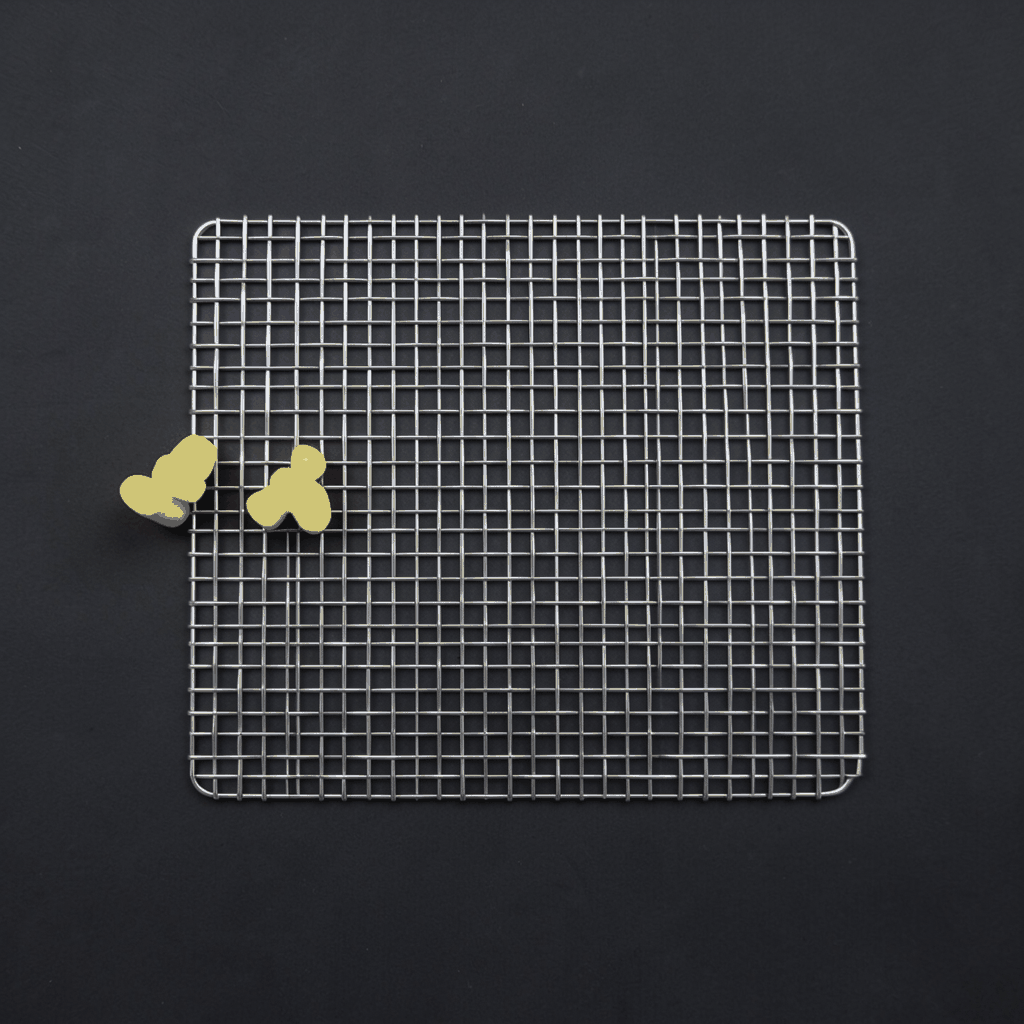
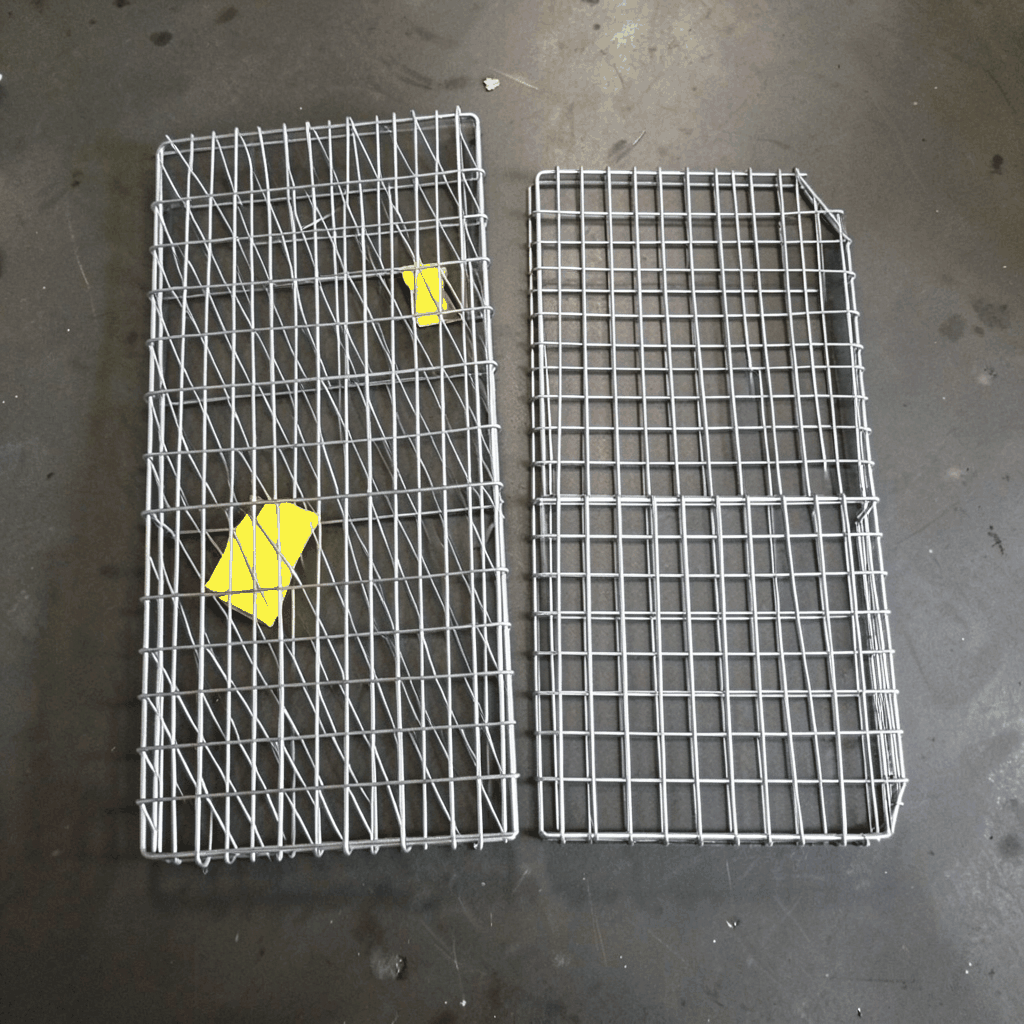
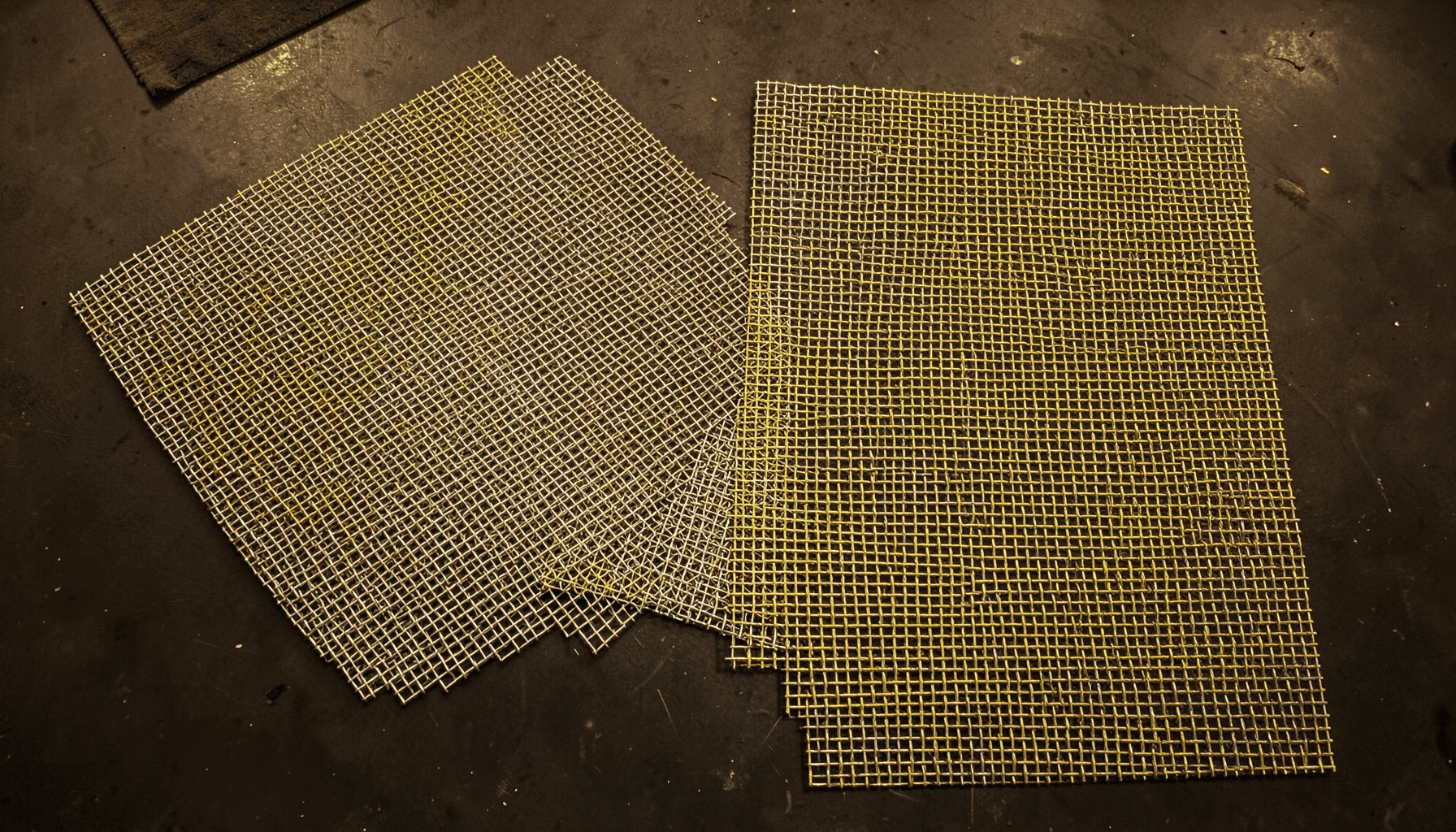
Welded wire mesh is commonly selected for industrial fan covers because its fixed intersections provide consistent openings and good dimensional stability. Expanded metal can offer a rigid, lightweight panel with a distinctive pattern, while perforated sheet may be suitable where a more enclosed surface is preferred. Woven wire mesh can be useful for fine filtration or small equipment, although it requires careful attention to edge finishing and frame support.
The mesh itself should be supported by a frame that resists vibration and repeated handling. A thin panel with inadequate bracing may rattle during operation, fatigue around its fasteners or deform after contact with equipment. Folded edges, perimeter frames, reinforced corners and intermediate supports can improve service life without obstructing the fan’s working area.
Open-area calculations are important when a guard is fitted over an air intake or exhaust. If the barrier restricts airflow too severely, the fan may consume more energy, run hotter or fail to deliver the required ventilation rate. Engineers and installers should assess the free area of the selected mesh, the spacing from the blades and the effect of dirt or lint accumulating on the surface.
Materials Suited To Australian Conditions
Stainless steel is a strong choice for food processing plants, coastal facilities, wash-down areas and sites where corrosion control is important. Grade selection should match the exposure. Stainless steel mesh can provide a clean appearance and long service life, while passivation or suitable finishing may be required after fabrication to protect cut edges and weld areas.
Aluminium offers low weight and natural corrosion resistance, making it useful for large guards that must be removed during maintenance. It is often considered for rooftop ventilation units, commercial buildings and transportable plant. Designers should still account for impact strength, galvanic corrosion where dissimilar metals meet, and the effects of vibration.
Painted or galvanised steel may suit indoor factories, agricultural buildings and general industrial equipment where cost, rigidity and impact resistance are priorities. In a coastal city such as Sydney, salt-laden air can accelerate corrosion, particularly around exposed fixings and cut edges. A suitable coating system, stainless fasteners and regular inspection can help extend the guard’s working life.
Queensland facilities may face high humidity, heavy rainfall and tropical exposure, while mining and infrastructure sites in the Pilbara can experience abrasive dust, intense sunlight and long distances between maintenance visits. These conditions affect material selection, coating durability and the choice of fasteners. For food, pharmaceutical or hygienic environments, smooth surfaces and cleanable construction may take priority over a low-cost finish.
Designing Guards For Maintenance And Compliance
A fan guard should prevent access without making inspection or servicing unnecessarily difficult. Removable panels can be secured with captive fasteners so hardware is not lost during maintenance. Hinged access doors may suit larger enclosures, provided they include reliable latches and cannot swing into walkways or moving equipment.
The finished assembly should have no sharp cut wire, exposed burrs or protruding bolts that can injure workers. Edges can be folded, capped or enclosed within a frame. Where a guard is close to a walkway, its profile should avoid snagging clothing, catching hoses or reducing the safe passage width. Yellow or high-visibility finishes may help workers recognise the barrier, although colour does not replace physical protection.
Inspection access must be planned from the beginning. Operators may need to check blade cleanliness, belt condition, bearings, mounting bolts and motor temperature. A clear mesh pattern helps visual inspection, but guards should still be removed only under an appropriate isolation procedure. If the fan can start automatically, isolation should include all relevant electrical, pneumatic or mechanical energy sources.
The principles used for machinery safeguarding should be considered alongside the applicable Australian Standards and the site’s documented risk controls. Businesses may also need to satisfy client specifications, engineering approvals, building requirements or internal standards. A supplier can provide fabricated panels and drawings, but the responsible person on site must verify that the completed guard suits the machine, location and operating procedures.
Mesh barriers are also useful where fan equipment forms part of a broader restricted area. Guidance on see-through security barriers illustrates how open mesh can maintain visibility while controlling access, a principle that can apply to plant rooms, service corridors and ventilation compounds.
Custom Fabrication For Industrial Fan Protection
Standard fan covers may be unsuitable when equipment has unusual dimensions, angled supports, non-standard bolt patterns or limited clearance. Custom wire mesh fabrication allows the guard to follow the actual fan housing and surrounding structure. This can reduce unnecessary obstruction and make installation more straightforward.
A custom order can specify the mesh type, wire diameter, aperture, panel dimensions, frame profile, mounting holes, finish and access arrangement. It may also include folded panels, welded brackets, inspection doors or multiple sections for large ventilation systems. For replacement work, accurate measurements of the housing, bolt centres and clearance around the blades are essential.
Shuo Ke produces mesh solutions from stainless steel, aluminium, iron, copper and other alloys for industrial and architectural use. Its manufacturing approach can support protective fan screens alongside baskets, filters, fences, gates, guardrails and machine barriers. Material and finish recommendations should be based on the operating environment, cleaning method, expected impacts and required service life.
Australian projects often involve transport costs, staged shutdowns and contractors working across several states. A clearly documented fabrication package can help reduce installation delays. Useful information includes drawings, photographs, fan model details, access requirements, fastener preferences and the site’s environmental conditions. For a replacement guard, supplying the damaged panel or a dimensioned sketch can help the fabricator reproduce the mounting arrangement accurately.
A professionally made wire mesh enclosure should be checked after installation for secure fixings, adequate clearance, stable framing and unrestricted ventilation. It should remain firm during normal vibration and should not become a source of noise, loose parts or new trip hazards. Periodic inspections are especially important in busy warehouses, agricultural operations and remote industrial locations where impact and dust are common.
Protecting fan blades is a straightforward step that can remove a serious point of exposure around industrial equipment. The right mesh guard combines controlled openings, robust framing, suitable materials and maintenance-friendly access. It also fits the site’s Australian conditions and the organisation’s machinery safety procedures.
For a tailored industrial fan screen or protective mesh enclosure, contact Shuo Ke Wire Mesh Product Technology Co., Ltd. with the fan dimensions, photographs, material preference and installation environment. Its team can help develop a durable, practical solution for ventilation equipment, plant rooms, workshops, warehouses and other demanding applications.